Skip to content
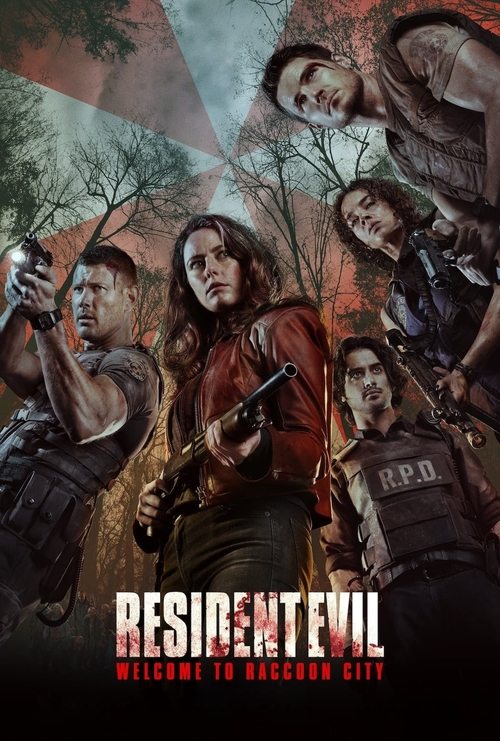
Resident Evil: Welcome to Raccoon City
A rain-soaked survival-horror nightmare lit by flickering flashlights, where a dying company town rots from the inside and a handful of strangers race the clock through corridors full of hungry shadows.
Resident Evil: Welcome to Raccoon City

"Witness the beginning of evil."

24 November 2021 Germany 107 min 5.9 (2,803)

Director: Johannes Roberts

Cast: Kaya Scodelario, Hannah John-Kamen, Robbie Amell, Tom Hopper, Avan Jogia

Action Science Fiction Horror Corporate greed and the disposable town Family, estrangement and reconciliation Survival under scarcity Betrayal and hidden loyalties Nostalgia and origins
Budget: $25,000,000
Box Office: $41,914,915

Resident Evil: Welcome to Raccoon City — Ending Explained

⚠️ Spoiler Analysis

The film interweaves the mansion incident from the first game with the city outbreak from Resident Evil 2, so both happen on the same night. Claire's warnings about Umbrella turn out to be right. The company's experiments, carried out on the town and linked to the orphanage where the Redfields grew up, released the infection. Chris's affection for William Birkin makes the reveal of Umbrella's crimes a personal betrayal as well.

Inside the S.T.A.R.S. team, Wesker's hidden loyalties show that the rot has spread to the institutions meant to protect the town. In the end the corporation treats the whole city as disposable. The survivors, the reunited siblings, Jill and Leon, have to escape Raccoon City before it is wiped out, and the final escape is by train.

Read in hindsight, the orphanage details, the infected neighbor's diary-like scrawl and Chris's defense of Birkin all point to the same point: the horror was engineered, not natural. The ending sets up a larger conspiracy for a sequel that was later cancelled.

Alternative Interpretations

As a love letter: Some viewers see the film as a collage of the games meant mainly for fans, where recognition (locations, notes, items) is the main pleasure, and they forgive its looseness as intentional B-movie energy.

As a failed compression: Critics argued that mashing together the first two games leaves each storyline underdeveloped, so the dual structure reads as rushed rather than parallel.

As a small-town decline allegory: The image of a company leaving a withering town can be read as a comment on deindustrialized America, where the monster is economic abandonment and the zombies are only its most literal symptom.

Explore More About This Movie

Dive deeper into specific aspects of the movie with our detailed analysis pages

Similar Movies