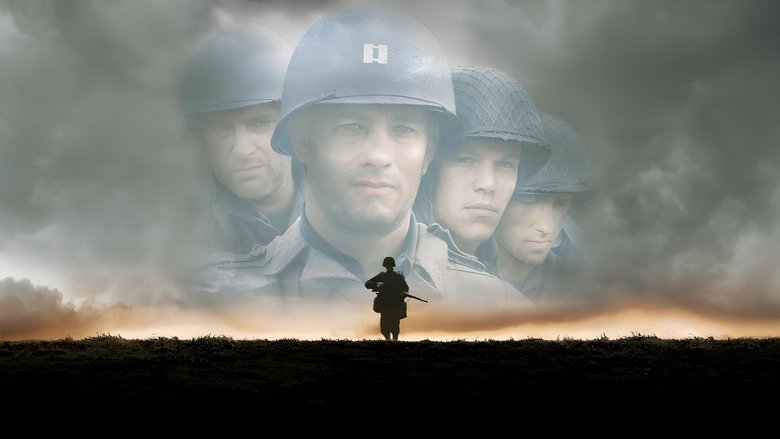
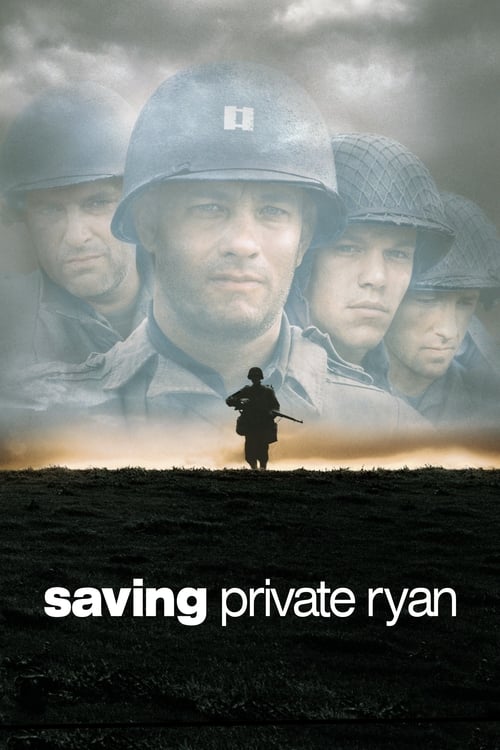
Saving Private Ryan
A visceral and harrowing WWII odyssey, where the chaos of battle is a blood-red canvas for a profound meditation on sacrifice and the worth of a single human life.
Saving Private Ryan

Saving Private Ryan

"The mission is a man."

24 July 1998 United States of America 169 min ⭐ 8.2 (16,554)
Director: Steven Spielberg
Cast: Tom Hanks, Tom Sizemore, Edward Burns, Barry Pepper, Adam Goldberg
Drama War History
The Brutality and Reality of War Sacrifice and the Value of a Single Life The Moral and Psychological Toll of War Camaraderie and Brotherhood
Budget: $70,000,000
Box Office: $481,840,909

Overview

Set during the Invasion of Normandy in World War II, "Saving Private Ryan" begins with the brutal and unflinchingly realistic depiction of the D-Day landing on Omaha Beach on June 6, 1944. Captain John H. Miller (Tom Hanks) of the 2nd Ranger Battalion survives the initial carnage and leads his men to secure a foothold. Shortly after, Miller is given a new, unusual assignment.

Back in Washington D.C., the War Department discovers that three of the four Ryan brothers have been killed in action within a short period. Their mother is set to receive all three telegrams on the same day. To prevent the family from losing its last surviving son, Army Chief of Staff George C. Marshall enacts the "Sole Survivor Policy" and orders a mission to find and bring home Private James Francis Ryan (Matt Damon), a paratrooper with the 101st Airborne Division who is missing in action somewhere in Normandy.

Captain Miller assembles a small, handpicked squad of eight men to venture behind enemy lines to find Ryan. As they journey through the war-torn French countryside, the men grapple with the immense danger and the questionable morality of risking eight lives to save one. The mission tests their loyalties, courage, and understanding of duty, culminating in a climactic battle for a strategically vital bridge.
Core Meaning

The core meaning of "Saving Private Ryan" revolves around the profound question of what a single human life is worth amidst the immense, impersonal slaughter of war. Director Steven Spielberg sought to explore the justification for wartime sacrifices by focusing on a microcosm: a mission where the lives of eight men are weighed against one. The film is a powerful critique of war's senseless brutality, stripping away any romantic notions and presenting it as a chaotic, terrifying, and hellish experience.

Ultimately, the film suggests that while the calculations of war are often cruel and politically motivated, acts of decency, honor, and sacrifice can create profound meaning. Captain Miller's final words to Ryan, "Earn this," encapsulate the film's central message: the survivors of conflict have a moral obligation to live a life worthy of the sacrifices made on their behalf. It is an examination of how humanity and moral choices persist even in the most inhumane of circumstances.

Thematic DNA

The Brutality and Reality of War 35%
Sacrifice and the Value of a Single Life 30%
The Moral and Psychological Toll of War 20%
Camaraderie and Brotherhood 15%

The Brutality and Reality of War

The film is renowned for its unflinching and graphic depiction of combat, particularly the opening D-Day sequence. Spielberg intentionally avoids glamorizing battle, instead presenting it as chaotic, terrifying, and arbitrary. The camera work, with its handheld, ground-level perspective, immerses the audience in the visceral horror of the experience, showing soldiers being killed randomly and gruesomely, thereby highlighting the fragility of life.

Sacrifice and the Value of a Single Life

The central premise—risking eight lives to save one—forces both the characters and the audience to confront the arithmetic of war. The soldiers constantly question the mission's logic, creating internal conflict. The film explores whether saving one man can be a "truly decent thing" in a war filled with death, as Sgt. Horvath suggests. Captain Miller's dying words to Ryan, "Earn this," transform the mission from a military order into a profound moral imperative about honoring sacrifice.

The Moral and Psychological Toll of War

"Saving Private Ryan" delves into the emotional and psychological burdens carried by soldiers. Captain Miller's shaking hand is a recurring symbol of his post-traumatic stress and the cumulative effect of combat. The characters are not just soldiers but individuals—a school teacher, a tough sergeant, a fearful translator—each changed by the war. The film examines how ordinary men grapple with extraordinary circumstances, fear, and the difficult moral choices they are forced to make, such as the decision whether to execute a German prisoner.

Camaraderie and Brotherhood

Despite the internal conflicts, a deep sense of brotherhood develops among the squad members. They share stories, argue, and ultimately die for one another. This bond is contrasted with Private Ryan's own loyalty to his "brothers" in arms, whom he initially refuses to abandon. The film portrays this found family as a crucial survival mechanism in the dehumanizing environment of war, where the men's shared experience forges a connection as strong as blood.

Character Analysis

Captain John H. Miller

Tom Hanks

Archetype: The Reluctant Hero / The Leader
Key Trait: Pragmatic Leadership

Motivation

His primary motivation is duty and a desperate desire to complete his missions successfully enough to earn his ticket home to his wife. He measures his success by how many men he can bring back alive, a goal tragically complicated by the Ryan mission, which forces him to redefine what a successful mission means.

Character Arc

Initially presented as a competent but emotionally distant commander, Miller's journey is one of increasing internal struggle. He is a school teacher forced into the role of a hardened soldier, and the mission to find Ryan forces him to confront the moral cost of his orders. His arc culminates in his final, selfless act, where he embraces the mission's humanistic goal, telling Ryan to "earn" the sacrifice, thus finding a measure of redemption and meaning in the chaos.

Sergeant Mike Horvath

Tom Sizemore

Archetype: The Loyal Second-in-Command
Key Trait: Unwavering Loyalty

Motivation

Horvath's motivation is rooted in his unwavering loyalty to Captain Miller and a deep-seated belief in doing his duty as a soldier. He trusts Miller's judgment implicitly and is dedicated to seeing the mission through, no matter the personal cost.

Character Arc

Horvath is steadfast and loyal to Captain Miller throughout the film. He acts as Miller's confidant and the enforcer of his commands. His arc is less about change and more about reaffirming his belief in Miller and the purpose of their mission. He provides the crucial moral argument for completing the mission, suggesting it might be the one "decent thing" they can do in the war, helping to solidify the squad's resolve.

Private James Francis Ryan

Matt Damon

Archetype: The Everyman / The Objective
Key Trait: Dutiful

Motivation

His initial motivation is loyalty to his fellow soldiers—the "only brothers he has left." After Miller's death, his motivation shifts to fulfilling Miller's final command: to live a good life and prove that the sacrifice was worthwhile.

Character Arc

Ryan begins as a simple objective, a name on a piece of paper. When found, he is not what the squad expects. He is a humble soldier committed to his comrades. His arc involves grappling with the immense weight of being deemed more valuable than other soldiers. He initially refuses to leave his post, but after witnessing the squad's sacrifice, he accepts the burden of survival. The film's frame story shows him as an old man, still measuring his life against the sacrifice made for him.

Corporal Timothy Upham

Jeremy Davies

Archetype: The Innocent / The Conscience
Key Trait: Idealistic Fear

Motivation

Upham is motivated by a belief in the rules of war, order, and morality. He tries to uphold a sense of civilized decency in an uncivilized environment. His journey is a struggle between his ideals and the terrifying reality he is unprepared for.

Character Arc

Upham is a cartographer and translator with no combat experience, representing the naive, intellectual perspective on war. He is thrust into the brutal reality of the front lines. His arc is one of traumatic disillusionment; he struggles to apply the rules of civilized conduct to the barbarity he witnesses. Paralyzed by fear during the final battle, his inaction leads to a comrade's death. He finally acts by shooting the German soldier he had earlier argued to set free, signifying his loss of innocence and transformation by the horrors of war.

Symbols & Motifs

Captain Miller's Shaking Hand

Meaning:

It symbolizes the immense psychological toll and trauma of war that even a strong and respected leader like Miller cannot escape. It represents the hidden fragility and human frailty beneath his stoic, professional exterior, a physical manifestation of his fear and the cumulative stress of command.

Context:

The tremor appears at various moments of high stress throughout the film, often when Miller is alone or in a quiet moment, betraying the calm authority he projects to his men. He tries to hide it, revealing the private burden of leadership and the unseen wounds of war.

The Letters Home

Meaning:

The letters, particularly the one written by the dying Private Caparzo, symbolize the soldiers' connection to the lives they left behind and the human cost of war. They represent the unfulfilled futures and the deep importance of family and memory amidst the chaos. Preserving these letters becomes a sacred duty for the surviving soldiers.

Context:

After Private Caparzo is killed by a sniper, Captain Miller retrieves the bloody letter Caparzo had written to his father. The squad discusses re-copying it to spare his father the sight of the blood, highlighting their efforts to preserve dignity and compassion in the face of death.

The Ruined French Landscape

Meaning:

The shattered towns and churches, like the one where the squad rests in Neuville, symbolize the destructive and desecrating nature of war. These once-sacred or peaceful places have become battlegrounds, reflecting the moral and physical devastation that war inflicts upon civilization itself.

Context:

The squad travels through numerous destroyed villages. They take shelter in a bombed-out church, a powerful image of sanctuary violated by conflict, where they have a rare moment of introspection and reveal personal details about their civilian lives.

Memorable Quotes

Earn this... Earn it.

— Captain John H. Miller

Context:

Spoken in the final moments of the battle for the bridge at Ramelle, as Miller lies mortally wounded. He looks at Ryan, conveying the full gravity of the price paid for his life, a command that haunts Ryan into his old age.

Meaning:

These are Captain Miller's dying words to Private Ryan. They encapsulate the central theme of the film: the immense weight and responsibility that comes with being saved at the cost of others' lives. It transforms Ryan's survival from a matter of luck or military orders into a lifelong moral obligation to live a life worthy of the sacrifice.

I just know that every man I kill, the farther away from home I feel.

— Captain John H. Miller

Context:

Miller says this to Sergeant Horvath in the quiet of a bombed-out church in Neuville. It is a rare moment of vulnerability where he confesses the personal cost of his duty and his fear of how war has irrevocably changed him.

Meaning:

This quote reveals the deep psychological toll the war has taken on Miller. It shows that despite his effectiveness as a soldier, he has not become desensitized to the act of killing. Each life he takes strips away a piece of his former self—the civilian school teacher—making him fear he won't be able to return to his old life.

Tell me I'm a good man.

— James Ryan (as an old man)

Context:

This is said in the film's closing scene, set in the present day at the Normandy American Cemetery. Ryan, overcome with emotion, collapses at Captain Miller's grave and asks his wife for validation that he has lived a life worthy of the men who died saving him.

Meaning:

This line, spoken by an elderly Ryan at Miller's grave, shows that Miller's final words have defined his entire life. He has spent decades trying to "earn" the sacrifice made for him. He seeks assurance from his wife that he has succeeded, highlighting the enduring power of guilt, gratitude, and the lifelong burden of survival.

Philosophical Questions

What is the value of one human life in the context of mass conflict?

This is the central question of the film. The entire plot revolves around the military's decision to risk the lives of an eight-man squad to save a single soldier. The soldiers themselves debate this, with Private Reiben calling the mission a "PR stunt." The film explores this through their sacrifices; men die on the way to find Ryan, forcing the characters and the audience to constantly weigh the cost. The film doesn't provide an easy answer but suggests that the meaning is created through the act of sacrifice itself and the responsibility it places on the survivor to live a worthy life.

How does war transform an individual's identity and morality?

The film deeply explores how war changes people. Captain Miller, a quiet schoolteacher, has become a hardened killer who feels increasingly distant from his former self with every life he takes. Corporal Upham, an idealistic intellectual, is confronted with a reality that his moral code cannot process, leading to paralysis and, ultimately, a violent act that signals the death of his innocence. The film suggests that no one can pass through the crucible of war unchanged and that survival often requires a painful compromise of one's pre-war self.

Is there a place for civilized rules and mercy in the brutality of war?

This question is most vividly explored in the scene involving the German prisoner nicknamed "Steamboat Willie." Upham argues for mercy based on the rules of war, while the other soldiers want immediate revenge for the death of their medic. Miller makes the controversial decision to let the soldier go. The tragic irony comes when the same German soldier reappears in the final battle and kills Captain Miller. This plot point raises difficult questions about whether mercy is a fatal liability in combat or a necessary tenet of humanity that must be upheld, regardless of the risk.

Alternative Interpretations

While largely viewed as a powerful anti-war film due to its horrific depiction of combat, "Saving Private Ryan" has also been interpreted from different perspectives. Some critics argue that despite its brutal imagery, the film ultimately functions as a piece of patriotic American myth-making. The framing device of the elderly Ryan at the cemetery, the American flags, and the focus on American heroism can be seen as celebrating the cause and the soldiers who fought for it, potentially overshadowing the anti-war message.

Another interpretation focuses on the central mission's morality. The film presents the squad's questioning of the mission as a central conflict. One reading is that the mission is an allegory for the moral absurdity of war itself—where political and public relations goals can lead to illogical and deadly decisions on the ground. A counter-argument is that the film ultimately affirms the mission's value, suggesting that preserving a symbol of hope and family (Ryan) is a worthy goal, a "decent thing" that reaffirms humanity amidst the slaughter.

Finally, the character of Corporal Upham invites various readings. Some see him as a representation of civilian morality's failure in the face of combat's brutality. Others view his final act—shooting the German soldier he once saved—not as a fall from grace, but as a necessary and brutal education on the true nature of survival in war, representing a tragic loss of innocence.

Cultural Impact

"Saving Private Ryan" had a profound and lasting impact on cinema and culture. Released in 1998, it redefined the war film genre with its unprecedented realism and visceral intensity. The opening 27-minute depiction of the Omaha Beach landing is widely considered a landmark in filmmaking, influencing countless action and war films that followed by popularizing techniques like handheld cameras, desaturated colors, and narrow shutter angles to create a chaotic, documentary-like feel.

The film was a massive critical and commercial success, becoming the second-highest-grossing film of 1998 and winning five Academy Awards, including Best Director for Steven Spielberg. Critics universally praised its technical achievements and searingly realistic portrayal of combat. More importantly, it was lauded by veterans, many of whom stated it was the most accurate depiction of combat they had ever seen, though some found it so realistic it triggered their PTSD.

Beyond its cinematic influence, "Saving Private Ryan" is credited with revitalizing interest in World War II among the American public. This renewed fascination led to a surge in WWII-related media, including the HBO miniseries "Band of Brothers" (produced by Spielberg and Hanks), numerous documentaries, and a new generation of video games. The film also brought the story of the Niland brothers, who partly inspired the narrative, to widespread attention, and it prompted a national conversation about the sacrifices of the "Greatest Generation."

Audience Reception

Audiences reacted to "Saving Private Ryan" with overwhelming praise, frequently citing its powerful emotional impact and groundbreaking realism. The film's opening D-Day sequence was a particular point of discussion, with many viewers finding it to be a harrowing, immersive, and unforgettable cinematic experience. For many, it was the first time they had seen such an unflinching and non-glorified depiction of combat, which fostered a deeper appreciation for the sacrifices made by WWII veterans.

The main points of praise focused on the stunning cinematography, the intense action sequences, and Tom Hanks's compelling performance as Captain Miller. Viewers found the story's central moral dilemma—risking many to save one—to be thought-provoking and emotionally resonant.

Criticism, though less common, tended to focus on the film's sentimental framing device, with the scenes of the elderly Ryan in the present-day cemetery seen by some as clichéd and overly patriotic, slightly undermining the raw, anti-war message of the combat scenes. A few critics also felt the characters, apart from Miller, were somewhat stereotypical war movie archetypes. Despite these minor criticisms, the overall verdict from audiences was that "Saving Private Ryan" is a masterpiece and one of the greatest war films ever made.

Interesting Facts

  • The film's plot is loosely inspired by the true story of the Niland brothers, four American siblings who served in WWII. After it was believed three of the four had been killed, the fourth, Frederick "Fritz" Niland, was located and sent back to the United States. However, one of the brothers thought to be dead, Edward, was later found alive in a Japanese POW camp.
  • To prepare for their roles, the main actors, except for Matt Damon, endured a grueling six-day military boot camp led by retired Marine Captain Dale Dye. The experience was so miserable that the cast voted to quit, but Tom Hanks convinced them to stay.
  • Matt Damon was intentionally excluded from the boot camp. Director Steven Spielberg wanted the other actors to feel a genuine resentment towards Damon's character, Private Ryan, mirroring their characters' feelings about the mission.
  • The Omaha Beach landing sequence cost $12 million to film, took four weeks to shoot, and involved up to 1,500 extras, many of whom were members of the Irish Army Reserve.
  • Two of the landing craft used in the D-Day sequence were actual WWII vessels.
  • The film is credited with renewing public interest in World War II, leading to the creation of other films, TV series like "Band of Brothers," and video games.
  • The Department of Veterans Affairs set up a special toll-free hotline for veterans who might be affected by the film's realistic and intense combat scenes, as many found them triggering.
  • There is very little musical score by John Williams during the combat sequences. Spielberg wanted the sounds of battle to provide the 'score' for those scenes to heighten the sense of realism.
  • The two German soldiers who are shot after trying to surrender are speaking Czech, saying, "Please don't shoot me, I am not German, I am Czech, I didn't kill anyone." This reflects the historical reality of Germany conscripting soldiers from occupied territories.

⚠️ Spoiler Analysis

Click to reveal detailed analysis with spoilers

Frequently Asked Questions

Explore More About This Movie

Dive deeper into specific aspects of the movie with our detailed analysis pages

Comments (0)

Leave a comment

No comments yet. Be the first to share your thoughts!