Skip to content
Scary Movie
A chaotic, nostalgic horror-parody overflowing with outrageous humor, acting as a cinematic wrecking ball swinging through the fragile tropes of modern 'elevated horror' and legacy sequels.
Scary Movie

Scary Movie

"Every line will be crossed."

03 June 2026 United States of America 96 min 5.4 (440)

Director: Michael Tiddes

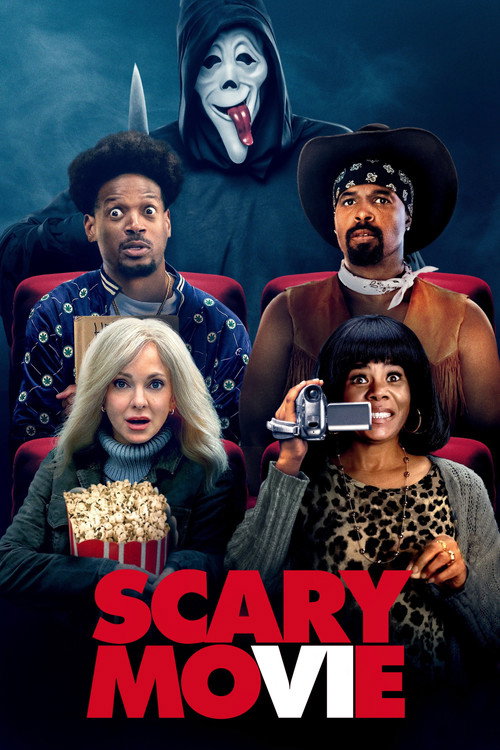
Cast: Marlon Wayans, Shawn Wayans, Anna Faris, Regina Hall, Damon Wayans Jr.

Comedy Horror The Illusion of Elevated Horror Rejection of the Requel Nostalgia vs. Modernity The Commodification of Trauma
Budget: $30,000,000
Box Office: $224,070,376

Overview

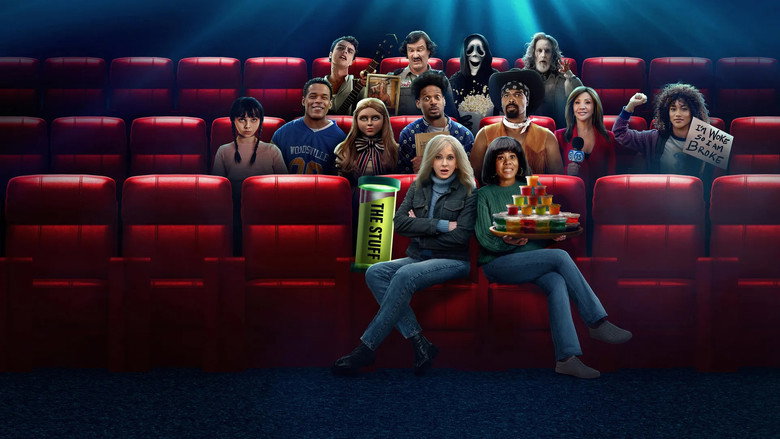
In this long-awaited sixth installment of the legendary parody franchise, Scary Movie (2026) marks the triumphant, chaotic return of the Wayans family. Twenty-six years after surviving their initial encounter with a suspiciously familiar masked killer, Cindy Campbell, Brenda Meeks, Ray Wilkins, and Shorty are forced to reunite when a new Ghostface begins targeting them. As they navigate a world where horror has supposedly become more elevated and self-serious, the core four must survive not only the killer but an onslaught of modern cinematic tropes.

Directed by Michael Tiddes, the film takes aim at the contemporary trend of requels (legacy sequels) that dominate the box office. Instead of passing the torch to a younger generation of victims, the veteran survivors refuse to go quietly into the night. It delivers a relentless barrage of pop culture references, sight gags, and meta-humor that skewers everything from Scream (2022) to Smile, bringing the raunchy, unapologetic spirit of the early 2000s crashing into the present day.
Core Meaning

At its core, Scary Movie (2026) is a biting meta-commentary on the Hollywood machine's obsession with legacy sequels and the recycling of intellectual property. By placing the original, aging characters in the crosshairs of a new generation's requel, the Wayans brothers critique an industry that constantly attempts to replace beloved icons with newer, sanitized versions of themselves. The film's ultimate message is a rebellious refusal to be overwritten; it asserts that the original creators and characters are irreplaceable, weaponizing the very structure of the modern franchise reboot to violently and hilariously reclaim their own legacy.

Thematic DNA

The Illusion of Elevated Horror 30%
Rejection of the Requel 40%
Nostalgia vs. Modernity 20%
The Commodification of Trauma 10%

The Illusion of Elevated Horror

The film aggressively mocks the pretension of modern 'elevated' horror, suggesting that behind the complex trauma narratives and atmospheric lighting, it is all just the same old blood and guts. This is demonstrated through the characters' hilarious dismissal of high-brow genre films in favor of crude survival tactics.

Rejection of the Requel

A central theme is the rejection of the torch-passing trope. The legacy characters—Cindy, Brenda, Ray, and Shorty—actively resist the narrative expectation that they must step aside or die in order for the new, younger cast to take over the franchise.

Nostalgia vs. Modernity

The film explores the clash between early-2000s raunch culture and 2020s social sensitivities. It actively attempts to mock cancel culture by thrusting unabashedly offensive and outdated character archetypes into hyper-modern, socially conscious scenarios.

The Commodification of Trauma

Mocking films like Halloween (2018) and Scream (2022), the movie pokes fun at how final girls' trauma is monetized by Hollywood. Cindy's exaggerated isolation and heavily booby-trapped house parody the modern obsession with damaged legacy survivors.

Character Analysis

Cindy Campbell

Anna Faris

Archetype: The Eternal Final Girl Key Trait: Oblivious resilience

Motivation

To survive the requel and prove that the original final girls are entirely untouchable.

Character Arc

Cindy starts as an exaggerated, traumatized recluse and evolves into a ruthless protector of her own franchise, completely refusing to yield screen time to the younger generation.

Brenda Meeks

Regina Hall

Archetype: The Loudmouthed Sidekick Key Trait: Unapologetic bluntness

Motivation

To outlast the masked killer and deliver the best punchlines.

Character Arc

Brenda remains remarkably unchanged from her early-2000s persona, acting as the anchor to the franchise's comedic roots while violently rejecting modern horror sensibilities.

Shorty Meeks

Marlon Wayans

Archetype: The Stoner Fool Key Trait: Perpetual intoxication

Motivation

Finding his next high while incidentally surviving a massacre.

Character Arc

Shorty returns to his classic stoner roots, navigating the updated, high-tech world of 2026 with the exact same brain-fried logic he utilized in the year 2000.

Ray Wilkins

Shawn Wayans

Archetype: The Closeted Jock Key Trait: Hilarious denial

Motivation

Maintaining his fragile facade while fighting for survival.

Character Arc

Ray continues his long-running gag of being overtly flamboyant while insisting he is straight, hilariously failing to adapt to the more open social climate of the 2020s.

Symbols & Motifs

Ghostface's Mask

Meaning:

It symbolizes the inescapable, repetitive nature of Hollywood reboots. No matter how many times the killer is defeated or unmasked, the studio will simply put the mask on someone else to keep the franchise alive.

Context:

Used throughout as a joke about how irrelevant the actual killer's identity is, treating the mask itself as a corporate uniform rather than a terrifying visage.

Cindy's Booby-Trapped House

Meaning:

It symbolizes the exaggerated traumatized survivor trope made popular by Laurie Strode in the recent Halloween requel trilogy.

Context:

Cindy's excessive paranoia and heavily fortified isolation are played for laughs, highlighting the absurdity of how modern horror defines its legacy characters purely through their past suffering.

The Golden Globe

Meaning:

It symbolizes the pretension of prestige acting in genre films, skewering the line between high art and slasher trash.

Context:

Used in the opening scene where Teyana Taylor bludgeons Ghostface with the award after being mocked for not winning an Oscar.

Memorable Quotes

I know who goes to a Wayans brother movie.
— Teyana Taylor

Context

Said right before she violently fights back against Ghostface in the opening scene of the film.

Meaning

A self-aware nod to the audience, acknowledging the specific, unapologetic brand of raunchy comedy the film delivers.

I'm like the wind, baby.
— Ghostface / Doofy

Context

Spoken by the masked killer, serving as an auditory easter egg confirming that the original mastermind Doofy is providing the voice.

Meaning

A deep-cut inside joke referencing actor Dave Sheridan's role in the 2002 comedy Frank McKlusky, C.I.

Wassssup!
— Shorty Meeks

Context

Used as a recurring gag by Shorty, highlighting his inability to move past the year 2000.

Meaning

A nostalgic callback to the inescapable pop culture catchphrase that defined the original Scary Movie.

Philosophical Questions

To whom does a legacy truly belong: the original creators, the modern audience, or the corporate studio?

The film forces this question by having the original Wayans creators hijack the requel format. By having the legacy characters literally murder their replacements, it violently asserts that creators and original stars have a fundamental ownership over their art that supersedes studio attempts to reboot it for newer demographics.

Is nostalgia inherently destructive?

Through its ending, the film suggests that the modern obsession with nostalgia and legacy sequels is toxic. By burning down the house to keep their franchise alive, the original characters demonstrate that clinging to the past leaves no room for the future to grow.

Alternative Interpretations

The film's chaotic and violent ending, where the legacy characters murder the new generation of victims, has sparked two distinct interpretations among critics and audiences.

  • The Anti-Woke Manifesto: Some viewers read the film as a straightforward rebellion against modern progressive culture. Because the new generation of characters represents 2020s sensibilities, the original crew's violent rejection of them is seen as the Wayans brothers explicitly canceling cancel culture and refusing to let their raunchy comedic legacy be sanitized by modern standards.
  • The Corporate Satire: A more nuanced interpretation views the ending as a dark satire of Hollywood capitalism and IP hoarding. In this reading, Cindy and Brenda aren't heroes; they represent the toxic, inescapable grip of nostalgia. By slaughtering the new cast, they personify the greed of legacy actors and studios who refuse to let franchises die or evolve naturally. The film thus critiques an industry so bankrupt of original ideas that it continuously resurrects aging stars.

Cultural Impact

Scary Movie (2026) arrived at a fascinating crossroads in cinematic history, marking the end of a decade-long drought for theatrical spoof comedies. The mid-2010s to early 2020s saw the near-total death of the mid-budget parody, replaced by self-serious elevated horror and IP-driven requels. By reuniting the Wayans family 25 years after their departure from the franchise they created, the film served as a cultural lightning rod. It directly challenged modern Hollywood's reliance on legacy sequels—films like Scream (2022) and Halloween (2018)—where original actors are brought back merely to legitimize a new, younger cast.

Critically, the film was deeply polarizing. Reviewers largely panned its scattershot narrative and reliance on dated, early-2000s humor, resulting in low aggregate scores. Critics argued that spoofing the modern Scream films—which are already meta-commentaries—was a Russian nesting doll of comedy that yielded diminishing returns. However, it achieved significant cultural resonance among audiences nostalgic for unapologetic, R-rated comedies. Its brazen refusal to conform to contemporary social sensitivities and its shocking climax sparked intense online discourse about the nature of reboots, cancel culture, and the ownership of intellectual property.

Audience Reception

Audience reception for Scary Movie (2026) was highly divided, reflecting a stark generational and cultural split. Long-time fans of the Wayans brothers and early 2000s comedies praised the film for its nostalgic reunion of the Core Four (Anna Faris, Regina Hall, Marlon Wayans, and Shawn Wayans). Many viewers expressed immense satisfaction at seeing Faris and Hall fall effortlessly back into their iconic roles, trading punchlines with the same chaotic energy they possessed 25 years prior. The film was celebrated by this demographic as a much-needed return to form for the dead spoof genre.

Conversely, the film faced heavy criticism for its reliance on outdated humor and a scattershot structure. Many audience members felt the jokes were lazy, relying too heavily on simply pointing at recent films like Smile, M3GAN, or The Substance without actually subverting them. Furthermore, controversial moments and heavy-handed jabs at cancel culture were seen by younger audiences as out-of-touch and mean-spirited. Ultimately, while it succeeded by tapping into an underserved market craving raunchy comedy, it alienated viewers looking for sharp, innovative satire.

Interesting Facts

  • The film marks the first time Marlon, Shawn, and Keenen Ivory Wayans have been involved in the Scary Movie franchise since their bitter departure after Scary Movie 2 in 2001.
  • The ending of the film was changed during additional photography; the creators realized that having the legacy characters murder the new generation and burn down the house was a more impactful meta-joke than the original scripted conclusion.
  • Actor Dave Sheridan, who played the fan-favorite Officer Doofy in the first film, returns in a vocal capacity, providing the voice of Ghostface with an imitation of the iconic Roger L. Jackson voice.
  • The opening scene features Teyana Taylor in a parody of the Scream franchise's iconic opening kills, where she successfully fights off Ghostface by beating him with her actual Golden Globe award.
  • Chris Elliott returns in a mid-credits scene as his character from Scary Movie 2, now affectionately nicknamed 'Shorthand,' in an extended spoof of the 2024 horror film Longlegs.

Easter Eggs

Teyana Taylor's Golden Globe

During the opening parody of Scream 6, Teyana Taylor bludgeons Ghostface with a Golden Globe when he mocks her for not winning an Oscar. This nods to the ongoing debate about prestige awards ignoring horror films.

The 'Brosferatu' Mid-Credits Scene

A direct, extended parody of Robert Eggers' Nosferatu, hidden in the mid-credits to mock the intense marketing and 'elevated' nature of modern art-house horror.

Doofy's vocal return

Dave Sheridan, who famously played Officer Doofy (the mastermind in the original Scary Movie), returns to voice Ghostface, delivering an inside joke by uttering a line from his 2002 comedy Frank McKlusky, C.I.

Cindy's booby-trapped house

Directly mimics Laurie Strode's fortified compound from the Halloween (2018) reboot, complete with Cindy's exaggerated paranoia to mock the 'traumatized legacy character' trope.

⚠️ Spoiler Analysis

Click to reveal detailed analysis with spoilers

Frequently Asked Questions

Explore More About This Movie

Dive deeper into specific aspects of the movie with our detailed analysis pages

Comments (0)

Leave a comment

No comments yet. Be the first to share your thoughts!

Similar Movies