
Skip to content
Shameless
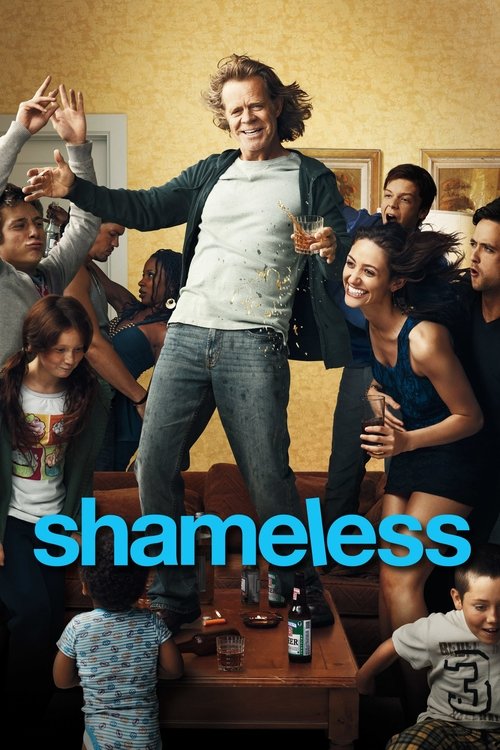
Set against a raw, gritty urban landscape, this comedic family drama burns with fierce affection and desperate hope. It operates like a flickering neon sign buzzing over a fractured concrete house, casting warmth and shadows over those who survive inside.
Shameless

Shameless

"Living crappily ever after."

09 January 2011 — 11 April 2021 United States of America 11 season 134 episode Ended 8.2 (3,424)

Cast: William H. Macy, Jeremy Allen White, Ethan Cutkosky, Shanola Hampton, Steve Howey

Drama Comedy Poverty, Class, and Gentrification Addiction and Generational Trauma Familial Loyalty vs. Individual Autonomy Identity, Sexuality, and Mental Health Systemic Inequality and Institutional Failure

Overview

Developed by John Wells and based on Paul Abbott’s acclaimed British series, Shameless follows the sprawling Gallagher family in the working-class South Side of Chicago. At the center of the household is Frank Gallagher, an unrepentantly negligent, substance-abusing patriarch who spends his days scheming, drinking, and abdicating his paternal responsibilities. His six children—Fiona, Lip, Ian, Debbie, Carl, and Liam—are forced to raise themselves, relying on collective hustle, street smarts, and unwavering loyalty to keep food on the table and a roof over their heads.

Across eleven seasons, the narrative charts the turbulent transitions of the Gallagher children from vulnerable youths into adulthood. Rather than following a singular procedural arc, the series operates as an epic chronicle of socio-economic survival, exploring how generational trauma and poverty shape each sibling's choices. Alongside their loyal, equally eccentric neighbors, Kevin Ball and Veronica Fisher, the Gallaghers fight against systemic odds, romantic entanglements, legal troubles, and mental health challenges.

Through a volatile blend of raucous black humor and deeply poignant drama, Shameless explores the messy reality of lower-class American life. The overarching story arc traces the slow, painful process of breaking—or succumbing to—the cycles of addiction and neglect that defined their upbringing. As the world changes around them through gentrification and economic pressure, the Gallaghers demonstrate that while blood can be a burden, radical familial solidarity is their ultimate armor.


Core Meaning

The foundational premise of Shameless is that structural poverty and broken households do not negate human dignity, love, or resilience. Through eleven seasons, the creators argue that traditional notions of American morality and the "American Dream" are often luxuries reserved for the privileged. For those living on the margins—the "no collar" working poor—survival requires a reinvented code of ethics where traditional rules are bent or broken out of necessity.

Furthermore, the show explores the lingering weight of generational trauma. Frank Gallagher serves as a cautionary monument to self-absorption and unhealed wounds, whereas his children embody the terrifying choice between repeating parental failures or carving out difficult, independent paths. Ultimately, Shameless asserts that family is defined not by ideal behavior or societal respectability, but by showing up when everything else falls apart.

Thematic DNA

Poverty, Class, and Gentrification 30%
Addiction and Generational Trauma 25%
Familial Loyalty vs. Individual Autonomy 20%
Identity, Sexuality, and Mental Health 15%
Systemic Inequality and Institutional Failure 10%

Poverty, Class, and Gentrification

Poverty is treated as an active antagonist throughout the show. In early seasons, it manifests as immediate crises: unpaid utility bills, food insecurity, and legal fees. As the show progresses, the focus expands to systemic barriers, corporate exploitation, and the gentrification of the South Side, showing how economic shifts displace working-class communities.

Addiction and Generational Trauma

Addiction is depicted without sensationalism or easy solutions. Frank’s chronic alcoholism damages everyone around him, while Lip battles his own burgeoning alcoholism in later seasons, mirroring his father. The series highlights how trauma travels down bloodlines and how breaking addiction requires grueling, conscious effort.

Familial Loyalty vs. Individual Autonomy

The Gallagher ethos demands total sacrifice for the unit. Early on, Fiona sacrifices her youth and aspirations to raise her siblings. However, as the children grow, tension arises between remaining bound to the family home and pursuing personal growth, culminating in Fiona's difficult decision to leave Chicago behind.

Identity, Sexuality, and Mental Health

Ian Gallagher’s journey with Bipolar Disorder—inherited from his mother, Monica—and his relationship with Mickey Milkovich normalizes complex discussions surrounding mental illness and LGBTQ+ identity within harsh, hyper-masculine, working-class environments.

Systemic Inequality and Institutional Failure

The series highlights the inadequacy of social safety nets, healthcare systems, child protective services, and the criminal justice system, showing how marginalized individuals must construct their own informal networks of care to survive.

Character Analysis

Frank Gallagher

William H. Macy

Archetype: The Antihero / The Trickster Parasite Key Trait: Unyielding narcissism masked by charismatic pseudo-intellectualism

Motivation

Avoiding responsibility, obtaining alcohol/drugs, and preserving his uninhibited freedom.

Character Arc

Frank remains stubbornly immune to traditional redemption. From Season 1 to Season 11, he remains a chaotic philosopher-grifter who uses intellect to exploit social welfare and his loved ones. However, his physical deterioration—from liver failure in Season 4 to alcoholic dementia and COVID-19 in Season 11—shows the mortal cost of his lifestyle.

Fiona Gallagher

Emmy Rossum

Archetype: The Overburdened Matriarch / Sacrificial Hero Key Trait: Fierce, protective resilience paired with a tendency toward self-sabotage

Motivation

Protecting her family at all costs, evolving into a desire for personal self-actualization.

Character Arc

Begins as a fierce 21-year-old surrogate mother who sacrifices her youth to keep her siblings out of foster care. She evolves from working minimum-wage jobs into an ambitious property manager and entrepreneur. After spiraling through self-sabotage, addiction, and bad romantic choices in middle seasons, she secures financial independence and departs Chicago in Season 9 to find her own identity.

All 5 characters and cast

Symbols & Motifs

The Gallagher Squirrel Fund Jar

Meaning:

Symbolizes collective survival and communal accountability.

Context:

Placed in the kitchen, every penny put in represents the family’s shared effort to keep the lights on and maintain basic living utilities.

The Washing Machine / Laundry

Meaning:

A recurring domestic motif representing the never-ending, grueling labor required to keep a broken household running, while also serving as a metaphor for "washing away" daily dirt and trauma.

Context:

Used continuously throughout domestic scenes in the Gallagher household to emphasize ongoing burden and labor.

The Backyard and Fire Pit

Meaning:

Serves as a sanctuary for family meetings, wild parties, and cathartic bonfires. Burning items in the yard represents letting go of past burdens or celebrating rare victories.

Context:

Located behind 2119 S. Hoyne Ave, acting as the setting for crucial family gatherings and symbolic burnings throughout the series.

The South Side Chicago Winter/Summer Dynamics

Meaning:

Harsh, freezing winters symbolize physical isolation, vulnerability, and bleak reality, whereas hot Chicago summers bring street hustles, chaotic freedom, and heightened passion.

Context:

Used as seasonal narrative backdrops framing the fluctuating emotional state and economic struggles of the characters.

Frank’s Bar Stool at The Alibi Room

Meaning:

Represents Frank's emotional stagnation, refusal to change, and prioritization of alcohol over his children.

Context:

Frank's permanent designated spot inside the local neighborhood dive bar.

Memorable Quotes

Nobody's saying our neighborhood is the Garden of Eden... but it's been a good home to us, to me and my kids, who I'm proud of, 'cause every single one of them reminds me a little bit of me.
— Frank Gallagher

Context

Season 1, Episode 1 ("Pilot"), Frank’s opening voiceover monologuing around a bonfire.

Meaning

Sets the entire tone of the series in the pilot, establishing Frank’s narcissistic perspective and introducing the family.

You were never fucking here! You left! I was nine! Nine and taking care of you... I was in fourth grade dragging your ass, passed out, in from the yard so you wouldn't freeze to death!
— Fiona Gallagher

Context

Season 2, Episode 11 ("Just Like the Pilgrims Intended"), Fiona confronting Frank after Monica’s suicide attempt.

Meaning

A defining, emotional confrontation highlighting Fiona’s sacrificed childhood and Frank’s profound neglect.

All 6 quotes

Episode Highlights

Pilot

S1E1

Establishes the world, tone, character dynamics, and economic desperation of the Gallagher household.

Significance:

Sets up the primary relationships and foundational themes of the series.

Just Like the Pilgrims Intended

S2E11

During Thanksgiving dinner, Monica attempts suicide in the kitchen, shattering the illusion of family stability and exposing deep trauma.

Significance:

Marks a dramatic turning point in tone for the series.

Survival of the Fittest

S3E12

Fiona legally becomes the guardian of her younger siblings, while Frank faces severe end-stage liver failure.

Significance:

Permanently shifts the legal and emotional hierarchy of the family.

Iron City

S4E6

Fiona is arrested after toddler Liam accidentally ingests her cocaine.

Significance:

Marks the darkest point in Fiona’s character arc, breaking her heroic image and forcing Lip to step up as head of the family.

Emily

S4E11

Frank mistakes a dying young girl in the hospital for Fiona and apologizes for his failures as a father; Mickey publicly comes out at the Alibi.

Significance:

Widely regarded as one of the finest hours of television.

Lazarus

S4E12

Frank recovers from his liver transplant, walks out onto a frozen Lake Michigan with alcohol, and screams at God.

Significance:

Asserts Frank's unyielding, toxic survival despite near-death experiences.

Crazy Love

S5E6

Ian experiences a severe manic episode, kidnaps Mickey’s baby, and is ultimately committed to a psychiatric ward.

Significance:

Shifts the series' focus toward mental health management.

Requiem for a Slut

S7E12

Following Monica's death, the family gathers for her funeral, featuring Fiona putting gold in Monica's coffin while standing firm against Frank.

Significance:

Originally envisioned as a potential series finale, representing a major cathartic milestone for the family.

Found

S9E14

Emmy Rossum’s final episode. Fiona leaves $50,000 for the family and quietly boards a plane out of Chicago.

Significance:

Brings Fiona's 9-season journey full circle as she seeks her own path.

Father Frank, Full of Grace

S11E12

The series finale. Frank dies alone in a hospital from COVID-19 and alcoholic dementia while floating above Chicago, while his children celebrate Ian and Mickey’s anniversary.

Significance:

Concludes the 11-season chronicle of the Gallagher family.

Philosophical Questions

Is true altruism possible within extreme poverty, or is survival inherently selfish?

The show explores whether moral purity is a luxury reserved for those whose basic needs are met, showing characters constantly weighing ethical choices against basic survival.

Can an individual truly transcend their upbringing without abandoning their identity?

Through Lip and Fiona, the series asks whether escaping class background requires cutting ties with one's roots or if socio-economic mobility creates permanent alienation.

What defines parenthood—biological connection or active presence?

Frank’s biological status as a father is contrasted with Fiona’s active parenting role, questioning traditional definitions of family structure.

Is addiction an illness requiring compassion or a series of personal choices requiring accountability?

The narrative continually examines society's stance on addiction through Frank's refusal to recover versus Lip's grueling journey toward sobriety.

Alternative Interpretations

Frank Gallagher as a Tragic Philosophical Hero: Some critics and fans interpret Frank not merely as a deadbeat dad, but as a deliberate anti-capitalist philosopher who actively rejects societal productivity, mortgage debt, and bourgeois morality. His monologues can be read as a radical critique of the American Dream.

Full ending explanation

Cultural Impact

Debuting in 2011 in the aftermath of the 2008 Great Recession, Shameless reflected a distinct cultural moment when millions of working-class American families faced severe economic distress, foreclosures, and stagnant wages. Unlike glossier network shows, Shameless offered an unfiltered, empathetic look at "no collar" poverty, addiction, and public assistance.

The show influenced television by demonstrating that premium cable audiences would embrace unapologetically flawed, low-income characters without softening their edges. Its portrayal of Ian and Mickey ("Gallavich") became a landmark in LGBTQ+ media, earning widespread praise for representing a gay working-class relationship grounded in street grit rather than polished suburban tropes.

Critical reception evolved over its run: early seasons (Seasons 1–4) received critical acclaim for balancing dark comedy with raw, tragic drama. Middle seasons retained strong viewership, while later seasons (Seasons 9–11) faced criticism for leaning more heavily into topical sitcom humor, though the series maintained a devoted global fanbase through streaming platforms like Netflix.

Audience Reception

Across its 11-season run, Shameless received widely evolving critical and audience reactions.

  • Seasons 1–4 (The Golden Era): Highly praised by critics (Rotten Tomatoes scores ranging from 85% to 100%) and audiences alike. Praised for dark humor, gritty realism, and intense dramatic performances, particularly in Season 4's prison and addiction storylines.
  • Seasons 5–7 (Peak Emotional Weight): Acclaimed for deep character work, including Ian’s bipolar journey and Monica’s death. Viewers considered "Requiem for a Slut" a high-water mark for emotional storytelling.
  • Seasons 8–11 (Late-Era Decline & Transition): Received mixed reviews. Following Emmy Rossum's exit in Season 9, critics noted a shift toward lighter, episodic sitcom satire and political commentary, losing some of the earlier emotional stakes.

Overall Verdict: Despite late-season fatigue, the series remains widely regarded as a groundbreaking landmark in American premium cable television, praised for its fearless portrayal of working-class survival and character development.

Interesting Facts

  • Strict "No Scripts on Set" Rule: Showrunner John Wells strictly banned actors from bringing script pages or sides to the set. Everyone—including day players and guest stars—was expected to know all lines perfectly before arriving, creating a theater-like discipline.
  • Real Chicago Filming: While interior scenes were shot on soundstages in Warner Bros. Studios in Burbank, California, the production traveled to Chicago multiple times per year for two-week stretches to shoot exterior scenes on location, ensuring authentic weather and architectural grit.
  • Justin Chatwin’s Cut Death Scene: At the end of Season 3, Jimmy/Steve was intended to be killed on a drug cartel yacht. They even constructed a prosthetic head of Chatwin for a gruesome death shot. However, showrunner John Wells decided to cut the death to keep the character's fate open, eventually bringing him back for Season 5.
  • Emmy Rossum's Equal Pay Fight: In 2016, prior to Season 8, Emmy Rossum made headlines by demanding equal pay with co-star William H. Macy, plus back pay for previous seasons where she was paid less despite carrying equal narrative weight. Macy vocally supported her, and production was halted until her demands were met.
  • Autobiographical Origins: UK creator Paul Abbott based the original concept on his own childhood growing up in poverty in Burnley, England, where his mother left when he was nine and his father abandoned the family, leaving the eldest sister to raise eight children.

Easter Eggs

The "Previous On Shameless" Cold Opens

The fourth-wall-breaking cold opens, where characters angrily berate the viewer for missing last week's episode, were directly inspired by interactive theater traditions, reinforcing the irreverent relationship between the show and its audience.

Real Address Location

The real house used for the Gallagher home exterior is located at 2119 S. Hoyne Ave in Chicago's Pilsen neighborhood. The actual homeowners allowed fans to visit and leave small donations on the porch for years.

The High Strung Opening Theme

The iconic theme song "The Luck You Got" is by the Detroit indie rock band The High Strung. The bathroom stall sequence featured in the opening credits remained virtually unchanged across all 11 seasons, keeping young versions of the cast in the intro long after they had grown up.

Patsy’s Pies Real Inspiration

The diner where Fiona works and eventually manages, Patsy’s Pies, was based on a real-life South Side Chicago diner called "Patsy’s" that John Wells visited during initial location scouting.

Cameo by Creator John Wells

John Wells makes subtle uncredited cameos in crowd scenes during major event episodes, such as wedding and funeral gatherings in later seasons.

Frequently Asked Questions

Explore More About This Movie

Dive deeper into specific aspects of the movie with our detailed analysis pages

Comments (0)

Leave a comment

No comments yet. Be the first to share your thoughts!

Similar Movies