Skip to content
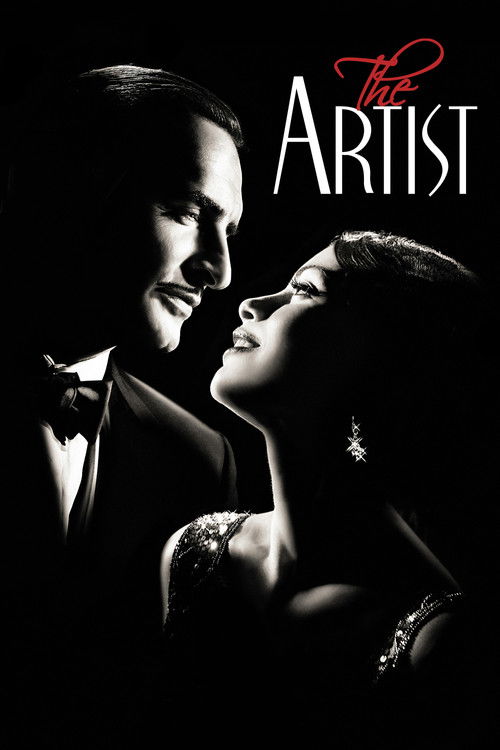
The Artist
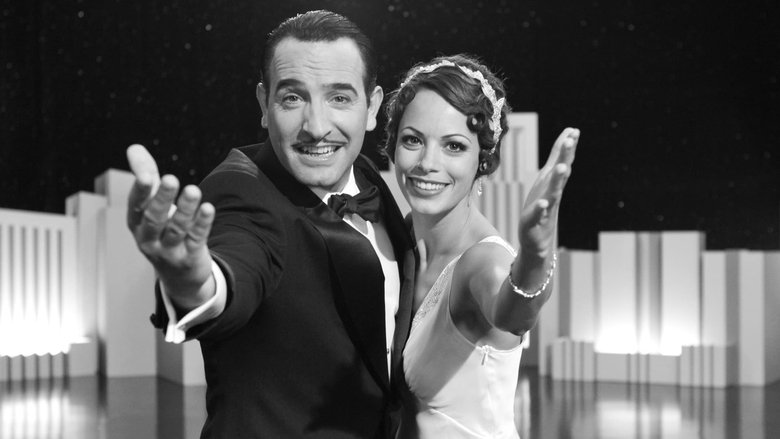
A nostalgic romantic comedy-drama wrapped in monochrome elegance, radiating melancholic yearning and exuberant joy as silent shadows dance across an incandescent screen to escape the crushing march of time.
The Artist

The Artist

"A breath of fresh vintage air."

12 October 2011 Belgium 100 min 7.4 (3,602)

Director: Michel Hazanavicius

Cast: Jean Dujardin, Bérénice Bejo, John Goodman, James Cromwell, Penelope Ann Miller

Drama Comedy Romance Technological Progress vs. Human Resistance Ego, Pride, and the Masks of Celebrity Empathy, Devotion, and Reversal of Roles The Power of Physicality and Visual Storytelling
Budget: $15,000,000
Box Office: $133,432,856

Overview

Set against the glittering backdrop of Hollywood between 1927 and 1932, The Artist chronicles the tumultuous crossroads of cinematic history when silent pictures gave way to "talkies". George Valentin is a dashing, top-tier silent film superstar at Kinograph Studios, revered by adoring fans and supported by his devoted Jack Russell terrier and faithful chauffeur. At the premiere of his latest swashbuckling triumph, Valentin serendipitously bumps into Peppy Miller, a spunky and vivacious young admirer whose photograph with the star thrusts her into the studio spotlight.

Sensing her natural charisma, Valentin encourages Peppy's ambitions and gives her a subtle trademark—a drawn-on beauty mark—that sets her on the path to stardom. However, the advent of synchronized sound technology creates a stark divide between them. Studio executive Al Zimmer moves decisively to shutter silent productions, but Valentin arrogantly scoffs at sound as a vulgar passing fad, choosing to gamble his entire fortune on independently financing his own silent epic.

As the 1929 stock market crash lands a devastating blow to the economy, George's self-funded silent film opens to near-empty theaters on the very same day that Peppy's premiere establishes her as the radiant new queen of the sound era. As Valentin sinks into obscurity, bankruptcy, and prideful isolation, Peppy’s star soars to the highest echelons of the industry. Yet despite the reversal of their fortunes, an enduring bond connects the fading idol and the rising star, testing whether empathy, art, and reinvention can bridge the rift between cinema's past and its future.
Core Meaning

Michel Hazanavicius conceived The Artist not as a mere novelty pastiche or an exercise in retro nostalgia, but as an affectionate exploration of human adaptability, pride, and artistic reinvention. At its core, the film examines the tension between technological advancement and individual identity: what happens to creators when the ground beneath them shifts and their primary medium is declared obsolete overnight?

Through George Valentin’s tragicomic descent, Hazanavicius critiques masculine vanity and self-destructive ego. The film demonstrates that Valentin’s downfall is not caused purely by the invention of sound, but by his stubborn refusal to accept help, listen to others, or evolve. Ultimately, the film carries an optimistic thesis celebrating cinema as a collaborative, living medium where visual expression and physical grace transcend the literal spoken word.

Thematic DNA

Technological Progress vs. Human Resistance 30%
Ego, Pride, and the Masks of Celebrity 25%
Empathy, Devotion, and Reversal of Roles 25%
The Power of Physicality and Visual Storytelling 20%

Technological Progress vs. Human Resistance

The film foregrounds the rapid industrial transformation of 1920s Hollywood as synchronized sound replaces silent film. George’s tragedy lies in treating innovation as an insult to his artistry rather than a new avenue for expression, demonstrating how industrial shifts discard workers who cannot or will not adapt.

Ego, Pride, and the Masks of Celebrity

George Valentin’s identity is completely intertwined with his silent screen persona. When that status falters, his pride curdles into bitter self-isolation, alienating his loyal servant Clifton and driving him toward self-destruction because he cannot bear the indignity of accepting charity.

Empathy, Devotion, and Reversal of Roles

Echoing classic melodramas like A Star Is Born, the film tracks the crisscrossing arcs of two artists. Peppy refuses to treat Valentin with condescension or dismiss him as a relic, asserting through her loyalty and gentle interference that true connection is grounded in gratitude and humility.

The Power of Physicality and Visual Storytelling

By utilizing a silent, black-and-white presentation, the film emphasizes the purity of visual gesture, pantomime, and body language. Characters communicate profound emotions through a glance or tap dance sequence rather than dialogue, proving sound is merely one dimension of cinematic language.

Character Analysis

George Valentin

Jean Dujardin

Archetype: The Tragic Hero / Fading Matinée Idol Key Trait: Dashing charisma masking a fragile, stubborn pride.

Motivation

To preserve his artistic autonomy, personal dignity, and reverence as a visual artist without compromising for sound.

Character Arc

Begins as the supreme, adored monarch of the silent screen. When sound emerges, his stubborn arrogance plunges him into destitution, depression, and near-suicide before he surrenders his ego to reinvent himself alongside Peppy as a song-and-dance performer.

Peppy Miller

Bérénice Bejo

Archetype: The Ingénue / Loyal Muse Key Trait: Effervescent vitality, empathy, and resilience.

Motivation

To perform and succeed in cinema while protecting and elevating the mentor who gave her an initial break.

Character Arc

Rises from an ambitious, wide-eyed extra into the leading sound star of Kinograph Studios, retaining her humility and gratitude to ultimately rescue George from complete despair.

All 4 characters and cast

Symbols & Motifs

The Drawn-On Beauty Mark

Meaning:

Symbolizes artistic transmission, individuality, and stardom. It represents the enduring trace of George's creative influence embedded within Peppy's identity in the modern talkie era.

Context:

Applied by George onto Peppy's upper lip in her dressing room, later becoming her recognizable signature aesthetic as a major star.

The Empty Suit / Coat Rack

Meaning:

Represents George’s absent presence, Peppy’s unvoiced romantic longing, and the physical vulnerability residing beneath his heroic screen persona.

Context:

Featured in George's dressing room when Peppy slips her arm through his hanging jacket sleeve to embrace herself.

The Jack Russell Terrier (Jack / Uggie)

Meaning:

Embodies unfaltering loyalty, pure non-verbal communication, and Valentin’s fading link to his former glory and underlying humanity.

Context:

Stays steadfast by George's side after human companions depart, eventually saving his life by alerting a policeman during a residential fire.

The Quicksand in Tears of Love

Meaning:

Functions as an overt visual metaphor for George's real-life financial ruin and psychological collapse within the evolving cinematic landscape.

Context:

Appears within Valentin's self-financed silent production as his character silently screams while sinking into quicksand.

The Auctioned Possessions

Meaning:

Initially marks the public stripping of George's identity and vanity, later transforming into symbols of selfless devotion and preserved legacy.

Context:

George's furniture, awards, and costumes are sold off following bankruptcy, secretly purchased and safeguarded by Peppy in a draped room.

Sound as a Nightmare / Cacophony

Meaning:

Frames synchronized sound not as natural industrial progress, but as an alien, aggressive invasion terrorizing the visual artist's sanctuary.

Context:

Occurs during George's surreal nightmare where ordinary items emit deafening clatter while his own voice remains entirely mute.

Memorable Quotes

I won't talk! I won't say a word!
— George Valentin

Context

Presented via intertitle during the electric-shock interrogation scene of George's silent film A Russian Affair.

Meaning

Acts as an ironic meta-cinematic thesis statement forecasting George's refusal to transition to talkies.

Please be silent behind the screen.
— Studio placard

Context

Displayed on a backstage studio sign as George stands waiting to acknowledge the audience's ovation.

Meaning

Encapsulates the playful meta-narrative style of the film, signaling to viewers that they are entering a silent cinematic reality.

All 6 quotes

Philosophical Questions

Does technological advancement inevitably degrade the purity of an art form?

The film explores whether silent cinema represented a distinct, self-contained artistic discipline rooted in visual metaphor, or merely an incomplete technical phase waiting for sound enhancement.

Where does identity end and artistic ego begin?

The narrative examines how performers cope with loss of self-worth when the external cultural machinery that validated their public identity collapses.

Is artistic pride an honorable defense of craft or a suicidal form of vanity?

Through George's preference for destitution over compromised commercial speech, the film interrogates the delicate line separating creative integrity from destructive obstinacy.

Alternative Interpretations

Critics and scholars have read the historical shift from silent pictures to talkies as an allegorical reflection of contemporary digital disruptions, such as the obsolescence of celluloid film, the rise of streaming platforms over theaters, and the emergence of automated generative technologies in creative spaces.

Full ending explanation

Cultural Impact

Arriving in 2011 amid an era defined by 3D blockbusters, CGI excess, and immersive sound technology, The Artist achieved significant cultural prominence as a silent, monochrome film presented in a 1.33:1 Academy aspect ratio. Winning three Golden Globe Awards, seven BAFTAs, and six French Césars, it made history at the 84th Academy Awards by securing five Oscars, including Best Picture, Best Director for Michel Hazanavicius, and Best Actor for Jean Dujardin.

Its victory marked the first silent film to take Best Picture since Wings at the inaugural 1929 ceremony, the first French-produced feature to win the top honor, and the first Best Actor Oscar won by a French performer. The film also sparked debate when veteran actress Kim Novak publicly protested against Hazanavicius's incorporation of Bernard Herrmann’s Vertigo score during the emotional climax.

Audience Reception

The Artist earned widespread acclaim, registering a 95% critical score and an 87% audience rating on Rotten Tomatoes. Critics celebrated the film as an ingenious, warmhearted homage to early cinema that succeeded on visual ingenuity, Ludovic Bource's symphonic score, and the magnetic physical chemistry between Jean Dujardin and Bérénice Bejo.

Minority detractors characterized the project as a lightweight pastiche engineered for award recognition, arguing that it borrowed heavily from classics like Singin' in the Rain without offering fresh thematic substance. Furthermore, some purists agreed with Kim Novak's critique, noting that quoting Herrmann’s Vertigo theme pulled viewers out of the narrative.

Interesting Facts

  • Although distributed in black-and-white, cinematographer Guillaume Schiffman shot the entire production on color film stock before converting it to a high-contrast monochrome digital intermediate.
  • The production was filmed on historic Los Angeles locations, including the Orpheum Theatre and the real former residential estate of silent film icon Mary Pickford.
  • Uggie, the Jack Russell terrier who played Jack, won the Palm Dog Award at the 2011 Cannes Film Festival for his physical performance.
  • The movie was produced on a modest budget of $15 million and went on to gross $133.4 million at the global box office.
  • Jean Dujardin and Bérénice Bejo trained daily in tap dancing for five months to perform the intricate finale choreography without dance doubles.
  • To emulate the hyper-fluid motion and subtle cadence of silent cinema, parts of the movie were captured at 22 frames per second rather than the modern 24 fps standard.

Easter Eggs

Douglas Fairbanks and The Mark of Zorro

George Valentin’s swashbuckling persona directly pays tribute to Douglas Fairbanks Sr., with Hazanavicius digitally superimposing Jean Dujardin's head into authentic 1920 footage from The Mark of Zorro.

Rudolph Valentino Surname Homage

Valentin's surname references silent cinema heartthrob Rudolph Valentino, whose sudden passing in 1926 spared him from experiencing the industry's technological disruption.

Malcolm McDowell Cameo

The uncredited appearance of A Clockwork Orange star Malcolm McDowell as an unassuming studio butler creates a playful collision between 1920s Hollywood pastiche and 1970s counterculture cinema.

Sunset Boulevard and Singin' in the Rain Structural Ties

The narrative structurally references classic Hollywood cinema, incorporating the silent-to-sound dynamic of Singin' in the Rain alongside the reclusive, memorabilia-filled decay of Sunset Boulevard.

Asta from The Thin Man Connection

Valentin’s terrier Jack serves as a visual and comedic nod to Asta, the celebrated canine partner featured across the 1930s William Powell detective series The Thin Man.

Frequently Asked Questions

Explore More About This Movie

Dive deeper into specific aspects of the movie with our detailed analysis pages

Comments (0)

Leave a comment

No comments yet. Be the first to share your thoughts!

Similar Movies