Skip to content
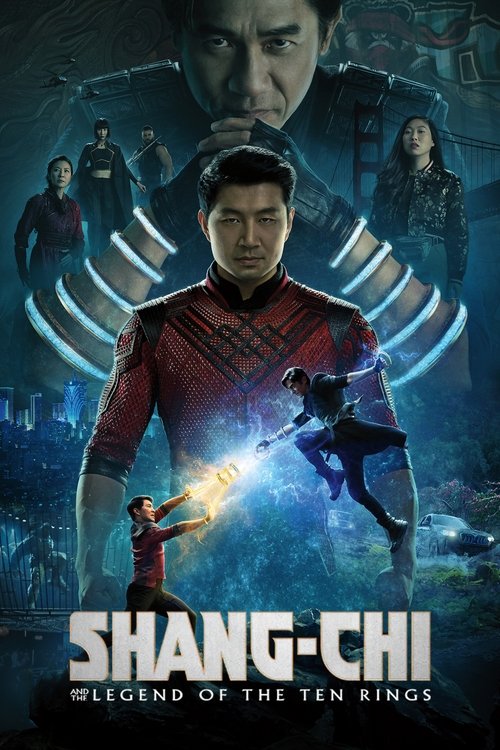
Shang-Chi and the Legend of the Ten Rings
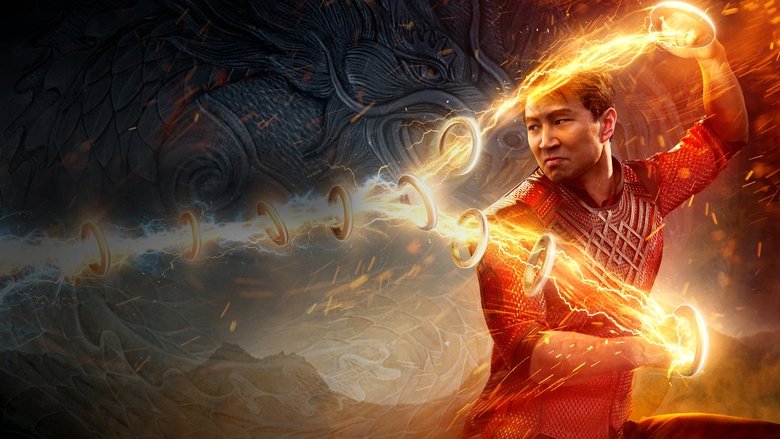
A kinetic martial-arts fantasy that blends family sorrow with wonder, where jade-green mountains, gliding dragons and spinning rings of light turn inherited violence into something that can finally be shed.
Shang-Chi and the Legend of the Ten Rings

Shang-Chi and the Legend of the Ten Rings

"You can't outrun your destiny."

01 September 2021 United States of America 132 min 7.5 (10,905)

Director: Destin Daniel Cretton

Cast: Simu Liu, Tony Leung Chiu-wai, Awkwafina, Ben Kingsley, Zhang Meng'er

Fantasy Action Adventure Identity and Self-Acceptance Family legacy and inherited trauma Grief and love as destructive force Power, choice and breaking cycles Friendship and chosen family
Budget: $150,000,000
Box Office: $432,243,292

Overview

Shang-Chi and the Legend of the Ten Rings (2021), directed by Destin Daniel Cretton, follows Shaun, a San Francisco valet who lives a quiet, slacker life with his best friend Katy. His ordinary world ends when assassins from the Ten Rings organization attack him on a city bus. The fight forces him to reveal that "Shaun" is a name he took to hide his real identity, Shang-Chi.

Shang-Chi's father is Wenwu, the leader of the Ten Rings, a terrorist organization that uses ten mystical bands of power. The assassins want a pendant Shang-Chi's mother gave him. He and Katy travel to Macau to find his estranged sister Xialing, who has a matching pendant. The trip pulls the siblings back into their father's orbit and into a search for a hidden mythical village.

The film mixes Hong Kong and wuxia-style fight choreography with Marvel humor and fantasy creatures. It is also a story about a young man who tried to outrun a family legacy and must decide what to do with it. It was the first Marvel Studios film with an Asian director and a predominantly Asian cast.

Core Meaning

The film argues that you cannot escape your past by changing your name, but you can choose what to do with it. Shang-Chi's mother tells him in the film that he is a product of everyone who came before him, both light and dark. His arc moves from hiding as "Shaun" to claiming his full identity.

It also treats grief as a source of both love and violence. Wenwu's love for Li is what drives his worst acts, and the film asks whether inheritance, whether power or trauma, has to be repeated or can be redirected. Shang-Chi wins by refusing to become his father, sparing him rather than killing him. The film also affirms a hybrid Asian and Asian-American identity that does not need to be explained away.

Thematic DNA

Family legacy and inherited trauma 30%
Identity and self-acceptance 25%
Grief and love as destructive force 20%
Power, choice and breaking cycles 15%
Friendship and chosen family 10%

Family legacy and inherited trauma

Wenwu trains Shang-Chi as an assassin after Li's death, and both children carry that damage. Shang-Chi flees it and Xialing builds her own empire in response. Each must decide how to relate to the legacy of their father and mother.

Identity and self-acceptance

Shang-Chi hides as 'Shaun' and keeps his skills secret. The film's jokes about names, language and Americanization reflect the pull between cultures. His mother's line about being a product of all who came before him turns this into a call to accept every part of himself.

Grief and love as destructive force

Wenwu gives up the rings for love, then returns to violence when Li is killed. The Dweller-in-Darkness exploits that grief by pretending to be his dead wife. The film presents him as a tragic figure and not a simple tyrant.

Power, choice and breaking cycles

The Ten Rings give immense power but also bind their wielder to a path. Shang-Chi spares his father and takes the rings on his own terms. Xialing's rise shows a second way to answer the same inheritance.

Friendship and chosen family

Katy refuses to leave Shang-Chi despite being out of her depth, and she comes through at key moments such as the bus and the climax. Their friendship offers a counterweight to the damaged blood family.

Character Analysis

Shang-Chi (Shaun)

Simu Liu

Archetype: Reluctant hero Key Trait: Deeply skilled but reluctant, with a strong moral center

Motivation

To escape his father's legacy, then to protect his sister and Ta Lo and to honor his mother.

Character Arc

He begins as a valet hiding under the name Shaun and avoiding conflict. He returns to his family and faces the guilt of his past, then learns the Ta Lo way of fighting. He ends the film accepting the rings and his identity while choosing not to follow his father's path.

Xu Wenwu

Tony Leung Chiu-wai

Archetype: Tragic villain Key Trait: Charismatic, grieving and dangerous

Motivation

To bring back his dead wife, whatever the cost.

Character Arc

Once a conqueror, Wenwu gives up the rings for a life with Li and returns to them after she is murdered. The Dweller-in-Darkness manipulates his grief. When he realizes how he was used, he sacrifices himself to protect his son and passes on the rings.
All 5 characters and cast

Symbols & Motifs

The Ten Rings

Meaning: Power that corrupts and binds, passed from one generation to the next. They stand for inherited weight, not simple strength.
Context: Wenwu wields them for conquest and removes them for Li. Shang-Chi first refuses them, then takes control and uses them in the climax against the Dweller.

The pendants

Meaning: The mother's love and legacy, and the physical link between the siblings and Ta Lo.
Context: Li gives matching pendants to her children. The Ten Rings steal Shang-Chi's, and Wenwu uses both pendants to reveal a map to Ta Lo.

The bus

Meaning: The collision of ordinary life with the past, and Shang-Chi's unwillingness to be seen as a fighter.
Context: The film's first major fight takes place on a moving bus. Katy has to take the wheel, and the scene sets up the film's blend of action and comedy.

The Great Protector dragon

Meaning: Benevolent, flowing power in contrast to the rings' domination.
Context: The dragon of Ta Lo helps Shang-Chi in the climax. Li tells her son he has the heart of a dragon.

Water

Meaning: Fluidity, rebirth and the gentle side of martial strength.
Context: Ta Lo's water-based fighting style appears in Li's training and the lake. A magical water map reveals the way to the village, and Wenwu pushes Shang-Chi into the lake before the Great Protector revives him.

The Dweller-in-Darkness and the gate

Meaning: Grief weaponized: a force that lures people with what they have lost.
Context: The creature behind the gate lets Wenwu believe Li is calling for him, which pulls him toward Ta Lo.

Memorable Quotes

You trained your son to be a killer. Is this what you wanted?
— Shang-Chi

Context

Said to Wenwu during their confrontation.

Meaning

He confronts his father with the human cost of the Ten Rings and his upbringing.
I thought I could change my name, start a new life, but I could never escape his shadow.
— Shang-Chi

Context

Shang-Chi confesses the truth about his past to Katy.

Meaning

Sums up the central conflict of running from heritage.
All 7 quotes

Philosophical Questions

Can we escape the people and histories that made us?

Shang-Chi's new name does not protect him from his father or his training. The film suggests acceptance of every part of one's heritage is the only real freedom.

Is a person defined by their worst actions?

Wenwu is both a murderer and a grieving husband and father. The film asks whether his last act of sacrifice redeems him, without excusing what he did.

Does grief justify any action?

Wenwu's love for Li leads to destruction, and the Dweller exploits it. The film shows how grief, left unexamined, can be turned into a weapon.

Is power something you inherit, or something you choose how to use?

Shang-Chi and Xialing both inherit a legacy of violence and make different choices. Shang-Chi spares his father, and Xialing remakes the organization.

How It Ends

Alternative Interpretations

Some viewers read the film as a story about immigrant and diaspora identity, where Shang-Chi's name change from Shang-Chi to Shaun stands for assimilation and its limits. Others read it more simply as a superhero origin story that follows the usual Marvel formula, with a CGI-heavy finale.

Full ending explanation

Cultural Impact

The film was released in September 2021, in the middle of the pandemic, and was a major test of Marvel's first Asian-led film. Its Labor Day weekend box office of $94.4 million set a record, and its worldwide gross passed $432 million.

Critics were largely positive. It holds a 92% approval rating on Rotten Tomatoes and a Metacritic score of 71, and many praised its action choreography, its Asian cultural representation and the performances of Liu and Leung. Some critics called it the best MCU origin story in years, with the Chicago Tribune comparing it to Guardians of the Galaxy and Black Panther.

The film drew on Hong Kong action cinema and wuxia, with homages to Jackie Chan, and it revisits the controversial Mandarin depiction in Iron Man 3. It was nominated for an Oscar (visual effects).

Audience Reception

Audiences and critics praised the fight choreography, especially the bus sequence, along with the cultural representation, the score and the performances. Tony Leung's Wenwu was widely singled out as a sympathetic and layered villain, and Awkwafina's comic chemistry with Simu Liu also drew praise. IMDb users rate it 7.3/10.

Criticism focused on formulaic Marvel plotting, a CGI-heavy climax that abandons the intimacy of the earlier fights, and heavy exposition about myths and backstory. Some reviewers found the characterization and themes underdeveloped, and a few thought the final monster antagonist was a letdown after Wenwu. Overall, it was seen as an enjoyable and visually captivating entry that expanded the MCU.

Interesting Facts

  • The film is the first Marvel Studios film with an Asian director and a predominantly Asian cast.
  • It grossed over $432 million worldwide, making it the ninth-highest-grossing film of 2021.
  • The village of Ta Lo was built by production designer Sue Chan and her team in a park about 30 minutes from downtown Sydney, with filming at Disney Studios and on location across Sydney.
  • Production resumed in August 2020 and ended in October, with additional filming in San Francisco.
  • The fights were choreographed by second unit director Brad Allan, fight choreographer Peng Zhang and fight coordinator Andy Cheng, a member of the Jackie Chan Stunt Team.
  • The production used a performer on stilts as reference for Benedict Wong's scenes with the Abomination.
  • Cinematographer Bill Pope also shot The Matrix, and critics noted echoes of that film in the photography.
  • The soundtrack album, Shang-Chi and the Legend of the Ten Rings: The Album, was produced by 88rising.
  • During the film's release, Disney CEO Bob Chapek called the theatrical release an experiment, and Simu Liu replied online that they were not an experiment. The film then broke Labor Day weekend records with $94.4 million.
  • Writers credited are Dave Callaham, Destin Daniel Cretton and Andrew Lanham, with the character created by Steve Englehart and Jim Starlin.

Easter Eggs

Abomination (Tim Roth) fights Wong in the underground ring.

Roth originated the role in The Incredible Hulk (2008). His reappearance shows the character is free and friendly with Wong.

Vlogger Klev (Zach Cherry) films the bus fight.

The character first appeared in Spider-Man: Homecoming, where he asked Spider-Man to do stunts for his camera.

Two references to the Blip, including a Post-Blip anxiety poster outside Katy's home.

They place the film after Avengers: Endgame and the return of the people who vanished.

The film retcons the Ten Rings from the Iron Man films and <i>Iron Man 3</i>'s Mandarin reveal.

The real Mandarin has been watching from a distance. Trevor Slattery (Ben Kingsley), the actor from Iron Man 3, appears in the film. The Ten Rings logo was also updated to use proper Chinese characters.

Shang-Chi uses his jacket as a weapon in the bus fight.

A homage to Jackie Chan films.

The mid-credits scene has Wong, Bruce Banner and Carol Danvers meet Shang-Chi and Katy.

They investigate the Ten Rings' origin, and the beacon the rings emit suggests a larger story for the MCU.

An AC/DC poster hangs in Xialing's room.

AC/DC is associated with Tony Stark in the MCU.

Frequently Asked Questions

Explore More About This Movie

Dive deeper into specific aspects of the movie with our detailed analysis pages

Comments (0)

Leave a comment

No comments yet. Be the first to share your thoughts!

Similar Movies