Green Snake
白蛇2:青蛇劫起
"Dependence arises from the previous life."
Overview
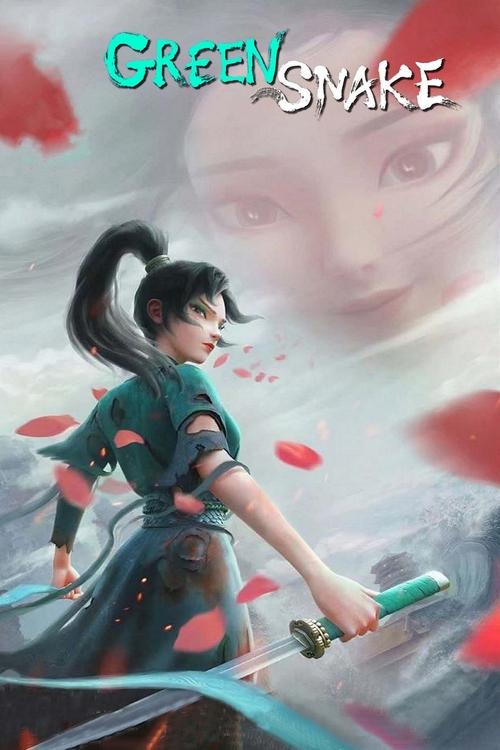
Following the events of White Snake, Verta (the Green Snake) is defeated by the monk Fahai and separated from her sister, Blanca (the White Snake), who is imprisoned under the Leifeng Pagoda. Verta is then cast into Asuraville, a modern dystopian city that serves as a purgatory for beings from all eras who are trapped by their own obsessions. Stripped of her demonic powers, Verta must navigate this dangerous new world, which is plagued by warring factions like the Ox-Heads and Horse-Faces, and survive its treacherous landscape.
Her singular obsession is to escape Asuraville and rescue Blanca. Along the way, she encounters a mysterious masked man with amnesia who bears a striking resemblance to her sister and a cunning fox demon who runs a marketplace. Verta is forced to form uneasy alliances and confront her own beliefs about strength, love, and sacrifice. The film blends traditional Chinese mythology with a frenetic, cyberpunk aesthetic, creating a unique and visually spectacular action-adventure.
Core Meaning
The core meaning of Green Snake revolves around the tenacious power of obsession and the redefinition of strength and sisterhood. The director, Amp Wong, explores the idea that an unwavering obsession, often seen as a flaw, can also be a source of immense power and motivation. Verta's journey is a testament to this, as her refusal to let go of her sister is what ultimately allows her to overcome impossible odds. The film also deconstructs traditional notions of heroism and love, suggesting that true strength lies not in physical power or romantic love, but in unwavering loyalty and self-reliance. It is a modern interpretation of a classic folktale that champions female agency and the enduring bond between sisters above all else.
Thematic DNA
Sisterhood and Loyalty
The central theme of the film is the unbreakable bond between Verta and Blanca. Verta's entire motivation for surviving and escaping the brutal world of Asuraville is her unwavering obsession with rescuing her sister. This theme is explored through Verta's relentless efforts and sacrifices, highlighting a sororal love that transcends life, death, and even reincarnation. The film posits this bond as the most powerful force, more so than romantic love or individual strength.
Obsession as a Driving Force
Asuraville is a place where beings are trapped due to their obsessions. While this is presented as a form of damnation, Verta's obsession with Blanca becomes her greatest strength. The film explores the duality of obsession, showing it as both a prison and a source of incredible power and determination. Verta's refusal to abandon her obsession is what allows her to grow stronger and ultimately find a path to escape.
Feminism and Self-Reliance
Green Snake is a story centered on a powerful female protagonist who learns to rely on her own strength. After being betrayed and realizing the limitations of depending on others, Verta undergoes a significant transformation, focusing on her own growth and power. The film has been noted for its feminist undertones, portraying Verta as a modern, independent woman who forges her own path.
Reincarnation and Identity
The film delves into Buddhist concepts of reincarnation and the cyclical nature of existence. This is most prominent in the character of the masked man, who is eventually revealed to be a reincarnation of Blanca. This twist explores the idea that the soul and its connections persist across different lifetimes and forms, raising questions about the nature of identity and the enduring power of love and obsession.
Character Analysis
Verta (Xiao Qing)
Tang Xiaoxi
Motivation
Verta's primary motivation is her all-consuming obsession with rescuing her sister, Blanca, from imprisonment. This singular goal drives all of her actions in Asuraville and fuels her determination to grow stronger and find a way to escape.
Character Arc
Verta begins the film as fiercely loyal to her sister but also somewhat dependent on her. After being cast into Asuraville, she is initially lost and vulnerable. However, through betrayal and hardship, she learns to rely on her own strength and becomes a powerful and determined warrior. Her arc is one of self-empowerment, as she transforms from a sidekick into a formidable hero in her own right.
The Masked Man
Zhang Fuzheng
Motivation
Initially, his motivation is unclear due to his amnesia. However, he is subconsciously driven by his deep-seated obsession to find and protect Verta, a remnant of his past life as Blanca.
Character Arc
The masked man starts as a mysterious amnesiac, unsure of his identity or purpose. He is initially a spy for the Ox-Heads but develops a genuine connection with Verta. His arc is one of self-discovery, culminating in the revelation that he is a reincarnation of Blanca. He ultimately sacrifices himself to help Verta escape, demonstrating a selfless love that transcends his own confusion and hardship.
Baoqing Fox
Zheng Xiaopu
Motivation
Her primary motivation appears to be profit and maintaining her neutral position in Asuraville. However, the post-credit scene reveals a desire for revenge, indicating a more complex and long-term plan.
Character Arc
Baoqing Fox is a cunning and enigmatic nine-tailed fox demon who runs a marketplace in Asuraville. She acts as a neutral party, trading with all factions. While she appears to be a self-serving businesswoman, she provides Verta with crucial information and seems to have her own hidden agenda, which is hinted at in the film's post-credit scene. Her character arc is not fully resolved, suggesting a larger role in future installments.
Simon (Sima)
Wei Chao
Motivation
Simon is motivated by survival and maintaining his position of power within the Raksha army. His actions are primarily driven by self-preservation, which leads him to abandon Verta when he perceives her as a liability.
Character Arc
Simon is the leader of the Raksha army who initially appears to be a charismatic and capable ally to Verta. However, his character arc reveals him to be opportunistic and ultimately unreliable. He betrays Verta in a moment of crisis, teaching her a harsh lesson about not depending on others. He later expresses remorse before being killed.
Symbols & Motifs
The Bone Flute
The bone flute symbolizes the masked man's lost memories and his deep, unconscious connection to Verta. It is the physical manifestation of his obsession, which he cannot remember. Ultimately, it becomes a key to revealing his true identity as a reincarnation of Blanca, linking him to her past and her bond with Verta.
The masked man carries the bone flute with him throughout the film, believing it to be a clue to his past. In the film's climax, Verta combines the flute with the broken pieces of Blanca's hairpin, making it whole again and confirming the masked man's identity.
Blanca's Hairpin
Blanca's hairpin represents her power and her connection to Verta. When it is broken at the beginning of the film, it symbolizes the sisters' separation and Verta's loss. The quest to restore the hairpin is synonymous with Verta's quest to reunite with Blanca.
The hairpin is shattered in the initial battle with Fahai. At the end of the film, Verta finds the broken pieces in a museum in the modern world. By combining it with the bone flute, she restores the hairpin, symbolizing the eventual reunion of the two sisters.
Asuraville
Asuraville is a representation of purgatory, a state of being trapped by one's earthly attachments and obsessions. It is a chaotic and lawless place where beings from different times and mythologies are forced to coexist, reflecting the internal turmoil of its inhabitants. It serves as a crucible for Verta, forcing her to confront her own obsession and grow stronger.
Verta is sent to Asuraville by Fahai and spends the majority of the film trying to escape. The city is a visually distinct, dystopian metropolis that combines modern and ancient aesthetics, reflecting its nature as a melting pot of lost souls.
Philosophical Questions
What is the nature of obsession, and can it be a virtue?
The film challenges the conventional view of obsession as a destructive force. In Asuraville, obsession is the reason for damnation, yet for Verta, it is the source of her strength and her will to survive. The film asks whether an unwavering dedication to a person or a cause, even to the point of obsession, can be a noble and powerful motivator for good. It suggests that what society might label as a flaw can, in certain contexts, be a person's greatest asset.
Can love and identity transcend physical form and reincarnation?
Through the character of the masked man, who is a reincarnation of Blanca, the film explores the idea that the essence of a person and the bonds they form can persist across lifetimes. Despite having no memory of his past life, the masked man is instinctively drawn to Verta and ultimately sacrifices himself for her. This raises questions about whether our identity is tied to our memories and physical form, or if there is a deeper, spiritual connection that endures through the cycle of reincarnation.
What is the true meaning of strength?
Verta initially believes that strength is about power and the ability to protect others. However, through her experiences in Asuraville, particularly her betrayal by the physically strong Simon and her bond with the amnesiac masked man, she comes to realize that true strength lies in perseverance, loyalty, and self-reliance. The film posits that emotional fortitude and a strong heart are more valuable than mere physical prowess.
Alternative Interpretations
While the film's ending suggests that the masked man is a reincarnation of Blanca, some viewers have offered alternative interpretations. One theory is that the masked man is actually Blanca's son, which would add a different layer to his connection with Verta. However, this is largely contradicted by the film's own visual cues, such as the masked man's face resembling Blanca's and the magical connection between the bone flute and her hairpin.
Another area of interpretation revolves around the relationship between Verta and Blanca. Some viewers have read a romantic subtext in their intense bond, suggesting that Verta's obsession with Blanca goes beyond sisterly love. This interpretation is supported by the fact that they are not biological sisters but rather 'martial sisters' who trained together. The film's choice to have Blanca reincarnate as a male figure that Verta develops feelings for can be seen as a way to explore this romantic connection while navigating censorship.
Cultural Impact
Green Snake represents a significant step forward for the Chinese animation industry, showcasing its ability to produce visually stunning and thematically complex films that can compete on a global scale. The film's release on Netflix has brought this modern take on a classic Chinese folktale to a wider international audience. By blending traditional mythology with contemporary genres like cyberpunk and post-apocalyptic fiction, the film breathes new life into a well-known story, making it relevant to a new generation of viewers. The film's focus on a strong, independent female protagonist has also been seen as a reflection of modern feminist ideals. Light Chaser Animation Studios is consciously building a cinematic universe based on Chinese myths, and Green Snake is a key part of this ambitious project, which aims to share Chinese culture with the world through a new and exciting medium.
Audience Reception
Audience reception for Green Snake has been generally positive, with particular praise for its stunning visuals and high-quality animation, often compared to the likes of Disney and Pixar. Many viewers were captivated by the film's action sequences and the creative world-building of Asuraville. However, some critics and viewers found the plot to be convoluted and overstuffed, with too many characters and factions introduced in a short amount of time. A common point of criticism was that the story could be confusing for those who had not seen the first film, White Snake, as the sequel throws viewers directly into the action with little exposition. Despite this, many appreciated the film's focus on a strong female protagonist and the emotional core of the sisters' relationship.
Interesting Facts
- The film is a sequel to the 2019 animated film 'White Snake' and is inspired by the classic Chinese folktale 'Legend of the White Snake'.
- The film was a box office success in China, earning 200 million yuan (approximately $30.86 million) in its first three days of release.
- Light Chaser Animation Studios, the production company behind 'Green Snake', aims to release one animated film every year.
- The director, Amp Wong, also co-directed the first 'White Snake' film.
- The film's aesthetic has been compared to video games and the 'Mad Max' franchise due to its dystopian, post-apocalyptic setting.
- The English dub of the film is available on Netflix.
Easter Eggs
In a mid-credits scene, the Baoqing Fox is seen meeting with a mysterious river monster. He gives her a severed fox tail, and she speaks of plotting revenge.
This scene teases a future installment in the 'White Snake' franchise, suggesting that the Baoqing Fox will play a more central and potentially antagonistic role. It also reveals that she is a nine-tailed fox who is missing one of her tails, hinting at a backstory of conflict and a quest to regain her full power.
A post-credits scene teases a sequel to another Light Chaser Animation film, 'New Gods: Nezha Reborn', titled 'New Gods: Yang Jian'.
This easter egg connects 'Green Snake' to a larger cinematic universe of animated films based on Chinese mythology being created by Light Chaser Animation Studios, similar to the Marvel Cinematic Universe.
⚠️ Spoiler Analysis
Click to reveal detailed analysis with spoilers
Frequently Asked Questions
Explore More About This Movie
Dive deeper into specific aspects of the movie with our detailed analysis pages
Comments (0)
No comments yet. Be the first to share your thoughts!