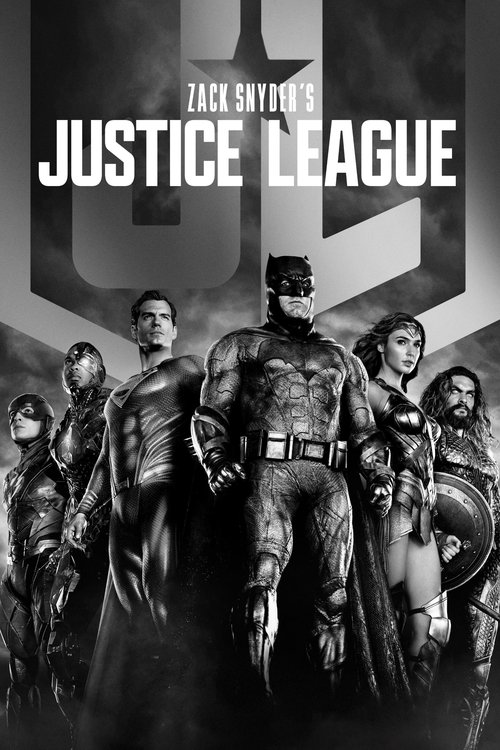
Zack Snyder's Justice League
"Us united."
Overview
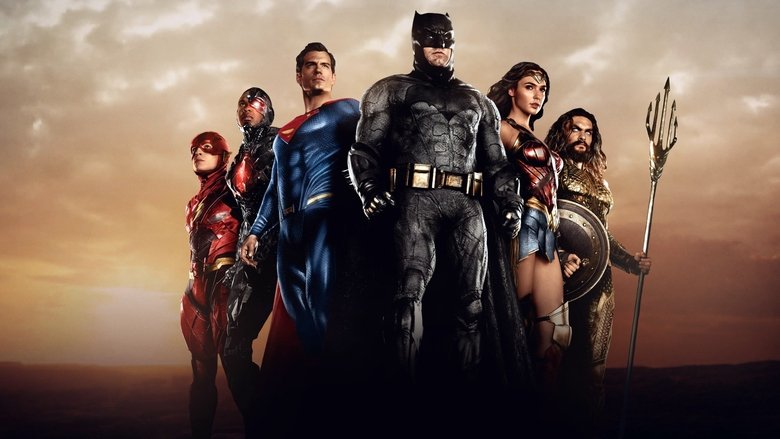
Following the death of Superman, Bruce Wayne is driven by a restored faith in humanity to ensure the ultimate sacrifice was not in vain. He joins forces with Diana Prince to recruit a team of metahumans to protect the world from an approaching catastrophic threat. The task proves more difficult than Bruce imagined, as each of the recruits must face the demons of their own pasts to transcend that which has held them back, allowing them to come together and finally form an unprecedented league of heroes.
Now united, Batman, Wonder Woman, Aquaman, Cyborg, and The Flash may be too late to save the planet from Steppenwolf, an emissary of the cosmic tyrant Darkseid, who seeks to conquer Earth by synchronizing three ancient power sources known as Mother Boxes. The heroes realize their only hope may lie in resurrecting Superman, a risky endeavor that could either save the world or doom it entirely.
Core Meaning
At its heart, Zack Snyder's Justice League is an exploration of faith, redemption, and the power of unity in the face of overwhelming despair. The film posits that even gods and heroes are fallible and broken, haunted by loss and trauma. Director Zack Snyder uses the grand scale of superhero mythology to tell an intimate story about finding purpose and family through shared struggle. The central message is that one cannot overcome darkness alone; true strength is found in connection, in healing old wounds, and in having faith in others. It is a deliberate move away from cynicism, arguing that even in a dark and jaded world, coming together for a common good is not only possible but necessary for salvation.
Thematic DNA
Unity vs. Isolation
The film's central theme is the idea that individuals are stronger together than in isolation. Each hero begins in a state of self-imposed exile, dealing with their personal grief and trauma alone. Bruce Wayne's mission is to unite them, believing, as Superman did, that they are "stronger together." The narrative contrasts the heroes' journey toward forming a found family with the villain Steppenwolf, who is also isolated and desperately seeks to regain favor with his master, Darkseid. The league's eventual success is a direct result of their collaboration and trust in one another.
Grief, Trauma, and Second Chances
Nearly every main character is defined by a profound loss. Bruce Wayne is haunted by the death of his parents and now Superman. Diana Prince mourns Steve Trevor. Victor Stone has lost his mother and his own body. The film explores how they cope with their trauma and the possibility of a "second chance." The resurrection of Superman is the most literal representation of this theme, but it also applies to Cyborg accepting his new form and Batman redeeming himself from the darkness he embraced in Batman v Superman.
Faith and Humanity
Inspired by Superman's sacrifice, Bruce Wayne operates on a newfound "faith" in others, a stark contrast to his paranoid and cynical worldview in the previous film. The film questions what it means to be a hero and a god in a world that is often fearful and ungrateful. It ultimately lands on an optimistic note, suggesting that humanity is worth saving and that heroes inspire hope, not just through their power, but through their own capacity for faith and sacrifice.
Fatherhood and Legacy
The relationships between fathers and their children are a recurring motif. Victor Stone's arc is intrinsically linked to his father, Silas, whose sacrifice and final message help Victor accept himself. Barry Allen is driven by the desire to exonerate his incarcerated father. Even Superman's resurrection involves guidance from the lingering consciousness of his two fathers, Jor-El and Jonathan Kent. This theme explores the legacy parents leave and the burdens their children carry.
Character Analysis
Bruce Wayne / Batman
Ben Affleck
Motivation
To honor Superman's memory by uniting a team of heroes powerful enough to defend the world in his absence. He is driven by the promise he made on Superman's grave and the fear of an impending alien threat he foresaw.
Character Arc
Following his xenophobic rage and paranoia in Batman v Superman, Bruce Wayne's arc in this film is one of redemption. Fueled by guilt and inspired by Superman's selfless sacrifice, he sheds his cynicism and embraces faith. His journey is to transform from a lone, brutal vigilante into the leader and founder of the Justice League, learning to trust others and operate as part of a team. His primary role shifts from combatant to strategist and unifier.
Victor Stone / Cyborg
Ray Fisher
Motivation
Initially, his motivation is to understand the nature of his new existence and the alien technology that powers him. He is drawn into the conflict when his father is kidnapped and he realizes the Mother Box that created him is part of a larger threat. Ultimately, he is motivated to protect his new friends and the world.
Character Arc
Victor's journey is the emotional core of the film. Initially, he sees himself as a monster, broken and destroyed by the accident that took his mother and his body. He is isolated and resentful of his father for turning him into a machine. Through joining the league and seeing the potential of his powers for good, he learns to accept his new identity. His arc culminates in him declaring, "I'm not broken," signifying his self-acceptance and embrace of his role as a hero.
Clark Kent / Superman
Henry Cavill
Motivation
Upon his return, his primary motivation is to protect his loved ones, Lois and Martha, and by extension, the world he has chosen as his home. He becomes the league's most powerful asset, driven by a clear sense of duty and love for humanity.
Character Arc
Superman's arc is one of completion. Having died to save humanity, his resurrection allows him to fully embrace his role as a symbol of hope. Initially disoriented and powerful, he is brought back to himself by Lois Lane and his mother. His return solidifies his journey from a conflicted outsider (in Man of Steel) and a feared god (in Batman v Superman) to the true, classic hero he was always meant to be, now fully integrated with both his Kryptonian heritage and his adopted world.
Steppenwolf
Ciarán Hinds (voice)
Motivation
To conquer 50,000 more worlds to pay off a debt to Darkseid and end his exile. He seeks to unite the three Mother Boxes on Earth to summon his master and prove his worth, hoping to finally be allowed to come home to Apokolips.
Character Arc
In contrast to the 2017 version, this Steppenwolf has a clearer and more tragic arc. He is not a generic conqueror but a disgraced lieutenant, exiled by his master Darkseid for a past betrayal. His conquest of Earth is a desperate, violent pilgrimage to appease Darkseid and earn his way back into the fold. This adds a layer of motivation beyond simple villainy; he is driven by a desire for redemption in the eyes of his tyrannical leader, making his actions more desperate and his design more intimidating.
Symbols & Motifs
Mother Boxes
The Mother Boxes symbolize both creation and destruction. They are described as "change machines" that can rearrange matter. For Cyborg, a Mother Box is the source of his rebirth, representing a traumatic but ultimately powerful transformation. For Steppenwolf and Darkseid, they are tools of conquest, meant to terraform worlds and extinguish life, symbolizing the destructive imposition of will. Their dual nature represents the core conflict of the film: whether immense power will be used to heal or to dominate.
The three Mother Boxes—one held by Amazons, one by Atlanteans, and one by humans—are the central MacGuffins of the plot. Steppenwolf's quest is to unite them to form "The Unity," which would destroy Earth's ecosystem. The Justice League uses the human Mother Box to resurrect Superman, tapping into its creative potential.
Superman's Black Suit
The black suit is a direct reference to the "Reign of the Supermen" comic book storyline where Superman returns from death. Symbolically, it represents a rebirth and a transitional phase. He is not yet the bright, hopeful symbol he will become. The suit signifies a more raw, powerful, and perhaps less certain version of the character, emerging from the grave to complete his journey toward becoming the "true" Superman.
Upon his resurrection, Clark Kent enters his Kryptonian scout ship and walks past several armor options before choosing the black and silver suit. He wears it for the remainder of the film's final battle against Steppenwolf.
The Knightmare Sequence
The "Knightmare" visions symbolize a potential dark future, a timeline where the heroes fail and Darkseid conquers Earth. It represents the ultimate stakes of their mission and Batman's deepest fears. This apocalyptic world, where Superman is under Darkseid's control, is a manifestation of the consequences of loss and disunity, serving as a grim warning and a driving motivation for Bruce Wayne to ensure this future never comes to pass.
Cyborg experiences a vision of the Knightmare future when interfacing with the Mother Box during Superman's resurrection. The film's epilogue features an extended scene set in this timeline, where Batman, Cyborg, The Flash, Mera, Deathstroke, and the Joker have formed a resistance.
Memorable Quotes
I'm not broken... and I'm not alone.
— Victor Stone / Cyborg
Context:
While interfaced with the Mother Boxes, a psychic illusion tempts him with the promise of restoring his human body. He rejects this temptation, realizing he is whole and supported by his new team.
Meaning:
This is the culminating line of Cyborg's character arc. It signifies his final acceptance of his new form, refuting the idea that he is a monster or an incomplete person. It's a powerful declaration of self-worth and a testament to the found family he has discovered in the Justice League.
I don't care how many demons he's fought in how many hells. He's never fought us. Not us united.
— Bruce Wayne / Batman
Context:
Spoken to the team as they prepare for the final confrontation with Steppenwolf, rallying them and instilling confidence in their collective power.
Meaning:
This quote encapsulates Bruce's newfound faith and the core theme of the movie. It's his declaration that the combined strength of the Justice League is a new, unprecedented force for good, capable of facing cosmic threats that no single hero could. It marks his full transition into the role of a leader.
Fly, son. It's time.
— Jonathan Kent (voice)
Context:
As Clark Kent stands within the Kryptonian scout ship after his resurrection, the disembodied voices of his fathers guide him toward accepting his role once more before he flies off to join the battle.
Meaning:
This line, along with guidance from Jor-El, represents the convergence of Superman's two legacies—his Kryptonian heritage and his human upbringing. It's the final push he needs to fully embrace his destiny and return to the world as its protector, guided by the love of both his fathers.
It's time you stand. Fight. Discover. Heal. Love. Win. The time is now.
— Silas Stone
Context:
In the film's epilogue, Victor listens to a recording his father left for him before his sacrifice. The words play over a montage of the league members finding their new places in the world.
Meaning:
This is Silas Stone's final message to his son, a powerful and poignant encouragement for Victor to not only be a hero but to live a full life. It encapsulates the film's themes of overcoming trauma and finding purpose, giving Victor the closure he needs to move forward.
Philosophical Questions
Can gods be broken, and if so, how do they heal?
The film presents its heroes, who are functionally gods, as deeply flawed and broken individuals. Each member of the league is dealing with profound trauma, loss, or alienation. The narrative explores the idea that immense power does not grant immunity to psychological suffering. It suggests that healing doesn't come from their powers, but from connection. By forming a community and family, they are able to confront their pain and find a new purpose. The film posits that even for gods, the path to healing is through vulnerability and reliance on others.
What is the nature of hope in a world defined by darkness and loss?
Following Superman's death, the world is depicted as being in mourning and losing hope. The film questions whether hope is an external symbol (like Superman) or an internal choice. Batman's journey is central to this exploration; he must learn to operate on faith and inspire hope in others rather than just fear. The film ultimately argues that hope is not the absence of darkness, but the will to fight against it, a choice that must be actively made and nurtured through collective action and belief in one another.
Does free will exist in the face of destiny and overwhelming power?
The Knightmare sequences and the looming threat of the Anti-Life Equation (Darkseid's ultimate weapon to eliminate free will) bring this question to the forefront. The heroes are constantly fighting against a seemingly pre-ordained dark future. The Flash's ability to reverse time suggests that destiny is not fixed, and that individual choices, even small ones, can rewrite the future. Cyborg's struggle against the Mother Box's influence is also a battle for his own will against a powerful, deterministic technology. The film champions the idea that choices, sacrifice, and the will to resist are what truly define heroism.
Alternative Interpretations
One of the primary alternative readings of the film views it as a meta-commentary on its own creation. The resurrection of Superman can be interpreted as a metaphor for the resurrection of Snyder's film itself. Just as Superman is violently brought back from the dead, confused and not quite himself before being restored by love and memory, the 'Snyder Cut' was brought back from its 'death' (the 2017 version) by the passionate efforts of fans and the director's own commitment. In this reading, the league uniting to bring back their most powerful member mirrors the fan movement uniting to bring back the director's original vision.
Another interpretation focuses on the film as a modern epic poem or religious allegory. Snyder frequently employs mythological and theological imagery, casting the heroes as flawed, suffering gods. Superman's death and resurrection are overtly Christ-like, while the struggle against Darkseid and the forces of Apokolips can be seen as a Manichaean battle between light and darkness. The Mother Boxes are holy relics, and the characters are on a spiritual quest for redemption and faith. The film's somber tone, deliberate pacing, and epic scope align it more with classical mythology than with the fast-paced action of its contemporaries, inviting an interpretation of the story as a grand, modern myth about divinity, humanity, and sacrifice.
Cultural Impact
Zack Snyder's Justice League is a unique cultural artifact, born from an unprecedented and passionate fan movement known as #ReleaseTheSnyderCut. After the critical and commercial failure of the 2017 theatrical version, which was heavily altered by Joss Whedon and Warner Bros. executives after Zack Snyder's departure, a dedicated fanbase campaigned for years to see the director's original vision realized. This movement, while sometimes toxic, demonstrated the power of a mobilized online fanbase to influence major studio decisions, a landmark event in the age of social media and streaming wars.
The film's release on HBO Max in March 2021 was seen as a major victory for artistic integrity and a vindication for Snyder. Critics overwhelmingly agreed that this four-hour version was vastly superior to the 2017 cut, praising its cohesive tone, deeper character development (particularly for Cyborg), and grand, operatic scale. It proved that a director's singular, unfiltered vision could find a massive audience, even with a daunting runtime and a darker, more methodical pace than typical superhero blockbusters. The film's success became a major talking point about the future of streaming, the nature of director's cuts, and the relationship between studios, creators, and fans. While it didn't immediately lead to the full restoration of Snyder's planned sequels, it remains a monumental achievement in fan-driven content and a testament to the enduring power of a director's vision.
Audience Reception
Audience reception for Zack Snyder's Justice League was overwhelmingly positive, especially from fans who had campaigned for its release. Viewers praised the film as a dramatic improvement over the 2017 theatrical version, with many calling it an "epic" and "amazing" experience. The four-hour runtime was often cited as a positive, allowing for deeper character development, particularly for Cyborg, The Flash, and Steppenwolf. The more serious, consistent tone, the grand visual style, and the complex, lore-heavy plot were frequently highlighted as strengths. Main points of criticism, even among some who enjoyed it, centered on the extensive runtime, which some found bloated or self-indulgent. A few found the film's slow-motion-heavy style and somber mood to be exhausting. However, the overall verdict from the target audience was that the film was a triumphant and satisfying vindication of Zack Snyder's original vision.
Interesting Facts
- The film is dedicated to the memory of Zack Snyder's daughter, Autumn Snyder, whose death led to his departure from the original 2017 production.
- The final version of the film cost an additional $70 million to complete, covering new visual effects, editing, scoring, and some minor reshoots.
- The film is presented in a 1.33:1 aspect ratio, which Snyder chose to better approximate the IMAX format and create a more vertical composition for his characters.
- The #ReleaseTheSnyderCut fan campaign was a multi-year effort involving social media campaigns, billboards, and even flying banners over Warner Bros. studios, ultimately convincing the studio to fund the project.
- The only entirely new scene filmed for this version was the epilogue conversation between Batman and Jared Leto's Joker in the Knightmare future.
- Composer Tom Holkenborg (Junkie XL), who was replaced on the 2017 version, returned to create a completely new, four-hour musical score for this cut.
- Ray Fisher's Cyborg is considered by Snyder and many critics to be the "heart of the movie," with his backstory and character arc being the most significant restoration from the original vision.
- Zack Snyder has a brief cameo in the film; he can be seen sitting at a coffee shop in the background when Lois Lane gets a coffee.
Easter Eggs
Martian Manhunter's Reveal
General Swanwick, a character present since Man of Steel and played by Harry Lennix, is revealed to be the shapeshifting Martian hero J'onn J'onzz, also known as the Martian Manhunter. He first appears disguised as Martha Kent to console Lois Lane, and later reveals his true form to Bruce Wayne, offering his help for future threats. This was part of Snyder's long-term plan for the character.
Ryan Choi's Appearance
Dr. Ryan Choi, a scientist at S.T.A.R. Labs, has a significant supporting role. In the DC Comics, Choi is the third person to take up the mantle of The Atom, a superhero with the ability to shrink. His promotion to Director of Nanotechnology at the end of the film hints at this future.
Green Lanterns in the History Lesson
During the flashback to Darkseid's first invasion of Earth, a member of the Green Lantern Corps is seen fighting alongside the Old Gods, Amazons, and Atlanteans. This Lantern is identified as Yalan Gur, the protector of Space Sector 2814 (which includes Earth) from the comics. Another dead Green Lantern is briefly visible during Cyborg's Knightmare vision.
The Joker's 'Boy Wonder' Comment
In the Knightmare epilogue, the Joker taunts Batman by asking, "...why you sent a Boy Wonder to do a man's job?" This is a direct reference to the death of Robin at the hands of the Joker, an event previously hinted at in Batman v Superman by the defaced Robin suit in the Batcave.
Ayn Rand's 'The Fountainhead'
Zack Snyder is a known admirer of Ayn Rand's novel The Fountainhead. An architectural drawing in Lex Luthor's home is for the "Security Bank of Manhattan," a reference to a project in the book. Additionally, a sinking boat is named "The Cortlandt," another reference to a housing project from the novel.
⚠️ Spoiler Analysis
Click to reveal detailed analysis with spoilers
Frequently Asked Questions
Explore More About This Movie
Dive deeper into specific aspects of the movie with our detailed analysis pages
Comments (0)
No comments yet. Be the first to share your thoughts!