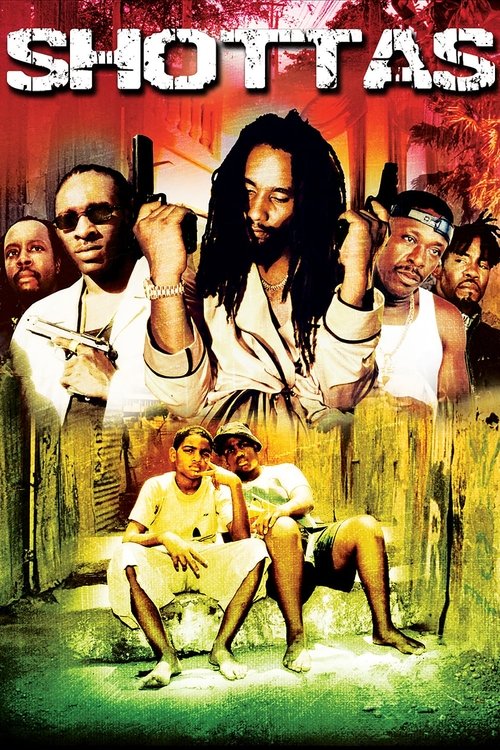
Shottas
"Friendship, loyalty & greed."
Overview
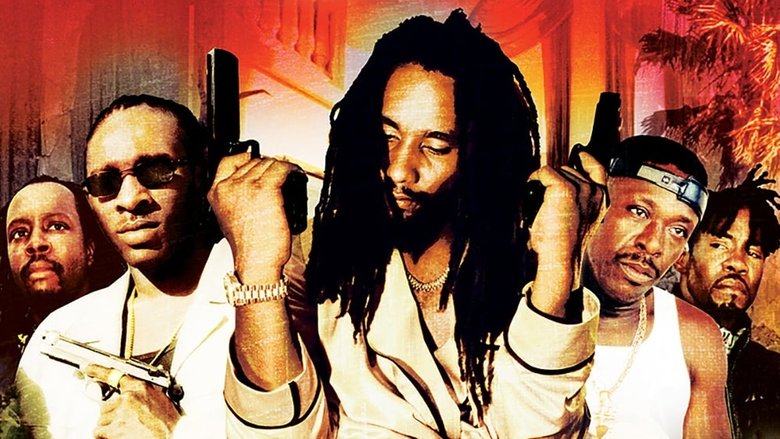
Growing up in the impoverished and volatile streets of Kingston, Jamaica, childhood friends Biggs and Wayne quickly learn that survival requires embracing the ruthless shotta (gangster) lifestyle. Beginning their criminal careers as young boys, they use the illicit funds from a violent robbery to purchase visas, escaping to the United States in pursuit of the American Dream. However, their version of this dream is steeped in extortion, drug trafficking, and brutal turf wars.
Years later, after being deported back to Jamaica, Biggs and Wayne find themselves constrained by corrupt local politicians and relentless police. Teaming up with the unpredictable and unhinged Mad Max, they return to Miami to reclaim their throne. The trio embarks on a merciless campaign to take over the local underworld, putting them on a direct collision course with the established and powerful drug kingpin, Teddy Bruckshut.
As their empire expands and the body count rises, the unbreakable bond of brotherhood between the men is put to the ultimate test. The film navigates the intoxicating allure of wealth and power while simultaneously exposing the tragic, cyclical nature of violence that threatens to consume everyone involved.
Core Meaning
The core message of Shottas is a stark demystification of the gangster lifestyle, serving as a cautionary tale about the cyclical nature of poverty and violence. The director intended to highlight how systemic neglect, lack of education, and political corruption in marginalized communities force young men into corners where crime appears to be the only viable avenue for survival and success.
Furthermore, the film challenges the illusion of the American Dream for immigrants in the diaspora. While it seemingly glorifies the extravagant rewards of the underworld, the devastating climax firmly asserts that the pursuit of power through bloodshed ultimately results in the loss of one's soul, loved ones, and humanity.
Thematic DNA
The Cycle of Poverty and Crime
The film illustrates how severe economic deprivation in Kingston acts as an incubator for criminality. Biggs and Wayne are not born evil, but their environment dictates that extreme violence is the most effective tool for upward mobility, trapping them in a cycle they cannot escape even when they achieve wealth.
Brotherhood and Loyalty
At its heart, the narrative is driven by the ride-or-die loyalty between Biggs and Wayne. Their friendship is the emotional anchor of the film, showcasing how trauma and shared struggles create unbreakable bonds, which ultimately make their inevitable downfalls all the more tragic.
The Illusion of the American Dream
Miami is presented as a paradise of wealth, cars, and excess. However, the film critiques the immigrant pursuit of this dream by showing that for the shottas, this success is entirely transactional, built on a fragile foundation of extortion and murder that quickly crumbles.
Systemic Corruption
The movie does not solely blame the street gangsters for the violence; it actively points a finger at the hypocrisy of politicians and the police force. These authority figures are depicted as equally corrupt, profiting off the suffering and illicit activities of the ghetto youth.
Character Analysis
Biggs
Ky-Mani Marley
Motivation
Driven initially by survival and a desire to escape the ghetto, his motivation morphs into an insatiable hunger for total control, wealth, and dominance over the underworld.
Character Arc
Biggs evolves from a desperate youth seeking an exit from poverty into a stoic, calculating, and ruthless kingpin. By the end, he achieves ultimate wealth but loses his closest friends, leaving him emotionally hollowed out.
Wayne
Spragga Benz
Motivation
His primary motivation is his unbreakable brotherhood with Biggs and the immediate gratification of wealth and respect.
Character Arc
Wayne remains fiercely loyal to Biggs from childhood through adulthood. His hot-tempered nature fuels their rise, but his unyielding commitment to the gangster lifestyle eventually costs him his life.
Mad Max
Paul Campbell
Motivation
Max is motivated by the sheer thrill of chaos, extortion, and an inherent love for the violent mechanics of the streets.
Character Arc
Max enters the story as an experienced, slightly unhinged deportee. He acts as the chaotic muscle for Biggs and Wayne, embracing the violence fully until he meets a grim, bloody fate.
Teddy Bruckshut
Louie Rankin
Motivation
Maintaining his dominance, protecting his vast wealth, and commanding respect through fear.
Character Arc
Teddy begins as the undisputed, arrogant ruler of the Miami drug trade. His complacency becomes his undoing as he is violently usurped, humiliated, and stripped of his empire by the younger generation.
Symbols & Motifs
The Visas
The visas symbolize a transactional ticket to freedom and the deceptive promise of a better life. They represent the barrier between the impoverished Third World and the prosperous First World.
Early in the film, the young boys commit a violent robbery specifically to buy visas. Their entire entry into major crime is predicated on the desperate need to purchase this piece of paper to escape Jamaica.
The Gun
The gun is a symbol of false empowerment and immediate consequence. It is literally referred to as a "ticket" out of their circumstances.
When young Wayne finds a hidden gun, he brings it to Biggs. The weapon transforms them from helpless children into powerful players in their neighborhood, cementing their fatal destiny.
Miami
Miami represents materialistic excess, hubris, and the ultimate battleground for the soul. It is a neon-lit mirage of success.
The city is the primary setting for their adult criminal empire. Its mansions and luxury cars starkly contrast with the dusty streets of Kingston, serving as the glittering stage for their ultimate demise.
Memorable Quotes
Baby, if I gotta ask a price, that mean I can't afford it.
— Biggs
Context:
Biggs says this while indulging in the luxury lifestyle that his criminal empire has afforded him, dismissing the concept of monetary limits.
Meaning:
This highlights Biggs' transition from a life of poverty to one of extreme, unapologetic wealth, demonstrating his newfound arrogance and materialistic mindset.
You have all of my money! You have everything! What else do you want from me? / Your soul.
— Teddy Bruckshut / Biggs
Context:
During the climactic home invasion, Biggs extorts seven million dollars from Teddy. When Teddy pleads for his life, Biggs delivers this chilling final demand.
Meaning:
This exchange signifies the absolute ruthlessness of Biggs. It shows that the takeover is not just about money, but about total annihilation and dominance of the enemy.
Yo, spread the word... the real gangsters are back, in full effect!
— Biggs
Context:
Biggs says this upon returning to the United States and immediately shaking down the local criminal establishments.
Meaning:
A declaration of war and a reassertion of power. It establishes their identity not just as criminals, but as an unstoppable force returning to claim what they believe is theirs.
We don't like beating people, not even kids. We wait until they grow up, then we shoot them.
— Mad Max
Context:
Max casually delivers this line while intimidating a target, showcasing his absolute lack of empathy and sociopathic charm.
Meaning:
This quote perfectly encapsulates Max's darkly comedic yet terrifyingly psychotic approach to violence, emphasizing the cheapness of life in their world.
Philosophical Questions
Does severe poverty and a hostile environment absolve individuals of their moral responsibility?
The film asks viewers to consider whether Biggs and Wayne ever truly had a choice. Born into a system with zero opportunities, failing infrastructure, and corrupt authorities, their turn to violence is depicted almost as an instinctual survival mechanism rather than pure malice.
Is loyalty a virtue when it binds you to a path of destruction?
The brotherhood between Biggs and Wayne is the film's most redeeming quality, yet it is exactly this blind loyalty that keeps them entrenched in the criminal underworld. The film explores the paradox of a noble trait (brotherhood) leading to an evil outcome (murder and ruin).
What is the true cost of power and material wealth?
By the film's climax, Biggs successfully obtains millions of dollars and eliminates his rivals, but he loses his best friend and his lover in the process. It questions whether the acquisition of the world is worth the loss of one's soul and human connections.
Alternative Interpretations
A Cautionary Tale vs. Glorification of Crime: The most prevalent debate surrounding Shottas is whether it serves as a warning or a glorification. Many viewers perceive the film as an endorsement of the gangster lifestyle due to its stylish portrayal of wealth, flashy cars, and alpha-male dominance. Conversely, the director and cultural analysts argue that the narrative is a strict cautionary tale; the tragic third act—where almost every main character is violently murdered—strips away the glamour and proves that the shotta path inevitably leads to death and sorrow.
A Critique of Imperialism and the System: Another interpretation views the film as a socio-political critique. The characters' obsession with obtaining U.S. visas highlights the economic imbalance between the Global North and South. Biggs and Wayne's violent actions in Miami can be interpreted as a dark reflection of capitalist exploitation—they are merely adopting the ruthless, predatory tactics taught to them by corrupt politicians and colonial systems to survive in an inherently unfair world.
Cultural Impact
Shottas left an indelible mark on the landscape of Caribbean cinema and the "ghetto crime film" genre. Because an unfinished bootleg circulated for years before its official release, the film organically embedded itself into the cultural fabric of the Jamaican diaspora, dancehall, and global hip-hop communities. It authentically showcased the harsh socio-economic realities of Kingston alongside the vibrant, aggressive patois dialect, providing representation for a marginalized demographic.
Critics often compared the film to Brian De Palma's Scarface and Hype Williams' Belly due to its rags-to-riches crime narrative and its unabashed depiction of urban violence. While mainstream critics often dismissed it for its low-budget execution and gratuitous violence (resulting in a low Rotten Tomatoes score), audience reception was incredibly strong. It became a beloved cult classic that influenced a wave of subsequent Jamaican-American films and frequently had its quotes and aesthetic referenced in rap music and urban pop culture.
Audience Reception
Audience reception for Shottas is sharply divided between mainstream critics and its passionate cult fanbase. Critics heavily penalized the film for its low-budget production values, occasional pacing issues, and what they deemed to be excessive, desensitizing violence. Many reviewers felt it leaned too heavily on established gangster tropes without offering a fresh narrative structure.
However, general audiences—particularly within the Caribbean diaspora and hip-hop culture—overwhelmingly praised the movie. Fans celebrated its raw authenticity, the unadulterated use of Jamaican patois, and the undeniable on-screen chemistry between Ky-Mani Marley and Spragga Benz. The film's unapologetic grittiness and iconic one-liners cemented its status as a highly entertaining, culturally significant cornerstone of urban cinema.
Interesting Facts
- The film was made on an estimated shoestring budget of only $200,000.
- Long before its official theatrical release in 2006, an unfinished bootleg of the film leaked, turning it into a massive underground cult classic across the Caribbean diaspora and hip-hop community.
- Director Cess Silvera wrote the script as a tribute to the harsh realities of his hometown. Out of the 50 names listed in the 'In Memoriam' section at the end of the film, Silvera stated only one died of natural causes.
- While the prompt and some databases credit Adam Doench as the director, he was actually a first assistant director; Cess Silvera is the true writer and primary director, though the chaotic indie production led to intertwined credits.
- The intense shower shootout scene took a full day to film because star Ky-Mani Marley insisted on getting the choreography and action perfectly right for the big screen.
- Louie Rankin, who plays Teddy Bruckshut, was a Grammy Award-winning dancehall musician for his 1992 song 'Typewriter'.
- Many of the lead actors, including Ky-Mani Marley, Spragga Benz, and Wyclef Jean, were established reggae, dancehall, or hip-hop musicians prior to starring in the film.
Easter Eggs
Louie Rankin's Typecasting
Louie Rankin plays a Jamaican kingpin named Teddy Bruckshut, which acts as a spiritual continuation of his iconic, highly similar role as the Jamaican kingpin Lennox (Ox) in Hype Williams' 1998 classic film Belly.
Wyclef Jean's Cameo
Grammy-winning musician Wyclef Jean appears as Richie Effs. In addition to acting in the film, he served as an executive producer and contributed heavily to the soundtrack.
Lennox Lewis Appearance
Real-life heavyweight boxing champion Lennox Lewis makes a cameo appearance as himself, grounding the film's Miami scenes in the reality of the early 2000s celebrity culture.
⚠️ Spoiler Analysis
Click to reveal detailed analysis with spoilers
Frequently Asked Questions
Explore More About This Movie
Dive deeper into specific aspects of the movie with our detailed analysis pages
Comments (0)
No comments yet. Be the first to share your thoughts!