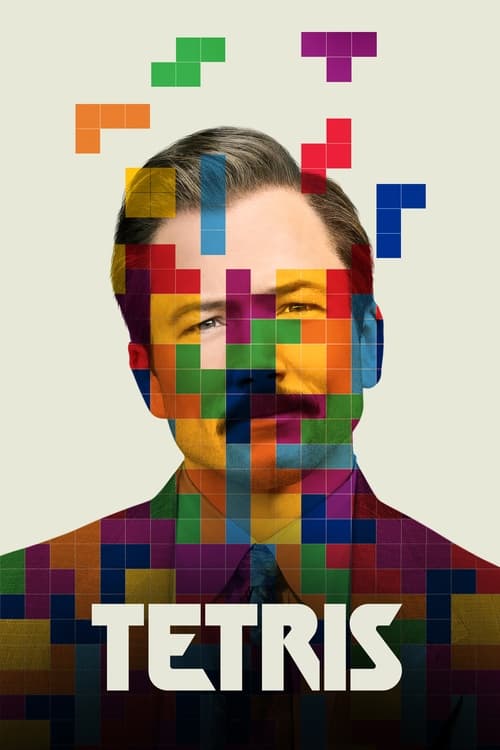
Tetris
"The game you couldn't put down. The story you couldn't make up."
Overview
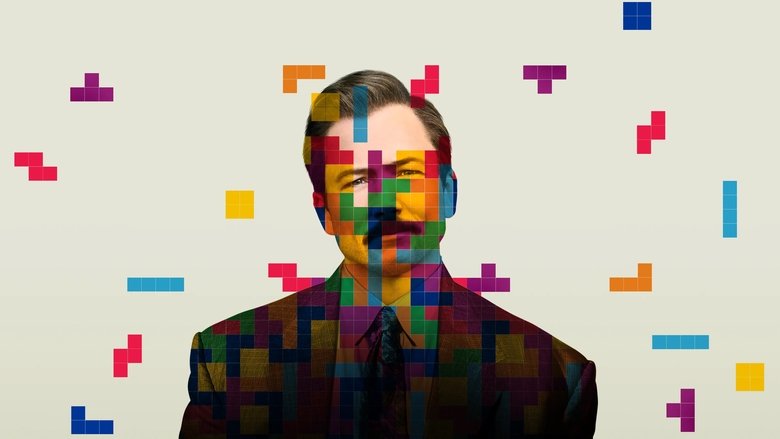
Set against the frosty backdrop of the Cold War, Tetris (2023) plunges into the surprisingly dangerous and chaotic true story behind the world's most addictive video game. The film follows Henk Rogers, a fiercely determined Dutch-American video game entrepreneur who discovers the titular puzzle game at a trade show and instantly recognizes its universal appeal. His obsession with securing the global distribution rights propels him into a high-stakes corporate and political labyrinth.
As Rogers ventures directly into the heart of the Soviet Union, he finds himself entangled in a volatile web of corrupt government officials, KGB agents, and rival media tycoons—including the ruthless Robert Maxwell and his son Kevin. Despite the mounting danger, Rogers forms an unlikely but profound friendship with the game's humble creator, Alexey Pajitnov. Together, they must navigate a treacherous system where art is property of the state and personal ambition can be a death sentence.
Directed by Jon S. Baird, the film brilliantly disguises a boardroom legal battle as a propulsive espionage thriller. Fusing nostalgic 8-bit graphics with a synthesized period soundtrack, it masterfully illustrates how a simple game of falling blocks bridged a massive cultural divide, ultimately becoming a global phenomenon.

Core Meaning
At its core, Tetris is a testament to the unifying power of art and human connection across seemingly insurmountable ideological divides. The director uses the creation and distribution of the game to contrast the oppressive, state-controlled environment of Soviet communism with the cutthroat, profit-driven motives of Western capitalism. Through the platonic love story between Henk Rogers and Alexey Pajitnov, the film suggests that genuine passion for creation and play can transcend political boundaries and corporate greed. It argues that art, even in the form of a simple digital puzzle, belongs to the world and has the profound ability to bring out our shared humanity.
Thematic DNA
Capitalism vs. Communism
The film sharply contrasts the Western capitalist drive for individual wealth and corporate monopoly with the Soviet communist system, where individual intellectual property is denied in favor of the state. This ideological clash is personified through Henk's entrepreneurial hustle and Alexey's forced humility under the watchful eye of ELORG and the KGB.
The Unifying Power of Play
Despite the dangerous political climate, Henk and Alexey find common ground through their mutual love for game design. The universal language of play breaks down the Iron Curtain between them, proving that human connection and joy can outmaneuver bureaucratic paranoia.
Greed and Corporate Espionage
The cutthroat tactics of Robert Maxwell, Robert Stein, and corrupt Soviet officials highlight the destructive nature of unchecked greed. The film portrays business negotiations as a high-stakes spy game, where contracts are manipulated, and alliances are constantly betrayed for a piece of the lucrative pie.
Artistic Integrity and Recognition
A central emotional pillar is Henk's genuine desire to see Alexey credited and compensated for his brilliant creation. The film champions the rights of the creator over the exploitative entities that seek to profit from their genius without contributing to the art itself.
Character Analysis
Henk Rogers
Taron Egerton
Motivation
Initially driven by the need to provide for his family and save his failing business, his motivation shifts to protecting his friend and the integrity of the game.
Character Arc
Henk evolves from a desperate, debt-ridden salesman focused purely on profit into a loyal friend willing to risk his life and livelihood to ensure Alexey receives the recognition he deserves.
Alexey Pajitnov
Nikita Efremov
Motivation
To create pure, elegant puzzles that bring people joy, while protecting his family from the dangerous political consequences of his invention.
Character Arc
Living in fear of the KGB and the state, Alexey transitions from a guarded, paranoid state employee to a bold collaborator willing to subvert his own oppressive government for the sake of his art and friendship.
Robert Maxwell
Roger Allam
Motivation
Absolute power, financial dominance, and maintaining his status among the global elite.
Character Arc
A static representation of arrogant, imperialistic greed, Maxwell uses his media empire and political connections to bully his way into the deal, only to ultimately face bankruptcy and defeat.
Valentin Trifonov
Igor Grabuzov
Motivation
Personal enrichment and survival at the expense of both communist ideals and human lives.
Character Arc
As a ruthless KGB agent, he initially serves the state with an iron fist, but his arc reveals him as a hypocrite attempting to extort Western capitalists for his own personal fortune as he senses the impending collapse of the Soviet Union.
Symbols & Motifs
Falling Blocks (Tetrominoes)
The continuous, accelerating cascade of blocks symbolizes both the escalating tension of the Cold War negotiations and the psychological need to find order within chaos.
Henk visualizes life as falling blocks after first playing the game, and the 8-bit aesthetic is woven throughout the film to transition scenes and represent the characters' mental states.
The Vague Contract
It represents control, power, and the contrasting ideologies of the East and West. It is the ultimate MacGuffin that drives the espionage.
The ambiguous language regarding computers versus consoles drives the entire plot, weaponized by different factions to claim ownership of the game.
The Game Boy
It symbolizes the future, the democratization of technology, and the ultimate triumph of accessible joy over restrictive boundaries.
Henk secretly views the prototype at Nintendo, realizing it requires a universal game like Tetris to transcend demographics and unite players globally.
Memorable Quotes
It's poetry. Art and math all working in magical synchronicity. It's the perfect game.
— Henk Rogers
Context:
Henk is passionately pitching the game's potential to the skeptical executives at Nintendo, trying to secure the Game Boy deal.
Meaning:
This encapsulates Henk's profound appreciation for the game, elevating it from a mere commercial product to a piece of universal art.
In business, there are no friends, only opportunities.
— Robert Maxwell
Context:
Maxwell dismisses the human element of the negotiations, prioritizing his aggressive tactics to acquire the rights.
Meaning:
This highlights the ruthless, capitalistic greed that stands in stark contrast to the genuine friendship forming between Henk and Alexey.
If you include Mario, the Game Boy will be for little boys, but if you include Tetris, the Game Boy will be for everybody.
— Henk Rogers
Context:
Henk argues with Nintendo executives, convincing them to bundle Tetris instead of their flagship character for the launch of the new handheld console.
Meaning:
A brilliant marketing insight that cemented Tetris as the essential pack-in game, emphasizing its universal, demographic-transcending appeal.
Good ideas have no borders.
— Alexey Pajitnov
Context:
Spoken during a moment of bonding between Alexey and Henk, realizing they are kindred spirits despite their opposing national allegiances.
Meaning:
A poignant reflection on how human creativity cannot be contained by political ideologies or physical walls like the Iron Curtain.
Philosophical Questions
Who truly owns a piece of art?
The film delves into the conflict between intellectual property and state ownership. It questions whether a creator's work belongs to the individual mind that conceived it, the corporation that markets it, or the state that employs the creator.
What is the moral cost of ambition?
Henk risks his family's financial ruin, his marriage, and his own life in the Soviet Union to secure the game. The film asks audiences to weigh the line between visionary determination and reckless obsession.
Can play transcend ideological boundaries?
By showing characters from deeply opposed political systems bonding over a puzzle game, the narrative explores whether pure human joy and the instinct for play are universal traits that can dissolve societal and political conditioning.
Alternative Interpretations
While generally viewed as a crowd-pleasing story of triumph, Tetris has sparked alternative interpretations regarding its political messaging. Some critics argue that the film implicitly glorifies Western capitalism and materialism. In this reading, Henk Rogers, despite his pure intentions for his friend, is ultimately validated by returning home a millionaire, framing financial success as the ultimate victory over the creatively stifling Soviet system.
Conversely, another interpretation suggests the film is a critique of both systems. The Soviet government is shown as oppressively bureaucratic and corrupt, but the Western capitalists—personified by the deceitful Robert Stein and the tyrannical Robert Maxwell—are depicted as equally ruthless and morally bankrupt. Through this lens, the film posits that both unadulterated capitalism and state-controlled communism are fundamentally flawed, and the only true moral victor is the genuine, borderless human connection and shared passion between individual creators.
Cultural Impact
Tetris arrived in 2023 during a cinematic wave of corporate "brand biopics" (alongside Air and BlackBerry), shifting the focus from the products themselves to the obsessive human stories behind them. Culturally, the film recontextualizes one of the most ubiquitous digital games in history, transforming it from a simple time-killer into a profound artifact of the late Cold War. By highlighting the crumbling Soviet bureaucracy, the movie serves as a historical microcosm of the late 1980s, illustrating the breaking of the Iron Curtain through digital entertainment.
Critically, the film was well-received for its energetic pacing and Taron Egerton's charismatic performance, holding a favorable 82% on Rotten Tomatoes. While some critics noted that the convoluted legal machinations sometimes slowed the narrative, audiences praised it as an educational and highly entertaining espionage thriller. By exposing the perilous journey of Alexey Pajitnov and Henk Rogers, the film ensures that the legacy of Tetris is forever linked not just to falling blocks, but to a triumph of friendship over geopolitical hostility.
Audience Reception
Audiences responded enthusiastically to Tetris, pleasantly surprised by its pivot from a potential video game adaptation into a fast-paced, Cold War espionage thriller. Viewers highly praised Taron Egerton's energetic, grounded performance and the genuine emotional weight of his friendship with Nikita Efremov's Alexey. The stylistic choice to include retro 8-bit graphics and synthesizer-heavy music was also lauded as a fun, nostalgic touch that kept the film's tone buoyant.
On the critical side, some audiences felt the intricate details of contract law and licensing agreements became overly convoluted, occasionally bogging down the second act. Furthermore, history buffs and purists pointed out the heavy Hollywood dramatization—specifically the fabricated, action-heavy car chase at the climax. However, the overall verdict from audiences is that Tetris is a highly entertaining, crowd-pleasing biopic that successfully turns a story about copyright law into a thrilling and heartwarming adventure.
Interesting Facts
- Alexey Pajitnov originally programmed Tetris on an Elektronika 60 computer, using simple text brackets to form the falling blocks because the machine had no graphical interface.
- Taron Egerton wore a fake mustache to closely resemble the real-life Henk Rogers, and studied tapes of Rogers to mimic his accent and mannerisms.
- The real-life Henk Rogers and Alexey Pajitnov served as executive producers and consultants on the film, ensuring the 'spiritual truth' of their friendship was portrayed accurately.
- Despite the intense action in the film's climax, the real Henk Rogers confirmed that the high-speed car chase to the Moscow airport with the KGB never actually happened.
- Director Jon S. Baird envisioned the film not as a standard biopic, but as a 'Cold War thriller on steroids' mirroring the tone of films like 'The Social Network' and 'Argo'.
Easter Eggs
8-bit scene transitions and pixelated car crashes
Throughout the film, establishing shots and even the climactic car chase feature vehicles and buildings morphing into 8-bit graphics. This is a direct stylistic homage to the era of gaming that Tetris helped define, breaking the fourth wall to remind the audience they are watching a story about a video game.
Real-life cameos during the epilogue
During the film's epilogue and credits, archival footage and photographs of the real Henk Rogers and Alexey Pajitnov are shown, honoring the real men who lived through the bureaucratic nightmare to bring the game to the masses.
Nintendo executive's hatred of Atari
A Nintendo executive explicitly mentions how much they hate Atari. This is a comedic nod to the intense, real-life 'console wars' and the massive legal battles between Nintendo and Atari (Tengen) during the late 80s over publishing rights for games, including Tetris itself.
⚠️ Spoiler Analysis
Click to reveal detailed analysis with spoilers
Frequently Asked Questions
Explore More About This Movie
Dive deeper into specific aspects of the movie with our detailed analysis pages
Comments (0)
No comments yet. Be the first to share your thoughts!