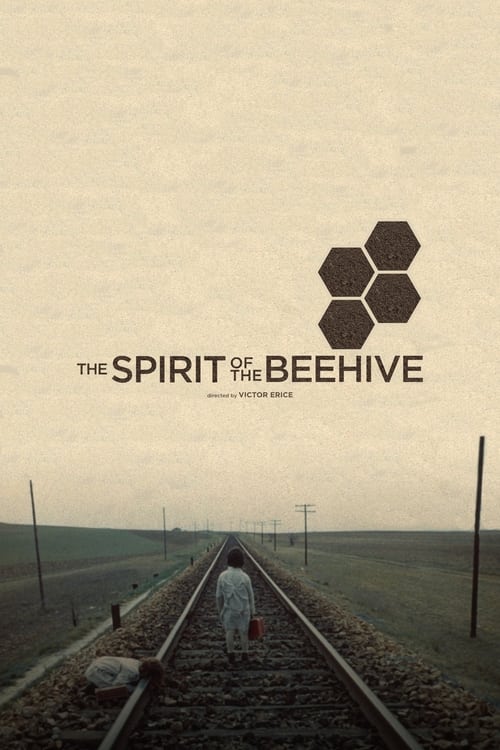
The Spirit of the Beehive
El espíritu de la colmena
Overview
In a remote Castilian village in 1940, just after the Spanish Civil War, a traveling cinema brings James Whale's 1931 classic Frankenstein to the isolated community. Six-year-old Ana is profoundly affected by the film, particularly the scene where the Monster interacts with a young girl. Her older, mischievous sister Isabel convinces her that the Monster is not dead, but rather a spirit that can be summoned if one knows how to call him.
Believing her sister's tale, Ana begins to seek out the spirit in the barren landscape surrounding her village. Her search leads her to an abandoned sheepfold, where she discovers a wounded Republican fugitive hiding from the Francoist police. Ana's innocence blurs the lines between reality and cinematic fantasy as she secretly tends to the man, viewing him through the lens of the misunderstood monster she saw on screen.
As the adult world of political oppression inevitably encroaches upon Ana's quiet, imaginative existence, her family's already fragile dynamics begin to unravel. The film slowly builds into a haunting exploration of trauma, the loss of innocence, and the profound power of art to both shelter and expose the vulnerabilities of the human spirit.
Core Meaning
Víctor Erice uses the perspective of an innocent child to construct a veiled, allegorical critique of life under Francisco Franco's oppressive regime. The director illustrates how a society traumatized by war and silenced by authoritarian rule becomes emotionally paralyzed and alienated—much like the mindless, mechanical workers within a beehive. Through Ana's fascination with Frankenstein's monster, the film suggests that what the state dictates as "monstrous" or "other" often harbors true humanity. Ultimately, the film champions the power of imagination and cinema as vital tools for survival, resistance, and understanding in a world governed by censorship and fear.
Thematic DNA
The Trauma of War and Fascism
Set immediately after the Spanish Civil War, the film reflects the devastation of Spain under Franco. The adults, particularly Ana's parents, are emotionally distant, trapped in their own silent despair and isolation. The oppressive political atmosphere is felt off-screen, dictating a pervasive sense of dread and shaping the literal and metaphorical boundaries of the characters' lives.
The Power of Cinema and Imagination
The arrival of the traveling cinema is the catalyst for Ana's awakening. Frankenstein introduces her to the concept of the "Other" and blurs the line between fiction and reality. Ana's vivid imagination becomes a coping mechanism to process the harsh, inexplicable realities of adulthood, death, and political violence.
Childhood Innocence vs. Adult Corruption
Ana represents the pure, untainted generation of post-war Spain, perceiving the world without ideological prejudice. She approaches the wounded soldier with empathy rather than fear. In contrast, Isabel bridges the gap to adulthood, using deceit and manipulation, while the adults are entirely paralyzed by their pasts and the regime's stifling order.
Silence and Alienation
Dialogue is sparse, and the family members are rarely seen in the same frame. Fernando isolates himself with his bees and poetry, while Teresa writes letters to an absent lover. This profound lack of communication symbolizes the censorship and mutual suspicion enforced by the totalitarian state, leaving Ana to navigate her fears entirely alone.
Character Analysis
Ana
Ana Torrent
Motivation
To understand the mysteries of life, death, and the "Other" as presented on the cinema screen, driving her to search for the monster's spirit.
Character Arc
Ana transitions from a passive observer of a movie to an active participant in her own reality. Her quest to find the "spirit" of the monster leads her to discover real-world violence. Trauma forces her to retreat inward, ultimately asserting her own solitary identity in the darkness.
Isabel
Isabel Tellería
Motivation
To entertain herself in a desolate environment by exerting power and exploiting Ana's gullibility.
Character Arc
Isabel moves further away from childhood innocence toward the manipulative behaviors of the adult world. She experiments with cruelty—strangling a cat and faking her own death—testing the boundaries of life and the emotional responses of her vulnerable sister.
Fernando
Fernando Fernán Gómez
Motivation
To find order and meaning through his intellectual pursuits (beekeeping, writing) as a refuge from a society he finds horrifying.
Character Arc
Fernando remains static, a man broken by the civil war. He goes through the motions of his daily routine, observing his bees and pacing his study at night, unable to connect with his family or affect the changing world around him.
Teresa
Teresa Gimpera
Motivation
To escape the suffocating reality of her loveless marriage and the oppressive state of her country through romantic nostalgia.
Character Arc
Teresa experiences a purely internal arc, trapped in physical reality but living mentally in the past or a fabricated fantasy. She remains distant from her children and husband, finding solace only in writing letters to a distant, perhaps imaginary, lover.
Symbols & Motifs
The Beehive
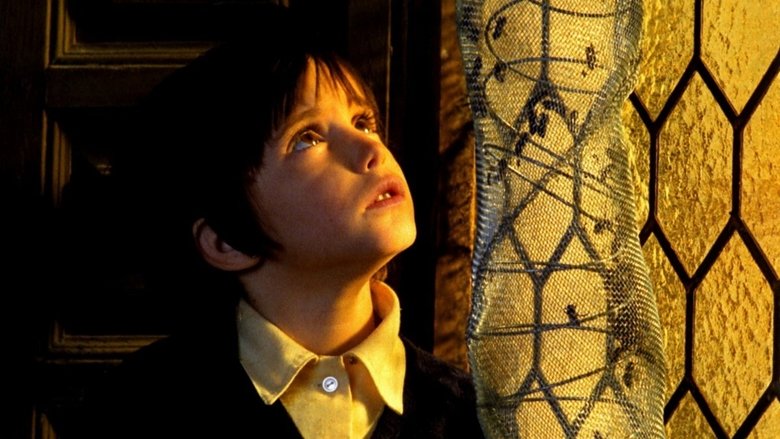
The glass beehive Fernando tends symbolizes the society of Francoist Spain: ordered, industrious, and endlessly repetitive, but entirely devoid of individuality, imagination, or soul. The hexagonal motifs reinforce that the family is trapped within this oppressive structure.
Used visually in the literal beehives and the honeycomb-patterned glass of the manor's windows. Fernando writes about the horrifying, frantic commotion of the hive during his sleepless nights.
Frankenstein's Monster
The Monster represents the "Other"—the defeated Republicans, the outcasts, and perhaps even the looming specter of Franco himself. To Ana, the Monster is a misunderstood spirit of loneliness, mirroring her own alienation and becoming a vessel for her empathy.
First seen on the cinema screen, the Monster's image haunts Ana's thoughts, reflects in the river, and is superimposed onto her perception of the wounded soldier and her own father.
The Poisonous Mushroom
The deadly mushroom symbolizes the hidden dangers of the adult world, the deception of appearances, and the lethal consequences of making the wrong choice under a fascist regime. It is a lesson in survival and a metaphor for censorship.
Fernando takes his daughters foraging and explicitly teaches them to identify and destroy the poisonous mushroom so nobody is harmed by its deceiving appearance.
The Pocket Watch
The musical pocket watch symbolizes the passage of time, the inescapable reality of the adult world, and the haunting presence of memory. It bridges the gap between Ana's innocent fantasy and the lethal consequences of the political reality.
Fernando's watch is given by Ana to the fugitive soldier. When the soldier is killed, the police find it and it plays its chime, alerting Fernando to Ana's actions.
Memorable Quotes
Soy Ana.
— Ana
Context:
The final shot of the film. Ana stands by the window at night, looking out into the darkness, whispering her name to summon the spirit of the monster.
Meaning:
This is the ultimate assertion of Ana's identity. Stripped of her illusions and isolated from her family, she embraces the darkness and the spirit within herself. It represents her survival and her solitary stand against the oppressive environment.
Why did he kill the girl, and why did they kill him after that?
— Ana
Context:
Ana asks her older sister Isabel this question in bed, whispering in the dark after they have just returned from watching Frankenstein.
Meaning:
This quote encapsulates Ana's fundamental inability to understand senseless violence and prejudice. It perfectly frames the central theme of the film: the loss of innocence in a world where the innocent are destroyed and the misunderstood are persecuted.
If you're not sure that a mushroom is good, don't pick it. Because if it's bad, and you eat it, it's your last mushroom and your last everything else.
— Fernando
Context:
Fernando is walking through the countryside with Ana and Isabel, teaching them how to identify different types of mushrooms.
Meaning:
Beyond practical foraging advice, this quote serves as a grim metaphor for navigating life under Francisco Franco's regime. One wrong move, one misplaced trust, or one subversive action can lead to absolute destruction.
Philosophical Questions
How does innocence process the concept of mortality and violence?
The film contrasts the adults' paralyzed, unspoken trauma with Ana's active, innocent questioning. By filtering the brutality of death and political execution through the lens of a movie monster, the narrative asks whether fantasy is a necessary shield for the innocent mind to comprehend the incomprehensible.
Can society function without the spirit of individuality?
Through Fernando's monologue about the beehive—a society characterized by frantic, mindless labor and an intolerance for the sick or dying—the film asks what happens to humanity when individuals are forced into absolute conformity, sacrificing their souls for the mechanics of the state.
What is the true nature of a 'monster'?
By making Frankenstein's creation an object of Ana's empathy rather than fear, the film challenges societal definitions of monstrosity. It questions whether the true monsters are the outcasts and the persecuted, or the authoritarian forces and societal indifference that destroy them.
Alternative Interpretations
While widely viewed as a political allegory about Francoist Spain, The Spirit of the Beehive invites several other rich interpretations. Some critics argue the film is primarily a meta-cinematic essay on the power of film itself. In this reading, the Frankenstein monster is not a political figure but the embodiment of "movie magic" and fiction's ability to infect reality. Ana's journey represents the viewer's suspension of disbelief, culminating in a state where cinema and life are indistinguishable.
Another popular interpretation leans into psychoanalysis and the Gothic horror tradition, viewing the film as a coming-of-age story about confronting the Freudian "Other." Ana's obsession with the monster can be seen as a manifestation of her subconscious desire to connect with her distant, emotionally unavailable father (who is visually linked to the monster via his protective beekeeping suit). The film's ambiguous ending, where Ana summons the spirit, is debated: some see it as a tragic descent into delusion and isolation, while others interpret it as a triumphant assertion of her individuality and resilience against a conforming society.
Cultural Impact
Released in 1973, mere years before the death of dictator Francisco Franco, The Spirit of the Beehive is widely hailed as a masterpiece and a defining work of Spanish cinema. Its release marked a watershed moment, proving that filmmakers could subtly subvert and critique the authoritarian regime through allegory, symbolism, and poetic ellipsis rather than overt political statements.
The film's exploration of trauma, childhood innocence, and the blurring of fantasy and reality left an indelible mark on modern cinema, serving as the direct blueprint for Mexican auteur Guillermo del Toro. Del Toro frequently cites the film as one of his top three favorite movies, and its influence is heavily apparent in his works The Devil's Backbone and Pan's Labyrinth, both of which feature child protagonists navigating the horrors of the Spanish Civil War through the lens of fantasy and monsters.
Upon release, it won the Golden Shell at the San Sebastián International Film Festival, though its slow, deliberate pacing polarized early audiences used to straightforward narratives. Today, critics universally praise its cinematography—often compared to Vermeer paintings—and Ana Torrent's hauntingly naturalistic debut performance. It remains a crucial text in film studies for its use of off-screen space, visual metaphor, and atmospheric dread, cementing Víctor Erice as a legendary, albeit elusive, auteur.
Audience Reception
Audiences and critics revere The Spirit of the Beehive for its breathtaking visual poetry and masterful subtlety, frequently highlighting Luis Cuadrado's honey-hued cinematography and the extraordinary, wide-eyed performance of young Ana Torrent. Viewers consistently praise the film's ability to capture the authentic, unhurried rhythm of childhood and its profound respect for the intelligence of its audience, requiring them to decode its visual metaphors.
However, the film's unconventional structure is often cited as a point of friction for casual viewers. The extreme pacing, minimal dialogue, and lack of a traditional plot arc can be polarizing, leading some to describe it as slow or overly opaque. The elliptical narrative, where crucial events happen off-screen or are left unexplained, frustrates those seeking clear answers.
Despite this, the overall verdict is overwhelmingly positive. It is widely considered an essential arthouse classic—a deeply moving, melancholic masterpiece that rewards patience and repeated viewings with its rich thematic layers and haunting atmosphere.
Interesting Facts
- Ana Torrent was only six years old during filming and genuinely believed the actor playing Frankenstein's monster was real, becoming deeply disturbed when he appeared on set.
- Director Víctor Erice originally intended the film to include a voice-over from an adult Ana and scenes featuring abandoned cannons to explicitly reference the Spanish Civil War, but these were cut.
- The cinematographer, Luis Cuadrado, was progressively going blind during the production of the film. He relied heavily on his assistants to execute his instructions for the film's famously beautiful lighting.
- To maintain a naturalistic feel, Erice used the actors' real first names for their characters, helping the child actors respond more naturally on camera.
- The film circumvented severe Francoist censorship because the state censors believed its slow pace and artistic ambiguity would make it completely unappealing and harmless to general audiences.
- The film's title, "The Spirit of the Beehive", is derived from a phrase in a book by the Belgian playwright and poet Maurice Maeterlinck, specifically from his work "The Life of the Bee."
Easter Eggs
The casting of Fernando Fernán Gómez
Gómez was a highly recognizable veteran actor in Spain who had appeared in over a hundred films. His casting added a layer of weary, familiar humanity to the bleak and austere visual style of the movie, anchoring the abstract themes for the Spanish audience.
Direct visual homage to James Whale's Frankenstein
The framing of Ana by the water, looking at her own reflection just before encountering the monster, directly mirrors the iconic lakeside scene in the 1931 Frankenstein, emphasizing the blurred line between the cinematic monster and Ana's own identity.
The location of Hoyuelos
The village where the film was shot, Hoyuelos in the Castilian plain, kept its real name in the film. Using a genuine, desolate, slowly decaying village enhanced the neorealist, documentary-like undercurrents of the narrative.
⚠️ Spoiler Analysis
Click to reveal detailed analysis with spoilers
Frequently Asked Questions
Explore More About This Movie
Dive deeper into specific aspects of the movie with our detailed analysis pages
Comments (0)
No comments yet. Be the first to share your thoughts!