Skip to content
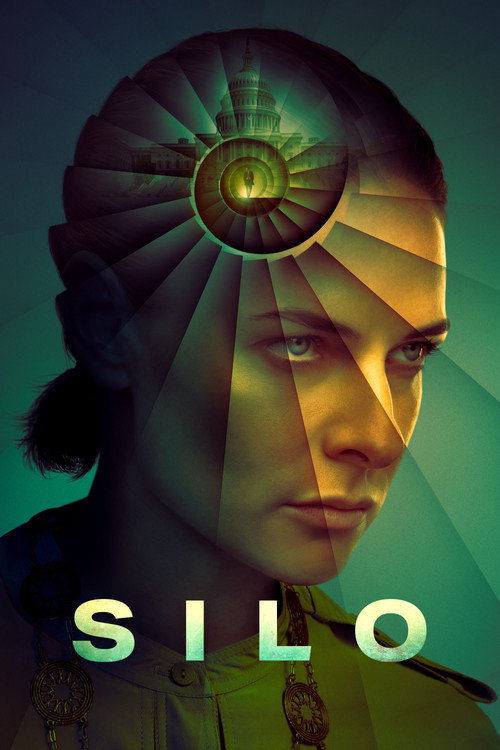
Silo
A claustrophobic sci-fi thriller steeped in pervasive paranoia, where endless brutalist staircases and toxic horizons metaphorically entrap humanity's desperate urge to break free from comfortable, lethal lies.
Silo

Silo

"The key to the future lies in the past."

04 May 2023 — 30 July 2026 United States of America 4 season 30 episode Returning Series 8.2 (2,361)

Cast: Rebecca Ferguson, Common, Chinaza Uche, Tim Robbins, Billy Postlethwaite

Drama Sci-Fi & Fantasy Truth vs. Totalitarian Control The Ethics of the "Noble Lie" Memory, Artifacts, and Historical Erasure Curiosity and the Instinct for Freedom Vertical Class Hierarchy and Isolation

Overview

Silo is a dystopian science-fiction television drama created by showrunner Graham Yost, based on the bestselling book trilogy (Wool, Shift, Dust) by Hugh Howey. Set in a bleak future where the last remaining 10,000 human beings reside inside a giant, 144-level subterranean bunker, the series explores a society whose history has been systematically erased. The citizens live under strict regulatory laws ("The Pact") designed to preserve order and prevent rebellion, while any individual who expresses curiosity about the outside world or utters the forbidden phrase "I want to go outside" is condemned to exit the structure to "clean" its external sensors before collapsing in the toxic wasteland.

The broader narrative arc follows Juliette Nichols, a skilled mechanical engineer from the Silo's lowest depths, who is unexpectedly thrust into the role of Sheriff. Her investigation into a loved one's mysterious death uncovers a web of institutional deception, surveillance, and conspiracy orchestrated by the enigmatic IT department and judicial authorities. As Juliette digs deeper, her quest for truth shatters the isolated reality of her home, revealing that their Silo is merely one node in an interconnected network of subterranean vaults and prompting a struggle for rebellion, survival, and the restoration of humanity's true origins.

Across its multi-season run, the show expands its lens from a tight, claustrophobic mystery inside a single bunker to an epic survival saga spanning ruined neighboring Silos and long-buried past timelines. By weaving present-day struggles with origin stories set centuries prior, Silo examines how fragile human civilisations become when held together by enforced amnesia, corporate tyranny, and manufactured fear.


Core Meaning

The central thesis of Silo is that survival purchased through total state control, historical erasure, and noble lies ultimately dehumanizes society and guarantees its collapse. The creators argue that human curiosity and the search for truth are irrepressible instincts. While authoritarian systems justify total surveillance and information suppression as necessary measures to prevent self-destruction, Silo demonstrates that a community built on manufactured illusions is fundamentally fragile. True resilience requires transparency, accountability, and the courage to face dangerous realities rather than residing in comfortable captivity.

Thematic DNA

Truth vs. Totalitarian Control 30%
The Ethics of the "Noble Lie" 25%
Memory, Artifacts, and Historical Erasure 20%
Curiosity and the Instinct for Freedom 15%
Vertical Class Hierarchy and Isolation 10%

Truth vs. Totalitarian Control

The overarching conflict centers on the struggle between authoritarian governance and individual enlightenment. The ruling authorities (IT and Judicial) maintain absolute authority by strictly controlling technology, outlawing pre-rebellion "relics," and executing dissidents through forced cleaning. The series illustrates how total control relies on controlling the narrative: when citizens lose their past, they lose their ability to imagine a different future.

The Ethics of the "Noble Lie"

The narrative presents a nuanced moral dilemma regarding whether deception is justifiable if it prevents mass panic and extinction. Key figures like Bernard Holland believe that enforcing absolute order—even through murder and artificial VR illusions—is a moral duty required to keep 10,000 people alive. The show continually evaluates the cost of this philosophy, asking if life in a cage maintained by falsehoods is truly worth living.

Memory, Artifacts, and Historical Erasure

Throughout the series, physical artifacts ("relics") from the "Before Times" function as catalysts for awakening. Books, cameras, and everyday objects carry the memory of what humanity once was. The systemic destruction of history by the state emphasizes that memory is an act of resistance; remembering the past is the only way to break cyclical oppression.

Curiosity and the Instinct for Freedom

Despite oppressive indoctrination, the human spirit persistently questions its boundaries. Characters across generations—from Allison and Holston to Juliette and Lukas—are driven by an innate impulse to look beyond the screen. Silo frames curiosity not as a dangerous flaw, but as an essential evolutionary driver for human progress.

Vertical Class Hierarchy and Isolation

The physical architecture of the Silo directly mirrors its socio-economic strata. The elite rule in the Upper levels, administrators occupy the Middle, and laborers toil in the dark, hot environment of Mechanical at the bottom. This physical separation fosters prejudice, isolation, and systemic inequality, showing how tyrannical regimes divide populations to prevent unified uprisings.

Character Analysis

Juliette Nichols

Rebecca Ferguson

Archetype: Reluctant Hero / Practical Truth-Seeker Key Trait: Unyielding pragmatic determination and mechanical mastery.

Motivation

Evolves from seeking personal justice for her lover George's murder to taking responsibility for the liberation of the entire population.

Character Arc

Begins as an isolated, grief-stricken engineer in Mechanical who avoids social interaction and buries herself in machines. Upon becoming Sheriff, her relentless problem-solving drive transforms her into an iconic rebel leader who uncovers the multi-silo conspiracy and survives the toxic surface.

Bernard Holland

Tim Robbins

Archetype: Pragmatic Antagonist / Zealot of Order Key Trait: Calculated, emotionless utilitarianism masking deep-seated anxiety.

Motivation

Preserving human life at any cost through total control and narrative suppression.

Character Arc

Starts as the cold, bureaucratic Head of IT who ruthlessly enforces the Pact to maintain stability. As secrets unravel, he is revealed to be a burdened pawn answering to external directives, eventually forced into a desperate battle to keep the Silo from destroying itself.

All 5 characters and cast

Symbols & Motifs

Heat Tape

Meaning:

Symbolizes the thin line between structural sabotage and survival.

Context:

The inferior heat tape supplied by IT causes the cleanings suits to fail quickly, killing cleaners. When Juliette's allies swap it for high-grade Mechanical tape, it becomes a symbol of practical working-class ingenuity breaking a state-sponsored death trap.

The Central Spiral Staircase

Meaning:

A visual motif for class struggle, physical toil, and the immense burden of communication across a divided society.

Context:

Traversing the stairs requires immense physical sacrifice, emphasizing how the state keeps citizens tired, localized, and separated.

Relics (Pez Dispenser, Pocket Watch, Star Guide)

Meaning:

Symbols of forbidden truth and human connection to a forgotten past.

Context:

These mundane items from the pre-collapse era carry immense subversive power, proving that the world was once vast, vibrant, and populated by a different civilization.

The Visor / VR Helmet Display

Meaning:

Represents engineered illusion and manufactured hope.

Context:

The helmet's digital visor projection shows a lush, green landscape to fool cleaners into wiping the camera lens clean so those inside can see, concealing the harsh reality that the air outside remains deadly.

The Generator / Mechanical Water Pump

Meaning:

Symbolizes the pulse of the Silo and the raw physical labor sustaining the illusion of civilization.

Context:

Its maintenance requires constant risk, highlighting the systemic reliance on lower-class workers whom the upper administration treats as expendable.

Memorable Quotes

We do not know why we are here. We do not know who built the silo. We do not know why everything outside the silo is as it is. We do not know when it will be safe to go outside. We all know that day is not today.
— Holston Becker and Bernard Holland

Context

Season 1, Episode 1 ("Freedom Day") during public ceremonies and cleanings.

Meaning

Establishes the foundational dogma of the Silo's psychological conditioning, reiterating institutional fear to keep citizens obedient.

I want to go outside.
— Allison Becker / Holston Becker

Context

Season 1, Episode 1 & 2 when characters choose fatal exile over living in state-enforced deception.

Meaning

The ultimate taboo sentence; once spoken aloud, it triggers an irrevocable death sentence via cleaning.

All 5 quotes

Episode Highlights

Freedom Day

S1E1

Introduces the world, the rule of the Pact, and the central mystery through Allison Becker's tragic suspicion that the outside view is fake.

Significance:

Sets off the chain of investigative events that pulls Holston and eventually Juliette into uncovering the Silo's dark origin.

Machines

S1E3

Juliette agrees to become Sheriff on the condition that she be granted time to repair the Silo's failing primary generator in a high-stakes engineering sequence.

Significance:

Solidifies Juliette's competence, establishes the class friction between Upper IT and Mechanical, and grounds the physical reality of the Silo's life-support systems.

The Relic

S1E6

Juliette investigates illegal relics and ends up discovering a hidden LCD camera monitoring room in Judicial/IT.

Significance:

A major narrative shift revealing that the entire Silo population is under constant, high-tech surveillance by hidden authorities.

Outside

S1E10

Juliette is forced to clean; wearing suit sealed with Mechanical's superior heat tape, she refuses to clean the camera, climbs the hill, and sees dozens of other Silos buried in a scorched landscape.

Significance:

Gamchanging season finale that shatters the single-Silo illusion and expands the scope of the universe.

The Engineer

S2E1

Focuses entirely on Juliette exploring the corpse-filled, flooded ruins of Silo 17 after her escape from Silo 18.

Significance:

Demonstrates what happens when a Silo rebellion fails completely, introducing the hermit character Solo (Jimmy).

Into the Fire

S2E10

The rebellion in Silo 18 reaches a dramatic climax while Juliette attempts to bridge communication between Silos.

Significance:

Realigns major factions inside Silo 18 and triggers Bernard's loss of absolute control.

Who Are You?

S3E1

Juliette copes with trauma and memory loss while the narrative introduces Dual-Timelines, cutting back to the "Before Times".

Significance:

Expands the mythology by showing the political climate and apocalyptic planning that led to the creation of the Silo network centuries earlier.

Memory

S3E5

Highly acclaimed episode where key characters flip sides and Juliette recovers critical lost memories regarding the Silo's true safeguard systems.

Significance:

Accelerates the endgame trajectory of the series, bringing past and present storylines together.

Philosophical Questions

Is a comfortable lie morally superior to a lethal truth?

The series challenges viewers to consider whether authorities are justified in lying to a population if exposing the harsh reality leads to mass panic and social extinction.

What defines human identity when collective memory is erased?

By depicting a society stripped of its history, Silo asks if humanity can maintain genuine moral progress when severed from its past mistakes and cultural heritage.

Can security and freedom ever truly coexist in extreme conditions?

The narrative explores the totalitarian trap: as life-support requirements become more fragile, state surveillance and control become more absolute, questioning if true freedom is possible under survival pressure.

Alternative Interpretations

The Allegory of Plato's Cave: The Silo can be interpreted as a literal manifestation of Plato's Cave. The citizens watch projected shadows of the outside world on a giant cafeteria screen. The "cleaners" who step outside are like those freed from the cave; even when shown the truth, the illusion is so deeply ingrained that artificial VR projections still dictate their final moments.

Full ending explanation

Cultural Impact

Silo emerged during a period of heightened cultural anxiety regarding post-truth politics, institutional opacity, climate collapse, and digital surveillance. Released alongside a wave of cerebral streaming sci-fi, the series earned critical acclaim for avoiding standard post-apocalyptic action tropes in favor of a grounded, character-driven mystery.

Critics praised the series for its immersive worldbuilding, writing, and standout performances by Rebecca Ferguson and Tim Robbins. Season 1 was universally hailed as a masterclass in slow-burn tension, while Season 2 expanded the lore to strong viewer engagement despite minor complaints about split-location pacing. Season 3 received high critical praise for integrating pre-apocalyptic origin timelines. Silo is widely regarded as a benchmark for high-concept, atmospheric book adaptations on television.

Audience Reception

Season 1 Reception: Enthusiastically received (88%+ Rotten Tomatoes). Viewers praised the claustrophobic atmosphere, physical set design, and the shocking finale twist where Juliette walks over the hill.

Season 2 Reception: Highly positive, though slightly more polarized regarding pacing. Audiences loved the introduction of Silo 17 and Steve Zahn's performance as "Solo", though some felt splitting screen time between Juliette's isolated journey and Silo 18's political rebellion slowed narrative momentum.

Season 3 Reception: Acclaimed for answering long-standing origin mysteries. The dual-timeline structure featuring pre-collapse political figures was widely praised for adding emotional depth and explaining why the Silos were built.

Overall Audience Verdict: Celebrated as an intelligent, visually grounded dystopian drama that rewards attentive viewing.

Interesting Facts

  • Production built one of the largest practical sets in UK television history at Hoddesdon Studios, including a three-story, full-scale concrete spiral staircase extended digitally to 144 levels.
  • Rebecca Ferguson served as an Executive Producer alongside starring, heavily influencing Juliette's gritty characterization and performing many of her own physical and underwater stunts.
  • Showrunner Graham Yost worked directly with novel author Hugh Howey, adapting the books while expanding Judicial's role and pacing timeline reveals to fit the overall trilogy vision.
  • Composer Atli Örvarsson created a unique soundscape utilizing samples of heavy industrial machinery, metallic clanks, and rhythmic pump sounds to make the Silo feel like a living, breathing mechanical entity.
  • The production built physical replicas of heavy diving suits and helmet visors, using specialized interior lighting rigs so actors could react realistically to digital displays.

Easter Eggs

The Pez Dispenser

The small duck-headed Pez dispenser passed between characters acts as a literal pop-culture relic, highlighting how mundane 21st-century plastic items become holy historical artifacts in a post-apocalyptic era.

Historical Headlines in Flashbacks

In pre-collapse scenes, vintage news articles titled "NIXON BOWS OUT" and "BUILD H-BOMB SAYS TRUMAN" appear. These reference real-world historical cover-ups and nuclear escalation, foreshadowing the secret government project that created the Silos.

"Romeus and Juliette" Promotional Detail

In official Apple TV background artwork and level maps, subtle easter eggs cite level numbers referencing Shakespearean star-crossed lovers, hinting at the tragic romance between Juliette and George.

Caesar Shift Cipher

In Season 2, Lukas attempts to decode legacy files using historical ciphers, a nod to classical cryptography and early computing methods forgotten by the Silo inhabitants.

Frequently Asked Questions

Explore More About This Movie

Dive deeper into specific aspects of the movie with our detailed analysis pages

Comments (0)

Leave a comment

No comments yet. Be the first to share your thoughts!

Similar Movies