
Skip to content
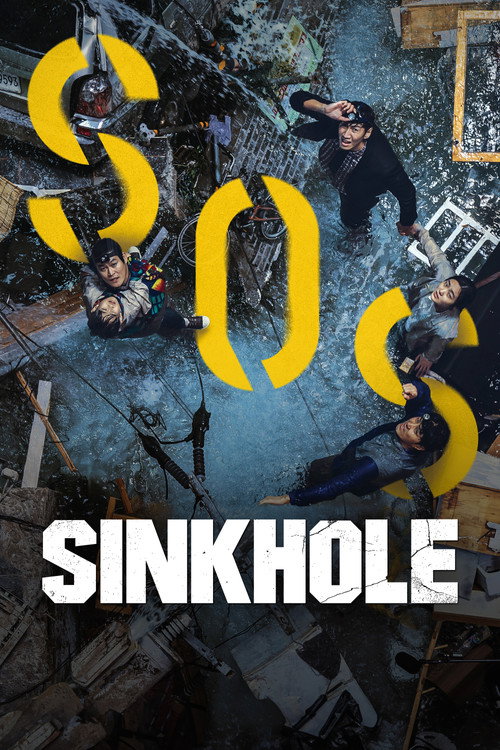
Sinkhole
A farcical subterranean disaster unfolds into an exhilarating tale of ordinary grit, where the hollow pursuit of social status collapses into an abyss—forcing estranged souls to cling to a buoyant yellow tank as their floating ark of salvation.
Sinkhole
Sinkhole

싱크홀

"A house earned after 11 years of effort falls deep into the ground in a minute."

11 August 2021 South Korea 113 min 6.9 (168)

Director: Kim Ji-hoon

Cast: Cha Seung-won, Kim Sung-kyun, Lee Kwang-soo, Kwon So-hyun, Kim Hye-jun

Drama Comedy The Absurdity of the Housing Market & Economic Anxiety Found Community and Neighborly Solidarity Paternal Responsibility and Generational Sacrifice Systemic Complacency vs. Bureaucratic Helplessness
Budget: $11,400,000
Box Office: $17,970,000

Sinkhole — Ending Explained

⚠️ Spoiler Analysis

After moving into Cheongun Villa, Dong-won ignores multiple warning signs (uneven floors, rolling marbles, cracked asphalt, trapped elevator doors). Following a drunken celebration with colleagues Seung-hyeon and Eun-joo, the ground yields and the building slips 500 meters straight down into a colossal underground shaft.

Down in the dark, survivors regroup: Dong-won, his son Su-chan, Man-soo, his son Seung-tae, Seung-hyeon (who survived inside a crushed taxi), and intern Eun-joo. They also discover elderly resident Grandmother Oh (suffering from dementia) and her filial son Min-joon trapped in lower wreckage. Despite spirited team efforts, disaster strikes again: shifting debris and sudden collapses claim the lives of Grandmother Oh and Min-joon, shattering the film’s comedic tone and injecting genuine grief.

When torrential rains flood the 500-meter pit into a vertical well, surface rescue attempts fail. Eun-joo and Dong-won realize they must ride the flood upward using the villa complex’s enormous, sealed industrial yellow plastic water storage tank as a buoyancy capsule. In the heroic sacrifice twist, Man-soo seals the hatch from the outside to ensure his son Seung-tae and the others survive. The tank shoots upward like a submerged cork, while Man-soo is torn away by currents. However, upon reaching the surface, Man-soo is revealed to have survived by hooking onto emergency cables and the tank's outer ropes.

Dong-won loses the house he spent eleven years saving for, receiving no magical windfall from insurance. In the epilogue, he and his family live happily in a modest rural camper/suburban home, while Seung-hyeon and Eun-joo marry, illustrating that home is defined not by concrete and square footage, but by the loved ones who survive beside you.

Alternative Interpretations

The film can be analyzed through several distinct interpretive lenses:

  • The Anti-Capitalist Allegory: Dong-won's apartment complex is a micro-society built upon quicksand. In this reading, the physical sinkhole is not an accident of nature, but the inevitable collapse of a debt-fueled economy where speculative assets have no solid foundation. The characters' liberation comes only when their material property is completely annihilated.
  • Escapist Folk-Farce: Rather than treating it as serious satire, several critics view the film as a modern Korean folk comedy (madang-geuk), where the disaster setting serves purely as a stage for physical slapstick, witty dialogue (tiki-taka), and absurd theatrical survival.
  • Generational Reconciliation Parable: Viewed through family dynamics, the collapse represents the breakdown of communication between overworked baby-boomer/Gen-X fathers and disenchanted Gen-Z offspring. The underground crucible forces parents to stop treating their children as extensions of financial ambition, facilitating genuine emotional reunion.

Explore More About This Movie

Dive deeper into specific aspects of the movie with our detailed analysis pages

Similar Movies