Skip to content
Sinkhole
A farcical subterranean disaster unfolds into an exhilarating tale of ordinary grit, where the hollow pursuit of social status collapses into an abyss—forcing estranged souls to cling to a buoyant yellow tank as their floating ark of salvation.
Sinkhole

Sinkhole

싱크홀

"A house earned after 11 years of effort falls deep into the ground in a minute."

11 August 2021 South Korea 113 min 6.9 (168)

Director: Kim Ji-hoon

Cast: Cha Seung-won, Kim Sung-kyun, Lee Kwang-soo, Kwon So-hyun, Kim Hye-jun

Drama Comedy The Absurdity of the Housing Market & Economic Anxiety Found Community and Neighborly Solidarity Paternal Responsibility and Generational Sacrifice Systemic Complacency vs. Bureaucratic Helplessness
Budget: $11,400,000
Box Office: $17,970,000

Overview

Directed by Kim Ji-hoon (The Tower, Sector 7), Sinkhole is a disaster comedy that blends biting social commentary on South Korea's hyper-competitive housing market with high-stakes survival slapstick. The narrative centers on Park Dong-won (Kim Sung-kyun), an unpretentious middle-management salaryman who, after eleven years of relentless penny-pinching and debt accumulation, finally purchases an apartment in Seoul's suburban "Cheongun Villa". Elated to offer a permanent hearth to his wife Yeong-i and their young son Su-chan, Dong-won's pride is quickly tested by persistent micro-annoyances, foremost among them his eccentric, ubiquitous busybody neighbor Jung Man-soo (Cha Seung-won).

Trouble surfaces almost immediately through subtle domestic anomalies: marbles roll spontaneously across slanted floors, door frames catch, hairline fractures open along outer walls, and the complex suddenly loses municipal water pressure. Shrugging off these alarming warning signs out of a desperate need to believe his hard-earned investment is sound, Dong-won hosts a drunken housewarming celebration for his work colleagues, including cynical subordinate Kim Seung-hyeon (Lee Kwang-soo) and bright junior intern Hong Eun-joo (Kim Hye-jun).

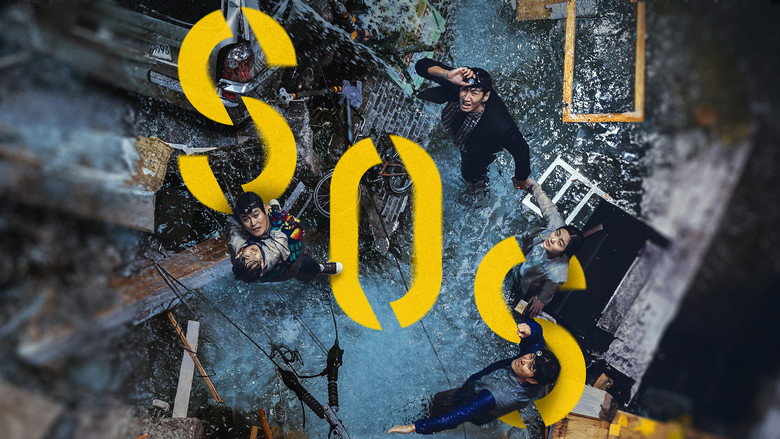
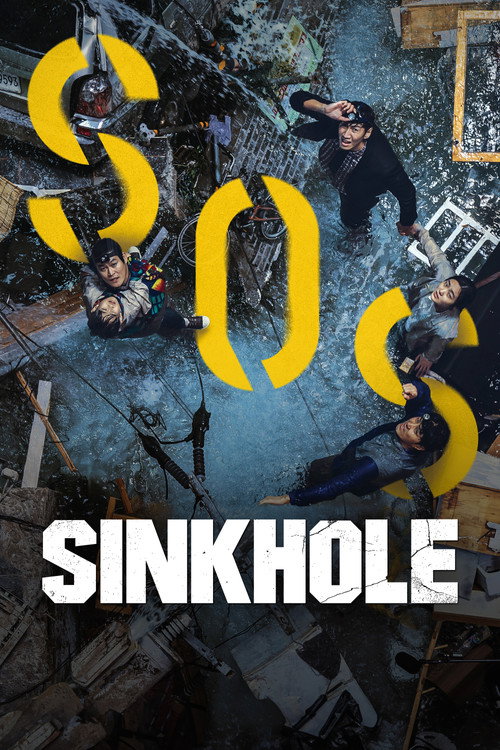
The next morning, while Dong-won’s colleagues nurse heavy hangovers and Man-soo inspects rooftop pipe issues, the ground beneath the apartment building suddenly gives way. In a single catastrophic minute, the entire multi-story structure is swallowed by a colossal sinkhole, plummeting 500 meters into the dark recesses of the earth. Cut off from telecommunications and trapped beneath falling rubble, unstable soil, and impending torrential rains, an oddball cast of residents and visitors must overcome petty grievances and team up in an against-the-odds race for survival.


Core Meaning

Director Kim Ji-hoon uses the physical phenomenon of a sinkhole as a literal and structural metaphor for South Korea's precarious real estate bubble and hyper-capitalist rat race. In contemporary Seoul, homeownership is glorified as the ultimate metric of human worth, familial duty, and social dignity. By causing an entire apartment block to vanish underground the instant its owner celebrates buying it, the film illustrates how fleeting, hollow, and fragile material obsession truly is.

Beyond the architectural critique, the core philosophical message explores human solidarity in the face of structural collapse. Stripped of titles, mortgages, social hierarchy, and generational estrangement, the characters discover that authentic security is not anchored in bricks and mortar, but in collective empathy and communal sacrifice.

Thematic DNA

The Absurdity of the Housing Market & Economic Anxiety 35%
Found Community and Neighborly Solidarity 25%
Paternal Responsibility and Generational Sacrifice 20%
Systemic Complacency vs. Bureaucratic Helplessness 20%

The Absurdity of the Housing Market & Economic Anxiety

The film dedicates its entire first act to the crushing societal pressure surrounding homeownership (nae-jip-maryeon). Dong-won's decade-long asceticism and Seung-hyeon’s bitter cynicism about never being able to afford marriage or property highlight the despair of working-class Koreans priced out of stability. The tragic irony is that owners often conceal structural building defects because reporting them would depress property valuations.

Found Community and Neighborly Solidarity

Modern apartment living isolates people despite their close physical proximity. Dong-won and Man-soo begin as territorial adversaries. Only when plunged 500 meters subterranean into a shared abyss do the residents break through modern atomization, pooling resources, food, and courage to ensure each other's survival.

Paternal Responsibility and Generational Sacrifice

Fatherhood serves as an emotional engine for both Dong-won and Man-soo. Man-soo hustles multiple exhausting odd jobs to support his distant son Seung-tae, while Dong-won defines his manhood by sheltering his child. Their instinctive willingness to endure crushing debris and risk drowning underscores a parent's primal drive to protect the next generation.

Systemic Complacency vs. Bureaucratic Helplessness

The film satirizes the disconnect between disaster response systems on the surface and the lived reality of those trapped. Advanced drones, government briefings, and rescue apparatuses repeatedly fail or crash due to the hostile subterranean topography, emphasizing how bureaucratic procedure falters before unpredictable human disasters.

Character Analysis

Park Dong-won

Kim Sung-kyun

Archetype: The Striving Everyman / Reluctant Hero Key Trait: Scrimping diligence masked by nervous cheerfulness.

Motivation

To provide stability and pride for his wife and young son.

Character Arc

Evolves from an insecure, status-conscious wage earner into a self-sacrificing father who understands that home is defined by family, not real estate.

Jung Man-soo

Cha Seung-won

Archetype: The Eccentric Mentor / Comic Trickster Key Trait: Hyperactive hustler with a sharp tongue and fierce paternal devotion.

Motivation

To financially sustain his distant son and secure his future.

Character Arc

Transitions from an irritating, opportunistic neighborhood busybody into a courageous, paternal protector who risks his life for others.

All 5 characters and cast

Symbols & Motifs

The Rolling Marbles

Meaning:

The marbles serve as a domestic omen of structural defect and tilt, visually representing how ordinary citizens ignore warning signs to protect their illusions of security.

Context:

Early in the film, Dong-won’s young son plays with glass marbles that consistently roll toward the window on an allegedly flat floor.

The 500-Meter Sinkhole

Meaning:

The cavernous pit operates as a visual manifestation of societal drop-out—a literal bottom falling out of middle-class aspirations, leaving victims buried alive by the very system they struggled to climb.

Context:

The massive geological chasm into which the entire apartment complex plunges, swallowing the characters and their material possessions.

The Trapped Yellow Taxi

Meaning:

The taxi represents modern urban gig-economy mobility, transformed into a claustrophobic cage until transformed into a cooperative shelter.

Context:

Kim Seung-hyeon gets trapped inside a yellow taxi that crashed down alongside the building debris into the subterranean depths.

The Yellow Water Tank

Meaning:

It reverses the downward plummet into an upward ascent, symbolizing the resilience of human survival and rebirth through ordinary utilitarian objects.

Context:

In the climax, a large municipal plastic water storage tank becomes the survivors' makeshift escape pod as subterranean waters rise.

The Housewarming Alcohol & Toilet Paper Gifts

Meaning:

A grotesque reminder of how quickly domestic celebrations can degenerate into apocalyptic struggles.

Context:

Traditional Korean housewarming gifts—rolls of toilet paper (symbolizing smooth fortune) and alcohol—litter the subterranean ruins after the collapse.

Memorable Quotes

자가야 자가! 11년 만에 내 집 마련했다고!
— Park Dong-won

Context

Shouted with euphoric tears to his wife and friends early on.

Meaning

It encapsulates the emotional climax of South Korea's working-class dream before reality literally swallows it whole.

한 500m 정도는 떨어진 것 같아... 우리, 나갈 수 있을까요?
— Hong Eun-joo / Kim Seung-hyeon

Context

Spoken when the survivors gaze up at the tiny pinprick of sunlight illuminating the rim of the chasm.

Meaning

It marks the dramatic turning point from disoriented shock to the terrifying realization of their entrapment.

All 4 quotes

Philosophical Questions

What constitutes a true "home"?

Explored through Dong-won's loss of his property versus his family's survival, questioning whether security arises from legal deeds and square meters, or from human intimacy and mutual trust.

How much integrity will society compromise for economic illusion?

Investigated via the premise of residents and prospective sellers intentionally ignoring warning signs and structural building defects solely to prevent real estate devaluation.

In extreme peril, does humanity default to self-preservation or solidarity?

Examined through the transition of antagonistic neighbors into a cohesive cooperative unit, asking whether disaster reduces humans to beasts or elevates them into communal saviors.

How It Ends

Alternative Interpretations

The film can be analyzed through several distinct interpretive lenses:

Full ending explanation

Cultural Impact

During the late 2010s and early 2020s, the Seoul Metropolitan real estate market witnessed unprecedented inflationary spikes, sparking a cultural phenomenon known as young-kkeul ("dragging all soul and cash to buy property"). Skyrocketing costs pushed young professionals and middle-aged workers into debilitating debt simply to acquire modest "villas" (low-rise apartment flats) on the city fringes, and Sinkhole tapped directly into this widespread public panic.

The narrative also touches an exposed nerve in the South Korean cultural psyche regarding man-made civil engineering failures, recalling historical tragedies such as the 1995 Sampoong Department Store collapse and modern urban sinkholes caused by subterranean excavation and groundwater mishandling. Released amid strict pandemic cinema seating curbs in August 2021, Sinkhole revitalized domestic theater attendance and spawned social media memes juxtaposing mortgage calculators with excavation depths, cementing the term "Sinkhole villa" in urban housing banter.

Audience Reception

Audience and critical reception was generally positive, yielding a crowd-pleasing box office hit driven by strong cast chemistry and immersive staging:

  • Praised Elements: Audiences and critics unanimously celebrated the comedic timing and banter between Cha Seung-won, Kim Sung-kyun, and Lee Kwang-soo. The kinetic, disorienting practical effects of the tilting villa sets and mud-drenched soundstages earned widespread acclaim for visceral, tactile excitement, while Korean moviegoers deeply identified with the poignant depiction of middle-class housing aspirations.
  • Criticisms & Controversies: Some international and domestic reviewers critiqued the jarring tonal whiplash between cartoonish slapstick, harrowing life-or-death peril, and tearful family melodrama. Additionally, the climactic escape via the floating yellow water tank was singled out as cartoonish and physically preposterous, and certain wide-angle disaster CGI sequences appeared noticeably weightless.

Interesting Facts

  • The production built a colossal, full-scale suburban villa complex and surrounding residential streets inside an open lot, so realistically constructed that cast members noted it felt like a living Seoul neighborhood prior to controlled destruction.
  • To replicate the terrifying physics of a building tipping and sinking into the earth, the production mounted full interior apartment rooms on large hydraulic gimbals, allowing actors to perform their own stunts as sets shifted at steep 30-to-45-degree angles.
  • Rather than relying solely on green screen water, thousands of gallons of actual water and specialized cinematic mud were pumped into tilted soundstages, forcing cast members to spend weeks soaked in cold sludge.
  • The film was budgeted at approximately ₩15 billion (KRW) and had its theatrical premiere delayed by nearly a full year due to COVID-19 surges after being slated for the Chuseok holiday season of 2020.
  • Before opening in Korea, Sinkhole celebrated its world premiere in Switzerland at the 74th Locarno Film Festival on August 6, 2021, screening out-of-competition at the prestigious Piazza Grande.
  • Upon domestic debut on August 11, 2021, Sinkhole became the fastest Korean film of 2021 to surpass 1 million admissions (in just six days) and finished the year with 2.19 million admissions ($17.97–$18.8 million USD), second only to Escape from Mogadishu.

Easter Eggs

Subversion of The Tower (2012)

Director Kim Ji-hoon previously helmed The Tower, an earnest homage to The Towering Inferno. Sinkhole functions as an inverted companion piece: while The Tower trapped luxury high-rise elites escalating upward away from flames, Sinkhole plunges working-class suburbanites 500 meters downward into mud, exchanging operatic tragedy for self-aware slapstick comedy.

Lee Kwang-soo’s Slapstick Persona

Lee Kwang-soo’s role directly trades on his beloved variety persona from SBS’s Running Man. Visual gags—such as getting his tall limbs pinned inside a compact taxi cab and panic-screaming while attempting athletic heroics—were intentionally choreographed to elicit recognition from variety fans.

Cameo by Veteran Actor Jang Gwang

Renowned character actor Jang Gwang makes a memorable comic cameo as the grandfather in the neighboring villa hanging laundry, oblivious to the geological disaster until it swallows the neighboring lot.

Echoes of Bong Joon-ho’s Subterranean Motifs

The film plays on Korea’s cinematic trope of subterranean verticality (popularized by Bong Joon-ho's Parasite and The Host). The characters' descent underground symbolizes immediate socio-economic demotion into literal dregs of society.

Frequently Asked Questions

Explore More About This Movie

Dive deeper into specific aspects of the movie with our detailed analysis pages

Comments (0)

Leave a comment

No comments yet. Be the first to share your thoughts!

Similar Movies