Solo Leveling
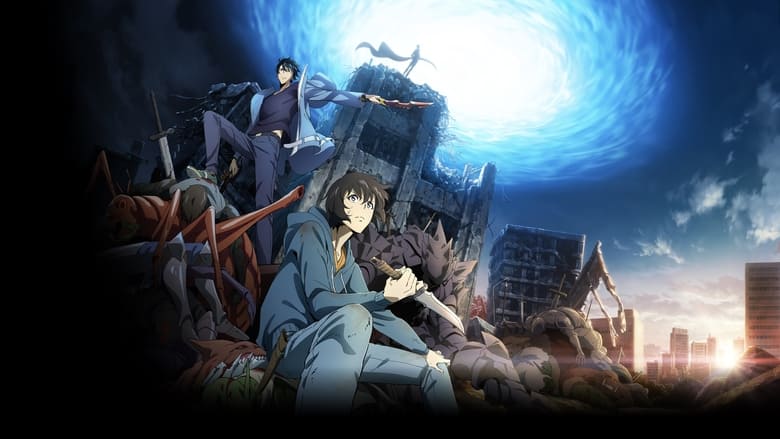
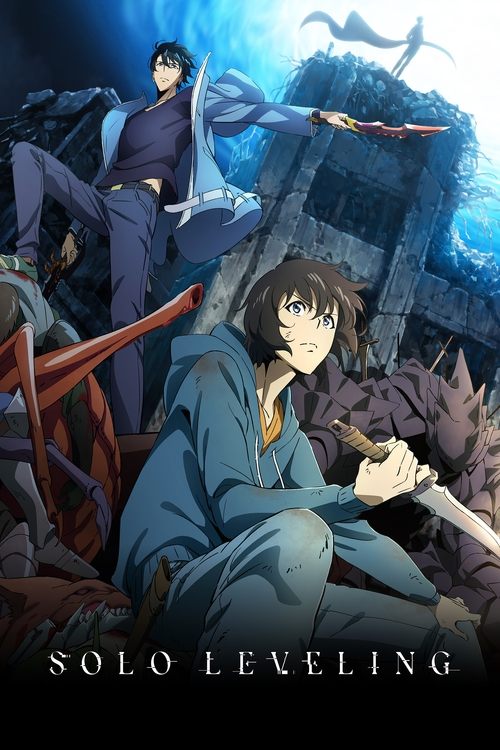
A dark fantasy descent into brutal strength, where a lone hunter's desperate climb for survival illuminates a world bathed in the neon glow of power and the encroaching shadows of his own humanity.
Solo Leveling

Solo Leveling

俺だけレベルアップな件

"He used to be the weakest."

07 January 2024 — 30 March 2025 Japan 1 season 25 episode Ended ⭐ 8.6 (1,371)
Cast: Taito Ban, Genta Nakamura, Haruna Mikawa, Reina Ueda, Daisuke Hirakawa
Animation Sci-Fi & Fantasy Action & Adventure
The Struggle of the Underdog Power and its Corrupting Influence Individualism vs. Systems Dehumanization and Alienation

Overview

"Solo Leveling" is set in a contemporary world where dimensional gates have opened, unleashing monstrous creatures upon humanity. In response, certain individuals have awakened supernatural abilities and become "Hunters" who raid these dungeons. The story centers on Sung Jinwoo, notoriously known as the "World's Weakest Hunter." Barely able to survive in the lowest-ranking dungeons, he hunts to pay for his mother's medical bills and support his sister.

His life takes a dramatic turn after his party stumbles into a hidden "Double Dungeon" where they are mercilessly slaughtered. On the brink of death, Jinwoo is given a unique opportunity by a mysterious program called the System, which chooses him as its sole "Player." This grants him the unprecedented ability to grow in strength and level up without limits. Now, armed with this game-like interface that only he can see, he begins a solitary journey of intense training and dangerous conquest.

As he navigates increasingly perilous dungeons and confronts both monstrous and human threats, Jinwoo's power grows exponentially. His transformation from a timid E-Rank weakling into a confident, ruthless, and overwhelmingly powerful hunter forces him to hide his true abilities from the world's powerful guilds and associations, all while uncovering the dark secrets behind the gates, the monsters, and the true source of his extraordinary powers.
Core Meaning

The core meaning of "Solo Leveling" revolves around the themes of self-improvement and perseverance against insurmountable odds. It explores the idea that one's station in life is not fixed and that through immense effort and by seizing opportunities, one can break free from predetermined limitations. Sung Jinwoo's journey from the "World's Weakest" to the pinnacle of power is a testament to relentless determination.

However, the series also serves as a cautionary tale about the cost of power. As Jinwoo grows stronger, he becomes more isolated and loses aspects of his former self, questioning his own humanity. The narrative delves into the corrupting nature of absolute power and the dehumanization that can occur when life becomes a game of survival and dominance, ultimately asking what it means to be human in a world that only values strength.

Thematic DNA

The Struggle of the Underdog 35%
Power and its Corrupting Influence 30%
Individualism vs. Systems 20%
Dehumanization and Alienation 15%

The Struggle of the Underdog

This is the foundational theme of the series. Sung Jinwoo starts as the absolute weakest, an object of pity and scorn in the hunter world. His motivation is not glory but survival and the protection of his family. The series meticulously chronicles his painful and solitary struggle, emphasizing that his growth is not a gift but earned through near-death experiences, grueling training, and calculated risks. His journey embodies the fantasy of rising from the bottom to the top through sheer grit.

Power and its Corrupting Influence

As Jinwoo levels up, he not only gains physical strength but also a colder, more ruthless demeanor. The series explores how power changes a person, forcing them to make morally ambiguous decisions. His first time killing humans, though for survival, marks a significant turning point, showing that the power to kill monsters can easily be turned on people. The narrative constantly questions whether Jinwoo is simply becoming a stronger hero or transforming into a monster himself, a sentiment echoed in his own thoughts about losing parts of his humanity.

Individualism vs. Systems

The world of "Solo Leveling" is governed by rigid systems: the Hunter Association's ranking system, which deems individuals unchangeable, and the powerful guilds that control resources. Jinwoo operates entirely outside of this, his power coming from a personal, inscrutable "System." His journey is a solitary one, rejecting guild affiliations and societal expectations. This highlights a conflict between the established, collective power structures and the rise of a singular, uncontrollable individual who threatens to upend the entire world order.

Dehumanization and Alienation

The mysterious System that grants Jinwoo his powers operates on game-like logic, rewarding kills with experience points and reducing life-or-death struggles to quests and stats. This gamification of existence contributes to Jinwoo's emotional detachment. He becomes more alienated from others as the gap in power widens, unable to share the secret of his growth. He begins to see the world less through a human lens and more as a "Player" navigating a dangerous game, a process that makes him stronger but also more isolated.

Character Analysis

Sung Jinwoo

Taito Ban

Archetype: The Transfigured Hero / Anti-Hero
Key Trait: Indomitable Will

Motivation

Jinwoo's primary motivation is unwavering: to protect his family. Initially, this means earning money to pay for his mother's hospital bills and ensure his sister's future. This core desire fuels his willingness to enter dangerous dungeons despite his weakness. As he becomes powerful, the motivation shifts from earning money to acquiring enough strength to ensure his family is safe from any conceivable threat, whether it be monsters or humans.

Character Arc

In Season 1, Sung Jinwoo undergoes one of the most drastic transformations in modern anime. He begins as the physically and emotionally frail "World's Weakest Hunter," defined by his kindness, fear, and desperation to survive for his family. After his reawakening as the Player, his arc is one of exponential growth. Initially, he is cautious and terrified, barely surviving his first solo dungeon. As he accumulates power, his fear is replaced by cold confidence and brutal efficiency. By the end of the season, his physicality, demeanor, and worldview have completely changed; the once-friendly and awkward boy has become a sharp, intimidating, and solitary figure who is more monster than man in the eyes of others.

Yoo Jinho

Genta Nakamura

Archetype: The Loyal Sidekick
Key Trait: Unflinching Loyalty

Motivation

Jinho is motivated by a desire to prove his worth to his powerful father and step out of his older brother's shadow. He wants to build something of his own, which manifests as his plan to create the "Ahjin Guild." He sees partnering with the mysteriously powerful Jinwoo as the key to achieving this goal and earning recognition based on his own merits (and his eye for talent).

Character Arc

Yoo Jinho starts as a somewhat naive D-Rank hunter from a wealthy family, relying on expensive gear to compensate for his lack of skill. After being saved by Jinwoo from Hwang Dongsuk's treacherous party in Episode 6, he develops an unwavering, almost comically intense loyalty to him. Jinho's arc in Season 1 is about finding a purpose and a figure to believe in. He decides he wants to build his own guild with Jinwoo as its centerpiece, seeing in him the strength and integrity he admires. He evolves from a tag-along into Jinwoo's first and only true confidant and ally.

Cha Hae-In

Reina Ueda

Archetype: The Elite Warrior
Key Trait: Perceptive

Motivation

Her motivations in Season 1 are tied to her duties as an S-Rank hunter: protecting society and fulfilling her role in her guild. She is driven by a professional code of conduct and a desire to understand the nature of hunters and dungeons. Her personal motivation begins to form around the mystery of Sung Jinwoo.

Character Arc

Cha Hae-In's arc in Season 1 is one of introduction and intrigue. She is established as one of South Korea's most powerful S-Rank hunters, second-in-command of the Hunters Guild. She is depicted as serious, dedicated, and possessing a unique ability to smell the mana of other hunters, a scent she finds repulsive. Her brief encounters with Sung Jinwoo pique her curiosity, as he is the only hunter she's met who doesn't emit this foul smell. Her arc is minimal, serving primarily to establish her as a major figure in the world who is beginning to take notice of the anomaly that is Jinwoo.

Go Gunhee

Banjō Ginga

Archetype: The Wise Leader
Key Trait: Authoritative

Motivation

Go Gunhee is motivated by a deep sense of responsibility to protect his country and humanity from the threat of the gates. He understands the precarious balance of power in the world and is keen to cultivate any new strength—like Jinwoo's—that can serve as a bulwark against future calamities.

Character Arc

Go Gunhee is the chairman of the Korean Hunters Association and an immensely powerful S-Rank hunter, despite his age. His arc in Season 1 is to act as a stable, authoritative presence overseeing the hunter world in Korea. He is quickly made aware of the unusual events surrounding Jinwoo, from the Double Dungeon incident to his rapid, unexplainable growth. He represents the established order, but unlike others, he shows wisdom and curiosity rather than fear or greed regarding Jinwoo's power. He positions himself as a potential mentor or at least a powerful, observing figure in Jinwoo's future.

Symbols & Motifs

The System

Meaning:

The System is the primary symbol of opportunity, relentless growth, and hidden control. It represents the catalyst that allows Jinwoo to break free from his predetermined fate as the "World's Weakest." However, its impersonal, often demanding, nature—with its mandatory daily quests and punitive measures—symbolizes a new form of servitude. While Jinwoo uses the system, it also uses him, pushing him toward a path that may not be entirely his own.

Context:

The System is a constant presence for Jinwoo after his reawakening in Episode 2. It appears as a holographic game-like interface that only he can see, providing quests, stats, inventory, and rewards. Its most notable commands appear during critical moments, such as forcing him to kill human assassins in Episode 6 to complete a quest, blurring the lines between survival and enforced violence.

Shadow Extraction/Monarchy

Meaning:

This ability symbolizes the absolute subjugation of one's enemies and the accumulation of power from death. By raising fallen foes as loyal shadow soldiers, Jinwoo literally commands the strength of those he has defeated. It represents the ultimate form of dominance, but also serves as a grim reminder of his bloody path to power and his growing connection to death and darkness. His title, Shadow Monarch, signifies his rule over this legion of the dead.

Context:

This power is acquired at the very end of Season 1, in Episode 12, titled "Arise." After defeating the formidable knight Igris in his job-change quest, Jinwoo is given the class of Necromancer, which immediately elevates to Shadow Monarch. His first and most iconic use of the skill is when he utters the command "Arise" to resurrect Igris and the other knights as his first shadow soldiers.

Gates and Dungeons

Meaning:

The Gates symbolize the unknown, opportunity, and constant threat that has irrevocably changed the world. For hunters, they are a source of wealth and power, a workplace where they risk their lives for reward. They represent a new frontier for humanity but also an ever-present danger of annihilation should a "dungeon break" occur. For Jinwoo specifically, they transform from places of terror and weakness into personal training grounds for his leveling journey.

Context:

Gates are a core element of the world, appearing in every episode. Their rank (from E to S) dictates their difficulty. A key moment is the D-Rank Double Dungeon in Episodes 1 and 2, which acts as the catalyst for the entire story. Later, Jinwoo's use of "Instance Dungeon" keys, starting in Episode 3, privatizes this concept, allowing him to grow in secret without external interference.

Memorable Quotes

Arise.

— Sung Jinwoo

Context:

This is said in the final moments of Season 1, Episode 12, "Arise." After defeating Igris and completing the Job Change quest, Jinwoo unlocks the Shadow Monarch class. He looks upon the sea of defeated knights and utters this command, raising them as his first shadow soldiers.

Meaning:

This single word is the most iconic quote of the series. It signifies Jinwoo's ultimate transformation at the end of Season 1, moving beyond a mere fighter to become a commander of the dead. It is the activation of his Shadow Monarch ability, representing his complete dominion over the enemies he has slain and the culmination of his journey from prey to predator.

If I don't kill, I will be killed. I can't run away anymore.

— Sung Jinwoo

Context:

While this sentiment is a running theme, it crystallizes during his early struggles. A version of this thought process is prominent after the Double Dungeon incident and during his first forays into instance dungeons, where he realizes that hesitation and mercy lead to death.

Meaning:

This quote encapsulates Jinwoo's acceptance of the brutal reality of his new life. It marks a pivotal shift in his mindset from a scared victim to a proactive survivor. It's his justification for the violence he must commit, framing it as a necessity in a world governed by the law of the jungle. It signifies his resolve to get stronger, no matter the cost.

The system uses me, and I use the system.

— Sung Jinwoo

Context:

This is an internal monologue that occurs as Jinwoo grows more accustomed to his powers and begins to think more strategically about his leveling process, particularly after he starts to question the System's motives and the purpose of his quests.

Meaning:

This line reveals Jinwoo's sophisticated understanding of his predicament. He is not a blind servant to the mysterious System that grants him power. He recognizes the transactional, and potentially manipulative, nature of his abilities. It shows his intelligence and agency, asserting that while he may be a pawn in a larger game, he will leverage its rules to his absolute advantage.

If you guys are hunters, I'm saying you should be ready to become the hunted.

— Sung Jinwoo

Context:

This line is spoken in Episode 6, "The Real Hunt Begins," directed at Hwang Dongsuk and his group of hunters who betrayed Jinwoo and Yoo Jinho, leaving them to die in a C-Rank boss room. It is the moment before Jinwoo turns the tables and hunts them down one by one.

Meaning:

This is a chilling declaration of the reversal of power. Jinwoo, once the weakest and most hunted, now warns other hunters of the peril they face when they choose to become his enemy. It's a statement that redefines the roles of predator and prey within the hunter society itself, highlighting his newfound confidence and the deadly threat he now poses to humans, not just monsters.

Episode Highlights

I'm Used to It / If I Had One More Chance

S1E1

These inaugural episodes establish the world and Sung Jinwoo's rock-bottom status as the "World's Weakest Hunter." The majority of the party is brutally massacred inside a hidden Double Dungeon, the Cartenon Temple. Facing certain death, Jinwoo demonstrates immense courage by staying behind to help the last survivors escape. This selfless act leads to him being chosen by the mysterious "System," setting the stage for his entire journey.

Significance:

This two-part opening is the crucible for the entire series. It's the traumatic event that breaks Jinwoo and rebuilds him as the Player. It establishes the stakes, the brutality of the world, and provides the catalyst for the central plot. Without the Double Dungeon, there is no story.

It's Like a Game

S1E3

After waking up and discovering the game-like System, Jinwoo cautiously begins to explore its rules. He accepts a key to an "instance dungeon," a private training ground. Here, he fights monsters solo for the first time, including the powerful boss, the Blue Venom-Fanged Kasaka. He learns the mechanics of leveling up, healing, and using his stats, truly beginning his solitary ascent.

Significance:

This episode is critical for world-building and character development. It demonstrates the mechanics of Jinwoo's new power and showcases his transition from fear to calculated aggression. His first solo boss kill is a major milestone, proving that the System is real and that he truly can become stronger.

The Real Hunt Begins

S1E6

Jinwoo and Yoo Jinho are betrayed by their raid party leader, Hwang Dongsuk, who leaves them to be killed by a C-Rank dungeon boss. After Jinwoo single-handedly defeats the giant spider boss, he is confronted by the returning traitors. An emergency quest from the System forces Jinwoo to kill other humans for the first time. He systematically hunts down and eliminates his would-be murderers, demonstrating a new level of ruthlessness.

Significance:

This episode marks a significant moral turning point for Jinwoo. It's the first time his power is used against other people, blurring the line between hero and anti-hero. It solidifies his alliance with Yoo Jinho and signals to the audience that his journey will involve human conflict, not just fighting monsters.

A Knight Who Defends an Empty Throne

S1E11

Jinwoo finally undertakes the Job Change quest, transporting him to a hostile dungeon where he cannot use potions or log out. He faces waves of powerful knights and mages before confronting the final boss: the intimidating, blood-red knight, Igris. The episode features a spectacular, high-stakes battle where Jinwoo must use every skill and ounce of wit he has to overcome an opponent that vastly outmatches him.

Significance:

This episode showcases how far Jinwoo has come, pitting him against his strongest foe to date in a pure test of skill. The fight with Igris is a visual and narrative climax, a brutal and stunningly animated sequence that serves as the ultimate gatekeeper to the next stage of his power.

Arise

S1E12

After defeating Igris, Jinwoo must survive an endless horde of knights. He successfully completes the quest and the System grants him the class of "Necromancer," which is immediately upgraded to the hidden class "Shadow Monarch" due to his achievements. Realizing his new power, he looks upon the fallen knights and speaks the single command, "Arise," raising Igris and the entire army as his loyal shadow soldiers.

Significance:

The season finale fundamentally changes Jinwoo's abilities and the future of the series. He is no longer just a powerful fighter; he is now the leader of an ever-growing army. This episode concludes his initial arc of solo leveling and redefines him as the Shadow Monarch, setting up the immense scale of power he will wield in the future.

Philosophical Questions

What is the true cost of absolute power?

The series explores this question through Jinwoo's personal journey. While his power grants him security and the ability to protect his family, it comes at the cost of his own humanity. He feels himself becoming emotionally numb and detached with every level he gains, a sentiment he voices himself. The narrative constantly weighs the tangible benefits of his strength against the intangible loss of his former self, asking whether becoming an invincible monster is worth it if you lose the very connections you sought to protect.

Are we defined by our origins or by our growth?

Jinwoo begins as the "World's Weakest," a label that defines his existence and the way society perceives him. The world of hunters operates on the premise that one's rank is fixed upon awakening. Jinwoo's unique ability to level up directly challenges this deterministic worldview. His story becomes a powerful allegory for breaking free from societal labels and limitations through relentless effort, suggesting that potential is not a fixed attribute but something that can be cultivated, even if it requires an extraordinary catalyst.

When does a tool for survival become a cage?

The System is initially Jinwoo's only means of survival and advancement. However, its rigid rules, mandatory quests, and severe penalties for failure raise questions about free will. Is Jinwoo truly in control, or is he merely following a script written by an unknown creator? The series delves into the paradox of gaining power through a structure that simultaneously enables and controls, exploring the fine line between using a system and being used by it.

Alternative Interpretations

A prominent alternative interpretation of "Solo Leveling" challenges the view of Sung Jinwoo as a straightforward hero. Instead, it posits that he is an emerging anti-hero or a tragic figure on the path to villainy. This reading focuses on the profound changes in his personality; as he gains power, his empathy erodes, replaced by a cold, utilitarian worldview. His actions, such as killing humans without hesitation (even when prompted by the System) and his internal thoughts about enjoying his dominance, suggest a darker transformation.

From this perspective, the "System" is not a tool for empowerment but a corrupting force that is actively stripping away his humanity. The story is not just a power fantasy, but a tragedy about a man who, in his desperate quest to protect his loved ones, becomes the very kind of monster he once feared. His solitude is not just a title but a literal state of being, as he becomes a unique entity alienated from the rest of humanity by his immense and terrifying power.

Cultural Impact

"Solo Leveling's" 2024 anime adaptation arrived as one of the most hyped releases of the year, built on the foundation of its webtoon's colossal global success. Its impact was immediate and significant. It shattered streaming records on platforms like Crunchyroll, becoming one of its most-watched premieres and demonstrating the immense global appetite for Korean-originated stories in a Japanese anime format. This success has been pivotal in popularizing manhwa within the mainstream anime community, acting as a high-profile bridge between the two industries and paving the way for more webtoon adaptations.

Critically, the series was praised for A-1 Pictures' high-quality animation, especially the fluid and visceral combat sequences, which brought the webtoon's static panels to dynamic life. The audience reception was overwhelmingly positive, with fans of the source material largely satisfied with the faithful adaptation, while newcomers were drawn in by the compelling power-fantasy narrative. The series dominated social media discussions during the Winter 2024 anime season.

Its legacy, even after only one season, is in solidifying the "system" or "leveling" subgenre of fantasy in the animated sphere. It has set a new benchmark for manhwa adaptations and proved that a Korean story, produced by a Japanese studio, can become a global cultural phenomenon, transcending national and medium boundaries.

Audience Reception

The audience reception for the first season of "Solo Leveling" was overwhelmingly positive, largely meeting and in many cases exceeding the massive hype that preceded it. Fans of the original webtoon widely praised the anime for its faithful adaptation of the source material's plot and tone. The most lauded aspect was the animation by A-1 Pictures; the fluid, dynamic, and visually spectacular fight scenes, particularly the battles against Kasaka, Kang Taeshik, and Igris, received universal acclaim.

The main points of praise focused on the satisfying power-fantasy progression of Sung Jinwoo and the compelling world-building. However, some criticism was directed at the pacing, with some viewers feeling that certain plot points were rushed compared to the manhwa. Another common critique was the relative lack of development for the supporting cast, as the season is intensely focused on Jinwoo's journey, leaving characters like Cha Hae-In with minimal screen time. Despite these minor criticisms, the overall verdict from the audience was that "Solo Leveling" was a blockbuster hit and a highlight of the 2024 anime year.

Interesting Facts

  • The anime is based on a highly popular South Korean web novel by Chugong, which was later adapted into a webtoon (manhwa) illustrated by Dubu of Redice Studio.
  • The anime adaptation was produced by A-1 Pictures, a renowned Japanese animation studio known for works like "Sword Art Online" and "Kaguya-sama: Love Is War."
  • The epic musical score for the series was composed by Hiroyuki Sawano, a famous composer celebrated for his work on "Attack on Titan" and "Promare."
  • Prior to its television debut, the first episode was screened in special events in major cities worldwide, including Tokyo, Seoul, and Los Angeles, highlighting the massive global anticipation.
  • The success of the anime has been credited with bringing manhwa (Korean comics) to a wider mainstream audience, breaking down barriers between the Japanese anime and Korean webtoon industries.
  • A second season, officially subtitled "Arise from the Shadow," was announced immediately after the Season 1 finale aired, confirming the continuation of the story.

⚠️ Spoiler Analysis

Click to reveal detailed analysis with spoilers

Frequently Asked Questions

Explore More About This Movie

Dive deeper into specific aspects of the movie with our detailed analysis pages

Comments (0)

Leave a comment

No comments yet. Be the first to share your thoughts!