Haikyu!!
An electrifying sports drama that captures the exhilarating rush of flight, charting a team's ascent from fallen crows to soaring champions.
Haikyu!!

Haikyu!!

ハイキュー!!

06 April 2014 — 19 December 2020 Japan 4 season 85 episode Ended ⭐ 8.6 (1,433)
Cast: Ayumu Murase, Kaito Ishikawa, Yuu Hayashi, Satoshi Hino, Miyu Irino
Drama Animation Comedy
Teamwork vs. Individual Strength Talent vs. Hard Work Growth Through Failure Overcoming Personal Limitations

Overview

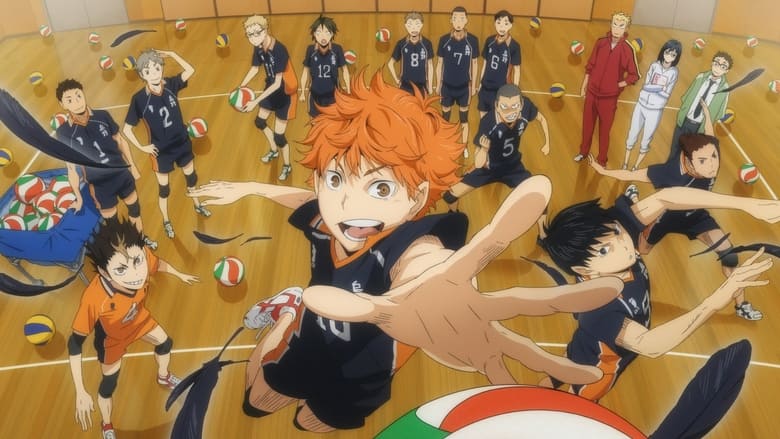
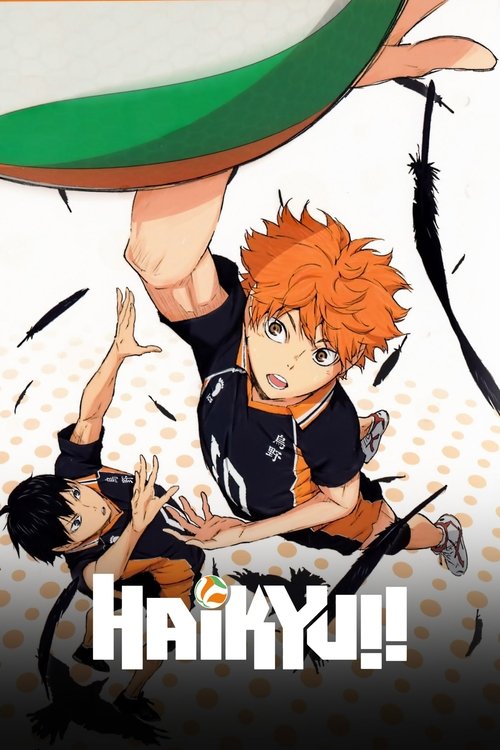
"Haikyu!!" chronicles the journey of Shoyo Hinata, a high school student of short stature who is inspired to become a volleyball ace after witnessing a player nicknamed the 'Little Giant' dominate on the national stage. Upon entering Karasuno High School, Hinata is shocked to find his middle school rival, the prodigy setter Tobio Kageyama, is now his teammate. Initially antagonistic, the pair form an unlikely and explosive partnership, combining Hinata's incredible jumping ability and speed with Kageyama's precise, genius-level tosses.

The series follows the Karasuno High School volleyball team, once a powerhouse known as the 'Fallen Champions,' as they strive to reclaim their former glory and reach the national tournament. Across four seasons, Hinata, Kageyama, and their teammates face a host of formidable rival schools, each with unique strengths and philosophies. The narrative is a compelling blend of high-stakes, technically detailed volleyball matches, laugh-out-loud comedy, and poignant character development. It's not just a story about winning, but about the arduous process of growth, the forging of an unbreakable team bond from a collection of disparate individuals, and the profound joy found in dedicating oneself completely to a passion.

Core Meaning

The core message of "Haikyu!!" is that personal growth is more significant than the simple act of winning or losing. The series posits that true strength is not found in solitary genius, but in the collaborative power of a team where each member elevates the others. It champions the idea that relentless hard work and an unyielding will to improve can allow anyone to challenge innate talent. Through its characters, the show explores the idea that losses are not failures but crucial opportunities for learning and evolution. Ultimately, "Haikyu!!" is a celebration of passion, perseverance, and the profound connections forged when individuals unite to pursue a common, seemingly impossible dream.

Thematic DNA

Teamwork vs. Individual Strength 35%
Talent vs. Hard Work 30%
Growth Through Failure 25%
Overcoming Personal Limitations 10%

Teamwork vs. Individual Strength

This is the central theme, embodied by the dynamic between Hinata and Kageyama. Kageyama begins as the 'King of the Court,' a brilliant but autocratic player whose teammates abandoned him. At Karasuno, he must learn to trust his teammates and adapt his abilities to bring out their best. The series consistently argues that a team of six strong players will always be more powerful than a team with one or two geniuses. This is contrasted with teams like Shiratorizawa, which is built almost entirely around the overwhelming power of its ace, Wakatoshi Ushijima. Karasuno's slogan, "Fly," symbolizes their freedom to use a variety of coordinated attacks, proving that collective strength can overcome individual power.

Talent vs. Hard Work

"Haikyu!!" deeply explores the dynamic between natural-born geniuses and those who achieve greatness through sheer effort. Kageyama is a prodigy, but his growth is stagnant until he learns to work with others. Characters like Tooru Oikawa, a brilliant player who is not a 'genius' in the same vein as Kageyama, push themselves to their absolute limits to compete. His personal philosophy is that "Talent is something you make bloom, instinct is something you polish." The series suggests that while talent provides a head start, it is dedication, strategy, and relentless practice that truly define a player's worth and potential.

Growth Through Failure

Every major defeat in the series serves as a catalyst for immense growth. Karasuno's devastating loss to Aoba Johsai in Season 1 forces the team to re-evaluate their skills and develop new weapons, leading directly to their evolution in Season 2. Characters constantly confront their weaknesses; Hinata must learn to be more than just a spiker, Kageyama must overcome his tyrannical past, and Kei Tsukishima must find a genuine passion for the sport. The message is that losing is not the end; it is an essential, albeit painful, part of the journey toward success.

Overcoming Personal Limitations

The protagonist, Shoyo Hinata, is the ultimate embodiment of this theme. In a sport dominated by height, his short stature is a significant disadvantage. However, he turns his height into a weapon by focusing on his incredible jumping power, speed, and stamina. The series repeatedly shows characters finding unique ways to overcome their perceived limitations, whether it's Nishinoya's skill as a short libero, Yamaguchi's journey from a timid 'coward' to a reliable pinch server, or Coach Ukai's strategic mind compensating for his team's raw power deficit against stronger opponents.

Character Analysis

Shoyo Hinata

Ayumu Murase

Archetype: The Underdog Hero
Key Trait: Unwavering Determination

Motivation

Initially, his motivation is a simple desire to win against Kageyama and become the ace. This evolves into a deeper love for every aspect of volleyball and a powerful drive for self-improvement. He finds joy in every point, every play, and his motivation becomes about staying on the court as long as possible with his team. His ultimate goal shifts from merely defeating his rival to standing on the same world-class stage with him, both as opponents and teammates.

Character Arc

Hinata begins as an enthusiastic but technically inept player, solely reliant on his raw athleticism. His initial motivation is to become the 'ace' like his idol, the 'Little Giant.' Throughout the series, his arc is about understanding that his unique role as the 'ultimate decoy' is just as crucial as being the ace. He is forced to evolve beyond being a simple weapon for Kageyama, developing his own court awareness, receiving skills, and strategic thinking. After high school, he moves to Brazil for two years to train in beach volleyball, a move that fundamentally rounds out his skills and makes him a formidable all-around player on the world stage.

Tobio Kageyama

Kaito Ishikawa

Archetype: The Reformed Tyrant
Key Trait: Perfectionist Genius

Motivation

Kageyama is driven by an obsessive desire for victory and perfection in volleyball. Initially, this manifests as frustration with players who can't keep up with him. As he develops, his motivation becomes more nuanced: he wants to win with his team. He is deeply motivated by his rivalry with Hinata, who constantly challenges him and pushes him to new heights, and by other skilled players like Tooru Oikawa, whose abilities he strives to surpass.

Character Arc

Kageyama is introduced as a volleyball genius with zero social skills. His tyrannical demands for perfection led his middle school team to abandon him, earning him the moniker 'King of the Court.' His primary arc is about shedding this solitary 'King' persona and becoming a setter who brings out the best in his teammates. He learns to communicate, trust others, and adapt his tosses to his spikers' needs instead of forcing them to match his. His journey transforms him from a self-centered prodigy into a true leader and the supportive backbone of the team, culminating in him becoming one of the best setters in the world.

Kei Tsukishima

Miyu Irino

Archetype: The Cynic
Key Trait: Intelligent & Antagonistic

Motivation

For most of the series, Tsukishima lacks strong motivation beyond simply doing what is logically required. He actively mocks Hinata and Kageyama for their passionate 'over-enthusiasm.' His motivation slowly shifts as he is influenced by his teammates and rivals, who challenge his cynical worldview. Ultimately, his motivation becomes the intellectual and competitive thrill of outsmarting and stopping powerful opponents through clever, read-blocking.

Character Arc

Tsukishima starts as a tall, intelligent, and deeply cynical player who treats volleyball as 'just a club.' His apathy stems from a past disillusionment where he saw his older brother, his idol, fail to become a regular player despite his passion. Tsukishima's arc is about finding his 'moment'—a single, thrilling play that hooks him on the exhilarating feeling of competition. This occurs in Season 3 when he successfully blocks the seemingly unstoppable ace, Ushijima. This moment transforms him from a detached, logical player into a passionate and indispensable defensive cornerstone for the team.

Tooru Oikawa

Daisuke Namikawa

Archetype: The Charismatic Rival
Key Trait: Strategic & Hardworking

Motivation

Oikawa is driven by a deep-seated insecurity and a burning desire to prove that hard work and teamwork can defeat innate genius. His primary motivation is to defeat Kageyama, whom he sees as a threat who has always had things easier, and Ushijima, the seemingly unbeatable ace of the prefecture. He is obsessed with being the best setter and leading his team to victory, no matter the cost.

Character Arc

As the captain of Aoba Johsai, Oikawa serves as the first major antagonist and rival for Karasuno. He is not a natural-born 'genius' like Kageyama, which is the source of his intense inferiority complex and his relentless drive to win through practice and strategy. His personal philosophy is that he can draw out 100% of the potential of any team he is on. His arc shows him as a brilliant, hardworking player who, despite his best efforts, is ultimately surpassed by his junior, Kageyama. After high school, he moves to Argentina, becomes a naturalized citizen, and eventually faces Hinata and Kageyama at the Olympics, proving his dedication to the sport on a global scale.

Symbols & Motifs

Crows (Karasu)

Meaning:

Crows are the central symbol for the Karasuno High team. They represent the team's status as 'scavengers' on the court, willing to use any weapon and learn from any opponent to win. As omnivores, crows symbolize the team's ability to adapt and consume new techniques. The flock mentality represents their reliance on teamwork over individual strength. The nickname 'The Fallen Champions' ties into the image of grounded crows who must learn to fly again.

Context:

The name 'Karasuno' itself is a pun on 'karasu,' the Japanese word for crow. Their team banner reads "Fly!" and imagery of crows taking flight is used throughout the series during pivotal moments and in the opening and ending sequences. Their black uniforms further reinforce this connection. Rival teams are also represented by animals, such as Nekoma's cats, Aoba Johsai's leaves (plants), and Shiratorizawa's eagles, turning matches into symbolic battles of concepts.

Flight

Meaning:

Flight symbolizes freedom, aspiration, and overcoming limitations. For Hinata, his extraordinary jump is his way of 'flying' on the court, allowing him to compete with players much taller than him. The team's motto, "Fly!" is a call to action, urging them to rise above their past failures and reach for the national stage. The concept of flight is deeply tied to Karasuno's identity as crows, who must use their wings in concert to soar.

Context:

The motif is present in the team's banner, their name, and countless visual metaphors throughout the anime. Key plays are often animated with wing-like imagery. The former coach, Ikkei Ukai, delivers a memorable line: “Because people don't have wings, we look for ways to fly,” which perfectly encapsulates the series' spirit of human perseverance.

The 'Iron Wall'

Meaning:

The 'Iron Wall' symbolizes an seemingly insurmountable obstacle. It is the nickname for Date Tech High's volleyball team, known for its impenetrable blocking. It represents the frustration and despair that spikers, particularly Karasuno's ace Asahi, feel when their best attacks are completely shut down. Overcoming this wall is a metaphor for breaking through one's own limits and fears.

Context:

The 'Iron Wall' is the primary antagonist for Karasuno's ace, Asahi Azumane, in Season 1. His spirit was broken after being repeatedly blocked by them in a previous match, causing him to quit the team. His return and eventual triumph over the Iron Wall during their official match is a major turning point for both his character and the team's confidence.

Memorable Quotes

才能は開花させるもの、センスは磨くもの

— Tooru Oikawa

Context:

Oikawa reflects on this during the intense final match between Aoba Johsai and Karasuno in Season 2. He thinks about his lifelong competition against geniuses like Ushijima and Kageyama and reaffirms his own path of achieving greatness through polishing his skills to their absolute peak.

Meaning:

"Talent is something you make bloom, instinct is something you polish!" This quote encapsulates Oikawa's, and one of the series' core philosophies: that skill is not just something you're born with, but something that must be cultivated through relentless effort and dedication. It's a powerful statement on the nature of hard work versus natural ability.

飛べない烏

— Ikkei Ukai

Context:

This is a line from Karasuno's former coach, Ikkei Ukai. It is shown in flashbacks and serves as the philosophical foundation for the team's motto and their relentless pursuit of improvement, especially for a player like Hinata who uses his jump to 'fly'.

Meaning:

"Because people don't have wings, we look for ways to fly." This quote is a central metaphor for the entire series. It speaks to the human condition of striving to overcome inherent limitations through ingenuity, effort, and passion. For Karasuno, whose symbol is the crow, 'flying' means reaching their full potential in volleyball.

お前は3年間何やってたんだ!

— Tobio Kageyama

Context:

This quote is from the very first episode, during Hinata and Kageyama's one and only match against each other in middle school. After Hinata's team is crushed, Kageyama confronts him, unable to comprehend how someone with such incredible physical gifts could be so unskilled.

Meaning:

"What have you been doing for three years?!" This is one of the first lines Kageyama screams at Hinata. It represents Kageyama's initial shock and frustration at Hinata's wasted potential and lack of fundamental skills, setting the stage for their intense rivalry and eventual partnership.

俺が居ればお前は最強だ!

— Tobio Kageyama

Context:

Kageyama says this to Hinata in Season 1, Episode 4, during their 3-on-3 match against Tsukishima. He has finally figured out how to toss the ball precisely to a fast-moving Hinata who spikes with his eyes closed, creating their unstoppable 'freak quick' attack.

Meaning:

"As long as I'm here, you're invincible!" This declaration marks the true beginning of Hinata and Kageyama's partnership. It signifies Kageyama's acknowledgment of Hinata's potential and his own role as the setter who will enable him, moving from a rivalry to a symbiotic relationship.

負けたくないことに、理由っている?

— Shoyo Hinata

Context:

Hinata poses this question early in the series, highlighting his fundamental nature. It demonstrates that his desire to compete and win isn't born from a complex backstory or rivalry, but from an innate part of his personality.

Meaning:

"Do you need a reason to not want to lose?" This simple but powerful question embodies Hinata's pure, instinctual drive to win. It cuts through all the complex motivations and philosophies and boils the spirit of competition down to its most basic, powerful element.

Episode Highlights

Removing the 'Solitary King'

S1E24

In the climax of the Inter-High preliminary match against Aoba Johsai, Kageyama reverts to his old, demanding 'King' persona out of desperation. Instead of rejecting him, Hinata defiantly tells him that the 'Solitary King' moniker is a thing of the past. In the final play, Kageyama sets the ball not to his ace, but to Hinata, showing his ultimate trust in his new partner. Though they ultimately lose the match, this episode solidifies their partnership.

Significance:

This episode marks the culmination of Kageyama's first major character arc. He finally sheds the 'King' persona by placing his trust in a teammate, even in the most high-pressure situation. The loss itself becomes the primary motivation for the entire team's growth throughout Season 2.

The Absolute Limit Switch

S2E24

The final, breathtaking rally of the Spring High preliminary final against Aoba Johsai. Both teams are pushed past their physical and mental limits. Oikawa makes a phenomenal, long-distance set that shows his incredible skill and determination. However, Karasuno's new, evolved offensive system triumphs as Hinata lands the final spike, securing their victory and a ticket to the nationals.

Significance:

This is the emotional payoff for two seasons of struggle and growth. Karasuno finally defeats their primary rivals and achieves their goal of reaching the nationals. It's a masterclass in tension and emotional release, showcasing how far every single player on the team has come since their first loss.

The Halo Around the Moon

S3E4

During the intense final against the powerhouse Shiratorizawa, the cynical Kei Tsukishima finally finds his passion for volleyball. After meticulously analyzing and channeling the ace Ushijima's spikes, he achieves a perfect, complete block on the nation's best spiker. His triumphant fist pump and roar of emotion is a shocking and powerful moment of catharsis for his character.

Significance:

This is arguably the most important character moment in the entire series. It completes Tsukishima's transformation from a detached observer to a passionate competitor. The block itself is a crucial turning point in the match, proving that Shiratorizawa's ace is not invincible and igniting Karasuno's belief that they can win.

The Battle of Concepts

S3E10

The final point of the final set against Shiratorizawa. Karasuno's concept of 'total volleyball,' where everyone contributes to a varied offense, is pitted against Shiratorizawa's concept of simple, overwhelming power. In a climactic rally, Karasuno executes a synchronized attack that allows Hinata to spike the winning point, concluding a brutal and exhausting five-set match.

Significance:

This episode is the culmination of Karasuno's journey to become the best in their prefecture. It's a victory of strategy, teamwork, and grit over pure, individual talent. Winning this match allows Karasuno to finally advance to the national stage, achieving the dream that has driven them from the beginning.

Pitons

S4E22

In the middle of a grueling nationals match against Inarizaki High, Hinata, who has struggled with receives for the entire series, makes a perfect, stunning dig to keep a powerful spike in play. The moment is so unexpected and well-executed that it silences the arena and earns a rare and coveted piece of praise from Kageyama: "Nice receive."

Significance:

This moment signifies a monumental step in Hinata's evolution as a player. He is no longer just a spiker or a decoy; he is becoming a true, all-around volleyball player. Kageyama's simple praise shows the immense growth in their relationship, moving from begrudging partners to teammates with genuine respect for each other's skills.

Philosophical Questions

Is innate talent or relentless hard work the true key to greatness?

The series constantly explores this through its characters. Kageyama is a born genius, but his growth is stunted by his inability to cooperate. Oikawa, by contrast, is a master craftsman who hones his considerable, but not genius-level, skills through obsessive practice to challenge those with natural gifts. Hinata himself has immense physical talent (speed, stamina, jump) but zero technical skill initially. The series seems to conclude that while talent is a powerful tool, it is the will to work, adapt, learn, and polish one's skills that ultimately allows one to 'bloom'.

What is the true meaning of victory?

"Haikyu!!" proposes that victory is not just the final score. A win is meaningless if it doesn't lead to growth. Conversely, a loss can be more valuable than a win if it provides the catalyst for improvement. Karasuno's journey is defined by their losses; each one teaches them a vital lesson that they use to become stronger. The series suggests that the ultimate victory is not a single championship, but the continuous process of becoming a better version of oneself.

Can individual ambition coexist with the collective good of a team?

This question is at the heart of the team's internal conflicts. Hinata wants to be the ace, while Kageyama wants to be the perfect, controlling setter. Both must learn to subordinate their personal ambitions for the team's benefit, only to find that by doing so, they achieve even greater personal growth. The series argues that the highest form of individual achievement is realized when one uses their skills to elevate the entire group.

Alternative Interpretations

While the series' primary themes are quite direct, some alternative readings have been discussed by fans and critics. One interpretation focuses on the series' narrative structure through what some have called a 'female gaze.' Unlike many shonen series, "Haikyu!!" places a heavy emphasis on intricate character relationships, emotional vulnerability, and the development of interpersonal bonds, rather than solely on action and power levels. This perspective suggests the series can be read not just as a sports story, but as a nuanced drama about male friendship and emotional intimacy.

Another interpretation delves into the nature of the Hinata-Kageyama rivalry. Instead of a simple competitive dynamic, it can be viewed as a fated, symbiotic relationship—two halves of a whole that can only reach their full potential when together. Their journey isn't just about who is better, but about how their opposition and partnership forge them into world-class athletes who are destined to push each other for their entire careers, as evidenced by the manga's finale.

Cultural Impact

"Haikyu!!" is widely regarded as one of the best sports anime of all time, credited with revitalizing the genre for a new generation. Its creation was heavily influenced by author Haruichi Furudate's own experiences as a middle-blocker in high school, which lent the series a deep sense of authenticity and passion. The series had a tangible real-world effect in Japan, inspiring a surge in male student enrollment in high school volleyball clubs.

Critically, the series has been praised for its masterful character development, not just of the protagonists, but of the entire supporting cast and even rival teams, making every match emotionally resonant. Its ability to explain complex volleyball strategy without sacrificing pacing or excitement has also been lauded. While the first three seasons received near-universal acclaim for their fluid and dynamic animation by Production I.G, the fourth season, "Haikyu!! To The Top," introduced a new art style intended to be more faithful to the manga. This change was met with a mixed reception from audiences, with some praising the new designs while others felt the animation was less dynamic. Despite this, the series' popularity has remained immense. Its legacy lies in its grounded, heartfelt storytelling that transcends the sports genre, focusing on universal themes of perseverance, teamwork, and the pursuit of passion that have resonated with a global audience.

Audience Reception

"Haikyu!!" has been met with overwhelmingly positive reception from audiences worldwide, consistently ranking as one of the most popular and highly-rated anime series. Fans have overwhelmingly praised its compelling and realistic character development, noting that the series gives meaningful arcs not only to the main Karasuno team but to its rivals as well, which adds emotional weight to every match. The intense, well-animated volleyball sequences are frequently cited as a major strength, being both easy for newcomers to understand and technically accurate enough for enthusiasts.

The first three seasons are often considered masterpieces of the sports anime genre. The fourth season, "Haikyu!! To The Top," generated some division among viewers due to a significant change in art and animation style. While some appreciated the new style's closer resemblance to Haruichi Furudate's manga art, others criticized it as appearing less fluid and dynamic in motion compared to the previous seasons. However, the quality of the storytelling and character work in the fourth season was still highly praised. Overall, the series is beloved for its infectious optimism, emotional depth, and thrilling portrayal of volleyball, maintaining a fiercely loyal fanbase.

Interesting Facts

  • The creator, Haruichi Furudate, played volleyball in middle and high school as a middle blocker, the same position as Hinata. His personal experiences heavily influenced the series' realism and passion for the sport.
  • In the original one-shot pilot for the series, Kageyama was the main character, and Hinata was a clumsy but athletic character he had to convince to play.
  • The series' title, 'Haikyu!!' (ハイキュー!!), uses the kanji characters for 'volleyball' (排球). While the sport is commonly referred to by its English name in Japan, Furudate chose the more traditional term for the title.
  • The setting of Karasuno High School, while stated to be in Miyagi Prefecture, is visually inspired by Furudate's actual hometown of Karumai in Iwate Prefecture.
  • The number of high school students enrolling in male volleyball clubs in Japan saw a significant increase after 'Haikyu!!' began serialization, an impact that was covered in an NHK documentary.
  • The voice actor for Hinata, Ayumu Murase, and the voice actor for Kageyama, Kaito Ishikawa, form the initials of 'Shoyo' and 'Tobio' when combined (翔 and 飛), which together form the word 飛翔 (hishō), meaning 'to fly' or 'to soar'.
  • The official mascot of Japanese volleyball, 'Vabo-chan,' makes numerous background appearances throughout the series on t-shirts and banners.

Easter Eggs

Kaito Ishikawa voices Tobio Kageyama, who wears the number 9 jersey. In another anime, "Terror in Resonance," Ishikawa voices a character named Nine. Similarly, Sōma Saitō voices Tadashi Yamaguchi, who wears number 12, and also voiced a character named Twelve in "Terror in Resonance."

This is a fun coincidence for fans of both series and voice acting. While likely unintentional, it creates an interesting connection between the voice actors and the characters they portray, linking them through their jersey numbers.

⚠️ Spoiler Analysis

Click to reveal detailed analysis with spoilers

Frequently Asked Questions

Explore More About This Movie

Dive deeper into specific aspects of the movie with our detailed analysis pages

Comments (0)

Leave a comment

No comments yet. Be the first to share your thoughts!