Soul
"Everybody has a soul. Joe Gardner is about to find his."
Overview
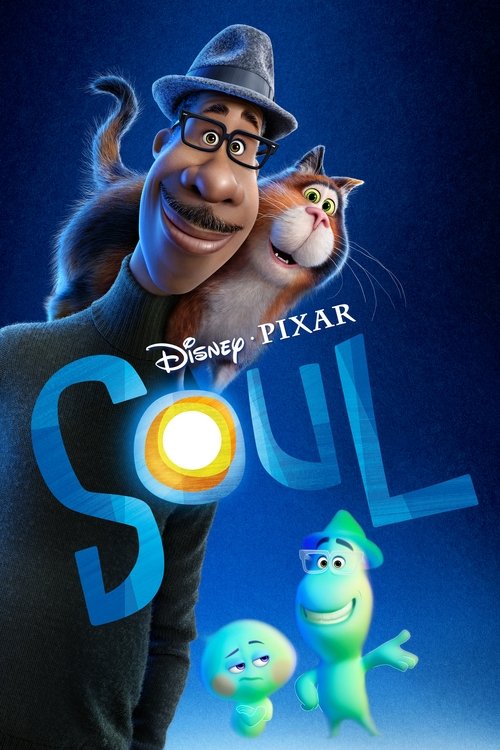
"Soul" follows Joe Gardner, a middle school band teacher who dreams of becoming a professional jazz musician. On the day he gets his big break, a sudden accident causes his soul to be separated from his body and transported to "The Great Before," a fantastical place where new souls get their personalities, quirks, and interests before they go to Earth.
In this otherworldly realm, Joe is mistaken for a mentor and is tasked with helping a cynical and precocious soul named 22, who has spent eons avoiding the human experience. Desperate to return to his life, Joe must convince 22 that living is worthwhile, embarking on a journey that forces him to re-evaluate his own life and discover what it truly means to have a soul.
Core Meaning
The central message of "Soul" is that the meaning of life is not found in a single-minded pursuit of a grand purpose or passion, but in the appreciation of the small, everyday moments. The film challenges the notion that a person's worth is defined by their achievements or a specific calling. Instead, it suggests that the 'spark' of life is simply the joy of living itself—savoring a slice of pizza, feeling the wind, or connecting with others. The director, Pete Docter, wanted to explore the idea that there isn't one right way to live and that fulfillment comes from being present and engaged with the world in all its ordinary beauty.
Thematic DNA
The Meaning of Life and Purpose
"Soul" directly confronts existential questions about purpose. Joe Gardner believes his sole purpose is to be a successful jazz musician. However, through his journey with 22, he learns that a 'spark' isn't a life's purpose but rather a love for living. The film posits that life's meaning is not about achieving a singular goal but about the joy found in the journey and the everyday experiences that make life rich and fulfilling.
Appreciation of the Mundane
A significant part of the film's message is the importance of appreciating the small, seemingly insignificant moments of daily life. When 22 experiences life in Joe's body, she is captivated by simple things like eating pizza, walking, and watching leaves fall. These moments, which Joe had previously overlooked in his pursuit of greatness, are revealed to be the very essence of what makes life worth living. The film encourages mindfulness and finding beauty in the ordinary.
Passion vs. Obsession
The film explores the fine line between healthy passion and consuming obsession. Joe's love for jazz is his driving force, but it also blinds him to other joys in his life. The "lost souls" in the Astral Plane are beings who have let their passions become all-consuming obsessions, detaching them from the world. "Soul" suggests that while passion is vital, it should not come at the expense of a well-rounded and engaged life.
Mentorship and Human Connection
The relationship between Joe and 22 is a central theme, highlighting the transformative power of mentorship and connection. While Joe is initially a reluctant mentor, their shared experiences lead to mutual growth. Joe teaches 22 about the joys of life, while 22 helps Joe see his own life from a new perspective. The barbershop scene, in particular, emphasizes the importance of community and shared human experience.
Character Analysis
Joe Gardner
Jamie Foxx
Motivation
Initially, Joe's sole motivation is to return to his body in time for his big break with jazz legend Dorothea Williams, which he sees as his life's purpose. This singular focus drives his actions for much of the film.
Character Arc
Joe begins as a man who believes his life is unfulfilled because he hasn't achieved his dream of being a famous jazz musician. His journey through the afterlife and his experience mentoring 22 force him to re-evaluate his priorities. He ultimately learns that a successful life is not measured by fame or accomplishment but by the joy and appreciation of living each day to the fullest. He transforms from someone chasing a singular dream to someone who embraces the entirety of life's experiences.
22
Tina Fey
Motivation
Her primary motivation is to avoid going to Earth at all costs. She has a dim view of life and has been in the Great Before for centuries. She initially helps Joe only as a means to get rid of him and remain in her comfortable, non-committal existence.
Character Arc
22 starts as a cynical and sarcastic soul who sees no point in living on Earth. Having failed to find her 'spark' for millennia, she is resistant to the idea of life. However, by experiencing the world through Joe's body, she discovers the simple joys of being human. She evolves from a detached and jaded being to one who is eager and ready to embrace life, finding her spark not in a specific passion but in the experience of living itself.
Libba Gardner
Phylicia Rashad
Motivation
Libba's motivation is rooted in her love for Joe and her desire to see him have a stable and secure life, free from the financial struggles she witnessed with his father.
Character Arc
Libba is introduced as a caring but cautious mother who wants stability for her son, urging him to take the secure full-time teaching job. She is wary of the precarious life of a musician, having experienced it with her late husband. Her arc involves coming to fully support Joe's dream, not just out of love, but with an understanding of its importance to him. This is shown when she lovingly prepares his father's suit for his big performance.
Dorothea Williams
Angela Bassett
Motivation
Her motivation is to maintain the excellence of her quartet and her music. She is discerning and only accepts the best musicians, which is why the opportunity she gives Joe is so significant.
Character Arc
Dorothea is a respected and no-nonsense jazz legend. She represents the pinnacle of the world Joe wants to enter. While her character doesn't have a significant arc, she serves as a catalyst for Joe's journey and later provides a crucial piece of wisdom through the parable of the fish, which helps Joe process his feelings of anticlimax after achieving his dream.
Symbols & Motifs
The 'Zone'
The 'Zone' represents a state of heightened focus and flow, where individuals are so engrossed in an activity they love that they enter a transcendent state. It symbolizes the power of passion and creativity to elevate the human experience. However, it also has a darker side, as getting too lost in the 'Zone' can lead to becoming a 'lost soul,' disconnected from life.
Musicians, artists, and others are shown entering the 'Zone' when they are deeply engaged in their craft. Moonwind and his mystics navigate this realm to help rescue 'lost souls' who have become consumed by their obsessions.
The Maple Seed (Helicopter Leaf)
The maple seed that 22 treasures symbolizes the beauty and wonder that can be found in the simplest, most ordinary aspects of life. It represents the 'spark' of living that is not tied to a grand purpose but to the simple joy of observation and experience.
While in Joe's body, 22 catches a falling maple seed and is fascinated by it. This memory becomes a powerful reminder for Joe of the joy 22 found in the mundane and helps him understand the true meaning of a 'spark'.
Joe's Father's Suit
The suit symbolizes Joe's aspirations and his connection to his father, who was also a musician. It represents his lifelong dream of becoming a professional jazz artist. When his mother lovingly repairs it for his big gig, it also symbolizes her support for his passion, despite her practical concerns.
Joe plans to wear his father's suit for his performance with Dorothea Williams. The act of his mother tailoring it for him is a pivotal moment of connection and understanding between them.
Pizza
The simple slice of New York pizza represents the sensory pleasures of being alive. For 22, it is a revelation, a tangible and delicious experience that contrasts with her abstract existence in The Great Before. It symbolizes the joy that can be derived from everyday experiences.
One of 22's first and most memorable experiences in Joe's body is eating a slice of pizza. This moment is a key part of her discovery of the joys of life on Earth.
Memorable Quotes
A spark isn't a soul's purpose. Oh, you mentors and your passions. Your purposes. Your meanings of life. So basic.
— Jerry
Context:
A Jerry says this to Joe near the end of the film, after Joe mistakenly believes that 22's spark must be a specific talent or passion. This revelation is a turning point for Joe's understanding of life.
Meaning:
This quote encapsulates the film's central theme. It directly challenges the protagonist's (and the audience's) preconceived notions about life's meaning, suggesting that the 'spark' is not about finding a single, grand purpose but about something more fundamental: the will to live.
I heard this story about a fish. He swims up to an older fish and says, 'I'm trying to find this thing they call the ocean.' 'The ocean?' says the older fish, 'that's what you're in right now.' 'This?' says the young fish. 'This is water. What I want is the ocean.'
— Dorothea Williams
Context:
Dorothea tells Joe this story after their successful gig, when Joe admits that he expected to feel different and more fulfilled. The story helps him begin to question his lifelong assumptions about success and happiness.
Meaning:
This parable illustrates the idea that we are often so focused on searching for a grand, abstract concept of happiness or purpose (the 'ocean') that we fail to recognize and appreciate the life we are already living (the 'water'). It speaks to Joe's feeling of emptiness after achieving his dream.
I'm just afraid that if I died today, my life would have amounted to nothing.
— Joe Gardner
Context:
Joe expresses this fear early in the film during a conversation with his mother, who is encouraging him to take the stable teaching job. This line establishes his internal struggle and his motivation for wanting to return to his body.
Meaning:
This quote reveals Joe's deep-seated fear of mediocrity and his belief that his life's worth is tied to his professional accomplishments as a jazz musician. It sets up his character arc and the central conflict of the film.
Philosophical Questions
What is the true meaning of a 'spark' for life?
The film initially presents the 'spark' as a specific passion or purpose that a soul must find before being born. Joe, and many of the mentors in the Great Before, believe this. However, the narrative deconstructs this idea, ultimately revealing that the 'spark' is not a purpose but the simple desire to live. 22 finds her spark not in jazz or any single activity, but in the experience of sensory details on Earth. The film asks viewers to consider whether life's meaning comes from a grand, singular objective or from the cumulative joy of small, everyday experiences.
Is a life dedicated to a single passion a fulfilled life?
Joe Gardner's life is entirely dedicated to jazz. He believes achieving his dream of playing with Dorothea Williams will be the ultimate fulfillment. When he finally achieves it, the feeling is anticlimactic. The film explores the idea that while passion is essential, a single-minded obsession can lead to a narrow view of life, causing one to miss out on other sources of joy and connection. The 'lost souls' are a literal representation of this danger. This prompts the question of whether a balanced life, open to various experiences, is more fulfilling than a life devoted to one pursuit.
Where does our personality come from?
Through the whimsical bureaucracy of the Great Before, "Soul" visualizes the abstract concept of personality formation. New souls are assigned personality traits in pavilions and are shaped by mentors. This fantastical exploration touches upon the classic philosophical debate of nature versus nurture. Are we born with a pre-determined set of characteristics, or are we a blank slate shaped by our experiences? The film playfully suggests it's a combination of both, with a pre-life shaping that is then tested and solidified by the act of living.
Alternative Interpretations
While the film's primary message is about finding joy in the everyday, some viewers and critics have offered alternative readings. One interpretation focuses on the idea of privilege. 22, having been mentored by historical figures, has a certain kind of privilege but lacks the lived experience to appreciate it. Joe, on the other hand, faces the systemic challenges of a Black artist trying to make it in a competitive world. Their journey together can be seen as a commentary on how different life experiences shape one's perspective on purpose and happiness.
Another perspective critiques the film's resolution as being too simplistic. Some argue that while the message to "just live" is heartwarming, it downplays the real-world necessity of having a purpose or passion to drive one's career and provide financial stability. This view suggests that the film's philosophy, while well-intentioned, might not fully resonate with those who do not have the luxury to simply enjoy the small moments without worrying about their future.
The ending, where Joe is given a second chance at life, has also been debated. Some see it as a heartwarming reward for his selflessness, while others might have preferred an ending where he accepts his death, which could have been a more profound statement on the finite nature of life and the importance of the time we have.
Cultural Impact
"Soul" was a significant film for Pixar, marking the studio's first feature with a Black lead character. Released during a period of heightened global consciousness around racial representation, the film was praised for its authentic depiction of Black culture, particularly its celebration of jazz as a cornerstone of the African-American experience. The inclusion of a culturally specific setting like a Black barbershop, added at the suggestion of co-director Kemp Powers, was highlighted by critics as a moment of genuine cultural representation.
The film was also released directly to Disney+ in many countries due to the COVID-19 pandemic, which impacted its box office but made it a widely discussed cultural event during a time when many people were contemplating life's big questions. It resonated with audiences for its deep, existential themes, prompting conversations about mental health, purpose, and the meaning of a fulfilling life. Critically, it was a major success, winning two Academy Awards for Best Animated Feature and Best Original Score, and was named one of the top ten films of 2020 by the National Board of Review and the American Film Institute.
Audience Reception
Audience reception for "Soul" was overwhelmingly positive. Viewers praised its stunning and imaginative animation, the emotional depth of its story, and its ambitious, thought-provoking themes. Many found the film to be a moving and timely meditation on life, purpose, and appreciating the present moment, particularly given its release during the COVID-19 pandemic. The film's jazz score and musical sequences were also widely acclaimed. The main points of criticism, though less common, revolved around the plot's complexity, with some viewers finding the metaphysical concepts a bit convoluted or the pacing uneven. A recurring point of debate was the trope of a Black character spending a significant portion of the movie in a non-human form (in this case, Joe's soul and later, a cat), a criticism that has been leveled at other animated films. Despite this, the overall verdict from audiences was that "Soul" is one of Pixar's most mature and profound films.
Interesting Facts
- "Soul" is Pixar's first film to feature a Black protagonist.
- The filmmakers consulted with jazz musicians like Herbie Hancock and Terri Lyne Carrington, and used session recordings of Jon Batiste as a reference for the musical sequences.
- The character of Joe Gardner was originally conceived as a scientist before the creators decided on a musician to better convey a sense of passion.
- The design of the soul counselors, the "Jerrys," which are essentially single, moving lines, was one of the biggest animation challenges for the team.
- The barbershop scene was not in the original script and was added by co-writer and co-director Kemp Powers to add a layer of cultural authenticity and community.
- The film's score was composed by Trent Reznor and Atticus Ross, while the original jazz compositions were written by Jon Batiste.
- Several endings were considered for the film, including one where Joe stays in the Great Before as a mentor.
Easter Eggs
The Pizza Planet Truck
A staple in nearly every Pixar film, the Pizza Planet truck from "Toy Story" can be seen in the Hall of Everything, among the collection of items meant to inspire new souls.
A113
The code "A113," which refers to the classroom at the California Institute of the Arts where many animators studied, appears as a sign in the Hall of Everything.
Brang's new headquarters
In the background of a shot of New York City, a building for "Brang" can be seen. This is a reference to the startup company from "Inside Out," another film directed by Pete Docter.
Cameos of other Pixar characters
In the tailor shop owned by Joe's mother, there are posters and designs on the wall that subtly reference characters from other Pixar films, such as a dress pattern inspired by "Brave."
⚠️ Spoiler Analysis
Click to reveal detailed analysis with spoilers
Frequently Asked Questions
Explore More About This Movie
Dive deeper into specific aspects of the movie with our detailed analysis pages
Comments (0)
No comments yet. Be the first to share your thoughts!