Sansho the Bailiff
A hauntingly beautiful period drama where familial bonds are tested by the crushing weight of injustice, rendered through visually poetic long takes.
Sansho the Bailiff

Sansho the Bailiff

山椒大夫

"Without mercy, man is like a beast."

31 March 1954 Japan 124 min ⭐ 8.1 (400)
Director: Kenji Mizoguchi
Cast: Kinuyo Tanaka, Yoshiaki Hanayagi, Kyōko Kagawa, Eitarō Shindō, Ichirō Sugai
Drama
Humanity vs. Inhumanity Freedom and Slavery Memory and Familial Bonds The Oppression of Women

Overview

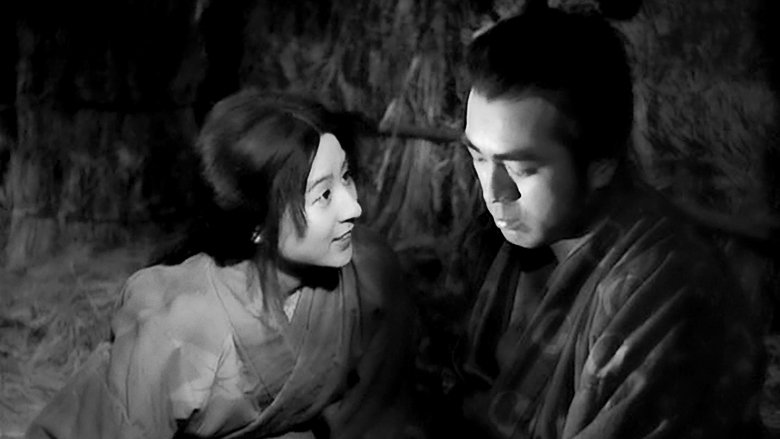
Set in eleventh-century Japan, "Sansho the Bailiff" tells the tragic story of a virtuous governor who is exiled for his compassion towards the peasants. His wife, Tamaki, and their two children, Zushio and Anju, are subsequently separated and sold into slavery. The children end up in the brutal work camp of the merciless bailiff, Sansho.

As years pass, the siblings' paths diverge. Anju holds onto their father's teachings of mercy, while Zushio, hardened by the cruelty he endures and inflicts, begins to lose his humanity in a desperate attempt to survive. A faint glimmer of hope appears when a song from a new slave reminds them of their mother, igniting a perilous plan for escape and a quest to reunite their shattered family.

Core Meaning

The central message of "Sansho the Bailiff" is an exploration of the enduring power of compassion and mercy in a world rife with cruelty and injustice. Director Kenji Mizoguchi posits that without these virtues, humanity descends to the level of beasts. The film questions whether one can maintain their ideals and humanity in the face of overwhelming suffering and systemic oppression. It ultimately suggests that true freedom and redemption are found not in power or revenge, but in upholding one's moral principles, even at great personal cost. The film serves as a powerful indictment of social apathy and the abuse of power, advocating for empathy as the essential force for positive change.

Thematic DNA

Humanity vs. Inhumanity 35%
Freedom and Slavery 30%
Memory and Familial Bonds 20%
The Oppression of Women 15%

Humanity vs. Inhumanity

The film constantly juxtaposes acts of profound compassion with extreme cruelty. Zushio's father's core teaching, "Without mercy, man is like a beast," serves as the film's moral compass. Zushio's internal struggle and eventual corruption under Sansho's rule illustrate the fragility of human decency when faced with brutalizing conditions. Anju's unwavering compassion and self-sacrifice, in contrast, represent the enduring spirit of humanity. The film explores whether one can retain their soul when systematically dehumanized by a cruel society.

Freedom and Slavery

The film provides a stark depiction of slavery, not just as physical bondage but as a spiritual and psychological state. The slaves at Sansho's estate are treated like animals, branded and brutalized. Mizoguchi critiques the societal structures that allow for such exploitation. Zushio's journey is a literal and metaphorical quest for freedom: freedom from captivity, from the hatred that has consumed him, and ultimately, the freedom to enact his father's merciful principles by abolishing slavery in his province.

Memory and Familial Bonds

Despite years of separation and suffering, the connection between the family members persists. Their father's teachings, symbolized by the Kannon statuette, serve as a moral guide. The mother's mournful song becomes a transcendent link, carrying across vast distances to rekindle hope in her children. These memories and bonds are the emotional core of the film, suggesting that love and connection can endure even the most horrific circumstances and motivate the characters toward reunion and redemption.

The Oppression of Women

A recurring theme in Mizoguchi's work, the suffering of women is central to the narrative. Tamaki is sold into prostitution, her tendons cut to prevent escape, and Anju ultimately sacrifices her life for her brother's freedom, seeing no other way out of her impending torture. The film poignantly illustrates how women are disproportionately victimized in a patriarchal and unjust society, bearing the heaviest burdens of cruelty and sacrifice.

Character Analysis

Zushiō

Yoshiaki Hanayagi

Archetype: Fallen Hero
Key Trait: Resilient

Motivation

Initially motivated by survival, Zushiō's core motivation shifts back to fulfilling his father's legacy of mercy and reuniting with his mother. Anju's sacrifice is the catalyst for this transformation, reminding him of the values he had abandoned.

Character Arc

Zushiō begins as a privileged child instilled with his father's compassionate ideals. After being enslaved, he endures immense hardship and, in a bid for survival, becomes hardened and cruel, eventually becoming one of Sansho's brutal overseers. His arc is one of losing and regaining his humanity. Spurred by his sister's sacrifice and the memory of his parents, he rediscovers his father's teachings, escapes, and uses a position of power not for revenge, but to abolish the very system that enslaved him, ultimately finding a bittersweet reunion with his mother.

Anju

Kyōko Kagawa

Archetype: Martyr/Innocent
Key Trait: Selfless

Motivation

Her primary motivation is to protect her brother and preserve the possibility that he might one day fulfill their father's ideals and find their mother. She embodies selfless love and unwavering faith in the family's principles.

Character Arc

Anju remains steadfast in her father's teachings throughout her enslavement, never losing her compassion or hope. She represents the moral anchor of the family. Her arc is one of quiet endurance culminating in the ultimate act of self-sacrifice. Fearing she will be tortured into revealing her brother's whereabouts after his escape, she drowns herself in a lake, ensuring his freedom and becoming a martyr for the family's values.

Tamaki

Kinuyo Tanaka

Archetype: The Suffering Mother
Key Trait: Enduring

Motivation

Her sole motivation is the memory of her children and the desperate hope of being reunited with them. This longing is expressed through her constant, mournful song.

Character Arc

Separated from her children and sold into prostitution on the remote Sado Island, Tamaki endures immense suffering. Her tendons are cut when she tries to escape. Her arc is one of tragic endurance, fueled by the undying hope of seeing her children again. She becomes a figure of pure, sorrowful love, her identity reduced to a mournful song for her lost children. She goes blind from weeping, and her final reunion with Zushiō is a moment of profound, heartbreaking pathos.

Sansho

Eitarō Shindō

Archetype: Tyrant/Antagonist
Key Trait: Merciless

Motivation

Sansho is motivated by greed and the maintenance of his power and authority. He sees other human beings as mere tools and property to be exploited for his own enrichment.

Character Arc

Sansho is a static character who embodies absolute cruelty and the corrupting nature of unchecked power. He is a ruthless bailiff who runs his slave estate with an iron fist, dehumanizing those under his control. He shows no mercy or development, serving as the primary obstacle and the representation of the inhumane social system the protagonists must overcome. His arc concludes with his downfall when Zushiō, as the new governor, has him and his family arrested and exiled, and the former slaves burn his manor.

Symbols & Motifs

Kannon Statuette (Goddess of Mercy)

Meaning:

The small figurine represents the father's teachings of compassion, mercy, and the inherent equality of all people. It is the physical embodiment of the family's moral code and spiritual resilience.

Context:

The father gives the statuette to Zushio just before they are separated, instructing him to remember his words. It serves as a tangible link to his lost ideals. In the final, emotionally devastating scene, Zushio presents the statuette to his blind mother, and she recognizes it by touch, confirming his identity and the survival of their family's values.

Water (Lakes, Sea)

Meaning:

Water in the film symbolizes separation, passage of time, life, death, and spiritual connection. It is a medium that both divides the family and paradoxically, connects them through memory and longing.

Context:

The family is first separated near the sea. Anju commits suicide by walking into a serene lake, a tranquil end to a life of torment. Tamaki, stranded on Sado Island, sings her sorrowful song out over the water, which the wind carries to her children, bridging the physical distance between them.

The Mother's Song

Meaning:

The song is a powerful motif of enduring love, memory, and sorrow. It functions as a form of spiritual communication, transcending physical barriers to connect the separated family members and awaken Zushio's dormant humanity.

Context:

Anju first hears the song from a new slave girl from Sado Island, which confirms their mother is alive. Later, both siblings hear their mother's voice on the wind in the forest, a mystical moment that galvanizes Zushio to escape. Finally, it is by hearing his mother singing this same song on a beach that Zushio is able to find her after years of searching.

Branding

Meaning:

The act of branding runaways with a hot iron is a potent symbol of dehumanization and the brutal enforcement of power. It signifies being marked as property, an animal rather than a human being, stripping away identity and dignity.

Context:

Sansho orders the branding of any slave who attempts to escape. Zushio's corruption is chillingly demonstrated when he, having suppressed his father's teachings, mechanically carries out the branding of an old man himself. This act marks the nadir of his moral decline before his eventual redemption.

Memorable Quotes

人間に情けがなければ、それは人間ではない。自分に厳しく、人には優しく。

— Taira no Masauji (The Father)

Context:

The father says this to a young Zushiō at the beginning of the film, just before he is sent into exile. He imparts this wisdom as his legacy, entrusting his son with a statuette of Kannon, the Goddess of Mercy.

Meaning:

This translates to: "Without mercy, man is like a beast. Be strict with yourself, but be merciful to others." This line is the film's central philosophical thesis. It establishes the moral framework against which all the characters' actions are measured and serves as Zushiō's guiding principle, which he loses and must reclaim.

安寿恋しや、厨子王恋しや

— Tamaki (The Mother)

Context:

This song is first heard from a new slave who came from Sado Island, where Tamaki was sent. The siblings later hear it on the wind, and it is this same song that ultimately leads Zushiō to his blind mother on the beach in the film's final scene.

Meaning:

This translates to: "I long for Anju, I long for Zushiō." These are the lyrics of the mother's song. It encapsulates her boundless grief and enduring love, acting as a spiritual beacon that connects the shattered family across time and distance, symbolizing the resilience of their bond.

Philosophical Questions

Can one maintain their humanity and moral principles in the face of absolute cruelty and oppression?

The film explores this question through the divergent paths of Zushiō and Anju. Anju represents the unwavering ideal, holding onto her father's teachings of mercy even unto death. Zushiō, conversely, succumbs to the brutalizing environment, adopting cruelty as a survival mechanism. His journey suggests that while one's humanity can be lost or suppressed under extreme duress, it is not necessarily extinguished forever. It can be rekindled through memory, love, and sacrifice, but the struggle to maintain it is immense and fraught with moral compromise.

What is the nature of true freedom?

"Sansho the Bailiff" presents freedom as more than just the absence of physical chains. Zushiō gains his physical freedom but remains tormented by his actions as an overseer. True freedom for him is achieved only when he uses his power to liberate others and acts according to his father's merciful principles, thereby freeing himself from the cycle of hatred and cruelty. Anju finds a tragic form of freedom in death, escaping a life of certain torture. The film suggests that true freedom is internal, found in moral integrity and acting with compassion.

Is compassion a strength or a weakness in a merciless world?

The film presents a complex answer. The father's compassion leads directly to his exile and his family's destruction, suggesting it is a vulnerability in a feudal, power-driven society. However, it is also the family's only source of spiritual resilience. Anju's compassion leads to her death but saves her brother. Ultimately, Zushiō's choice to embrace mercy over vengeance leads to the liberation of the slaves and his own redemption. The film posits that while compassion may lead to personal suffering, it is the only force capable of breaking cycles of cruelty and is therefore the ultimate human strength.

Alternative Interpretations

While the film is widely seen as a humanist tale where compassion ultimately triumphs, some interpretations offer a bleaker reading. One perspective is that the ending is not a victory but a profoundly tragic reunion that underscores the immense, irreparable loss. Zushiō has lost his father and sister, and his mother is blind and broken. He has abandoned his governorship, just as his father was exiled, suggesting a cyclical nature of suffering and sacrifice where virtuous actions lead to personal ruin.

Another interpretation focuses on the film's title. Naming the film after the villain, Sansho, rather than the protagonists, could suggest that the world ultimately belongs to the cruel and powerful. From this viewpoint, Zushiō's actions are a fleeting, personal victory against an overwhelmingly and enduringly brutal system. The film, then, is less about the triumph of good and more a lament for a world dominated by figures like Sansho. Furthermore, the film's Buddhist underpinnings suggest a theme of renunciation; Zushiō renounces his worldly power to care for his mother, implying that true liberation is found not in changing the world, but in personal spiritual duty, which can be seen as a retreat from political activism.

Cultural Impact

"Sansho the Bailiff" was created during the "Golden Age" of Japanese cinema in the 1950s and was one of the films that brought director Kenji Mizoguchi to international attention, particularly in Europe. Coming just after the end of the American occupation of Japan, the film resonated deeply with post-war audiences. Its story of a family broken by a corrupt, militaristic regime was seen by many as an allegory for the nation's own recent trauma and the displacement of families during World War II.

Critically, the film was lauded for its powerful humanism, its critique of feudal oppression, and its profound emotional depth. Its visual style, characterized by Mizoguchi's signature long takes and the painterly cinematography of Kazuo Miyagawa, has been enormously influential. The film's aesthetic draws from traditional Japanese art forms like scroll paintings (suiboku-ga) and Kabuki theater. While not as immediately popular in the West as the works of Akira Kurosawa, "Sansho the Bailiff" has grown in stature over the decades and is now consistently ranked by critics and filmmakers as one of the greatest films in cinematic history. Its unflinching look at suffering, combined with its ultimate message of compassion, has secured its place as a timeless and universal work of art.

Audience Reception

Audience reception for "Sansho the Bailiff" is overwhelmingly positive, with many viewers hailing it as a beautiful, profound, and emotionally shattering masterpiece. The aspects most frequently praised are its stunning, painterly cinematography, the powerful and heartbreaking story, and its deep exploration of humanism, suffering, and compassion. Viewers often describe being deeply moved, with many calling the final reunion scene one of the most devastating and effective in all of cinema.

The main point of criticism, or at least a common warning from viewers, is the film's relentless bleakness and depiction of cruelty. Its slow, deliberate pace and the sheer weight of the tragedy can be emotionally taxing for some. A minor point of contention for some viewers is the title, as the villain Sansho is not the central character of the story, which focuses on Zushiō and Anju. Overall, the verdict is that it is a difficult but essential and deeply rewarding film, a cinematic experience that stays with the viewer long after it ends.

Interesting Facts

  • The film is based on a 1915 short story of the same name by Mori Ōgai, which itself was based on a much older Japanese folktale.
  • Director Kenji Mizoguchi won the Silver Lion for Best Direction at the 15th Venice International Film Festival for the film, one of three consecutive awards he won at Venice.
  • The film's cinematographer, Kazuo Miyagawa, was also the cinematographer for Akira Kurosawa's masterpiece "Rashomon" (1950).
  • Mizoguchi was known for his use of long, elaborate takes and flowing camera movements, both of which are hallmarks of "Sansho the Bailiff"'s visual style.
  • Actress Kyōko Kagawa, who played Anju, recalled that Mizoguchi encouraged actors to react to each other emotionally rather than just reciting lines, seeking a more naturalistic performance.
  • Many critics and filmmakers, including Jean-Luc Godard, François Truffaut, and Robin Wood, have cited the film as one of the greatest ever made.
  • The film is often interpreted as an allegory for the suffering of the Japanese people during and after World War II, with the cruelties of the slave camp reflecting those of modern concentration camps.

⚠️ Spoiler Analysis

Click to reveal detailed analysis with spoilers

Frequently Asked Questions

Explore More About This Movie

Dive deeper into specific aspects of the movie with our detailed analysis pages

Comments (0)

Leave a comment

No comments yet. Be the first to share your thoughts!