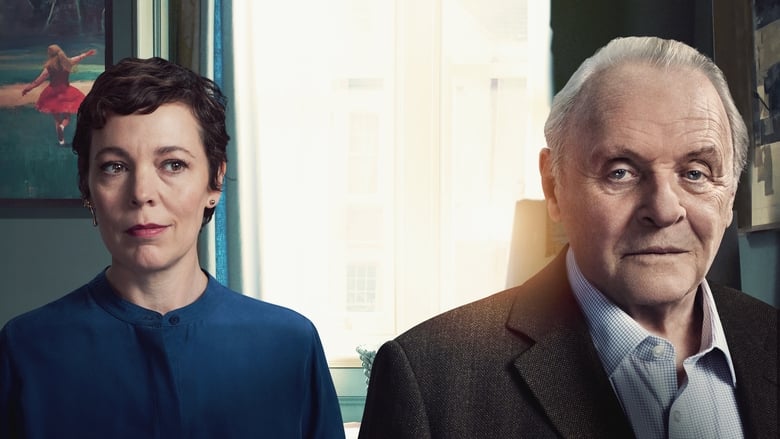
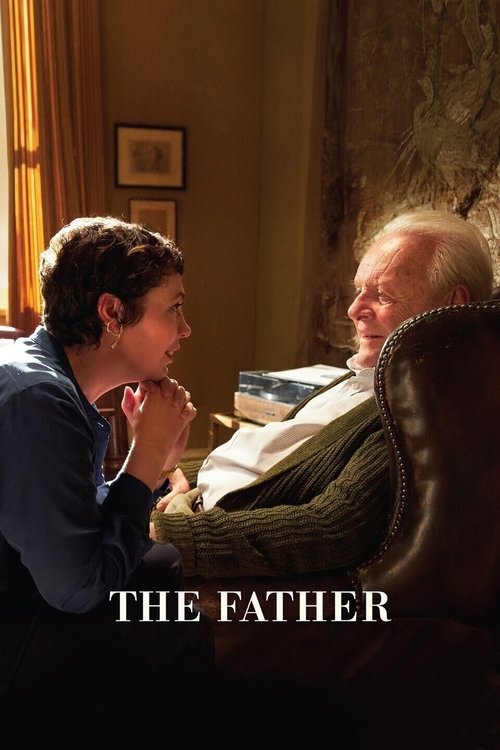
The Father
A psychological drama's chilling embrace of a fractured mind, where the architecture of memory crumbles into a haunting, disorienting ballet of love and loss.
The Father

The Father

23 December 2020 France 97 min ⭐ 8.1 (3,423)
Director: Florian Zeller
Cast: Anthony Hopkins, Olivia Colman, Mark Gatiss, Olivia Williams, Imogen Poots
Drama
The Subjective Experience of Dementia Loss of Identity and Self The Burden of Caregiving Reality vs. Perception
Budget: $6,000,000
Box Office: $21,029,340

Overview

"The Father" is a profound and unsettling psychological drama that immerses the viewer directly into the disorienting world of an aging man named Anthony, who is grappling with dementia. As he refuses assistance from his daughter, Anne, his perception of reality begins to fracture. He struggles to make sense of his changing circumstances, doubting his loved ones, his own mind, and the very fabric of his reality.

The narrative is deliberately fragmented and non-linear, mirroring Anthony's confusion. People and places shift inexplicably; characters played by one actor suddenly appear as another, and conversations repeat with unsettling variations. The film masterfully uses the physical space of an apartment, which subtly transforms throughout the story, to represent the labyrinth of Anthony's mind. This technique forces the audience to experience his disorientation and fear firsthand, creating an empathetic and deeply moving portrait of a mind coming undone and the heartbreaking impact on the family trying to cope.

Core Meaning

The core meaning of "The Father" is to provide a visceral, subjective experience of dementia, moving beyond a simple narrative to immerse the audience in the protagonist's psychological state. Director Florian Zeller intended the film not just to be a story, but an experience of what it feels like to lose one's bearings and grasp on reality. By employing a fragmented narrative, shifting characters, and a subtly changing environment, the film makes the viewer's confusion a mirror of Anthony's. It explores the devastating themes of memory, identity, and loss, highlighting the profound emotional toll dementia takes on both the individual suffering from it and their loved ones. Ultimately, the film is a meditation on the nature of reality, the pain of losing oneself, and the enduring, though strained, bonds of family love in the face of immense tragedy.

Thematic DNA

The Subjective Experience of Dementia 35%
Loss of Identity and Self 30%
The Burden of Caregiving 20%
Reality vs. Perception 15%

The Subjective Experience of Dementia

This is the central theme, with the film's unique narrative structure designed to place the audience directly inside Anthony's disoriented mind. We experience his confusion as actors change roles (e.g., Anne is played by both Olivia Colman and Olivia Williams), timelines shift without warning, and the apartment's layout and decor subtly transform. This technique makes his struggle with memory loss and paranoia a palpable, present-tense experience for the viewer, rather than a story observed from the outside.

Loss of Identity and Self

As Anthony's memories fade and become jumbled, his sense of self begins to disintegrate. He asks at one point, "Who exactly am I?" His past as an engineer or a tap dancer becomes uncertain, and his relationships with those around him are constantly in flux. The film poignantly explores the idea that our identity is intrinsically linked to our memories, and when those are gone, the foundation of who we are crumbles, leaving behind fear and vulnerability, culminating in him crying for his mother.

The Burden of Caregiving

The film doesn't solely focus on Anthony's experience but also deeply explores the emotional toll on his daughter, Anne. Olivia Colman's performance captures the immense grief, frustration, and unwavering love of a caregiver. We see her struggle with the painful dilemma of how to best care for her father while also trying to live her own life, a conflict that many families facing dementia can relate to. Her quiet moments of sorrow reveal the profound heartbreak of watching a loved one slowly disappear.

Reality vs. Perception

"The Father" constantly plays with the audience's perception of what is real. The narrative is an unreliable puzzle where scenes of apparent domestic abuse or arguments may be misremembered fears or distorted reality. The film suggests that reality is not a fixed absolute but is constructed through our consciousness and memory. By trapping the viewer in Anthony's subjective reality, it poses profound questions about how we define and trust our own experiences when the mind that interprets them is failing.

Character Analysis

Anthony

Anthony Hopkins

Archetype: The Unreliable Protagonist / Tragic Hero
Key Trait: Defiant

Motivation

His primary motivation is to maintain his independence and his grasp on reality. He fights against the help offered by his daughter because accepting it means admitting his own decline. He is driven by a desperate need to believe he is still in control of his life, his flat, and his own mind, even as all evidence points to the contrary.

Character Arc

Anthony's arc is one of tragic decline and disintegration. He starts as a proud, defiant man, insistent on his independence and control over his own life. As the narrative progresses, his dementia strips him of his memories, his autonomy, and his very identity. His defiance turns to confusion, fear, and paranoia. The final scenes show his complete regression to a childlike state of utter vulnerability, where he cries for his mother, having lost everything that defined him. His journey is not of growth, but of loss.

Anne

Olivia Colman

Archetype: The Caregiver
Key Trait: Dutiful

Motivation

Anne is motivated by a deep love for her father and a sense of duty to ensure he is safe and cared for. Despite the immense personal and emotional cost, she navigates his unpredictable behavior and deteriorating condition, constantly trying to find a solution that is best for him while wrestling with the pain of her decision to move on with her own life in Paris.

Character Arc

Anne's arc is an emotional journey of grief and difficult acceptance. She begins with a determined, albeit exhausted, effort to manage her father's care at home. Throughout the film, she is torn between her love and duty for her father and the need to live her own life. Her patience is tested to its limits. Her arc concludes with the heartbreaking but necessary decision to move Anthony into a professional care facility, representing her acceptance of the severity of his condition and the limits of her own ability to help.

The Man / Paul

Mark Gatiss / Rufus Sewell

Archetype: The Antagonist (in Anthony's perception)
Key Trait: Ambiguous

Motivation

Within Anthony's perception, the motivation of 'The Man' shifts. At times, he seems to be a concerned son-in-law trying to manage a difficult situation. At other times, he represents the hostile forces Anthony believes are trying to take over his flat and his life. His true motivation is obscured by Anthony's unreliable perspective, making him a symbol of the threatening and incomprehensible nature of his new reality.

Character Arc

This character, who appears as two different actors and is sometimes called Paul and sometimes James, does not have a traditional arc. Instead, he functions as a narrative device reflecting Anthony's confusion and paranoia. His presence shifts from being Anne's kind husband to a menacing figure who is impatient and even physically threatening, embodying Anthony's fears of being controlled and displaced by others.

The Woman / Catherine / Laura

Olivia Williams / Imogen Poots

Archetype: The Helper / The Stranger
Key Trait: Compassionate

Motivation

The motivation of these women is to provide care for Anthony. Laura arrives for a job interview, eager to help. The woman who looks like an older Anne (Olivia Williams) tries to reason with him. Catherine, the nurse in the final act, is motivated by professional compassion, comforting Anthony in his moment of ultimate despair and bringing a sense of peaceful closure to the narrative.

Character Arc

This composite character, appearing as different people (a new carer named Laura, a woman claiming to be Anne, and finally a nurse named Catherine), serves to heighten the sense of disorientation. The arc is not personal but functional, representing the changing faces of care and the inability of Anthony to form stable new memories. The final iteration, Catherine the nurse, represents the calm, compassionate reality of his situation at the end, providing comfort when his family can no longer be there.

Symbols & Motifs

The Apartment

Meaning:

The apartment symbolizes Anthony's mind. It is a physical manifestation of his deteriorating mental state. As his mind becomes more confused and fragmented, the apartment itself changes—colors shift, furniture moves or is replaced, and its layout seems to alter, becoming a labyrinthine space that is both familiar and alien.

Context:

The entire film is set within the confines of what initially appears to be Anthony's flat. However, as the film progresses, it subtly transforms into Anne's flat, and eventually a room in a nursing home. Production designer Peter Francis intentionally kept the architecture the same while altering décor, colors (from warm ochres to colder blues), and furniture to create a feeling of disorientation for the audience, mirroring Anthony's internal confusion.

The Watch

Meaning:

The watch represents Anthony's desperate attempt to hold onto time, routine, and control amidst his chaotic mental state. He constantly misplaces it and accuses others of stealing it, reflecting his inability to grasp the passage of time and his growing paranoia. It is a tangible link to a structured reality that is slipping away from him.

Context:

Throughout the film, Anthony is obsessed with finding his watch. This recurring motif appears in multiple scenes where he confronts Anne or his carers about its disappearance. The search for the watch is one of the few consistent threads in his fragmented experience, highlighting his struggle for orientation in a world that no longer makes sense.

"Losing all my leaves"

Meaning:

This verbal metaphor symbolizes the loss of memories, identity, and connection to life. Just as a tree loses its leaves in autumn, Anthony feels his life's experiences and the very essence of who he is falling away, leaving him bare and vulnerable. It is a poetic and devastating admission of his inner decay.

Context:

In the film's heartbreaking final scene, Anthony is in a nursing home and completely breaks down in front of his nurse, Catherine. He cries like a child, telling her, "I feel as if I'm losing all my leaves. The branches, and the wind, and the rain. I don't know what's happening anymore." This line encapsulates the entirety of his tragic experience.

Memorable Quotes

I feel as if I'm losing all my leaves. The branches, and the wind, and the rain. I don't know what's happening anymore.

— Anthony

Context:

This line is spoken in the film's final, devastating scene. Anthony is in a nursing home and has a moment of terrifying lucidity about his own confusion. He breaks down completely and weeps in the arms of his nurse, Catherine, finally verbalizing the depth of his loss and fear.

Meaning:

This is the film's most iconic and poetic line, encapsulating the entire experience of dementia. It's a profound metaphor for the loss of memory, identity, and one's connection to the world. It beautifully and tragically articulates the feeling of one's entire life and selfhood disintegrating.

Who exactly am I?

— Anthony

Context:

Towards the end of the film, in his room at the care facility, Anthony asks this question to his nurse, Catherine. The context is one of complete disorientation; Anne has left for Paris, and he no longer understands his place in the world or his own history, revealing the terrifying emptiness caused by his condition.

Meaning:

A simple but gut-wrenching question that cuts to the heart of the film's exploration of identity. It signifies the ultimate stage of Anthony's dementia, where not only has he lost his memories of others and his surroundings, but he has lost the fundamental connection to his own self.

I am not leaving my flat!

— Anthony

Context:

Anthony shouts this line multiple times throughout the film, often during confrontations with Anne or the man he perceives as her husband. It becomes a recurring, rage-filled refrain, highlighting his fear and refusal to accept that he is no longer capable of living on his own and, ironically, that he is often not even in his own flat.

Meaning:

This defiant declaration represents Anthony's desperate struggle to maintain control and independence. The flat is his last bastion of identity and autonomy, and the line is a powerful expression of his resistance against the changes being forced upon him by his illness and his family's attempts to help.

So, if I understand correctly, you're leaving me. Is that it? You're abandoning me.

— Anthony

Context:

This is Anthony's hostile reaction early in the film when Anne tries to explain to him that she is moving to Paris and needs to find a new carer for him. His accusation sets the stage for the central conflict between his need for care and his perception of being abandoned by his loved one.

Meaning:

This quote highlights the paranoia and fear of abandonment that often accompanies dementia. Anthony interprets his daughter's attempts to arrange for his care as a personal betrayal. It captures the emotional pain and insecurity at the root of his often cruel or difficult behavior.

Philosophical Questions

What constitutes a person's identity if their memories are gone?

The film relentlessly explores this question by stripping Anthony of his past, his relationships, and his understanding of himself. His recurring question, "Who exactly am I?" is the philosophical core of the film. It forces the audience to consider whether identity is merely the sum of our experiences and memories, or if there is an essential self that remains even when the mind has failed. Anthony's final regression to a childlike state, crying for his mother, suggests a return to a primal, pre-cognitive identity, raising questions about what remains of a person at their most vulnerable core.

How do we define reality when perception is unreliable?

"The Father" challenges the notion of an objective reality by confining the viewer to Anthony's subjective and chaotic perception. The narrative's contradictions—a daughter who is two different people, a flat that is constantly changing—demonstrate that our reality is constructed and interpreted by our minds. The film acts as a thought experiment, asking what happens when that interpretive tool breaks. It suggests that reality can become a terrifying and fluid labyrinth, and that the firm ground we believe we stand on is more fragile than we think.

What are the ethical dilemmas of love and duty in caregiving?

Through the character of Anne, the film delves into the painful conflict between love for a parent and the need for self-preservation. It poses the difficult question of where one's duty ends. Is it abandonment to place a loved one in a care facility when you can no longer cope? The film doesn't offer easy answers but presents Anne's choice with deep empathy, showing that the most loving decision can also be the most heartbreaking one. It examines the immense personal sacrifice involved in caregiving and the moral weight of decisions made under unbearable emotional strain.

Alternative Interpretations

While the film's primary interpretation is a straightforward, albeit non-linear, depiction of dementia from the protagonist's perspective, some alternative readings focus on specific elements. One interpretation suggests that the violent or cruel actions perceived by Anthony—such as Paul slapping him or Anne smothering him—are not merely distorted memories but manifestations of his deepest fears. They represent his terror of being helpless, abused, and a burden to his family, externalizing his internal anguish.

Another perspective focuses on the character of Anne. While she is presented as a loving, long-suffering daughter, some interpretations view the narrative's ambiguity as a way to question the reliability of her character as well. From Anthony's perspective, her plans are constantly changing (Is she going to Paris or not?), and her patience sometimes breaks. This reading doesn't suggest malice but rather highlights the extreme psychological pressure on caregivers, suggesting that the film's fractured reality might also reflect Anne's own emotional turmoil and conflicting desires—the wish to care for her father versus the wish to escape.

Finally, the ending can be interpreted in a more philosophical light. When the nurse tells Anthony he will soon forget his moment of painful clarity and they will go for a walk, it can be seen as a bleak commentary on the cyclical nature of his condition. However, it can also be read as a small moment of grace. The film suggests that while long-term memory and identity are lost, there is still the potential for comfort and peace in the immediate present, however fleeting. The final shot of the trees with their leaves intact offers a sliver of optimism, suggesting life continues even when an individual's world has fallen apart.

Cultural Impact

"The Father" achieved significant cultural impact primarily through its masterful and empathetic portrayal of dementia, a subject that affects millions worldwide. The film was released to widespread critical acclaim, lauded as one of the best films of the 21st century for its powerful performances and innovative storytelling. It received six Academy Award nominations, winning Best Actor for Anthony Hopkins and Best Adapted Screenplay for Florian Zeller and Christopher Hampton. Hopkins' historic win at age 83 made headlines and solidified the film's place in Oscar history.

Its influence on cinema lies in its radical narrative approach. By placing the viewer inside the protagonist's fracturing consciousness, it set a new standard for portraying subjective psychological states on screen, moving beyond traditional linear narratives about illness. This technique has been praised for fostering a deeper, more visceral understanding of the confusion and terror associated with dementia. The film resonated deeply with audiences, particularly those with personal experience of the disease, who found its depiction cathartic and painfully accurate. It sparked widespread conversation about the realities of dementia and the emotional burden on caregivers, solidifying its status as not just a cinematic achievement but also a culturally significant work of art.

Audience Reception

Audience reception for "The Father" was overwhelmingly positive, with many viewers finding it to be a profoundly moving and powerful experience. According to PostTrak, 84% of audience members gave the film a positive score. Viewers universally praised the tour-de-force performance by Anthony Hopkins, with many calling it the best of his career and deeply deserving of his Oscar win. Olivia Colman's performance as the anguished daughter also received widespread acclaim for its nuance and emotional depth.

The aspect most frequently highlighted by audiences was the film's unique and immersive storytelling, which effectively simulates the experience of dementia. Many viewers with personal experience caring for relatives with Alzheimer's or dementia found the depiction to be heartbreakingly realistic and cathartic. The main point of praise was its ability to generate profound empathy. There was very little criticism, though the film's heavy subject matter and deliberately disorienting structure were noted as being emotionally demanding and difficult to watch. The overall verdict from audiences was that "The Father" is a devastating, essential, and unforgettable masterpiece.

Interesting Facts

  • The film is an adaptation of director Florian Zeller's own highly successful 2012 stage play, "Le Père".
  • At 83 years old, Anthony Hopkins became the oldest person to ever win an Academy Award for Best Actor for his role in this film.
  • Florian Zeller wrote the screenplay with Anthony Hopkins specifically in mind, even naming the main character 'Anthony'. He chose to make the film in English rather than his native French for this reason.
  • The film was shot mostly in sequence to help the actors maintain the emotional continuity and growing sense of disorientation central to the story.
  • The production design was crucial to the film's effect. The entire film was shot in a studio, allowing the crew to subtly change the apartment set day by day—altering colors, furniture, and even proportions—to reflect Anthony's shifting mental state.
  • Director Florian Zeller was inspired to write the original play by his own personal experience, as he was raised by his grandmother who began to suffer from dementia when he was 15.
  • Olivia Colman's mother was a nurse who specialized in geriatric care, which gave her a personal connection to the story's themes.
  • A related film, "The Son" (2022), also directed by Zeller and based on his play, is considered a thematic companion piece, with Anthony Hopkins making a brief cameo as the same character.

⚠️ Spoiler Analysis

Click to reveal detailed analysis with spoilers

Frequently Asked Questions

Explore More About This Movie

Dive deeper into specific aspects of the movie with our detailed analysis pages

Comments (0)

Leave a comment

No comments yet. Be the first to share your thoughts!