Skip to content
Soulmate
A tender, bittersweet friendship drama washed in the light of Jeju's sea and sky, where two girls' lives braid, fray and re-knot, and love is measured in the space left between them.
Soulmate

Soulmate

소울메이트

"You were always beside me."

15 March 2023 South Korea 124 min 8.0 (109)

Director: Min Yong-keun

Cast: Kim Da-mi, Jeon So-nee, Byeon Woo-seok, Jang Hye-jin, Park Choong-seon

Drama Romance Friendship and love beyond definition Communication and silence Jealousy and living through another Freedom versus responsibility Time, memory and loss
Box Office: $2,471,778

Overview

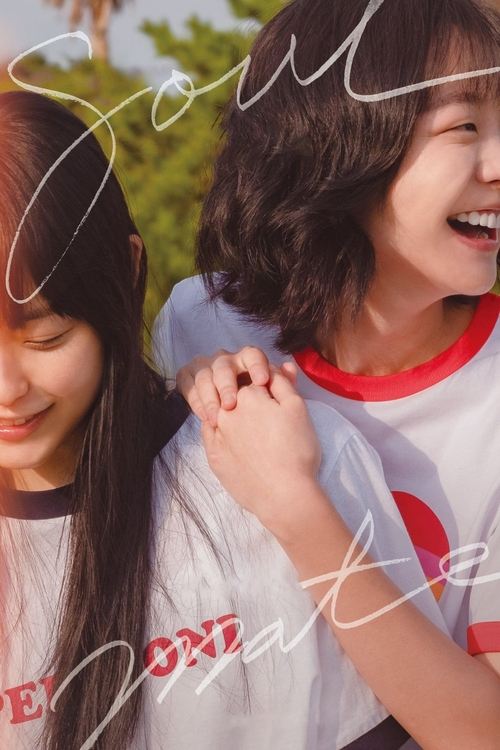
Soulmate (2023) is a South Korean drama directed by Min Yong-geun. It adapts the 2016 Chinese film Soul Mate by Derek Tsang. The film follows 14 years of meeting and parting, friendship and love, longing and jealousy between two girls who meet at age 13 on Jeju Island. Both were born in 1988.

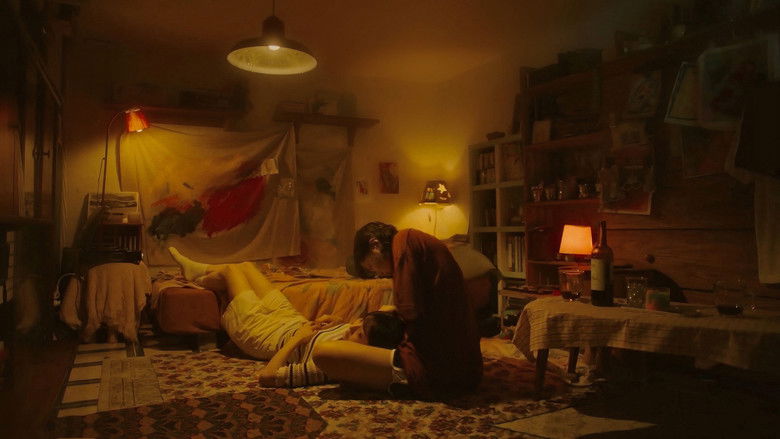
Mi-so (Kim Da-mi) is free-spirited, bold and artistically gifted, and she grew up without much family support. Ha-eun (Jeon So-nee) is reserved and dutiful, and she is pushed toward her father's dream of her becoming a teacher. Each admires what the other lacks. Together they roam Jeju, make art and look after a stray cat. A young man, Jin-woo (Byeon Woo-seok), enters their lives and puts the first crack in their closeness.

The story moves between childhood, adolescence and adulthood, with flash-forwards that hint at a mystery in Mi-so's later life. It asks what it means to be someone's soulmate when love, envy, resentment and silence all live inside the same bond.

Core Meaning

The film argues that a "soulmate" is not a frictionless ideal. It is the person who shapes you, who sees you completely, and whom you may hurt and resent for that reason. Reviewers note that Mi-so and Ha-eun fail to say the things they should say to each other. Their love is real, but it is tangled with envy, pride and unspoken sacrifice.

Min's version stresses that people can be lived through each other. Each woman carries part of the other's dream and identity, and that connection outlasts separation and even death. It also suggests that love between friends can be as deep, and as hard to define, as romantic love.

Thematic DNA

Friendship and love beyond definition 30%
Communication and silence 25%
Jealousy and living through another 20%
Freedom versus responsibility 15%
Time, memory and loss 10%

Friendship and love beyond definition

Mi-so and Ha-eun's bond reads as friendship, sisterhood and sometimes romance. Reviewers have described the love as too intense to be only platonic. The film does not give it a label.

Communication and silence

Mi-so leaves Jeju believing she is in Ha-eun's way, but she never says so. She also hides the truth about her life in Seoul. These silences leave the two women with misunderstandings that last for years.

Jealousy and living through another

Ha-eun lives her father's dream while Mi-so is said to live Ha-eun's dream. Each is drawn to what the other has and envies it. The film shows how admiration and resentment can sit side by side.

Freedom versus responsibility

Mi-so wants to travel and paint, and Ha-eun accepts the settled life expected of her. The film ends up suggesting that neither path is wrong and that people can swap or share them.

Time, memory and loss

The story spans 14 years and uses flash-forwards and imagined scenes that are later corrected. This shows how memory distorts, and how a person's absence stays in the living.

Character Analysis

Ahn Mi-so

Kim Da-mi

Archetype: Free spirit / wounded hero Key Trait: Free yet fragile

Motivation

To live freely through travel and painting. She also wants to protect Ha-eun's happiness, even by leaving.

Character Arc

She starts as a bold, adventurous girl who leaves Jeju for Seoul and hides the hardship of her real life. Her need for validation leads her into painful relationships. The film shows that she is more delicate than she looks.

Ko Ha-eun

Jeon So-nee

Archetype: Dutiful companion / reluctant rebel Key Trait: Reserved but deeply loyal

Motivation

To fulfil her father's wishes and keep Mi-so close.

Character Arc

She is reserved and ambitious, and lets her father and Jin-woo steer her choices. She grows to rely on Mi-so to inspire her, and that need mixes with jealousy. The film later turns her into someone who carries Mi-so's legacy.

All 3 characters and cast

Symbols & Motifs

The stray cat they call 'eomma' (mother)

Meaning:

Shared care, the family neither girl fully had, and the idea of two 'mothers' raising something together.

Context:

The girls raise a stray cat in childhood. According to viewers' readings, this echoes the ending, where the two end up as mothers to a child.

Drawing and painting

Meaning:

Seeing and knowing another person, and the dreams each woman puts aside or hands to the other.

Context:

Mi-so draws Ha-eun and says she learns her feelings through drawing. Ha-eun is ready to give up her own art for the teaching career her father wants.

Matching earrings

Meaning:

Paired identity and the space between two separated people.

Context:

Viewers cite the matching earrings as a visual motif of the pair. Reviewers also note an image of Kim Da-mi that marks both women's lives.

Jin-woo's lucky charm

Meaning:

A misread signal. It stands for the betrayal Ha-eun believes in and for the silence between the friends.

Context:

Mi-so leaves Jeju carrying Jin-woo's lucky charm. This gives Ha-eun the wrong impression, which she carries for much of her life.

Jeju Island and the icy final landscape

Meaning:

Jeju stands for childhood warmth and innocence. The cold, icy place at the end suggests loss and quiet endurance.

Context:

Jeju hosts the carefree early scenes among nature. Near the end Ha-eun is seen standing in an icy place, which one viewer reads as a summerless, post-loss world.

Memorable Quotes

I realized that I don't remember seeing your back. Because you were always beside me.
— Ha-eun

Context

The line is listed on IMDb as a quote from Ha-eun. It is given here in English, since the sources searched did not give the original Korean wording.

Meaning

It sums up the film's idea of companionship. The pair were so close that one never watched the other walk away.

Philosophical Questions

Can one person truly live for, or as, another?

Ha-eun lives her father's dream while Mi-so's choices are shaped by Ha-eun's happiness. The film's ending pushes this to the extreme and asks where one identity stops and another begins.

Is love possible without resentment?

In a late scene the two women admit they hate each other. The film suggests that honest love contains envy and anger and can survive them.

What do we owe the people who change us?

Mi-so and Ha-eun give up dreams, places and years for each other. The film asks whether these sacrifices are acts of love or a burden placed on the other.

How It Ends

Alternative Interpretations

Many viewers, including Letterboxd and Rotten Tomatoes reviewers, read Mi-so and Ha-eun's bond as romantic or at least queer-coded. They cite the longing, the jealousy and the intensity. Others see it strictly as a deep platonic soulmate friendship, a bond more lasting than romance.

Full ending explanation

Cultural Impact

The film belongs to the wave of East Asian remakes of Chinese-language films. It reinterprets Derek Tsang's 2016 work for Korean audiences. Viewers who watched both versions say the friendship is better developed in the Korean one, while the individual characters come out better in the Chinese one. Some say the endings differ and that the Korean ending speaks more deeply about friendship.

Its theatrical run was modest in Korea, at around 234,000 admissions. It found a second life with international viewers and on streaming. Letterboxd lists it under themes such as emotional LGBTQ relationships and teen coming-of-age stories. Critics such as Dramabeans and HanCinema have commented on its handling of the soulmate idea and on its ending.

Audience Reception

Viewers praised the chemistry of Kim Da-mi and Jeon So-nee, and some singled out Jeon's performance. They also praised the Jeju scenery, the colour grading and the nostalgic music. Many described crying and said the emotions stayed with them afterwards.

Criticism focused on the ending, which one critic called unsettling and another said drifts into melodrama. Some viewers also found the male lead's role cheesy. Overall verdict: a moving, if uneven, portrait of friendship that rewards emotional engagement. Audience scores on Letterboxd and similar sites were positive, though Korean box office was modest.

Interesting Facts

  • It is a remake of the 2016 Chinese film Soul Mate, directed by Derek Tsang.
  • The screenplay is credited to Kang Hyun-joo and Min Yong-geun. Producer Byun Seung-min, cinematographer Kang Gook-hyun, editor Han Mi-yeon and composer Mowg also worked on it.
  • The film was released in South Korean theatres on March 15, 2023, and premiered at the 28th Busan International Film Festival on October 5, 2023.
  • The early working title was 'Annyeong, Naui Sowoolmeiteu' ('Hi, My Soul Mate'), according to IMDb.
  • The running time is 124 minutes.
  • As of January 24, 2024, it had grossed about $1.7 million, with 234,775 tickets sold. Wikipedia's infobox lists a box office of US$2.5 million.
  • The production companies are Climax Studio, Andmarq Studio, Studio&NEW and KeyEast. It was distributed by Next Entertainment World and Wide Lens Pictures.

Frequently Asked Questions

Explore More About This Movie

Dive deeper into specific aspects of the movie with our detailed analysis pages

Comments (0)

Leave a comment

No comments yet. Be the first to share your thoughts!

Similar Movies