Skip to content
Jeanne du Barry
A sumptuous yet melancholic historical romance steeped in opulent defiance, Jeanne du Barry captures the intoxicating thrill of forbidden passion dancing against the rigid, suffocating shadows of Versailles.
Jeanne du Barry

Jeanne du Barry

16 May 2023 France 117 min 6.9 (707)

Director: Maïwenn

Cast: Maïwenn, Johnny Depp, Benjamin Lavernhe, Melvil Poupaud, Robin Renucci

Drama History Romance Class Stratification and the Illusion of Nobility Freedom vs. Institutional Etiquette Transactional Intimacy and Female Agency The Transience of Power and Fleeting Grandeur
Budget: $22,400,000
Box Office: $13,000,000

Overview

Set in 18th-century France during the twilight years of the Ancien Régime, the film chronicles the meteoric rise of Jeanne Bécu (later Jeanne Vaubernier), an illegitimate daughter of an impoverished cook and seamstress. Endowed with sharp intellect, a passion for literature and the arts, and natural beauty, Jeanne navigates French society by climbing from commoner status to high-class courtesan under the patronage of the calculating Count Jean du Barry.

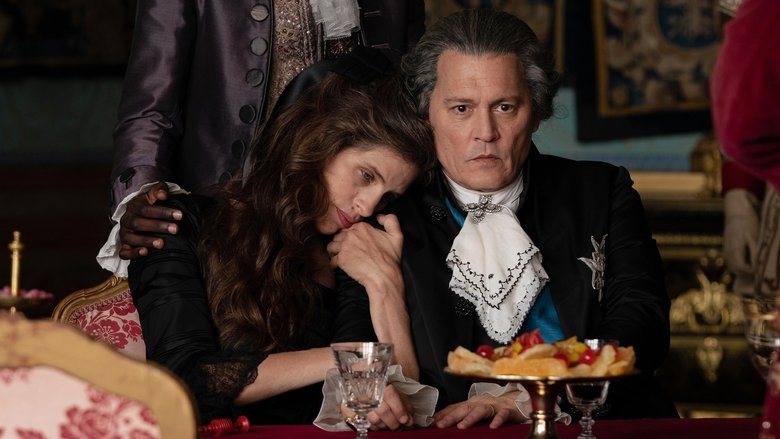
Through an orchestrated introduction by the Duke of Richelieu, Jeanne secures an audience at the Court of Versailles with King Louis XV. Wearied by courtly protocol and the burden of the crown, the aging monarch is immediately captivated by Jeanne’s candid irreverence, charm, and vitality. Their encounter ignites a passionate romance that leads the King to defy centuries of royal tradition by appointing her his official mistress (maîtresse-en-titre).

Jeanne's integration into the palace disrupts the ossified social order of Versailles. Met with contempt and hostility by the nobility—most notably the King’s unmarried daughters and the newly arrived Dauphine, Marie Antoinette—Jeanne must navigate venomous intrigues and strict etiquette, supported only by the monarch's favor and the loyalty of the King's premier valet, Jean-Benjamin de La Borde.
Core Meaning

Maïwenn constructs Jeanne du Barry as a critique of social elitism, hypocrisy, and the performative nature of power. The film highlights how class boundaries are sustained not by virtue, but by arbitrary protocols and inherited privilege. Through Jeanne, the narrative explores the female body and charm as tools of social mobility within a patriarchal structure, while illustrating the isolating toll exacted on an outsider who dares to be authentic in a world governed by masquerade.

Thematic DNA

Class Stratification and the Illusion of Nobility 30%
Freedom vs. Institutional Etiquette 25%
Transactional Intimacy and Female Agency 25%
The Transience of Power and Fleeting Grandeur 20%

Class Stratification and the Illusion of Nobility

The royal court looks down on Jeanne as common and vulgar, yet the aristocrats behave with pettiness, hypocrisy, and malice. Jeanne’s lower birth exposes the superficiality of aristocratic superiority.

Freedom vs. Institutional Etiquette

Versailles is depicted as a golden cage where every breath, step, and glance is governed by stifling ceremony. Jeanne’s refusal to conform to rigid behavioral rules highlights the conflict between individual freedom and societal control.

Transactional Intimacy and Female Agency

In 18th-century France, a woman without fortune had few paths out of poverty. Jeanne uses courtesanship strategically to secure autonomy and influence, showing how female survival relied on commodified allure in a patriarchal world.

The Transience of Power and Fleeting Grandeur

The romance between Louis XV and Jeanne exists against the backdrop of an impending revolution. The film contrasts their private intimacy with the inevitable collapse of royal authority and mortality.

Character Analysis

Jeanne Bécu / Countess du Barry

Maïwenn

Archetype: The Rebellious Outcast / Romantic Free Spirit Key Trait: Uninhibited spontaneity and emotional resilience

Motivation

To live free from destitution, pursue sensual and intellectual pleasure, and maintain emotional autonomy.

Character Arc

Climbs from poverty to become the sovereign's favorite, finds deep love in an artificial world, and endures total abandonment when royal favor dies.

King Louis XV

Johnny Depp

Archetype: The Jaded Ruler / Melancholic Sovereign Key Trait: Stoic dignity concealing deep vulnerability

Motivation

To escape the suffocating loneliness of royal etiquette and experience genuine human connection.

Character Arc

A weary monarch isolated by ritual who rediscovers joie de vivre through Jeanne, but remains bound to the religious and political duties of the crown.

All 4 characters and cast

Symbols & Motifs

Walking Backwards (Reculoir)

Meaning:

Symbolizes submission and the absurdity of royal etiquette, forbidding courtiers from turning their backs on the monarch.

Context:

Jeanne transforms this rigid court protocol into playful seduction with Louis XV and later utilizes it as a poignant expression of grief when departing his deathbed.

Men’s Riding Garb / Androgynous Clothing

Meaning:

Signifies rebellion against restrictive gender roles and the corseted decorum of high-society expectations.

Context:

Jeanne appears at the court of Versailles dressed in men's equestrian attire, shocking the assembled courtiers.

Zamor (The Gifted Page)

Meaning:

Represents the commodification of human beings in aristocratic excess as well as Jeanne's maternal empathy, which eventually meets ideological betrayal.

Context:

Presented as a young enslaved page gifted to Jeanne by King Louis XV.

The Diamond Necklace / Haute Joaillerie

Meaning:

Represents the King's boundless indulgence while functioning as glittering shackles binding Jeanne's reputation to vanity and courtly hatred.

Context:

Lavish bespoke jewelry showered upon Jeanne as she solidifies her position at court.

Books and Reading

Meaning:

Highlights Jeanne's intellect and independent mind, separating her genuine curiosity from the vacuous gossip of courtiers.

Context:

Jeanne maintains a persistent attachment to literature and arts throughout her rise from poverty to Versailles.

Memorable Quotes

Il y a bien du monde aujourd’hui à Versailles.
— Marie Antoinette (Pauline Pollmann)

Context

Spoken during New Year's greetings after months of refusing to address Jeanne, adhering to court etiquette where lower ranks could not speak until spoken to.

Meaning

A pivotal diplomatic breakthrough forced by the King and Austrian diplomacy, masking fierce court tension behind trivial small talk.

Vous ne devez jamais tourner le dos au Roi.
— Jean-Benjamin de La Borde (Benjamin Lavernhe)

Context

La Borde instructing Jeanne on the backwards-walking ritual before her first royal audience.

Meaning

Summarizes the absolute subservience demanded by the French monarchy and serves as the visual setup for Jeanne's playful subversion of court rules.

All 3 quotes

Philosophical Questions

Can love exist purely between unequal partners?

The narrative examines whether true emotional intimacy is possible when one partner wields absolute sovereign authority over the other.

What defines nobility—bloodline or character?

By contrasting the generosity of a common courtesan with the cruelty of titled royals, the film questions the moral legitimacy of hereditary privilege.

Is social climbing empowerment or complicity?

Jeanne gains influence by mastering the rules of a corrupt system, questioning whether personal elevation within an unjust hierarchy constitutes genuine emancipation.

Alternative Interpretations

The Feminist Reclamation: Interprets Jeanne as a forward-thinking trailblazer who navigated an oppressive class system through wit, artistic sensibility, and self-possession, humanizing a woman reduced by history to a royal consort.

Full ending explanation

Cultural Impact

The film arrived amid significant cultural debate. As Johnny Depp’s first major film project following his high-profile defamation trial in the United States, its premiere at Cannes ignited heated discussions regarding rehabilitation in cinema and celebrity status. Simultaneously, the film reflected French cinema’s ongoing fascination with reclaiming historical women whose reputations were distorted by revolutionary pamphlets and misogynistic propaganda. The movie achieved solid domestic box office success in France, drawing over 750,000 admissions in theatres.

Audience Reception

The overall consensus considers the film a handsomely mounted, classical period romance anchored by strong technical craftsmanship and a standout supporting performance from Benjamin Lavernhe, though occasionally held back by melodramatic conventions.

Praise: Benjamin Lavernhe's performance as La Borde received universal acclaim for his comedic timing and warmth. The production design, 35mm cinematography, and Jürgen Doering's Chanel-backed costumes were praised for aesthetic elegance, while Depp’s understated portrayal of an aging monarch was noted for quiet emotional resonance.

Criticism: Reviewers pointed to conventional, academic direction that smoothed over complex political realities of the Ancien Régime. The sultry voiceover narration was frequently criticized as heavy-handed and overly explanatory, and the script was noted for taking historical shortcuts regarding Jeanne's political role.

Interesting Facts

  • Cinematographer Laurent Dailland shot the production on 35mm Kodak film using natural light and candlelight, deliberately evoking Stanley Kubrick’s Barry Lyndon.
  • The production gained special permission to film in the real Hall of Mirrors, gardens, and state apartments at the Palace of Versailles on designated closed days.
  • Virginie Viard and the House of Chanel partnered with costume designer Jürgen Doering to create bespoke gowns and provide historic Chanel High Jewellery pieces for Maïwenn.
  • King Louis XV marked Johnny Depp's first feature performance conducted almost entirely in French, assisted on set by a specialized vocal coach.
  • With a budget of approximately $22.4 million (€20 million), it stood as one of the most expensive French productions of 2023.
  • The film was selected as the prestigious opening film of the 76th Cannes Film Festival on May 16, 2023, receiving a seven-minute standing ovation at its premiere.
  • Maïwenn conceived the project after seeing Asia Argento portray Madame du Barry in Sofia Coppola’s 2006 film Marie Antoinette, spending over ten years researching the biography before writing the screenplay.

Easter Eggs

Cinematic Homage to Barry Lyndon (1975)

Laurent Dailland's visual framing, voiceover narration style, and use of candlelight directly echo Stanley Kubrick’s period masterpiece.

Echoes of Sofia Coppola’s Marie Antoinette (2006)

The contentious dynamic between Marie Antoinette and Jeanne mirrors Coppola's film, but shifts the perspective to treat du Barry as the sympathetic protagonist rather than an antagonistic outsider.

Historical Painting Recreations

Several tableaus—such as the Duke of Penthièvre's family enjoying chocolate (La Tasse de Chocolat) and portraits by Élisabeth Vigée Le Brun—are framed and lit to recreate authentic 18th-century paintings.

Chanel Archive Reinterpretations

Specific dresses worn by Jeanne are modern cuts inspired by Karl Lagerfeld’s Chanel Haute Couture archives from the 1980s and 1990s, subtly bridging historical silhouettes with modern fashion sensibility.

Frequently Asked Questions

Explore More About This Movie

Dive deeper into specific aspects of the movie with our detailed analysis pages

Comments (0)

Leave a comment

No comments yet. Be the first to share your thoughts!

Similar Movies