Skip to content
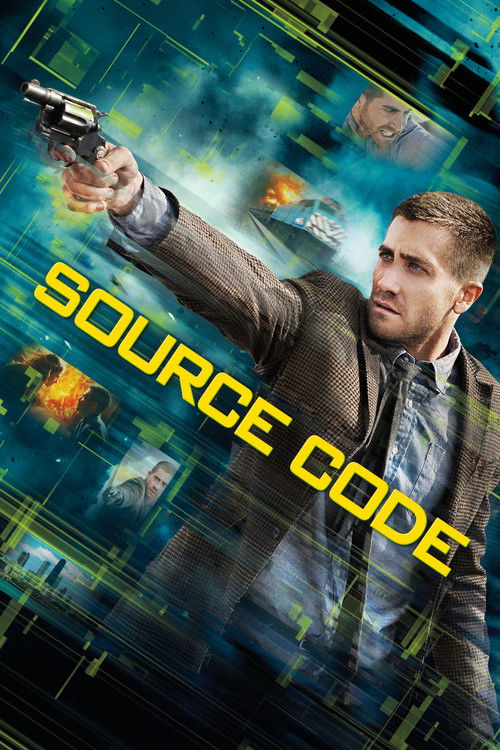
Source Code
A taut sci-fi thriller that turns eight repeating minutes into a meditation on second chances — a commuter train hurtling toward fire, and one man learning that a borrowed life can still be lived fully.
Source Code
Source Code

"Make every second count."

30 March 2011 United States of America 93 min 7.3 (9,382)

Director: Duncan Jones

Cast: Jake Gyllenhaal, Michelle Monaghan, Vera Farmiga, Jeffrey Wright, Michael Arden

Thriller Mystery Science Fiction Identity and the borrowed body Second chances and the value of eight minutes The individual versus the institution Determinism, free will and branching realities Trauma, war and the soldier's afterlife
Budget: $32,000,000
Box Office: $147,332,697

Source Code — Ending Explained

⚠️ Spoiler Analysis

Full spoilers follow. The film's first major revelation is Colter's actual condition. The 'capsule' he returns to between runs does not exist as he perceives it; Colter Stevens was killed in action in Afghanistan, and what remains of him — a partial body kept alive on life support — is wired into the Source Code apparatus. His mental image of the pod is a coping construct his mind generates to make sense of an unimaginable situation. Everything he has been told about going home is, in effect, a lie of omission designed to keep an asset functional.

The second revelation is the bomber: Derek Frost, a fellow passenger hiding in plain sight, whose van outside the station carries a far larger device intended for downtown Chicago. Colter identifies him, and the information passes into the real world, allowing the second attack to be prevented. That is the mission accomplished — and the film's most important move is that it does not stop there.

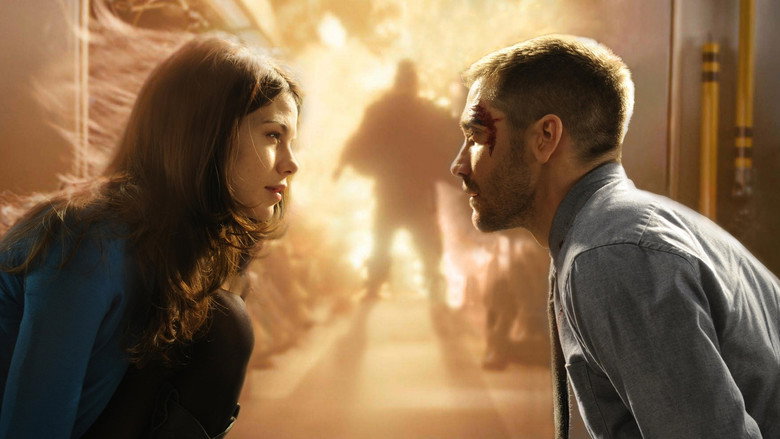
Colter's final request is twofold: send him in one last time, and afterward, disconnect him. Goodwin, who has spent the film as the voice of protocol, agrees, defying Rutledge's intention to wipe Colter's memory and redeploy him indefinitely. Inside the last run Colter does everything at once — he stops Frost, alerts the authorities, calls his father under Sean's name to say what he never said in life, and then simply stands with Christina, kissing her as the timer expires.

Then the eight minutes end and nothing ends. The train does not explode; the frozen tableau resumes. Rutledge's doctrine that 'Source Code is not time travel' but 'time reassignment' — a closed, unalterable recording — is refuted by the film itself. Colter continues to exist in a branching reality as Sean Fentress, alive, with Christina, walking through Millennium Park toward Cloud Gate. In the original timeline, Goodwin pulls the plug and Colter dies; in the new one he sends her a message telling her that if she is reading it, the Source Code works better than she knows, and that everything is going to be okay.

Retrospectively, the film's structure reveals itself as a redemption arc disguised as a procedural. The details that felt like local color — the spilled coffee, the comedian, the conductor, the father's unanswered phone — turn out to be the actual material of the story, because they are what Colter chooses to spend his last eight minutes on once he understands they are all he gets. Worth noting: earlier drafts ended with Colter's death as final, and the branching-timeline ending was adopted after test audiences responded powerfully to the idea of a continuing reality, which is why the more melancholy version is still legible underneath the hopeful one.

Alternative Interpretations

The optimistic reading. The Source Code is not a recording at all. Each entry opens a genuinely parallel world, and Colter's final run creates a branch in which the bomb never detonates and he goes on living as Sean Fentress. Rutledge is simply wrong about his own invention, and the film's closing minutes are an unironic gift: a real life, really saved.

The dying-mind reading. Everything after the last run is the terminal experience of a mortally wounded man — a perfect eight minutes stretched into a subjective forever as consciousness fades. On this view the ending is beautiful precisely because it is not literal, and the film has quietly become a story about a merciful death rather than a second life.

The ethical reading. The metaphysics are deliberately underspecified because the film's actual argument is moral, not physical. Whether or not the passengers exist objectively, Colter's decision to treat them as if they do is what the story rewards, and the ending dramatizes the consequences of that choice rather than the mechanics behind it.

The dissenting reading. Some critics take the resolution as a failure of nerve — an Inception-flavored escape hatch and a sentimental swerve that dissolves a tightly engineered suspense film into mush. Notably, earlier drafts did end with Colter's permanent death, and the branching-timeline conclusion was adopted after test audiences responded strongly to it, which gives this objection some documentary weight: the darker version genuinely existed.

The uncomfortable footnote. Whatever happens to Colter, Sean Fentress's body and life are occupied without consent, and the surviving timeline contains a Christina who is in a relationship with a man she does not actually know. The film treats this as romance; a colder reading treats it as a quietly troubling erasure.

Explore More About This Movie

Dive deeper into specific aspects of the movie with our detailed analysis pages

Similar Movies