Skip to content
Spider-Man 3
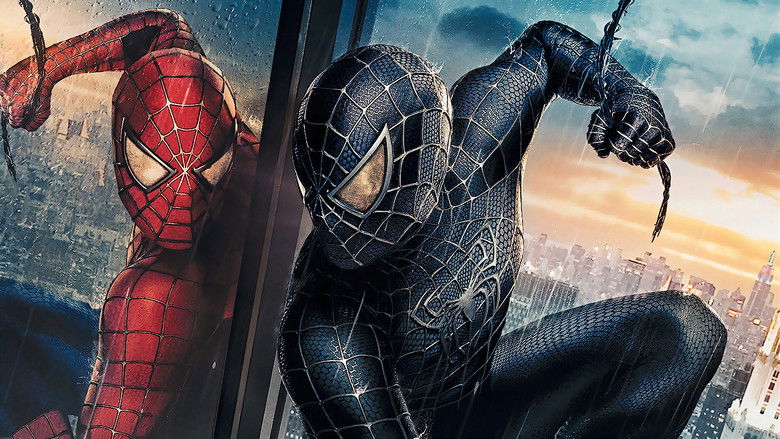
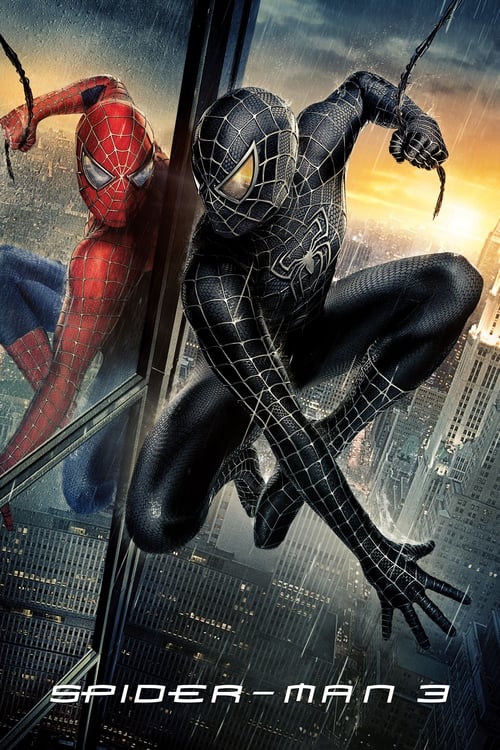
A superhero tragicomedy where golden heroism fractures into jet-black arrogance, as a falling meteor of alien darkness casts shadow over a web strung across a bittersweet, rain-slicked city sky.
Spider-Man 3

Spider-Man 3

"The greatest battle lies within."

01 May 2007 United States of America 139 min 6.5 (15,464)

Director: Sam Raimi

Cast: Tobey Maguire, Kirsten Dunst, James Franco, Thomas Haden Church, Topher Grace

Action Adventure Science Fiction Forgiveness and Redemption Ego, Pride, and the Fall from Grace Vengeance vs. True Justice The Internal Struggle with Darkness Choice and Responsibility
Budget: $258,000,000
Box Office: $894,983,373

Overview

Spider-Man 3 (2007) finds Peter Parker (Tobey Maguire) finally achieving the stability and recognition he long sought. New York City celebrates Spider-Man as a local hero, his academic career is thriving, and he is preparing to propose to his long-time love, Mary Jane Watson (Kirsten Dunst). However, beneath this shimmering surface, personal insecurity and communication cracks begin to strain their relationship, particularly as Mary Jane's Broadway acting career faces a devastating setback.

Threats emerge simultaneously on multiple fronts. Escaped convict Flint Marko (Thomas Haden Church) falls into an experimental particle accelerator, fusing his body with sand and granting him the ability to shapeshift. At the same time, Peter's former best friend, Harry Osborn (James Franco), adopting his late father’s villainous technology as the New Goblin, seeks deadly revenge for his father’s death. Meanwhile, an aggressive freelance photographer named Eddie Brock Jr. (Topher Grace) arrives at the Daily Bugle, rivaling Peter for a permanent photojournalism staff job.

The narrative turns when an extra-terrestrial symbiote crash-lands on Earth and attaches itself to Peter’s suit. The alien entity enhances Spider-Man's physical powers but feeds on his repressed rage, arrogance, and desire for vengeance. As Peter succumbs to the suit’s dark influence, he alienates those closest to him, forcing him to confront not only dangerous physical adversaries but also the shadow lurking inside his own soul.
Core Meaning

Director Sam Raimi designed Spider-Man 3 as a morality tale exploring the illusion of self-righteous perfection and the destructive nature of ego. Raimi wished to demonstrate that even individuals who consider themselves morally upright are susceptible to malice, pride, and hatred when consumed by vengeance.

The film's ultimate message is that true heroism is defined not by flawless invincibility, but by humility, self-awareness, and the transformative power of forgiveness. Raimi emphasizes that humans are complex, imperfect beings who inevitably make mistakes; however, no matter how deep one stumbles into darkness, individuals retain the agency to choose mercy over revenge and pull themselves back into the light.

Thematic DNA

Forgiveness and Redemption 30%
Ego, Pride, and the Fall from Grace 25%
Vengeance vs. True Justice 20%
The Internal Struggle with Darkness 15%
Choice and Responsibility 10%

Forgiveness and Redemption

The narrative core of the film centers on releasing resentment. Peter must learn to forgive Flint Marko for his role in Uncle Ben's death, while also seeking forgiveness from Mary Jane and Harry for his own cruel actions while under the influence of the symbiote. The film argues that harboring revenge poisons the soul, whereas granting forgiveness liberates both the wronged and the wrongdoer.

Ego, Pride, and the Fall from Grace

At the film's outset, public adoration inflates Peter’s vanity, making him self-absorbed and blind to Mary Jane's emotional struggles. The symbiote acts as a literal amplifier of this hubris, transforming Peter's heroism into self-serving arrogance and malicious grandstanding.

Vengeance vs. True Justice

Every major character is tested by a desire for revenge: Harry hunts Peter for his father’s death, Peter hunts Sandman out of retribution for Uncle Ben, and Eddie Brock seeks Spider-Man’s death after being exposed as a fraud. The film contrasts the bitter toxicity of vengeance with the peace brought by genuine justice and mercy.

The Internal Struggle with Darkness

Symbolized by the black suit, the film posits that evil is not merely an external force to be fought with superpowers, but an internal inclination present within everyone. A hero’s greatest victory lies in conquering their own darker impulses.

Choice and Responsibility

Expanding on the iconic line from the original film, Spider-Man 3 highlights that human beings are defined by their daily choices. Circumstances may corrupt, but individuals ultimately choose whether to succumb to bitterness or act with compassion.

Character Analysis

Peter Parker / Spider-Man

Tobey Maguire

Archetype: Hero undergoing a dark night of the soul Key Trait: Well-meaning, but vulnerable to pride and moral weakness

Motivation

Balancing his personal happiness with civic duties, seeking retribution for his uncle's murder.

Character Arc

Moves from self-satisfied vanity to dark, malicious arrogance, before being humbled through remorse and achieving mature wisdom through forgiveness.

Mary Jane Watson

Kirsten Dunst

Archetype: Emotional Anchor / Deuteragonist Key Trait: Empathetic, resilient, and emotionally grounded

Motivation

Finding genuine emotional intimacy and validation for her artistic identity.

Character Arc

Faces professional failure and emotional neglect from Peter, seeks comfort in Harry, but ultimately finds the strength to rebuild her relationship with Peter on honest grounds.

All 5 characters and cast

Symbols & Motifs

The Black Symbiote Suit

Meaning:

Symbolizes outer temptation and inner moral corruption. It physically represents Peter’s uninhibited ego, unresolved grief, and latent malice, acting as a parasitic mirror to his hidden dark side.

Context:

Attaches to Peter's original suit, altering his appearance and amplifying his aggressive behavior throughout the middle act of the film.

The Church Bell / Sound Waves

Meaning:

Symbolizes spiritual awakening, moral clarity, and painful exorcism. The loud vibrations of the church bell physically force the symbiote off Peter, representing the excruciating process of cleansing oneself of guilt and sin.

Context:

Used by Peter at Grace Cathedral to tear the symbiote from his body, and later weaponized using metal pipes to separate Eddie Brock from the alien entity.

Sand

Meaning:

Symbolizes instability, slipping control, and tragic impermanence. Flint Marko’s body constantly dissolves and reforms, representing his inability to keep his family together or maintain a stable life despite his efforts.

Context:

Manifests throughout Flint Marko's physical transformations, fights, and emotional breakdown when explaining his tragic past.

The Engagement Ring (Grandmother's Ring)

Meaning:

Symbolizes love, commitment, and maturity. Passed down from Aunt May, the ring becomes a barometer for Peter’s emotional readiness; his repeated failure to give it to Mary Jane highlights his self-centeredness during his moral decline.

Context:

Passed from Aunt May to Peter, kept throughout his strained relationship with Mary Jane, and ultimately unoffered during their rift.

Pumpkin Bombs and Fractured Mirrors

Meaning:

Symbolize fractured identity and inherited trauma. Harry repeatedly looks into broken glass or handles his father’s weapons, representing his inner conflict between his genuine affection for Peter and his loyalty to his father's violent legacy.

Context:

Seen in the Osborn mansion as Harry confronts his reflections and wields the Green Goblin arsenal against Peter.

Memorable Quotes

Whatever comes our way... Whatever battle we have raging inside us, we always have a choice. My friend Harry taught me that; he chose to be the best of himself. It's the choices that make us who we are, and we can always choose to do what's right.
— Peter Parker (narrating)

Context

Closing lines of the film at Harry’s funeral and during his quiet reunion with MJ.

Meaning

Captures the moral thesis of the entire Sam Raimi Spider-Man trilogy regarding free will and moral responsibility.

I forgive you.
— Peter Parker

Context

Said to Flint Marko in the aftermath of the final battle after Marko explains the tragic accident of Uncle Ben's death.

Meaning

Represents Peter’s complete liberation from the cycle of revenge and his growth into true emotional maturity.

All 6 quotes

Philosophical Questions

Is true forgiveness possible when damage is permanent?

The film explores this through Peter forgiving Flint Marko. Uncle Ben remains dead, yet Peter chooses to abandon hatred, demonstrating that forgiveness is an act of healing for the living rather than an undoing of past tragedies.

Does evil originate from external temptation or latent internal desires?

Through the symbiote, the film examines whether alien forces corrupt innocent minds or merely amplify dark desires already present within human hearts.

Can tragic circumstances morally excuse unlawful actions?

Explored through Sandman, who steals solely to pay for his dying daughter's medicine. The film asks where the boundary lies between moral desperation and criminal intent.

Is vengeance a form of justice or a path to self-destruction?

Through Harry, Peter, and Eddie, the film demonstrates that pursuing retribution turns the seeker into the very monster they despise.

Alternative Interpretations

The film invites multiple thematic interpretations beyond its primary narrative:

Full ending explanation

Cultural Impact

Spider-Man 3 left a significant mark on modern film history and pop culture through several developments:

  • The Summer of 3s (2007): Spider-Man 3 opened May 2007 alongside Shrek the Third and Pirates of the Caribbean: At World's End, defining a summer dominated by massive threequel blockbusters.
  • The "Bully Maguire" Meme Renaissance: While Peter’s dark jazz dance sequences were originally met with confusion or cringe by 2007 audiences, over the 2010s and 2020s, the internet re-evaluated these scenes as brilliant camp comedy. The character of "Bully Maguire" became one of the most widespread viral internet memes in modern pop culture.
  • Cautionary Tale of Studio Meddling: In film history and study, Spider-Man 3 became a prime example of studio overreach harming an auteur director's narrative vision. The fallout caused Sam Raimi to depart the proposed Spider-Man 4, prompting Sony to reboot the franchise with The Amazing Spider-Man (2012).
  • Multiverse Legacy: The film's elements received renewed cultural appreciation when Tobey Maguire, Thomas Haden Church, and Willem Dafoe reprised their roles in Marvel Studios' Spider-Man: No Way Home (2021), offering narrative closure to their characters' arcs.

Audience Reception

Aggregated critical and audience responses highlight a polarizing yet enduring reception:

Aspects Praised: High-octane action sequences, particularly the subway fight against Sandman and the finale building collapse; emotional depth and visual effects in Sandman’s character creation scene; Christopher Young's brassy, operatic musical score alongside Danny Elfman’s original motifs; and the final emotional reconciliation between Peter, MJ, and Harry.

Main Points of Criticism: Overstuffed plot attempting to balance three distinct villains and multiple subplots in a single movie; rushed development and miscasting of Topher Grace as Eddie Brock / Venom; and retconning Uncle Ben's death to involve Sandman, which some felt undermined the impact of the first film.

Controversial Moments: The "Emo Peter Parker" dance sequences split audiences; many 2007 viewers found it jarring, while modern audiences celebrate it as intentional, self-aware comedy.

Overall Verdict: While recognized as narrative-heavy compared to its acclaimed predecessor, Spider-Man 3 remains a box-office giant and a beloved cult classic appreciated for its emotional heart, ambitious themes, and iconic action.

Interesting Facts

  • Massive Budget: With an official production budget of $258 million (and estimated total costs reaching up to $350 million), Spider-Man 3 was the most expensive film ever produced at the time of its release in May 2007.
  • Studio Interference Regarding Venom: Sam Raimi originally intended to focus exclusively on Sandman, the New Goblin, and the Vulture, aiming to explore forgiveness. However, producer Avi Arad and Sony executives strongly pressured Raimi to include Venom to capitalize on the character's comic book popularity, forcing significant last-minute script rewrites.
  • Groundbreaking Sand CGI & 100 Tons of Real Sand: Sony Pictures Imageworks developed dedicated software to control the movement of millions of individual sand particles for Sandman. For practical scenes, production brought in over 100 tons of real sand, along with synthetic substitutes for stunt sequences.
  • Bryce Dallas Howard Performed Stunts While Pregnant: Bryce Dallas Howard (Gwen Stacy) performed her own stunts during the dramatic crane disaster scene, completely unaware at the time of filming that she was pregnant.
  • Topher Grace’s Physical Transformation and Venom Makeup: Topher Grace gained 24 pounds of muscle to prepare for Eddie Brock. His Venom transformation required four hours of prosthetic application, including uncomfortable fake teeth that pulled his lips back to create Venom's monstrous grin.
  • Thomas Haden Church's Knuckle Injuries: While filming a combat scene where Sandman punches a hole through a wall, Thomas Haden Church accidentally struck a section of real brick hidden behind a foam prop wall, breaking three knuckles.
  • Record-Breaking Box Office Opening: Upon release, Spider-Man 3 set the record for the biggest single-day opening ($59.3 million) and biggest domestic opening weekend ($151.1 million) in cinematic history at the time, eventually grossing $895.9 million worldwide.

Easter Eggs

Stan Lee Cameo

Stan Lee appears in Times Square standing beside Peter Parker, looking at a news ticker announcing Spider-Man’s key to the city, saying: "You know, I guess one person can make a difference. 'Nuff said."

Bruce Campbell Cameo

Frequent Raimi collaborator Bruce Campbell makes his third trilogy cameo as the snobbish French maître d' at Le Constellation, the French restaurant where Peter attempts to propose to Mary Jane.

Dr. Curt Connors & Lizard Foreshadowing

Dylan Baker returns as Peter's physics professor, Dr. Curt Connors. In his laboratory, a preserved lizard skeleton can be seen in the background, referencing his comic alter-ego, The Lizard.

Cliff Robertson’s Final Screen Performance

Oscar-winning actor Cliff Robertson reprises his role as Uncle Ben in flashback sequences; this marked the legendary actor's final film appearance before his passing in 2011.

Sam Raimi's 1973 Oldsmobile Cutlass Supreme

Raimi’s famous yellow car ("The Classic"), featured in almost all of his movies, appears as Aunt May and Uncle Ben's family vehicle.

Scott Spiegel Cameo

Cult director Scott Spiegel (a long-time friend of Raimi who played the balcony pizza man in Spider-Man 2) makes a cameo appearance as a patron at the jazz club who gets hit by a flying bottle.

Frequently Asked Questions

Explore More About This Movie

Dive deeper into specific aspects of the movie with our detailed analysis pages

Comments (0)

Leave a comment

No comments yet. Be the first to share your thoughts!

Similar Movies