Skip to content
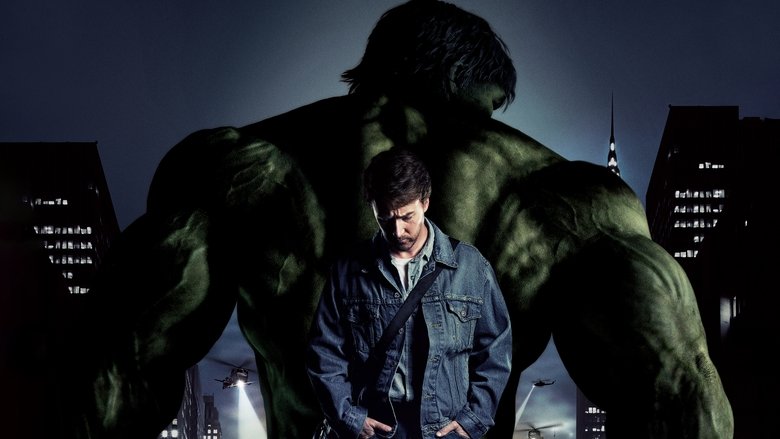
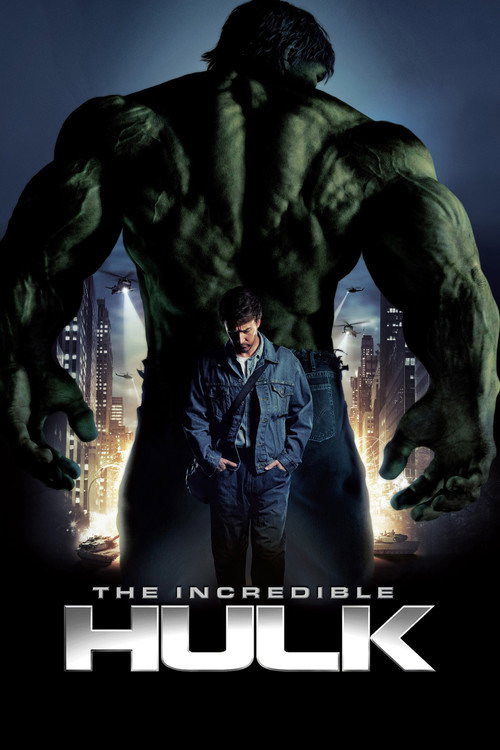
The Incredible Hulk
A fugitive science-thriller steeped in claustrophobic dread and tragic longing, where a tortured mind bleeds green rage into neon-soaked shadows as a man flees his own inner demon across the globe.
The Incredible Hulk

The Incredible Hulk

"You'll like him when he's angry."

12 June 2008 United States of America 114 min 6.3 (12,957)

Director: Louis Leterrier

Cast: Edward Norton, Liv Tyler, Tim Roth, William Hurt, Tim Blake Nelson

Action Adventure Science Fiction Duality and the Internal Monster The Military-Industrial Complex and Weaponization Isolation and the Burden of the Outcast Hubris vs. Ethical Responsibility in Science Love as a Pacifying and Grounding Anchor
Budget: $150,000,000
Box Office: $264,770,996

Overview

The Incredible Hulk (2008), directed by Louis Leterrier, follows scientist Dr. Bruce Banner as he lives in exile, hiding in the densely packed slums of Rio de Janeiro, Brazil. Haunted by a failed military experiment involving gamma radiation that transforms him into a behemoth of unbridled rage whenever his heart rate spikes, Banner maintains a low profile while working at a soda bottling factory. He spends his days practicing heart-rate control, studying martial arts breathing techniques, and secretly communicating with an anonymous scientist codenamed "Mr. Blue" in pursuit of a definitive cure.

Banner’s fragile peace shatters when a freak accident at the bottling plant causes a drop of his irradiated blood to contaminate a beverage shipped to the United States. The incident alerts his long-time pursuer, General Thaddeus "Thunderbolt" Ross, who dispatches an elite tactical unit led by ruthless British commando Emil Blonsky to capture him. Narrowly escaping the ambush by transforming into the monster, Banner realizes he must return to the United States to recover his original research data from Culver University.

Upon returning, Bruce reunites with his estranged lover, cellular biologist Betty Ross, who pledges to help him evade her father's relentless military machine. However, as General Ross authorizes increasingly extreme measures—including subjecting Blonsky to experimental super-soldier enhancements—Bruce finds himself hunted by an escalating military force. He is forced to balance his desperate search for a medical cure with the terrifying reality that his inner beast may be the only force capable of stopping a far more sinister monster.
Core Meaning

Director Louis Leterrier and screenwriter Zak Penn (with uncredited rewrites by Edward Norton) crafted The Incredible Hulk as an exploration of the internal division within human nature and the destructive consequences of military hubris. The film posits that true strength does not lie in suppression or weaponization, but in self-acceptance and emotional integration.

The narrative criticizes institutional authority—specifically the military-industrial complex—that views human beings and scientific discoveries solely as assets for violence. While General Ross and Emil Blonsky view the Hulk purely as a weapon to be controlled or surpassed, Banner’s journey proves that primal power stripped of empathy yields only monstrosity. Ultimately, the movie asserts that one cannot escape or eradicate their inner shadows; instead, one must learn to coexist with and channel them responsibly.

Thematic DNA

Duality and the Internal Monster 30%
The Military-Industrial Complex and Weaponization 25%
Isolation and the Burden of the Outcast 20%
Hubris vs. Ethical Responsibility in Science 15%
Love as a Pacifying and Grounding Anchor 10%

Duality and the Internal Monster

Bruce Banner’s physical condition serves as a literal manifestation of the classic Jekyll and Hyde dynamic. His constant monitoring of his pulse demonstrates his endless struggle between rational intellect and primal emotional rage. The film emphasizes that the monster is not an external parasite, but a suppressed aspect of Bruce's own identity.

The Military-Industrial Complex and Weaponization

General Ross treats gamma radiation research not as a medical breakthrough, but as military property intended to reinvigorate the WWII Super-Soldier program. The narrative highlights how institutional obsession with national dominance transforms men into monsters, turning soldiers like Blonsky into reckless weapons.

Isolation and the Burden of the Outcast

Bruce lives as an exiled wanderer, forced to sever all emotional ties to prevent collateral damage. His life in the Brazilian favela underscores the emotional isolation required to keep society safe from his potential outbursts.

Hubris vs. Ethical Responsibility in Science

Represented through Dr. Samuel Sterns ("Mr. Blue"), whose intellectual curiosity lacks moral boundaries. Sterns synthesizes Banner's blood samples without permission, blinded by scientific achievement and oblivious to the lethal risks of biological escalation.

Love as a Pacifying and Grounding Anchor

Betty Ross serves as the emotional bridge between Banner's human mind and the Hulk's feral instinct. While artillery and heavy weaponry provoke greater fury from the Hulk, Betty’s presence and touch consistently calm the beast, establishing empathy as superior to force.

Character Analysis

Dr. Bruce Banner / The Hulk

Edward Norton

Archetype: Tragic Hero / Reluctant Fugitive Key Trait: Quiet intelligence, intense guilt, and underlying emotional vulnerability.

Motivation

To find a cure for his gamma condition and protect the woman he loves from harm.

Character Arc

Begins as an isolated, guilt-driven runaway desperate to erase the Hulk from his genetics. Ends by relinquishing the dream of eradication, choosing instead to train his mind to accept and direct his inner power.

Betty Ross

Liv Tyler

Archetype: Compassionate Anchor / Protector Key Trait: Unyielding loyalty, gentle demeanor, and emotional resilience.

Motivation

To keep Bruce safe from military exploitation and restore peace to his life.

Character Arc

Transitions from a grieving, quiet academic into an active defender who defies her father's military command to stand by Bruce.

All 5 characters and cast

Symbols & Motifs

The Pulse / Heart Rate Monitor (Polar Watch)

Meaning:

Symbolizes Bruce’s fragile grip on self-control and the line separating humanity from rage.

Context:

The ticking metronome and digital wrist monitor track his internal equilibrium, turning his heartbeat into a literal countdown timer.

Gamma-Irradiated Blood

Meaning:

Symbolizes toxicity, existential curse, and dangerous potential.

Context:

A single drop in a beverage factory ignites the global military chase, while its duplication by Dr. Sterns threatens to corrupt human biology on a massive scale.

The Broken Mirror / Split Reflection

Meaning:

Symbolizes his fractured consciousness and dual identity.

Context:

Used when Bruce looks at his reflection while living in South America.

The Thunderstorm and Cave

Meaning:

Symbolizes emotional shelter and sanctuary.

Context:

During the rainstorm following the Culver University battle, the Hulk shields Betty inside a dark cave, highlighting his protective nature away from military interference.

Purple Pants

Meaning:

A visual motif referencing the original comic book wardrobe, grounding the film in its comic origins while emphasizing his displaced status.

Context:

Betty purchases oversized stretchable purple trousers for Bruce in the film.

Memorable Quotes

Don't make me hungry. You wouldn't like me when I'm hungry.
— Bruce Banner

Context

Spoken in broken Portuguese ("fome" instead of "raiva") to factory bullies in Rio de Janeiro.

Meaning

A humorous homage to the famous catchphrase from the 1978 TV series ("Don't make me angry...").

I don't want to control it. I want to get rid of it.
— Bruce Banner

Context

Spoken to Betty Ross while discussing his condition.

Meaning

Encapsulates Banner's core tragedy in the film—viewing his alter ego purely as a disease rather than a part of himself.

All 5 quotes

Philosophical Questions

Is a person morally accountable for actions committed by an unconscious alternate persona?

Bruce Banner lives in perpetual anguish over the destruction caused by the Hulk, raising questions regarding free will, moral agency, and individual accountability when mind and body fracture.

Where does ethical responsibility end when scientific advancement intersects with national defense?

General Ross justifies biological risks under the banner of military preparedness, raising bioethical concerns about turning human biology into state weaponry.

Can primal anger ever be harnessed for moral good, or is rage inherently destructive?

The movie contrasts Blonsky's malicious rage with Banner's protective fury, questioning whether intense emotion can serve justice when guided by empathy.

What defines human identity—rational intellect or raw emotion?

Banner represents logic and restraint, whereas the Hulk represents raw instinct and emotional passion. The film explores whether a complete human being requires both elements working in harmony.

Alternative Interpretations

Psychological Reading (Suppression vs. Integration): The Hulk represents the physical embodiment of unaddressed grief, guilt, and emotional trauma. The film illustrates the futility of attempting to purge one's shadow self, showing that mental stability is achieved only when Bruce learns to co-exist with his internal beast.Political & Anti-Militaristic Reading: Functions as a critique of state vio...

Full ending explanation

Cultural Impact

Released in June 2008 as the second cornerstone of Marvel Studios' Phase 1 plan, The Incredible Hulk arrived when cinematic shared universes were an unproven concept. The film demonstrated how post-credit sequences and cross-property character crossovers could build serialized narratives in blockbuster cinema.

Earning $264.8 million worldwide on a $137.5–$150 million budget, it remains the lowest-grossing entry in the Marvel Cinematic Universe despite receiving generally positive to mixed reviews (67% on Rotten Tomatoes). Long considered the "black sheep" of the MCU, the film experienced a major cultural revival in Phase 4 and 5 with the return of supporting characters like General Ross, Emil Blonsky, Betty Ross, and Samuel Sterns across multiple Marvel projects.

Audience Reception

Audience reviews praise Edward Norton’s grounded, nervous, and cerebral performance as Bruce Banner, along with the film's grittier tone, intense action set-pieces (such as the Brazil chase and Harlem brawl), and strong homages to the 1970s TV show.

However, main points of criticism center on character arcs feeling rushed due to studio cuts aimed at maintaining an under-two-hour runtime, CGI visual effects aging less gracefully, and a lack of the lighthearted charm found in Iron Man.

Controversial elements include timeline ambiguity in early MCU continuity and the eventual recasting of Edward Norton with Mark Ruffalo, which divided fans between Norton's tragic, intense take and Ruffalo's more neurotic, comedic iteration. Overall, it is viewed as a solid, visceral action-thriller that offers a grounded take on the character.

Interesting Facts

  • Director Louis Leterrier originally wanted to cast Mark Ruffalo as Bruce Banner, but Marvel Studios insisted on hiring Edward Norton due to his established star power.
  • Edward Norton signed on with the agreement that he could rewrite Zak Penn's screenplay, but when Marvel cut 20 to 30 minutes of character drama, Norton publicly clashed with the studio.
  • An alternate opening sequence shot in Greenland showed Bruce attempting suicide, during which brief glimpses show Captain America frozen in the ice with his shield.
  • The film's climactic battle in Harlem was shot on Yonge Street in Toronto, Canada.
  • Visual effects artists derived the Hulk's look from comic book artwork by artist Mike Deodato rather than modeling it on Edward Norton.
  • Brazilian Jiu-Jitsu legend Rickson Gracie made an onscreen cameo as Bruce's breath control and meditation instructor in Rio de Janeiro.
  • Lou Ferrigno provided the vocal growls for the Hulk and made a physical cameo as a campus security guard bribed with pizza.

Easter Eggs

Stan Lee Cameo

Stan Lee plays an elderly Milwaukee resident who contracts gamma poisoning after drinking a contaminated bottle of Guarana soda, unknowingly alerting the military to Banner's whereabouts.

Martin Starr Retcon

Actor Martin Starr plays a computer nerd at Culver University whom Bruce bribes with pizza, later retconned by Marvel into Roger Harrington, Peter Parker's science teacher.

The Leader Setup

When Dr. Samuel Sterns is knocked down, Banner's gamma blood drips into an open wound on his forehead, causing his brain and skull to expand and foreshadowing his rise as "The Leader".

Super-Soldier Formula ("Dr. Reinstein")

The serum container injected into Blonsky is labeled as developed by "Dr. Reinstein"—the alias used by Dr. Abraham Erskine in Marvel lore during Captain America's creation.

Jack McGee and Jim Wilson

Two students interviewed on TV news are named Jack McGee (a nod to the journalist in the 1978 TV show) and Jim Wilson (a comic book ally of the Hulk).

"The Lonely Man" Theme

Composer Craig Armstrong included musical phrases from Joe Harnell's melancholic theme song "The Lonely Man" from the 1970s TV series during scenes where Bruce wanders isolated along desolate roads.

Frequently Asked Questions

Explore More About This Movie

Dive deeper into specific aspects of the movie with our detailed analysis pages

Comments (0)

Leave a comment

No comments yet. Be the first to share your thoughts!

Similar Movies