Club de Cuervos
Overview
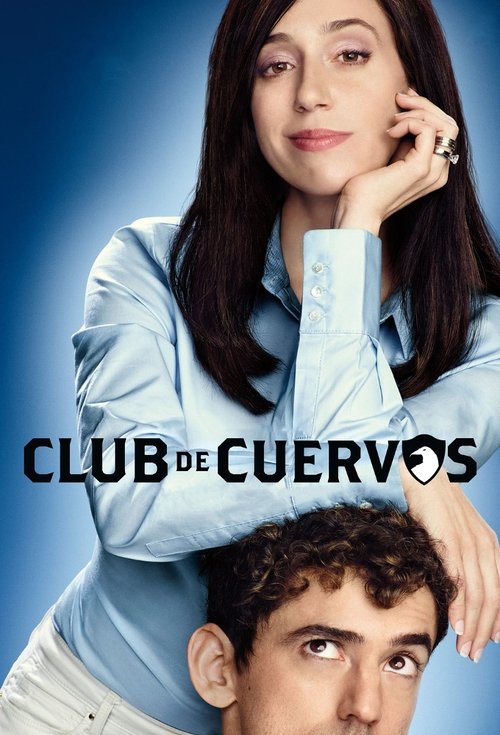
Club de Cuervos tells the tumultuous story of the Iglesias family and their struggle to maintain control of Cuervos FC, a professional football team in the fictional town of Nuevo Toledo, Mexico. Following the sudden death of the family patriarch, Salvador Iglesias Sr., his two children—the ego-driven playboy Salvador "Chava" Iglesias Jr. and the competent, hard-working Isabel Iglesias—plunge into a bitter power struggle. Despite Isabel's superior knowledge of the game and administration, institutional sexism leads to Chava being appointed president, sparking a series of hilariously disastrous management decisions that threaten the team's standing and the town's pride.
As the series progresses across four seasons, the conflict evolves from a petty sibling rivalry into a desperate battle for survival against corrupt politicians, ruthless business rivals, and the deep-seated decay within the Mexican football industry. The siblings are forced to navigate relegation, financial ruin, and personal scandals, eventually learning that their father's legacy is both a burden and a bond. The narrative masterfully balances raucous comedy with poignant moments of growth, as the characters transition from entitled heirs to genuine leaders who must redefine what it means to be a "Cuervo."
Core Meaning
At its heart, Club de Cuervos is a scathing satire of the "mirrey" culture (Mexico's entitled wealthy youth) and the systemic corruption that plagues both sports and politics. The creators use the chaotic management of Cuervos FC to explore the toxicity of patriarchal legacies and the difficulty of forging an independent identity under the shadow of a legendary father. Through the journey of Chava and Isabel, the series suggests that true leadership is not inherited by blood but earned through humility, collaboration, and a willingness to break free from the cycles of the past. It serves as a commentary on the resilience of community and the idea that a team belongs more to its people than to its owners.
Thematic DNA
Institutional Sexism and Gender Roles
Throughout the series, Isabel's arc is a constant battle against a glass ceiling. Despite being the most qualified for the presidency, she is repeatedly sidelined by the board, sponsors, and even the players simply because she is a woman. Her struggle highlights the ingrained machismo in the sporting world, showing how she must work twice as hard to earn a fraction of the respect given to her irresponsible brother.
The Burden of Legacy
Both siblings are haunted by the image of their father. Chava attempts to emulate his power but lacks his wisdom, while Isabel tries to preserve his methods but finds them outdated. The show explores how the weight of a "great man" can stunt the growth of his children, eventually showing that they can only succeed by dismantling the old structures and building something of their own.
Class and Privilege (Mirrey Culture)
The series satirizes the "mirrey" archetype—wealthy, arrogant young men who believe money can solve any problem. Chava's character embodies this at the start, often showing a complete disconnect from the reality of the working-class town. The series deconstructs this privilege as the siblings face actual consequences for their actions, forcing them to find empathy for the fans and players.
Corruption and Power Dynamics
Set against the backdrop of the Mexican soccer league, the show exposes "The Pact of Gentlemen" (Pacto de Caballeros) and political backroom deals. It demonstrates how sports are frequently used as pawns for political gain and how easily personal greed can ruin a community institution.
Redemption and Reconciliation
What begins as a cutthroat rivalry transforms into a partnership. The emotional core of the later seasons is the siblings realizing they are stronger together, moving from self-interest toward a shared responsibility for the team and its legacy.
Character Analysis
Salvador 'Chava' Iglesias Jr.
Luis Gerardo Méndez
Motivation
Initially seeks validation and fame to match his father's status; later motivated by a sincere desire to protect the community and his family from ruin.
Character Arc
Starts as a vapid, entitled playboy obsessed with turning the team into the "Real Madrid of Latin America." Through numerous failures, exile, and public humiliation, he develops a genuine conscience, eventually sacrificing his ego to save the team and moving to the US to pursue a career based on his own merit rather than his father's name.
Isabel Iglesias
Mariana Treviño
Motivation
Driven by the need for professional respect and a deep, lifelong love for the sport and the legacy her father built.
Character Arc
Initially bitter and desperate for the presidency she knows she deserves, Isabel struggles with a volatile temper and a tendency to overcompensate. Over the seasons, she learns to manage her anger, navigates the complexities of pregnancy and marriage, and ultimately proves herself as a strategic visionary who places the team's survival over her own pride.
Hugo Sánchez
Jesús Zavala
Motivation
Absolute devotion to Chava, driven by a need for belonging and a quirky, unwavering sense of duty.
Character Arc
Chava's personal assistant who begins as a comedic punching bag. Despite being constantly mistreated and ignored, he remains fiercely loyal. His development reveals a surprising depth of capability and a secret life that includes managing the team's digital presence (Cuervos TV). He represents the unsung labor that keeps empires running.
Rafael Reina
Antonio de la Vega
Motivation
Preserving his dignity as an athlete while supporting his wife's ambitions.
Character Arc
Isabel's husband and the team's veteran goalkeeper. He serves as the voice of reason and moral support for Isabel, eventually transitioning from a player facing retirement to a guiding force for the younger squad members.
Symbols & Motifs
The Crow (Cuervo)
The crow represents the family name, legacy, and the scavengers that appear when a patriarch dies. It symbolizes the predatory nature of the business world but also the resilience and survival of the team.
The team logo and the phrase "Todos somos Cuervos" (We are all crows) appear throughout the series, evolving from a corporate brand to a rallying cry of unity for the town.
The Haka
A symbol of unity, defiance, and a shift in identity. It represents the team finding its own "warrior" spirit outside of traditional corporate norms.
Introduced in Season 4 during the "Black Plague" (Peste Negra) phase, the team performs a version of the Haka to intimidate opponents and show their new, aggressive solidarity.
Isabel's Black and White Wardrobe
Symbolizes her rigidity, her loyalty to the team's traditional colors, and her professional armor in a male-dominated world.
Isabel almost exclusively wears black and white, reflecting her seriousness and the clear-cut, logical way she tries to view the world, which contrasts with the chaotic colorful life of Chava.
The 'Zombie'
The character of 'El Zombie' symbolizes the heart of the team—loyal, unglamorous, and willing to literally die for the win.
A player who survives several near-career-ending situations, his presence on the field serves as a moral compass for the siblings when they lose sight of the sport's true meaning.
Memorable Quotes
Vamos a ser el Real Madrid de América Latina.
— Chava Iglesias
Context:
Spoken in the pilot episode (S1E1) as he takes over the presidency, setting the stage for his many mismanagement failures.
Meaning:
This line encapsulates Chava's initial hubris and his delusional, grandiose vision that ignored the local reality of Nuevo Toledo.
Señor, no mames.
— Hugo Sánchez
Context:
Frequently uttered throughout the series when Chava's requests or ideas become too absurd for even Hugo to tolerate.
Meaning:
A breakthrough moment where the submissive assistant finally loses his patience, symbolizing the breaking point of the "forgotten" characters in the show.
Si no tratas lo que tienes como si fuera oro, los demás lo van a tratar como si fuera caca.
— Walter Bazar (quoted by Chava)
Context:
Chava frequently quotes his idol Walter Bazar throughout Season 1 to justify his expensive and flashy decisions.
Meaning:
Reflects the surface-level "wisdom" of self-help gurus that Chava follows to justify his arrogant behavior and focus on branding over substance.
Me critican más que a México cuando perdió 7-0.
— Chava Iglesias
Context:
Season 3, during a press conference where Chava is defending his erratic behavior as a politician and owner.
Meaning:
A humorous reference to a real-life national sports trauma in Mexico, highlighting Chava's victim complex and his tendency to compare his personal failures to national disasters.
Episode Highlights
Sé un capitán
The death of Salvador Iglesias Sr. triggers an immediate power vacuum. Chava's reckless ascent to presidency sets the tone for the series' satire on privilege.
Introduces the core conflict of sibling rivalry and the "mirrey" culture that the series deconstructs.
Iglesias vs. Iglesias
The simmering resentment between the siblings explodes as they both realize they have nearly destroyed the team. It features the reveal of Mary Luz's manipulation.
The first major turning point where the siblings must choose between personal victory and the team's survival.
Descenso
Following the disaster of the first season, the team is relegated to the second division. Chava has disappeared, and Isabel is left to face the fallout alone.
Forces the characters to face the reality of failure and the harshness of the sport beyond the glitz.
The Heart of Nuevo Toledo
A high-stakes finale where the siblings must finally decide whether to sell the team or fight for its return to the first division, involving a tense political subplot.
Solidifies the shift from rivalry to a tentative but necessary partnership.
La Peste Negra
The team rebrands as "The Black Plague," adopting an aggressive, rule-breaking persona to fight back against the league's corruption.
A fan-favorite episode that showcases the show's ability to blend high comedy with a meaningful "us against the world" narrative.
Todos Somos Cuervos
The series finale. The Cuervos play in the championship final against Chivas. Chava and Isabel achieve a hard-won victory and find personal resolution.
Provides total closure for the arcs of all main characters, emphasizing that the family bond is the true win.
Philosophical Questions
Can a legacy be preserved without being destroyed?
The series explores this through the siblings' realization that trying to keep things exactly as their father left them resulted in ruin. Only by destroying the old Cuervos and creating "La Peste Negra" could they actually save the spirit of the team.
Does competence justify power more than blood?
Isabel's entire arc challenges the notion of dynastic power, yet the show concludes by keeping power within the family, albeit earned through struggle. It questions whether true meritocracy can ever exist in a culture rooted in family loyalty.
Alternative Interpretations
Some critics have interpreted Club de Cuervos as a political allegory for Mexico itself: a country with immense passion and potential that is constantly held back by its own corrupt leadership and internal squabbles between the old guard (Isabel/Tradition) and the reckless new elite (Chava/Modernity). Another reading suggests the siblings are two halves of the same soul—Isabel representing the repressed, disciplined superego and Chava the impulsive, pleasure-seeking id—and the story is about their integration into a whole, functional personality. A more cynical interpretation posits that despite their growth, the siblings ultimately remain within the same elite circle, suggesting that true systemic change is impossible in a world built on dynasties.
Cultural Impact
Club de Cuervos was a landmark in television history as the first Spanish-language Netflix original, proving that local Latin American content could achieve global success. It fundamentally shifted the landscape of Mexican television away from the traditional telenovela format toward prestige serialized drama-comedy. Culturally, it popularized the critique of the "mirrey" stereotype and sparked national conversations about the corruption of "The Pact of Gentlemen" in the Mexican Football Federation (FMF). The show's legacy is so strong that the fictional team has crossed over into the real world through official merchandise and the formation of an actual Kings League team, demonstrating a rare case of a fictional sports brand becoming a tangible cultural icon.
Audience Reception
The series was met with overwhelming positive reception from both critics and audiences, particularly for its sharp wit and refusal to rely on melodramatic clichés. While Season 1 was occasionally criticized for being "bland" in its early episodes, by the finale of the first season, it had secured a massive fan base. Subsequent seasons were praised for their darker tone and deeper character development. Controversies were minimal, though the satire of real-life Mexican football officials was occasionally seen as "too close to home" for the industry. The series finale in 2019 was hailed as a "fitting and emotional end" that avoided the common pitfall of overstaying its welcome, maintaining a consistent legacy of quality.
Interesting Facts
- It was the first ever Spanish-language Netflix original series, debuting in August 2015.
- The series was filmed primarily in Pachuca, Hidalgo, and used the actual Estadio Hidalgo for its match scenes.
- Real professional footballers from the Mexican second division were hired as extras to make the match scenes look authentic.
- The series spawned two spin-offs: 'The Ballad of Hugo Sánchez' and 'Yo, Potro'.
- In 2023, a real-life team named 'Club de Cuervos' was launched in the Américas Kings League, using the show's logo and colors.
- Many of the quotes at the beginning of episodes are real quotes from legendary sports figures like Pelé and Maradona.
- The character 'El Zombie' was not originally intended to have such a large role, but became a fan favorite, leading to more screen time.
- Luis Gerardo Méndez's performance was influenced by his role in 'Nosotros los Nobles', but he worked to ensure Chava was a distinct, more layered character.
Easter Eggs
Cameos by real sports figures
Figures like Rafa Márquez, Kikín Fonseca, and Moises Muñoz appear as themselves, blurring the lines between the fictional show and the real Mexican football world.
Social Media Presence
During the show's run, the characters had real Twitter accounts (like @isabeliglesiasr and @ChavaIglesias) that interacted with real-life sports journalists and fans as if the team actually existed.
References to 'Nosotros los Nobles'
Since both projects share the same lead actor and director (Alazraki), there are subtle nods in Chava's behavior to 'Javi Noble,' particularly in his pursuit of ridiculous business schemes.
⚠️ Spoiler Analysis
Click to reveal detailed analysis with spoilers
Frequently Asked Questions
Explore More About This Movie
Dive deeper into specific aspects of the movie with our detailed analysis pages
Comments (0)
No comments yet. Be the first to share your thoughts!