That Time I Got Reincarnated as a Slime
転生したらスライムだった件
"Ascend into your true form."
Overview
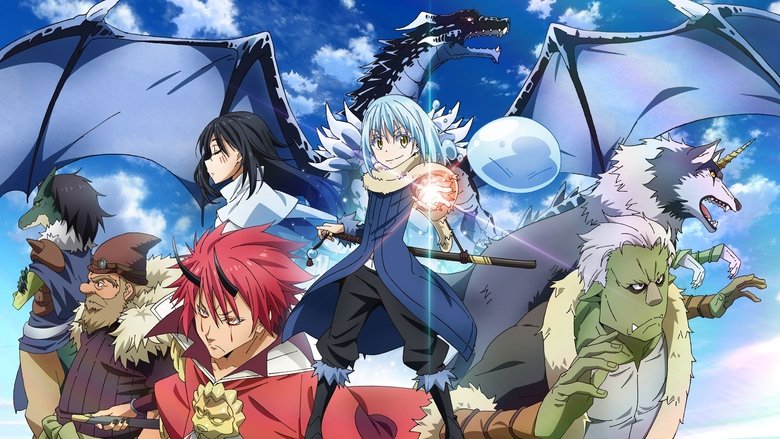
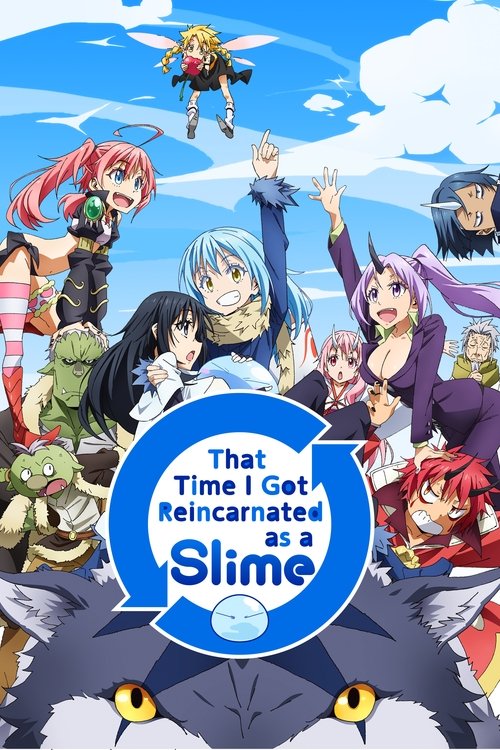
That Time I Got Reincarnated as a Slime (TenSura) follows Satoru Mikami, a 37-year-old corporate worker who is fatally stabbed and reborn in a fantasy world as a slime. Renamed Rimuru Tempest by the Storm Dragon Veldora, he discovers he possesses unique skills like Predator, allowing him to absorb anything and gain its attributes. Rather than seeking individual glory, Rimuru uses his overwhelming power to gather diverse monster tribes and establish the Jura Tempest Federation, a nation where humans and monsters can coexist in peace.
As the series progresses across multiple seasons, the scope expands from a local tribal alliance to high-stakes global diplomacy and warfare. Rimuru must navigate the complex politics of other Demon Lords, the religious zealotry of the Western Holy Church, and the schemes of ancient entities. The story arc transitions from survival and settlement to the heavy burdens of sovereignty, forcing Rimuru to make difficult moral choices to protect his people while maintaining his core humanity in a body that is no longer human.
Core Meaning
The core meaning of the series lies in the concept of empathy as a foundational strength rather than a weakness. Through Rimuru’s journey, the creators emphasize that true power is found not in conquest, but in the ability to understand others, bridge cultural divides, and build a community based on mutual respect. It argues that a leader's greatest asset is their capacity for kindness and the pursuit of a shared future, suggesting that even the most 'lowly' or unconventional being can reshape society if they choose cooperation over conflict.
Thematic DNA
Coexistence and Tolerance
The central pillar of the series is the struggle to unite disparate races—goblins, direwolves, ogres, and humans—into a single society. Throughout the seasons, this theme evolves from simple survival to complex political multiculturalism, highlighting that peace requires active effort and the dismantling of historical prejudices.
The Burden of Sovereignty
As Rimuru’s nation grows, the show explores the ethical weight of leadership. This is most poignantly revealed in Season 2, where Rimuru must decide if he is willing to sacrifice his pacifist ideals and commit mass slaughter to achieve the status of a Demon Lord to protect his subjects.
Evolution and Self-Actualization
Transformation is both literal and metaphorical. Characters frequently 'evolve' into higher species when named, mirroring their internal growth and commitment to Rimuru’s vision. This theme underscores how identity is shaped by the recognition of others and the personal drive to improve.
Knowledge as Power
Through the 'Great Sage' (and its later evolutions), the series posits that information, analysis, and strategy are as vital as physical strength. Rimuru’s success often comes from his ability to synthesize new technologies and modern knowledge into the fantasy world's existing framework.
Redemption and Forgiveness
Many of Rimuru’s closest allies were once enemies. The series consistently offers paths to redemption for those who were previously blinded by rage or manipulated, suggesting that the cycle of hatred can only be broken through mercy.
Character Analysis
Rimuru Tempest
Miho Okasaki
Motivation
Initially motivated by curiosity and a desire to help those in front of him, his goal matures into the creation of a global 'Human-Monster Co-Prosperity Sphere.'
Character Arc
Starts as a humble slime seeking only comfort and moves toward becoming a True Demon Lord. His arc is defined by the transition from a passive observer to an active architect of a global superpower, eventually realizing that he must wield terrifying power to ensure the peace he desires.
Veldora Tempest
Tomoaki Maeno
Motivation
Driven by his bond with Rimuru and a newfound love for 'Sacred Texts' (manga), he seeks to protect the fun life he has found in the new world.
Character Arc
Begins as a feared, isolated 'Storm Dragon' sealed away for centuries. After being absorbed by Rimuru, he spends seasons observing the world through Rimuru's eyes and reading manga, eventually emerging as a loyal, slightly eccentric protector of Tempest.
Milim Nava
Rina Hidaka
Motivation
Primarily motivated by boredom and the search for authentic connection, which she finds in Rimuru.
Character Arc
Introduced as one of the oldest and strongest Demon Lords. While appearing childish, her arc reveals deep loneliness and a tragic past. She grows from a chaotic wild card into a cornerstone of Rimuru's diplomatic defense net.
Hinata Sakaguchi
Manami Numakura
Motivation
A desire for absolute order and the protection of humanity, which she initially believes can only be achieved through the elimination of all monsters.
Character Arc
Develops from a cold, logic-driven religious zealot who views Rimuru as a monster to be purged, into a nuanced ally who recognizes the flaws in her own church's dogma. Her evolution is one of de-radicalization.
Symbols & Motifs
The Anti-Magic Mask
Symbolizes the legacy of Shizue Izawa and the concept of fate. It represents the link between Rimuru’s world and his past life, acting as a physical manifestation of the promise to care for those left behind.
Originally worn by Shizu to control the spirit Ifrit, it is passed to Rimuru and later serves as a key item in a time-loop involving the hero Chloe Aubert.
Names and Naming
Represents identity, value, and the transfer of power. In this world, a name is not just a label but a physical gift that bestows strength and binds the namer and named together.
Rimuru nearly drains his own 'magicules' multiple times by naming entire tribes, establishing the deep loyalty of characters like Benimaru and Ranga.
Honey
A symbol of whimsical friendship and de-escalation. It highlights the series' subversion of typical shonen tropes where major conflicts are often resolved through unexpected, lighthearted means.
Used by Rimuru to placate the world-destroying Demon Lord Milim Nava, turning a potential apocalypse into an enduring best-friendship.
Memorable Quotes
I'm not a bad slime!
— Rimuru Tempest
Context:
First used in Season 1 when meeting the three adventurers, and often repeated to disarm humans who are terrified of his presence.
Meaning:
A lighthearted recurring line that serves as a testament to his non-threatening intent and a direct reference to the Dragon Quest franchise.
It's not that I want to be a hero. I just want to create a world where everyone can live in peace.
— Rimuru Tempest
Context:
Season 2, during his preparations to face the Kingdom of Falmuth after the slaughter of his people.
Meaning:
Summarizes the utilitarian philosophy of the series: power is merely a tool for the maintenance of safety and happiness.
To the one who has everything, I offer this soul. Grant my wish, O Great Sage.
— Rimuru Tempest
Context:
Season 2, Episode 35 (Megiddo), during the pivotal turning point where Rimuru sacrifices his enemies' souls to resurrect his fallen friends.
Meaning:
The ritualistic invocation of the Harvest Festival, marking Rimuru's transformation into a Demon Lord.
Episode Highlights
The Storm Dragon, Veldora
Establishes the unique mechanics of the world, including the Great Sage and Predator skills, and the foundational friendship between a slime and a dragon.
Sets the lighthearted yet high-stakes tone and introduces the 'Tempest' family name, which drives the entire plot.
Inherited Will
Rimuru absorbs Shizu at her request, gaining his human form and inheriting her mission to save the summoned children.
The emotional core of the series; it gives Rimuru a human face and a definitive goal beyond mere survival.
Megiddo / Birth of a Demon Lord
Rimuru executes the 'Megiddo' spell to wipe out the Falmuth army and begins the Harvest Festival ritual.
A massive shift in tone where the protagonist commits a dark necessity to protect his people, forever changing his status in the world's power hierarchy.
Walpurgis
The banquet of the Demon Lords where Rimuru defeats Clayman and is officially recognized as a member of the Octagram.
The climax of the first half of the series, cementing Rimuru as a major player on the global stage.
The Founding Festival
Tempest hosts a massive festival to showcase its technology and culture to the world leaders.
Validates the success of Rimuru's nation-building and marks the transition from war to complex socio-economic diplomacy.
Philosophical Questions
What constitutes a 'soul' in a digital or magical context?
Through the 'Great Sage' and its evolution into Raphael and Ciel, the series questions the boundary between artificial intelligence and a sentient soul. Rimuru relies on a logic-processor that eventually develops its own distinct ego and protective instincts.
Does a leader have the right to commit evil for the sake of the collective good?
This is explored during the 'Megiddo' incident. The series doesn't shy away from the fact that Rimuru becomes a 'monster' to save his friends, forcing the audience to grapple with consequentialist ethics.
Alternative Interpretations
Critics and audiences have debated whether the series depicts a post-scarcity utopia or a benevolent dictatorship. While Rimuru’s intentions are peaceful, the absolute power he holds and the 'hive-mind' like loyalty of his subjects (bolstered by naming and soul-linking) have led some to interpret the Jura Tempest Federation as a cautionary tale on the efficiency of authoritarianism when led by a 'perfect' entity. Another interpretation views the series as a corporate allegory, where Rimuru is the CEO optimizing a startup by 'hiring' talented individuals and providing them with the resources to innovate.
Cultural Impact
That Time I Got Reincarnated as a Slime is credited with popularizing the 'nation-building' subgenre of isekai. While earlier works focused on solo hero journeys, TenSura shifted the focus toward civil engineering, diplomacy, and societal development, influencing a wave of similar series. It has become one of the most commercially successful light novel franchises in Japan, with its protagonist, Rimuru, consistently winning 'Best Protagonist' awards in anime polls. Philosophically, it challenged the common 'might makes right' trope of fantasy by presenting a world where administrative competence and economic stability are as vital as magical power.
Audience Reception
The series has been overwhelmingly well-received, particularly for its meticulous world-building and the satisfying progression of Rimuru’s power. Season 1 was praised for its sense of discovery and charm. Season 2 initially faced some criticism for its slow pacing during diplomatic meetings, but was vindicated by the high-impact 'Harvest Festival' and 'Walpurgis' arcs. Season 3 continued this trend, with fans of the light novels praising the political depth, while some casual viewers found the 'boardroom meeting' episodes overly dense. Overall, the series maintains a high rating for its high production values and its ability to balance comedy with dark fantasy stakes.
Interesting Facts
- The series originally began as a web novel on the 'Shōsetsuka ni Narō' website in 2013.
- Studio Eight Bit (8bit) reportedly spent significant effort on the 'walking' animations for characters, a signature style of character designer Ryoma Ebata.
- The 'Great Sage' skill has its own official voice credit, separate from Rimuru, highlighting its role as a distinct entity.
- Rimuru is technically genderless, though he retains a male consciousness from his past life, leading to various comedic situations.
- The author, Fuse, has stated that the series was inspired by his love for city-building games and classic JRPGs.
Easter Eggs
Dragon Quest References
Rimuru's catchphrase and his initial desire to be a slime are direct nods to the Slime mascot of Dragon Quest, which influenced the modern Japanese perception of slimes as 'weak but cute' monsters.
Veldora's Manga Collection
The 'Sacred Texts' Veldora reads are actually real-world manga series like Dragon Ball and Naruto, which Rimuru 'reproduces' from his memories.
⚠️ Spoiler Analysis
Click to reveal detailed analysis with spoilers
Frequently Asked Questions
Explore More About This Movie
Dive deeper into specific aspects of the movie with our detailed analysis pages
Comments (0)
No comments yet. Be the first to share your thoughts!