Skip to content
Survive
A sun-bleached, suffocating descent into an inverted abyss where the dried ocean floor becomes a sun-baked battleground, transforming raw parental instinct into a blood-soaked crucible for survival against nature's terrifying recoil.
Survive

Survive

Survivre

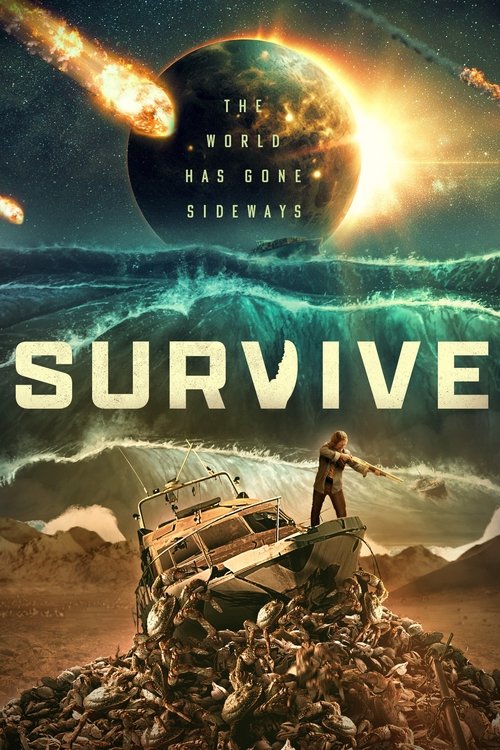
"The world has gone sideways."

19 June 2024 France 90 min 5.9 (398)

Director: Frédéric Jardin

Cast: Émilie Dequenne, Andreas Pietschmann, Lisa Delamar, Lucas Ebel, Arben Bajraktaraj

Action Thriller Adventure Science Fiction Ecological Fragility & Planetary Rebound Unconditional Parental Sacrifice Civilized Morality vs. Primal Savagery Time as a Lethal Ticking Clock Youthful Maturation Under Extreme Trauma
Budget: $5,270,000

Overview

Survive (Survivre) is a 2024 French high-concept disaster and post-apocalyptic survival thriller directed by Frédéric Jardin. The narrative centers on a close-knit family—Julia, a dedicated doctor; her husband Tom, a knowledgeable oceanographer; and their two teenage children, Cassie and Ben—who set sail on a Caribbean yacht trip to celebrate Ben’s 13th birthday.

Their peaceful vacation takes an apocalyptic turn when strange geophysical anomalies begin occurring: ship compasses spin uncontrollably, migrating whale pods collide with their boat, and burning satellite debris rains down from the night sky amidst a violent tempest.

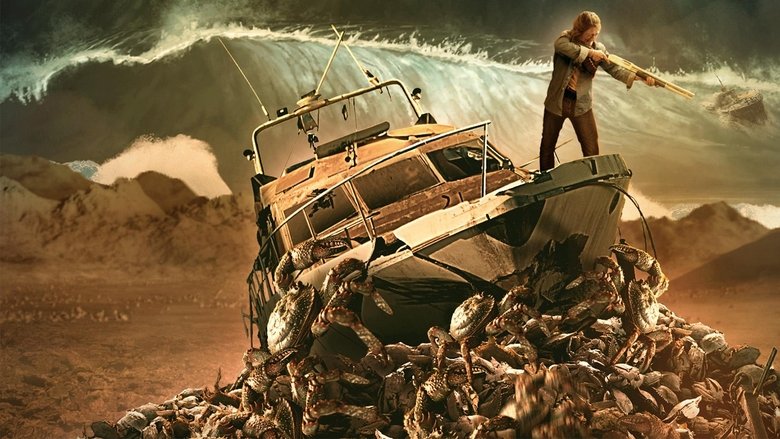
Upon awakening after the storm, the family discovers an unimaginable catastrophe. A sudden, violent reversal of Earth's magnetic poles has displaced the planet's oceans, leaving their yacht stranded high atop a rocky ridge in the middle of a vast, scorching desert—the newly exposed ocean floor. Stranded with dwindling water, no power, and a ticking clock before the magnetic poles reverse again and bring the sea roaring back, the family must trek across an alien wasteland. Along the way, they must endure blistering heat, unhinged human survivors, and terrifying predatory creatures unleashed from the ocean depths.
Core Meaning

Frédéric Jardin’s primary vision in Survivre is to examine the extreme fragility of human civilization when confronted with planetary-scale ecological upheaval. The film posits that modern humanity’s sense of security is an illusion built on fragile natural balance; when geophysical rules shatter, societal norms collapse overnight into primal survival of the fittest.

At its core, the movie is a tribute to parental devotion and maternal endurance. Through Julia’s character, Jardin demonstrates how civilized human beings can strip away all decorum and harness brutal, unyielding determination to protect their offspring when stripped of societal safety nets.

Thematic DNA

Ecological Fragility & Planetary Rebound 30%
Unconditional Parental Sacrifice 25%
Civilized Morality vs. Primal Savagery 20%
Time as a Lethal Ticking Clock 15%
Youthful Maturation Under Extreme Trauma 10%

Ecological Fragility & Planetary Rebound

The film highlights Earth's indifference to humanity. Through the sudden magnetic reversal, drained sea beds, and dumped toxic waste drums exposed on the dry ocean floor, the plot demonstrates how human technological hubris is instantly rendered useless when nature resets its parameters.

Unconditional Parental Sacrifice

Embodied by Julia and Tom, this theme explores how far parents will go to keep their children safe. Both parents face extreme physical trauma, tough moral choices, and mortal peril to ensure Ben and Cassie survive the apocalyptic wasteland.

Civilized Morality vs. Primal Savagery

Represented through the contrast between the family’s attempts to maintain ethics and the unhinged behavior of scavengers like 'L'homme au harpon' (The Harpoon Man). It examines how rapidly catastrophe degrades human morality into territorial violence.

Time as a Lethal Ticking Clock

Survival in the film is explicitly temporary. The impending secondary polar shift serves as a constant, invisible threat, forcing characters to continuously move forward despite exhaustion and injury.

Youthful Maturation Under Extreme Trauma

Explored through teenagers Cassie and Ben, who are forced to instantly shed petty adolescent anxieties (like lost phone signals and sibling rivalry) to step up as active survival partners alongside their mother.

Character Analysis

Julia

Émilie Dequenne

Archetype: Hero / Protective Mother Key Trait: Unyielding maternal resilience

Motivation

Absolute survival of her children.

Character Arc

Starts as a compassionate doctor and caring mother on holiday; transforms into a battle-hardened, fiercely protective warrior who uses raw physical strength and medical knowledge to preserve her family.

Tom

Andreas Pietschmann

Archetype: Mentor / Analytical Father Key Trait: Calm, rational authority

Motivation

Guiding his family toward safety using navigation and science.

Character Arc

Moves from a calm oceanographer relying on scientific logic to an active protector forced to accept that empirical science cannot save them, leading to selfless sacrifice.

All 5 characters and cast

Symbols & Motifs

The Wildly Spinning Compass

Meaning:

Symbolizes the complete loss of orientation, the breakdown of physical laws, and the erosion of human control over the natural world.

Context:

A recurring motif that appears when the geophysical anomalies begin to strike.

The Stranded Yacht "Orca"

Meaning:

Represents the collapse of human luxury and safety, transforming from a comfortable haven into a useless metal monument in a desert.

Context:

Perched precariously on a dry desert ridge after the ocean drains away.

"L'homme au harpon"'s Spear (Bread knife taped to a pole)

Meaning:

Symbolizes the immediate regression of humanity from advanced technology back to primitive, makeshift weaponry for survival warfare.

Context:

Carried and wielded by the feral scavenger hunter encountered on the dried seabed.

Abyssal Arthropods / Deep-Sea Crabs

Meaning:

Represent nature’s opportunistic scavengers reclaiming the surface world, acting as visual metaphors for the terrifying mysteries hidden in Earth's depths.

Context:

Emerging from deep earth fissures at night to hunt living flesh across the dry mud floor.

The Downed Private Jet & Bat Swarm

Meaning:

Symbolizes the sudden downfall of high-altitude human technology and civilizational infrastructure during global magnetic shifts.

Context:

Encountered as wrecked debris along the family's trek across the dried ocean floor.

Memorable Quotes

The world has gone sideways.
— Tom

Context

Spoken in English shortly after discovering their yacht sitting on dry, rocky seabed.

Meaning

Encapsulates the surreal realization that planetary norms have collapsed.

Quand les pôles s'inverseront à nouveau, il sera trop tard.
— Julia / Tom

Context

Used as the core tagline and stated during their survival planning.

Meaning

Establishes the ticking-clock dynamic: the drained ocean floor is only temporary, and the ocean will return with catastrophic force.

All 3 quotes

Philosophical Questions

What remains of human morality when the physical foundation of civilization vanishes overnight?

Explored through the rapid collapse of ethics in secondary survivors like the Harpoon Man compared to Julia's struggle to maintain her humanity.

Is parental love an absolute moral good, or a selfish biological drive that justifies violence against others?

Explored through Julia's willingness to commit fatal violence against human threats to guarantee her children's safety.

How fragile is humanity's self-appointed dominance over Earth's ecosystem?

Examined through how instantly human technology (yachts, jets, communications) becomes useless junk when planetary physics change slightly.

Alternative Interpretations

Literal Sci-Fi Disaster Reading: A straightforward post-apocalyptic action narrative centered on geomagnetic pole reversal, focusing purely on survival mechanics, navigation, and physical endurance.

Full ending explanation

Cultural Impact

Survivre arrived during a notable resurgence of French genre, thriller, and horror cinema in 2023–2024 (alongside films like Le Règne animal, Acide, and Vermines), supported by French funding bodies aimed at expanding sci-fi production beyond traditional dramas and comedies.

Released in 2024, the film tapped into contemporary eco-anxiety surrounding sudden environmental collapse, toxic waste mismanagement, and shifting global weather dynamics.

It received mixed-to-positive responses from international horror and sci-fi critics (e.g., premiering at FrightFest 2024 and Screamfest). Critics praised its impressive visual scope and Pierre Aïm's cinematography relative to its micro-budget, though some questioned its scientifically absurd premise.

Audience Reception

Praised Aspects:

  • Pierre Aïm's desert cinematography, which creates a convincing, surreal ocean-floor landscape.
  • Émilie Dequenne’s committed, intensely physical performance as Julia.
  • Lean 85-minute pacing that skips heavy exposition to jump straight into high-stakes survival.
  • Creative use of low budget through practical effects and natural Moroccan scenery.

Main Criticisms:

  • Scientific implausibility (magnetic reversal draining oceans instantaneously).
  • Occasional horror clichés and predictable character tropes (e.g., characters wearing headphones at key moments).
  • Mixed execution of CGI for the abyssal crab creatures.

Overall Verdict: Considered an entertaining, visually ambitious B-movie thriller that punches above its budget weight class, offering solid popcorn fun for survival and creature-feature fans.

Interesting Facts

  • The film was produced on a budget of just 5 million euros ($5.4 million), an exceptionally tight budget for a science-fiction disaster film featuring creature FX and apocalyptic landscapes.
  • Director Frédéric Jardin completed principal photography in a rapid 20-day shoot, relying heavily on meticulous planning and natural desert lighting.
  • To substitute for the dried Caribbean ocean bed without relying on expansive green screens, the production filmed on location in the desert regions near Ouarzazate, Morocco.
  • Lead actress Émilie Dequenne delivered her intense physical performance while secretly facing severe health issues; she was diagnosed with rare adrenocortical carcinoma shortly after filming in late 2023, entering remission in 2024 before tragically passing away in March 2025. Survivre remains one of her final starring roles.
  • Screenwriter 'Matt Alexander' is actually the collective pen name for French screenwriting partners Alexandre Coquelle and Matthieu Le Naour.

Easter Eggs

Yacht Named "Orca"

The family’s boat is named the Orca, an intentional tribute to Steven Spielberg’s classic 1975 thriller Jaws (where Quint’s boat is named the Orca). In Survivre, it serves as ironic foreshadowing of maritime catastrophe.

Homage to Luc Besson's Le Dernier Combat

Surreal visual touches throughout the desert—such as Ben urinating into an unplumbed porcelain toilet standing alone on the seabed—pay visual homage to Luc Besson's 1983 post-apocalyptic debut film and Moebius comic book aesthetics.

70s Eco-Apocalypse Thriller References

The film’s minimalist structure and intimate family focus pay homage to economical 1970s disaster movies like Where Have All the People Gone? (1974) and The Last Woman on Earth (1960).

Frequently Asked Questions

Explore More About This Movie

Dive deeper into specific aspects of the movie with our detailed analysis pages

Comments (0)

Leave a comment

No comments yet. Be the first to share your thoughts!

Similar Movies