Skip to content
Alienoid: Return to the Future
A time-shattering fantasy epic where swordsmen, sorcerers and androids collide: half martial-arts fairy tale, half sci-fi apocalypse, it feels like a gate opening between two centuries at once.
Alienoid: Return to the Future

Alienoid: Return to the Future

외계+인 2부

"At long last, all secrets shall be unveiled."

10 January 2024 South Korea 122 min 6.7 (869)

Director: Choi Dong-hoon

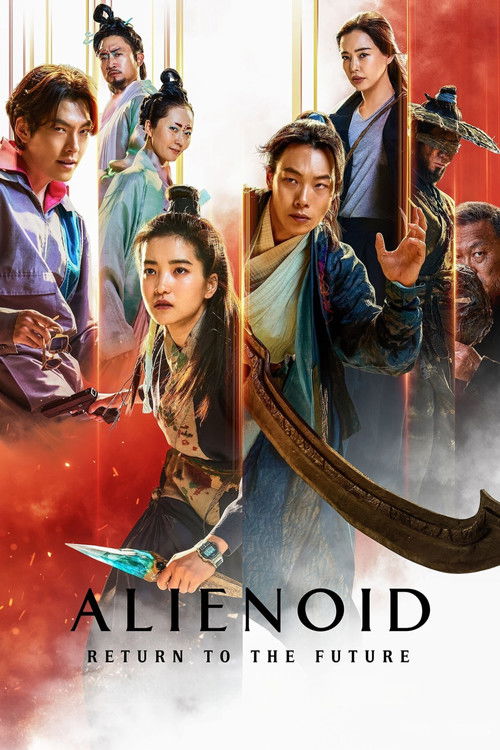
Cast: Ryu Jun-yeol, Kim Tae-ri, Kim Woo-bin, Lee Hanee, Yum Jung-ah

Fantasy Action Adventure Science Fiction Time as a place you can be stranded in Possession and the alien within Found family across impossible distances Desire, greed and the object everyone wants The collision of magic and machine
Box Office: $10,824,208

Overview

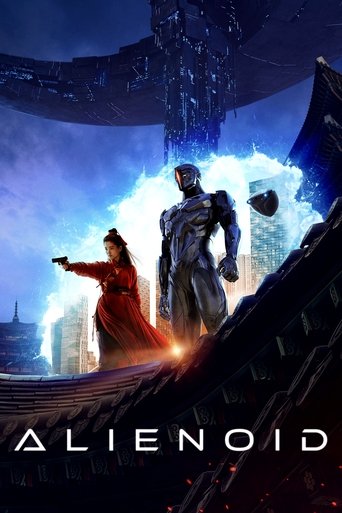
Choi Dong-hoon's Alienoid: Return to the Future picks up the tangled threads left dangling by the 2022 first part, and its mission is closure. Lee Ahn, the gun-toting young woman stranded in the year 1391, must retrieve the fabled Divine Sword — the key capable of unlocking the gate of time — find the android Thunder, and make her way back to the future she came from. Around her swirls a crowded 14th-century marketplace of schemers: everyone in Goryeo, it seems, wants that sword.

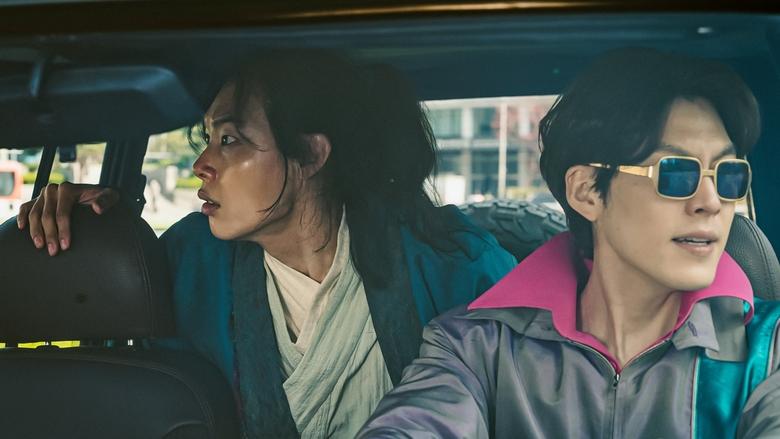
Her reluctant companion is Mureuk, a Taoist trickster-swordsman with a talent for bluffing his way through a fight and a growing suspicion that something is very wrong inside his own body. Pursuing the pair are Heug-seol and Cheong-woon, the two mages of Samgaksan who believe an alien is hiding within Mureuk; Neung-pa, a blind swordsman who wants the divine blade to restore his sight; and the monk Ja-jang, who wants it for reasons of his own.

Meanwhile, in the present day, an alien substance called haava is detonated by the escaped prisoner known as The Architect, killing several people, and an accidental witness, Min Gae-in, begins investigating. Two timelines, two genres and roughly a dozen agendas converge as the film braids its sprawling mythology into a single, breathlessly maximalist chase. Released on 10 January 2024 in IMAX, 4DX and ScreenX, it runs roughly twenty minutes shorter than the 142-minute original — a leaner, faster machine built to finally answer its own riddles.
Core Meaning

At its heart, Return to the Future is a film about inheritance across time — about how the past is never safely sealed off, and how the choices of one era detonate, literally, in another. The alien prisoners locked inside human bodies are the film's central conceit and its central idea: history carries something buried inside it, and the future spends its energy either containing that thing or being destroyed by it.

Choi Dong-hoon's second, concluding half also argues for something gentler beneath the spectacle. Where the first part scattered characters across centuries, this one is devoted to weaving them back together — the sequel's real subject is the assembling of a found family out of a fugitive girl, a fraudulent swordsman, two bickering mages, a cat and a pair of machines. The Divine Sword can open the gate of time, but what actually gets people home is other people. The director's message is that the fantastic apparatus — androids, time gates, alien parasites — exists so that ordinary loyalty can be tested at an operatic scale.

The film is also, unmistakably, an argument for play: a defence of the maximalist, genre-blending Korean blockbuster as a legitimate mode, insisting that a Goryeo-era wuxia comedy and a science-fiction extinction event belong in the same frame.

Thematic DNA

Time as a place you can be stranded in 28%
Possession and the alien within 24%
Found family across impossible distances 20%
Desire, greed and the object everyone wants 15%
The collision of magic and machine 13%

Time as a place you can be stranded in

Lee Ahn does not merely travel to 1391 — she grows up there, and the film treats the past as an exile rather than a tourist destination. Her gun, an object from 2022, makes her both famous and hunted, a walking anachronism. The Divine Sword functions as the key to the gate of time, meaning the entire plot is structured as a long attempt to earn passage home. Every faction chasing the blade is, in some sense, chasing a different century.

Possession and the alien within

The premise that alien prisoners are locked inside unsuspecting human bodies gives the film its unease: any person may be a cell. Mureuk's arc turns on this directly — a strange presence disturbs him, and the mages Heug-seol and Cheong-woon hunt him precisely because they suspect an alien lies within. The horror is not invasion from outside but the possibility that the self is already occupied and that identity is a container someone else is using.

Found family across impossible distances

The sequel's structural task is convergence: characters introduced separately in Part One are braided into one company. The bond between Lee Ahn and Mureuk, the guardianship of the androids Guard and Thunder, and the comic double act of the two Samgaksan mages all resolve into a unit that fights together. Loyalty here is chosen rather than inherited — machines parent a human child, and rivals become kin.

Desire, greed and the object everyone wants

The Divine Sword is a classic MacGuffin turned into a moral X-ray. Neung-pa, blind, wants it to open his eyes; Ja-jang wants to claim it; the mages want it to prove a suspicion. Each pursuer reveals themselves entirely through what they imagine the blade will fix, and the film quietly suggests that a weapon promising to grant your deepest wish is the most dangerous object in either century.

The collision of magic and machine

Taoist talismans, sword-summoning incantations and fan-wielding sorcerers share the screen with nanotech androids, haava detonations and interstellar prison protocols. Rather than reconciling the two systems, the film delights in their friction — the third act inverts the first film's premise, sending magical characters into the modern world, so that spells and machinery finally have to operate in the same room.

Character Analysis

Lee Ahn

Kim Tae-ri

Archetype: Displaced hero / warrior-orphan Key Trait: Fearless, quick-triggered resolve

Motivation

To get back to the future and stop the escape of an alien prisoner locked in a human body — and, beneath that, to reassemble the family time scattered.

Character Arc

Sent from 2022 back to 1391 as a child, she grows up inside the past she was exiled to, becoming a gunfighter with a reputation across Goryeo and a target on her back. Her arc in the sequel is the long labour of return: retrieving the Divine Sword, locating the android Thunder and forcing the gate of time open, while learning that the era she was stranded in gave her the people worth fighting for.

Mureuk

Ryu Jun-yeol

Archetype: Trickster / reluctant hero Key Trait: Charming bluffer with buried decency

Motivation

Initially reward and reputation; increasingly, protecting Lee Ahn and discovering the truth of what is inside him.

Character Arc

A Taoist swordsman-for-hire whose bravado outstrips his ability, Mureuk moves from comic opportunist to genuine ally. The sequel destabilises him from within: a weird presence in his body disturbs him and makes him a suspect to his own world, forcing him to confront the possibility that he is not entirely himself.

All 5 characters and cast

Symbols & Motifs

The Divine Sword

Meaning:

The key that unlocks the gate of time, and therefore a symbol of agency over one's own era — the power to choose which century you belong to. Because every faction projects a private wish onto it, it doubles as a mirror of desire.

Context:

The engine of the entire plot: Lee Ahn must retrieve it to return to the future, while Neung-pa, Ja-jang and the Samgaksan mages converge on the same blade, turning the fierce battle for the sword into the spine of the film.

The gate of time

Meaning:

A threshold between eras, and an image of consequence — what passes through it cannot be recalled. It embodies the film's belief that past and present are not sealed compartments but rooms connected by a door someone keeps propping open.

Context:

The destination toward which Lee Ahn's quest is aimed and the mechanism by which 14th-century characters ultimately collide with the modern day.

Haava, the alien substance

Meaning:

Contamination that arrives without warning and kills indiscriminately — a symbol of the buried past detonating in the present, and of an ecological or technological threat whose source is invisible to those it kills.

Context:

In the present-day timeline, haava is detonated by the escaped prisoner The Architect, killing several people; the accidental witness Min Gae-in begins investigating the incident, which pulls the modern thread into the ancient one.

The human body as a prison cell

Meaning:

Bodies used as containment for alien convicts literalise the idea that a person can be occupied by something they never consented to carry — inherited trauma, hidden lineage, or a fate assigned before birth.

Context:

The core premise carried over from Part One and paid off here through Mureuk's unsettling internal disturbance and the mages' hunt for the alien they believe hides inside him.

The blind swordsman's eyes

Meaning:

Neung-pa's blindness stands for willed ignorance and the price of ambition: he wants a magical object to grant him sight rather than accept what he already knows. Vision, in the film, is something earned rather than bestowed.

Context:

Neung-pa pursues the rumoured divine sword specifically to open his eyes, making him the most legible embodiment of the film's theme of desire.

The gun in a sword-fighting world

Meaning:

Lee Ahn's firearm is an artefact of the future misplaced in the past — a symbol of anachronism as both power and exposure. It makes her formidable and simultaneously marks her as prey.

Context:

Her possession of the gun in 1391 earns her a reputation across Goryeo and makes her a hunted figure, driving much of her early predicament.

Philosophical Questions

If a person's body can be a prison for something else, what exactly is the self?

The film's founding premise — alien convicts sealed inside unsuspecting humans — makes personhood a container question. Mureuk's arc pushes it furthest: a weird presence disturbs him, others hunt him for what may be inside him, and he must act morally without knowing whether his impulses are wholly his own. The film offers no clean metaphysical answer, suggesting instead that the self is defined by what one chooses to do rather than by what one contains.

Does where you come from or where you were raised determine who you are?

Lee Ahn is a child of 2022 who grew up in 1391. Her weapon belongs to one century and her loyalties to another, and the whole plot is her attempt to return to a home she barely remembers. The film quietly answers that belonging is built from relationships rather than birth dates — by the time the gate can be opened, the question of which era is 'hers' has become genuinely ambiguous.

Should we want a power that grants our deepest wish?

The Divine Sword is desire made into an object. Neung-pa wants it to restore his sight, Ja-jang to claim it, the mages to settle a suspicion. Each pursuer is characterised entirely by their wish, and the film's action arranges them so that the blade's promise corrodes judgement long before anyone wields it — the pursuit itself is what does the damage.

Can a machine be a parent?

Guard and Thunder are nanotech androids assigned a custodial function, yet what they perform toward Lee Ahn across centuries is indistinguishable from parenting. The film never argues that they feel; it simply shows them acting, over and over, in ways that cost them, and lets the audience decide whether the distinction between programmed duty and love survives that evidence.

Is the past a settled thing, or is it still happening?

By running a 14th-century quest and a present-day haava investigation in parallel, the film makes causation bidirectional: an escaped prisoner's detonation kills people now because of containment decisions made then. History is staged not as background but as an active agent, and the climax's convergence of eras insists that nothing is ever safely over.

Alternative Interpretations

As a story about time, or a story about family. One reading takes the mechanics at face value: this is a time-travel adventure in which a gate must be opened and a girl must go home. Another treats the time machinery as pure metaphor — Lee Ahn's exile in 1391 is an image of anyone raised far from where they began, and the Divine Sword's promise of return is really the fantasy of recovering a lost family. Under this reading the ending is emotionally rather than temporally resolved.

Full ending explanation

Cultural Impact

Alienoid: Return to the Future arrived at a fraught moment for the Korean blockbuster. Its predecessor had been one of 2022's most conspicuous commercial disappointments, finishing around $12.2 million after poor reviews and weak word of mouth, which made the release of a sequel already shot and in the can an unusually public test case for the industry's mega-budget, two-part model. Choi Dong-hoon — a director long associated with slick, star-packed crowd-pleasers — spent weeks before release personally arguing that the second half was the better film.

Commercially, the sequel performed respectably rather than triumphantly: it opened at number one in South Korea with roughly $3.57 million over the weekend and a 39% market share, and closed at about $10.8 million. Critically, the reception was split. Sympathetic reviewers called it a worthy successor and a fitting conclusion, praising it as fun, visually impressive and gloriously bonkers, and singling out the third act's inversion of the first film's premise — magical characters loosed into the modern world — as a genuinely refreshing dynamic. Detractors countered that the plot barely hangs together and that the film leans on action at the expense of coherence, with the finale landing anticlimactically.

Its wider significance lies in what it represents rather than what it grossed: an unapologetically maximalist fusion of Goryeo-era martial fantasy, Taoist folklore and hard science fiction, staged with IMAX, 4DX and ScreenX ambitions. It stands as one of the boldest recent attempts to build an original Korean genre mythology at Hollywood scale — and as a cautionary tale about the risks of splitting such a story in two.

Audience Reception

What was praised. Audiences and sympathetic critics responded to the sheer scale and inventiveness of the spectacle, describing the film as fun, visually impressive and bonkers in the best sense, and as a worthy successor and fitting conclusion to Choi Dong-hoon's time-bending epic. The third act drew particular admiration for inverting the original's premise — instead of aliens invading the past, magical characters are turned loose in the modern world, a switch reviewers called a refreshing dynamic. The escalating finale, which runs a car chase into a fight across the carriages of a moving cargo train and then into a mutant alien confrontation in an abandoned power plant, was singled out as the film's set-piece high point. The ensemble comedy and bigger laughs were also widely welcomed, and the tightened running time — roughly twenty minutes shorter than the 142-minute first part — was read as a corrective.

What drew criticism. The most persistent complaint is coherence: reviewers reported feeling the plot barely hanging together, with the film leaning on action at the expense of narrative logic, and the resolution landing as pretty anticlimactic after so much build-up. The dependence on Part One for basic comprehension remained a barrier for newcomers, and the density of factions and characters was described as overwhelming.

The verdict. Opinion is genuinely divided rather than uniformly negative. Commercially the film opened at number one in South Korea with about a 39% market share before finishing near $10.8 million, and it carries an IMDb user rating of roughly 6.5 — the profile of a big, generous, overstuffed entertainment that rewards viewers willing to surrender to its chaos and frustrates those who want the mythology to add up.

Interesting Facts

  • Both parts of Alienoid were shot simultaneously in a single continuous production: filming began in March 2020 and ran for roughly 13 months.
  • Return to the Future was released on 10 January 2024 and rolled out in premium formats including IMAX, 4DX and ScreenX.
  • The sequel runs about twenty minutes shorter than the first film, which was 142 minutes long — a deliberate tightening after Part One was criticised for sprawl.
  • Where the first part concentrated on introducing a large cast spread across different eras, the second was designed specifically to weave those separate stories and the overall worldview back together.
  • The first Alienoid was one of the biggest commercial disappointments of 2022 in South Korea, finishing with roughly $12.2 million despite its scale.
  • Ahead of release, director Choi Dong-hoon spent weeks publicly campaigning on the message that the second part was better than the first.
  • Alienoid 2 opened at number one in South Korea with about $3.57 million over its opening weekend and roughly $4.77 million across five days, taking a 39% market share.
  • The film ultimately grossed around $10.8 million, a modest result that landed close to its predecessor's total.
  • The finale escalates through a car chase into a brawl fought across the carriages of a moving cargo train before ending in a mutant alien showdown in an abandoned power plant.
  • The film holds an IMDb user rating of around 6.5.

Easter Eggs

The English subtitle "Return to the Future"

An unmistakable inversion of Back to the Future, signposting that this half of the story reverses the first film's direction of travel: instead of aliens invading the past, the past comes forward into the present.

Neung-pa, the blind swordsman

A direct nod to one of East Asian genre cinema's most durable archetypes — the blind master of wuxia and the Zatoichi lineage — imported wholesale into a science-fiction framework and given a sci-fi motive: he wants the divine sword to open his eyes.

The android Thunder's vehicle form

A nanotech machine that shifts between guardian and transport places the film in open conversation with transforming-robot pop culture, while grafting that iconography onto a Goryeo-era fantasy where it reads as pure sorcery.

Frequently Asked Questions

Explore More About This Movie

Dive deeper into specific aspects of the movie with our detailed analysis pages

Comments (0)

Leave a comment

No comments yet. Be the first to share your thoughts!

Similar Movies