Skip to content
Sweet Home
An apocalyptic nightmare where suppressed human desires manifest as monstrous mutations, suffocating trapped survivors in a decaying apartment complex until raw empathy rekindles warmth within the cold ashes of humanity.
Sweet Home
Sweet Home

스위트홈

"Will you stay a monster or will you stay a human?"

18 December 2020 — 19 July 2024 South Korea 3 season 26 episode Ended 8.2 (1,595)

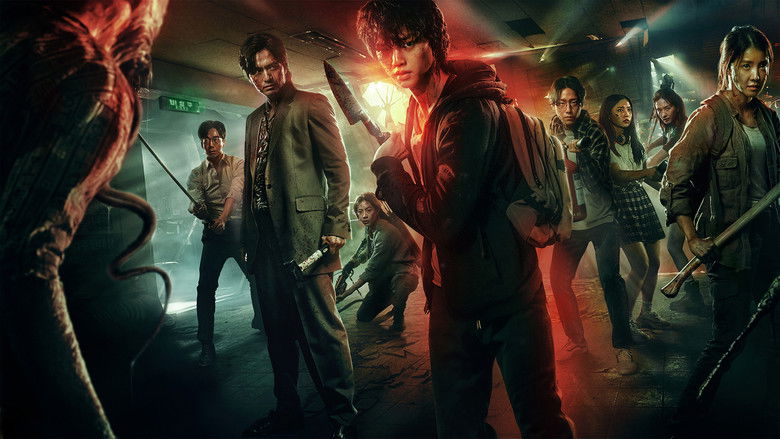
Cast: Song Kang, Lee Jin-uk, Lee Si-young, Go Min-si, Go Youn-jung

Sci-Fi & Fantasy Action & Adventure Monstrosity vs. Humanity The Weight of Hidden Desires Community, Sacrifice, and Coexistence Grief, Trauma, and Rebirth

Sweet Home — Ending Explained

⚠️ Spoiler Analysis

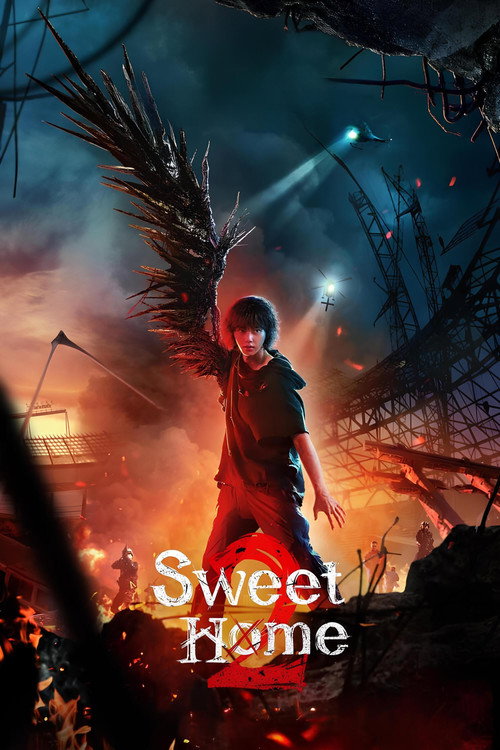
Season 1 Plot & Twists: The monster outbreak is not biological; it is driven by human desire. Cha Hyun-su resists his inner monster, becoming a Special Infectee with super-strength and a wing made of dark blades. During Green Home's fall, Jung Jae-heon and Han Du-sik die heroically. Lee Eun-hyeok realizes he is infected and stays behind under collapsing rubble. Rogue Special Infectee Jung Ui-myeong (MH-1) transfers his liquid soul into Pyeon Sang-wook’s corpse and drives off with an unconscious Hyun-su.

Season 2 Plot & Twists: Survivors flee to a military stadium run by the Crow Platoon. MH-1/Ui-myeong is revealed to be Nam Sang-won, the missing fiancé of firefighter Seo Yi-kyung, seeking to create a world ruled by Special Infectees. Yi-kyung gives birth to a daughter (Yi-su) who turns humans into monsters by touch. In a finale cliffhanger, Lee Eun-hyeok emerges nude from a giant cocoon as a reborn Neo-Human.

Season 3 Plot & Series Finale: Reborn cocoon creatures are "Neo-Humans"—immortal, emotionless beings representing the final evolutionary stage. Yi-kyung tragically dies after being monsterized and subdued by Hyun-su. Hyun-su integrates his monster alter-ego, gaining the ability to clear monsters' desires and restore their humanity. In the final battle, Sang-won attempts to possess Sang-wook's body again, but Sang-wook’s suppressed soul awakens and walks into fire to burn both himself and Sang-won to death. Afterwards, humans and Neo-Humans agree to live together, and Eun-hyeok slowly recovers human emotions as survivors reunite, finding their true "Sweet Home".

Alternative Interpretations

The series can be interpreted through multiple distinct lenses:

  • A Metaphor for Mental Illness and Suppressed Trauma: In this reading, monsterization is not a physical disease, but a psychological metaphor. Desires represent unhealed emotional wounds, guilt, and depression. Cha Hyun-su’s ability to remain human while holding monster powers symbolizes living with severe trauma without allowing it to destroy one's moral humanity.
  • Sociological Commentary on Modern Isolation and Hyper-Individualism: Green Home reflects modern South Korea’s urban housing crisis and societal alienation. Residents live meters apart yet remain complete strangers until forced together. The apocalypse forces an individualistic, self-absorbed society to dismantle personal walls and learn collective empathy.
  • The Evolutionary Post-Human Perspective (The Neo-Human Ending): The final emergence of Neo-Humans presents a philosophical view on evolution. Neo-Humans have no grief, no malice, no destructive desires, and no physical aging. While initially appearing cold and emotionless, their eventual integration with surviving humans suggests that human evolution requires balancing intellectual peace with emotional warmth.

Explore More About This Movie

Dive deeper into specific aspects of the movie with our detailed analysis pages

Similar Movies