Skip to content
Sweet Home
An apocalyptic nightmare where suppressed human desires manifest as monstrous mutations, suffocating trapped survivors in a decaying apartment complex until raw empathy rekindles warmth within the cold ashes of humanity.
Sweet Home

Sweet Home

스위트홈

"Will you stay a monster or will you stay a human?"

18 December 2020 — 19 July 2024 South Korea 3 season 26 episode Ended 8.2 (1,595)

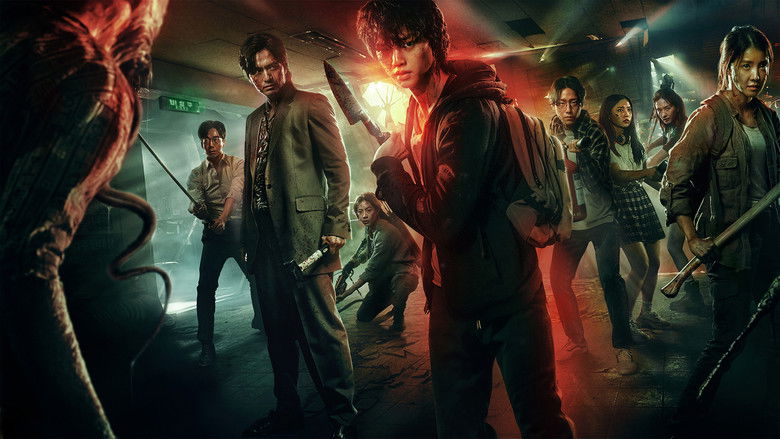
Cast: Song Kang, Lee Jin-uk, Lee Si-young, Go Min-si, Go Youn-jung

Sci-Fi & Fantasy Action & Adventure Monstrosity vs. Humanity The Weight of Hidden Desires Community, Sacrifice, and Coexistence Grief, Trauma, and Rebirth

Overview

Sweet Home is a South Korean apocalyptic horror-action drama adapted from the acclaimed Naver webtoon by Kim Carnby and Hwang Young-chan. Directed by Lee Eung-bok, the series spans 3 seasons and 26 episodes (Season 1: 10 episodes; Season 2: 8 episodes; Season 3: 8 episodes). Rather than relying on a classic zombie virus or biological weapon, the show introduces a unique supernatural curse: human transformation driven by hidden psychological desires.

Across its three-season arc, the story begins within the claustrophobic confines of Green Home—a dilapidated apartment complex where troubled high school orphan Cha Hyun-su and an ensemble of neighbors fortify themselves against terrifying grotesqueries. As Hyun-su discovers he is a "Special Infectee" capable of retaining human consciousness despite wielding monster powers, the group relies on his abilities while confronting their own dark impulses and external threats.

In subsequent seasons, the narrative expands far beyond Green Home into a devastated post-apocalyptic world. Survivors migrate to a fortified military-controlled stadium, where armed forces, rogue factions, and military scientists collide. The central crisis evolves from basic survival to an existential war involving "Special Infectees" and the emergence of "Neo-Humans"—emotionless, immortal beings hatched from cocoons, marking the next phase of human evolution. Ultimately, the entire series explores whether humanity can transcend its destructive desires to discover a genuine "sweet home" through mutual empathy and coexistence.
Core Meaning

The core thesis of Sweet Home is that monstrosity is not an external infection, but an inner psychological manifestation of unfulfilled human desire, trauma, and greed. The series posits that physical monsters are merely physical expressions of human obsession—ranging from grief, vanity, and insecurity to the desperate urge to protect others.

Through its three-season trajectory, the creators deliver a message: true humanity is defined not by physical form or emotional detachment, but by the conscious choice to show empathy, warmth, and self-sacrifice even when surrounded by despair. The evolution from baseline humans to monsters and finally to "Neo-Humans" demonstrates that neither total suppression of emotion nor unchecked desire offers a future; only emotional connection and peaceful coexistence can rebuild a broken world.

Thematic DNA

Monstrosity vs. Humanity 30%
The Weight of Hidden Desires 25%
Community, Sacrifice, and Coexistence 25%
Grief, Trauma, and Rebirth 20%

Monstrosity vs. Humanity

In Season 1, monstrosity is viewed as an abomination to be fought or avoided within Green Home. By Seasons 2 and 3, the line blurs significantly as human military factions commit horrific atrocities, while certain monsters display protective, maternal instincts. The emergence of Neo-Humans further challenges the definition, proving that physical appearance does not dictate moral humanity.

The Weight of Hidden Desires

Season 1 establishes desire as the catalyst for monsterization (e.g., a grieving mother becoming a protective fetus monster, a balding man becoming a hair monster). In Seasons 2 and 3, this concept scales globally: characters must consciously confront their innermost desires to retain their human consciousness or reverse their transformations.

Community, Sacrifice, and Coexistence

Beginning as reluctant neighbors forced together in a barricaded building, the survivors learn to rely on each other's distinct skills. By the finale, the concept of community transcends biological species, ending with a new societal model where surviving humans, reformed monsters, and Neo-Humans share a home together.

Grief, Trauma, and Rebirth

Cha Hyun-su begins the series suicidal following his family’s death. His journey through suffering leads him to find purpose in saving others. Characters like Seo Yi-kyung and Lee Eun-yu similarly navigate intense grief over lost loved ones, transforming personal trauma into resilience that drives the ultimate resolution.

Character Analysis

Cha Hyun-su

Song Kang

Archetype: Reluctant Hero / Tragic Savior Key Trait: Empathy under extreme suffering

Motivation

From wanting to end his life to protecting survivors and saving infected individuals from their own dark desires.

Character Arc

Begins as a traumatized, suicidal outcast in Season 1 who reluctantly uses his monstrous power to shield apartment residents. In Season 2, he isolates himself to prevent hurting others and undergoes severe internal battles between his human and monster alter-egos. In Season 3, he unifies both halves, mastering his powers to restore monsters’ minds and lead humanity toward peace.

Pyeon Sang-wook / Nam Sang-won / MH-1

Lee Jin-uk

Archetype: Antihero turned Primary Antagonist (Body Parasite) Key Trait: Unyielding physical strength and latent moral resolve

Motivation

Initially personal vengeance/redemption; later hijacked by Sang-won’s desire for monster dominance, until Sang-wook's final selfless act of self-destruction.

Character Arc

Season 1 introduces Sang-wook as a scarred, tough-talking contract killer who reveals a deeply protective heart. At the end of Season 1, his body is hijacked by Jung Ui-myeong (Nam Sang-won / MH-1), the rogue Special Infectee. Across Seasons 2 and 3, Sang-won uses Sang-wook’s body to build a monster order. In the series finale, Sang-wook’s lingering original consciousness awakens, sacrificing himself in a bonfire to eliminate Sang-won permanently.

All 5 characters and cast

Symbols & Motifs

The Broken Cell Phone / Suicide Countdown

Meaning:

Symbolizes Cha Hyun-su’s deep isolation, depression, and desire to end his life.

Context:

Used in Season 1 where, as the apocalypse begins, the phone transitions from a countdown to death into a tool for reaching out and protecting others.

The Black Wing / Wing-Blade

Meaning:

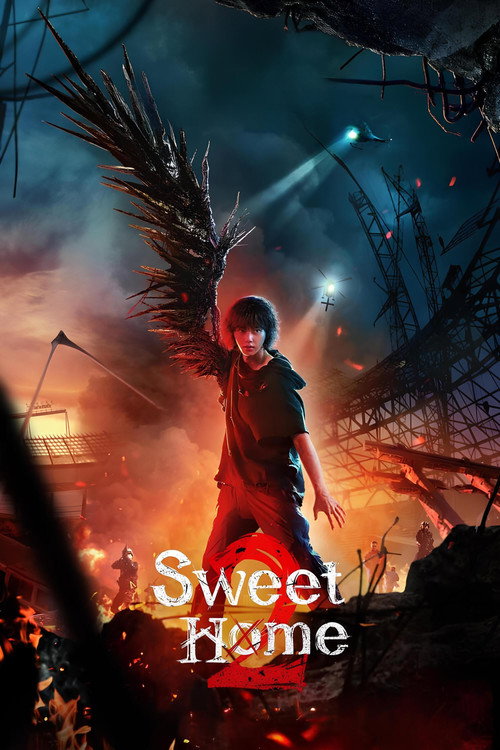
Cha Hyun-su’s monstrous appendage—a wing woven from dark, spiky tendrils—serves as a visual motif for his burden as a Special Infectee.

Context:

Appears throughout Seasons 1–3, functioning as both a lethal weapon to defend loved ones and a visible mark of his constant struggle against losing his soul.

Ballet Shoes / Pointe Shoes

Meaning:

Belonging to Lee Eun-yu, the ballet shoes represent shattered dreams, youth lost to hardship, and persistent resilience.

Context:

Featured across Seasons 1–3, where even after giving up dancing, the shoes remain a grounding motif connecting her to her brother, Eun-hyeok.

The Wooden Cross / Sword

Meaning:

Carried by Christian Korean language teacher Jung Jae-heon, the sword and cross represent moral conviction, spiritual faith, and noble self-sacrifice in the face of overwhelming horror.

Context:

Used in Season 1 during combats against monsters, culminating in his tragic last stand.

The Green Home Apartment Building

Meaning:

A literal and figurative microcosm of society. Its crumbling walls, dark halls, and makeshift barricades symbolize the fragile psychological barriers humans erect between themselves and the outside world.

Context:

Serves as the primary setting for Season 1 where survivors fortify themselves.

The Cocoon

Meaning:

The transition state between monsterization and Neo-Human rebirth. It symbolizes baptism, metamorphosis, and the shedding of emotional baggage to produce a clean slate.

Context:

Featured in Seasons 2–3 as infected individuals transform into Neo-Humans.

Memorable Quotes

죽는 건 무섭지 않다. 다만 사람으로서 죽고 싶을 뿐이다.
— Cha Hyun-su

Context

Season 1, Episode 3; Hyun-su speaking to residents who fear his powers.

Meaning

Captures the moral core of the protagonist—his desperate fight to maintain his human integrity despite his terrifying monsterization.

신은 인간이 견딜 수 있는 시련만 주신다면서요? 하지만 신이 틀렸어요. 인간은 그보다 훨씬 많은 것을 견뎌냅니다.
— Jung Jae-heon

Context

Season 1, Episode 8; spoken right before his heroic last stand against the security guard monster.

Meaning

Encapsulates the show’s theme of human endurance in the face of unspeakable trauma and suffering.

All 5 quotes

Episode Highlights

Episode 1

S1E1

Establishes Cha Hyun-su’s move to Green Home, his suicidal ideation, and the sudden outbreak of monsterization. Introduces the memorable "Lotus Root Monster" (Blind Monster) and sets up the claustrophobic, intense atmosphere.

Significance:

Serves as the foundation for the entire series, establishing the monsterization rules and initial group dynamics.

Episode 5

S1E5

A turning point where the apartment residents form a unified defensive strategy.

Significance:

Hyun-su’s dual nature as a weapon and a protector becomes fully integrated into the community’s survival plan.

Episode 8

S1E8

Features the iconic death of Jung Jae-heon, who sacrifices himself in an elevator to destroy a violent chainsaw-wielding monster.

Significance:

Deeply impacts Ji-su and Eun-hyeok, shifting the emotional tone of the group.

Episode 10

S1E10

The destruction of Green Home. Hyun-su undergoes a dramatic winged transformation to fight Ui-myeong. Eun-hyeok stays behind to die under the rubble as his nose bleeds. Sang-wook’s body is hijacked by Ui-myeong, setting up the expanded world.

Significance:

Concludes the Green Home arc and sets up the expanded world for future seasons.

Episode 3

S2E3

Marks the complete transition out of Green Home into the outside wilderness and military stadium. Demonstrates the brutality of military quarantine protocols and introduces key Crow Platoon personnel.

Significance:

Expands the narrative scope from claustrophobic survival to systemic post-apocalyptic control.

Episode 8

S2E8

Reveals the birth of Yi-kyung’s daughter (Yi-su) and her terrifying power to turn humans into monsters by touch. In the final shot, Lee Eun-hyeok dramatically hatches nude from a monster cocoon with a cold smile, setting up Season 3.

Significance:

Sets up the primary conflicts, new evolutionary status, and stakes for Season 3.

Episode 4

S3E4

Features an intense internal and external battle between Cha Hyun-su and his dominant dark monster alter-ego. Eun-yu’s unwavering emotional bond brings Hyun-su’s true human self back to the surface.

Significance:

Reclaims Hyun-su's humanity and prepares him for the ultimate climax.

Episode 8

S3E8

The grand climax. Sang-wook’s true consciousness fights back against Nam Sang-won, walking into fire to destroy the main villain. Hyun-su and Eun-hyeok establish a new social paradigm where humans, Neo-Humans, and reformed creatures coexist peacefully.

Significance:

Resolves the overall series narrative arc and fulfills the overarching thematic resolution of finding a 'Sweet Home'.

Philosophical Questions

What truly defines a 'monster' versus a 'human'?

The show constantly asks whether physical monstrosity makes a creature evil, or if human greed, selfishness, and cruelty are the true forms of monstrosity.

Are human desires inherently destructive or essential to our soul?

Since desires trigger monsterization, the narrative questions whether emotional attachment is a dangerous flaw or the very essence that makes life worth living.

Can true peace exist without human emotion?

Through the Neo-Humans—who are free from harmful desires but lack empathy—the show explores whether an emotionless, conflict-free world is a utopia or a soulless tragedy.

Is self-sacrifice the ultimate expression of human freedom?

Characters repeatedly overcome their monster transformations through acts of love and sacrifice for others, suggesting that free will is proven when choosing others over self-preservation.

Alternative Interpretations

The series can be interpreted through multiple distinct lenses:

Full ending explanation

Cultural Impact

Released in December 2020 during the peak of the global COVID-19 pandemic, Sweet Home struck a chord with audiences worldwide. The themes of self-isolation, fear of infection from neighbors, barricaded living spaces, and societal mistrust directly mirrored real-world pandemic anxieties.

Furthermore, Sweet Home was the first South Korean series to enter the Netflix Top 10 TV Shows in the United States, opening doors for subsequent global K-content mega-hits like Squid Game and All of Us Are Dead. It proved that high-budget, creature-feature apocalyptic horror could succeed globally out of South Korea.

Audience Reception

Audience reception evolved distinctly across the three seasons:

  • Season 1 Reception: Highly positive (Rotten Tomatoes audience score ~85%+; IMDb ~7.3/10). Audiences loved the intimate apartment setting, unique monster designs, emotional character deaths (e.g., Jae-heon, Du-sik), and compelling performance by Song Kang.
  • Season 2 Reception: Highly controversial and divisive. Viewers voiced frustration over the jarring shift from claustrophobic horror to sprawling military sci-fi. The absence of main protagonist Cha Hyun-su for several middle episodes and the death of beloved original characters (like Ji-su) angered many long-time fans.
  • Season 3 Reception: Moderate recovery with mixed reviews. Audiences praised the return of Lee Do-hyun as Neo-Human Eun-hyeok and his dynamic with Song Kang, as well as the resolution of Sang-wook’s tragic arc. However, critics noted that the overall story lost much of the emotional heart and grounded fear that made Season 1 iconic.

Overall Verdict: A ground-breaking, trendsetting K-drama franchise whose brilliant first season defined an era of Korean streaming content, even if its sequels struggled under the weight of world-building expansion.

Interesting Facts

  • Season 1 cost approximately 3 billion KRW (~$2.7 million USD) per episode, making it one of the most expensive K-drama productions at the time of its 2020 premiere.
  • Director Lee Eung-bok hired top Hollywood practical effects teams, including Legacy Effects and Spectral Motion, alongside South Korea's premier CGI studio Westworld.
  • Famous choreographer Kim Seol-jin was hired to coach movement actors using tutting and contemporary dance techniques to give monsters uncanny, unnatural movements.
  • Webtoon creator Kim Carnby specifically requested that director Lee Eung-bok alter the drama’s ending and storyline from the webtoon so television viewers wouldn't spoil the uncompleted comic.
  • Seasons 2 and 3 were greenlit simultaneously by Netflix and filmed back-to-back over more than a year, concluding in March 2023.
  • Actor Song Kang underwent intense physical conditioning and weapon-handling training, while Lee Si-young reduced her body fat percentage to 8% for her stunt scenes.
  • Season 1 heavily featured Imagine Dragons’ song 'Warriors' during key action sequences, which generated debate among fans regarding its fit with the horror atmosphere.

Easter Eggs

Cameo of the Webtoon Creator's Other Works

In Season 1, subtle background posters and digital screens show easter egg nods to Kim Carnby’s other popular webtoon works, such as Bastard and Pigpen.

Nod to Classic Horror Cinema

Visual framing of the hallways in Green Home pays homage to Stanley Kubrick’s The Shining (1980), featuring lingering, symmetrical shots down carpeted corridors before blood spilling or monster attacks occur.

The 'Monsterization Disease' CDC Broadcasts

Background television news reports in Season 1 show fictional global emergency broadcasts featuring real South Korean newsroom graphic templates, grounding the uncanny horror in realistic media presentation.

Song Kang & Lee Do-hyun's On-Screen Chemistry

Both lead actors gained stardom almost simultaneously through Netflix productions; their bromance and tactical rivalry served as a meta-appeal for young K-drama fans, culminating in their hyped bus battle in Season 3.

Frequently Asked Questions

Explore More About This Movie

Dive deeper into specific aspects of the movie with our detailed analysis pages

Comments (0)

Leave a comment

No comments yet. Be the first to share your thoughts!

Similar Movies