System Crasher
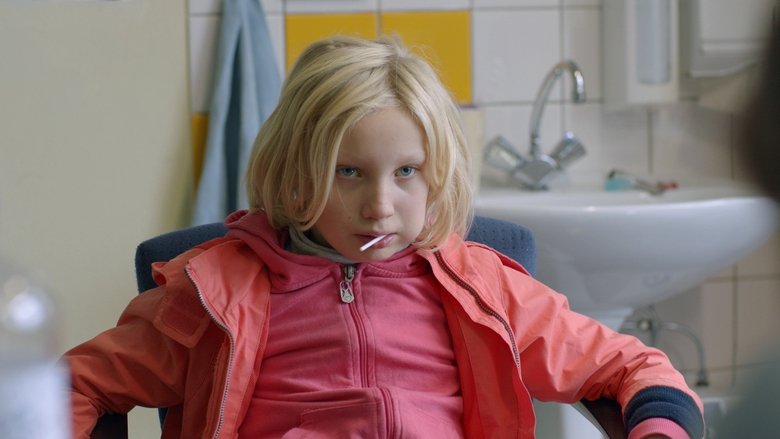
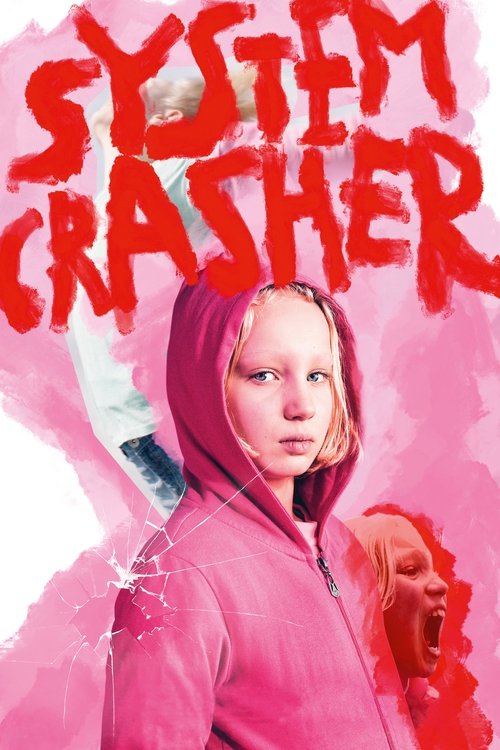
A harrowing social drama. A tiny whirlwind in a shocking pink jacket crashing desperately against the unbreakable glass walls of bureaucracy.
System Crasher

System Crasher

Systemsprenger

19 September 2019 Germany 118 min ⭐ 7.6 (377)
Director: Nora Fingscheidt
Cast: Helena Zengel, Albrecht Schuch, Gabriela Maria Schmeide, Lisa Hagmeister, Maryam Zaree
Drama
The Limitations of Institutional Care The Enduring Trauma of Abandonment The Boundary Between Professionalism and Personal Attachment

Overview

System Crasher (Original title: Systemsprenger) centers on Benni, a fierce, foul-mouthed, and deeply traumatized nine-year-old girl who bounces from one foster home and psychiatric facility to another. Labeled a "system crasher" by the German child welfare system because no institution can handle her explosive, violent outbursts, Benni has only one desperate wish: to return home to her mother. However, her mother is emotionally unstable, terrified of her own daughter, and entirely incapable of providing a safe environment.

When traditional social work fails, Benni's dedicated but exhausted caseworker, Frau Bafané, hires an unconventional school escort named Micha. Normally an anger-management trainer for delinquent teenage boys, Micha decides to take Benni on an educational retreat to a remote cabin in the woods, far from the triggers of civilized society. In this isolated environment, an unexpected and profound bond begins to form between the volatile child and the physically imposing but empathetic trainer.

As the film progresses, it transforms into a visceral, kinetic exploration of child psychology and the heartbreaking limitations of institutional care. Avoiding easy Hollywood resolutions, the narrative immerses the viewer in the agonizing tension between a child's desperate need for unconditional love and the boundaries of the exhausted adults struggling to save her without losing themselves in the process.

Core Meaning

Director Nora Fingscheidt aims to expose the tragic paradox of modern institutional care: a system designed to protect vulnerable children often lacks the capacity to provide the one thing they actually need to heal—unconditional, permanent love. By labeling a child a "system crasher," society places the blame on the individual, but the film argues that it is the rigid, bureaucratic system that is truly failing. The narrative challenges the audience to look past Benni's terrifying violence to see a profound cry for help, highlighting the devastating, permanent rewiring of a child's brain caused by early abandonment and trauma.

Thematic DNA

The Limitations of Institutional Care 35%
The Enduring Trauma of Abandonment 35%
The Boundary Between Professionalism and Personal Attachment 30%

The Limitations of Institutional Care

The film scrutinizes the well-meaning but fundamentally bureaucratic child welfare system. Despite having extensive resources and dedicated workers, the system relies on relocating Benni whenever she becomes too difficult to handle. This constant shuffling prevents her from forming the secure, long-term attachments she desperately needs, illustrating that an institution cannot be a substitute for a family.

The Enduring Trauma of Abandonment

Benni's explosive violence is portrayed not as inherent malice, but as a visceral manifestation of profound neglect. Her specific trigger—violently lashing out when her face is touched—stems from severe infantile abuse. Her entire existence is defined by the desperate, unrequited desire to return to a mother who continually abandons her, showing how early trauma fundamentally dictates a child's survival instincts.

The Boundary Between Professionalism and Personal Attachment

Through the character of Micha, the narrative explores the dangers of rescue fantasies in social work. Micha succeeds in breaking through Benni's defenses by offering genuine connection, but he soon realizes he cannot maintain the required professional distance. The film tragically illustrates that professionals cannot simply absorb a child's trauma without sacrificing their own boundaries and endangering their own families.

Character Analysis

Benni (Bernadette)

Helena Zengel

Archetype: The Tragic Antihero / The Feral Child
Key Trait: Explosively violent yet deeply vulnerable

Motivation

To return home and receive unconditional love from her mother.

Character Arc

Benni cycles through bursts of extreme violence and desperate bids for affection, pinballing between foster homes and psychiatric wards. Despite a breakthrough in the woods with Micha, she ultimately realizes she can never fit into his family or return to her mother's, leading to her ambiguous, rebellious escape at the airport.

Micha (Michael Heller)

Albrecht Schuch

Archetype: The Mentor / The Rescuer
Key Trait: Patient, physically imposing, but emotionally susceptible

Motivation

To save Benni from being consumed by the system and channel her rage into positive outlets.

Character Arc

Micha begins as a confident anger-management trainer who believes his unconventional methods can tame Benni. However, as he bonds with her, he falls prey to a rescue fantasy. He is ultimately forced to confront his own limitations and step back to protect his wife and infant child from Benni's volatility.

Frau Bafané

Gabriela Maria Schmeide

Archetype: The Caregiver
Key Trait: Compassionate, determined, and institutionally constrained

Motivation

To find a safe, permanent placement for Benni within the rigid rules of the welfare system.

Character Arc

As a dedicated social worker, Frau Bafané tirelessly advocates for Benni against an increasingly exhausted system. She gradually loses her professional composure, culminating in a heartbreaking role-reversal where she breaks down in tears and is comforted by the very child she is failing to place.

Bianca Klaass

Lisa Hagmeister

Archetype: The Inadequate Parent
Key Trait: Fearful, unreliable, and emotionally fragile

Motivation

Self-preservation and the protection of her younger children.

Character Arc

Bianca repeatedly promises to take Benni back once she leaves her abusive partner, offering the child false hope. At the crucial case meeting, she finally admits her profound fear of her own daughter's violence and abandons Benni permanently to protect her other children.

Symbols & Motifs

The Pink Jacket

Meaning:

It symbolizes Benni's lingering childlike innocence juxtaposed with her fierce, aggressive, and irrepressible energy.

Context:

Benni wears a bright pink winter jacket throughout most of the film. Visually, it makes her pop out of the bleak institutional environments and chaotic shaky-cam frames, subverting the traditional association of pink with quiet, delicate little girls.

Shattering Glass

Meaning:

Glass represents the invisible, rigid boundaries of the bureaucratic system, as well as Benni's own fractured and fragile psyche.

Context:

The motif appears when Benni throws objects at shatter-proof windows in care facilities. It culminates in the final freeze-frame of the film, where the literal cinema screen cracks like broken glass as Benni leaps into the air.

The Forest Cabin

Meaning:

The remote cabin symbolizes a primal, rule-free space stripped of institutional constraints, offering a fleeting illusion of a natural, untamed childhood.

Context:

Micha takes Benni to a cabin without electricity or running water for an educational retreat. Here, away from the concrete walls of the welfare system, she momentarily finds peace and connection, though the return to civilization shatters this illusion.

Memorable Quotes

Ich will zu meiner Mama!

— Benni

Context:

Benni screams this repeatedly throughout the film during her violent meltdowns when being restrained by social workers or police officers.

Meaning:

This desperate, recurring scream highlights the tragic simplicity of Benni's motivation. Despite her complex psychological issues and the massive institutional machinery deployed to help her, all she requires is the one thing the system cannot manufacture: a mother's love.

Ich kann nicht dein Papa sein. Ich habe eine Familie.

— Micha

Context:

Micha says this to Benni when she expresses her desire to live with him permanently after their successful retreat in the woods.

Meaning:

This line firmly draws the boundary between professional care and personal attachment, shattering Benni's hopes of being adopted and highlighting the tragic limits of Micha's rescue fantasy.

Dann töten wir deine Frau und das Baby.

— Benni

Context:

Benni casually offers this horrific solution immediately after Micha tells her he cannot adopt her because he already has a wife and child.

Meaning:

This chilling response perfectly encapsulates Benni's severely traumatized understanding of love and attachment. She views affection as a zero-sum game and resorts to extreme violence to secure the connection she craves.

Weinen Sie nicht, Frau Bafané.

— Benni

Context:

Benni gently comforts her social worker, Frau Bafané, who breaks down sobbing after realizing she has run out of options for the child.

Meaning:

This role-reversal emphasizes Benni's deep capacity for empathy and tenderness, contrasting sharply with her usual violent outbursts. It underscores the heavy emotional toll the system takes on its workers.

Philosophical Questions

Can systemic institutions ever adequately replace the unconditional love of a parent?

The film aggressively challenges the efficacy of state care, showing that while social workers and therapists can provide safety, shelter, and behavioral management, they cannot manufacture the genuine, permanent emotional anchor a child requires to heal from profound trauma.

Where is the ethical boundary between professional duty and personal attachment?

Through Micha's character, the film explores the danger of the 'rescue fantasy.' It asks whether it is ethical—or even possible—to truly help a deeply damaged child without becoming emotionally entangled, and what happens when that entanglement threatens the caregiver's own life and family.

How should society handle individuals whose suffering makes them a danger to others?

Benni is undeniably a victim of horrific abuse, yet she is also a violent perpetrator who severely injures other children. The film forces the audience to grapple with the tension between profound empathy for a traumatized child and the practical necessity of protecting society from her outbursts.

Alternative Interpretations

The film's sudden, ambiguous ending—where Benni escapes airport security, leaps from an elevated platform, and the screen freezes and shatters—has generated several divergent interpretations. The Suicidal Leap: Some audiences interpret the scene literally and tragically, believing Benni has jumped to her death, symbolizing the ultimate, fatal failure of a system that left her with nowhere else to go. The Metaphorical Escape: Conversely, many critics view the leap and the shattering screen as a triumphant, metaphorical act of defiance. By breaking the "glass" of the cinema screen, Benni cements her status as an untamable force of nature who refuses to be boxed in by institutional or narrative boundaries. The Cyclical Trap: A third interpretation suggests the ending simply represents the ongoing cycle of her life. She is running away, and she will inevitably be caught and processed again. The lack of closure reflects the grueling reality of social work, where there are rarely tidy, permanent solutions for deeply traumatized children.

Cultural Impact

System Crasher premiered at the 69th Berlin International Film Festival in 2019, where it won the prestigious Silver Bear Alfred Bauer Prize for cinematic innovation. Upon its release, it sparked widespread, intense socio-political discussions in Germany regarding the efficacy and limits of the nation's ambitious child welfare system, challenging the public's perception of "difficult" children. The film achieved massive critical success, sweeping the German Film Awards (Lolas) with eight wins. Culturally, it served as a major launching pad for its creators. Young star Helena Zengel received international acclaim, leading directly to her casting alongside Tom Hanks in the Hollywood film News of the World (2020), for which she earned a Golden Globe nomination. Director Nora Fingscheidt's masterful execution also caught the attention of international producers, leading her to direct Sandra Bullock in Netflix's The Unforgivable (2021) and Saoirse Ronan in The Outrun (2024).

Audience Reception

Audience reception for System Crasher has been overwhelmingly positive, though heavily caveated with warnings about its emotionally grueling nature. Viewers uniformly praised nine-year-old Helena Zengel's tour-de-force performance, noting that she carried the film with an authenticity rarely seen in child actors. Albrecht Schuch and Gabriela Maria Schmeide were also lauded for their heartbreaking portrayals of exhausted caregivers. However, the film's relentless pacing, characterized by Benni's frequent, ear-piercing screaming and sudden acts of violence, was cited by some viewers as a point of criticism, making the film an exhausting, anxiety-inducing watch. Certain controversial scenes—such as Benni violently bashing another child's head into an ice rink or secretly taking Micha's infant from its crib—deeply unsettled audiences. Overall, the verdict paints the film as a masterpiece of social realism; it is widely regarded not as light entertainment, but as an essential, harrowing cinematic experience that demands deep empathy.

Interesting Facts

  • The title 'Systemsprenger' (System Crasher) is an unofficial term used by German social workers to describe traumatized children who consistently break the rules until no institution will take them.
  • Director Nora Fingscheidt researched the topic for six years, inspired by a 14-year-old 'system crasher' she met while filming a documentary at a shelter for homeless women.
  • Helena Zengel was the seventh girl to audition out of 150 candidates. Fingscheidt never envisioned a blonde girl for the role, but Zengel was the only one who could authentically portray both extreme aggression and fragility.
  • Due to strict child labor laws in Germany, Helena Zengel could only work for 5 hours a day, causing the production to stretch over 5 months for 67 shooting days.
  • To protect her mental health, young actress Helena Zengel kept a 'script-diary' with the director every evening to process the heavy emotional toll of playing Benni.
  • The film swept the 2020 German Film Awards (Lolas), winning eight prizes including Best Film, Best Director, Best Actor (Albrecht Schuch), and Best Actress (Helena Zengel).

Easter Eggs

The shattering of the 'fourth wall' at the end.

The film ends on a freeze-frame of Benni leaping, which suddenly cracks with the sound of breaking glass. This is a brilliant visual callback to her throwing objects at shatter-proof glass in the care facilities. By cracking the camera lens/screen itself, it symbolizes that she has finally crashed the ultimate system: the cinematic narrative attempting to contain her.

Nina Simone's 'Ain't Got No, I Got Life' over the end credits.

The upbeat, defiant song serves as a darkly ironic yet triumphant anthem. It perfectly mirrors Benni's situation—she has no home, no mother, and no place in society, but she possesses an unbreakable, untamed life force.

The origin of the face-touching trigger.

Benni's extreme, violent reaction to having her face touched is revealed to stem from a horrific detail of her infancy: one of her mother's abusive boyfriends shoved soiled diapers into her face to stop her from crying. This hidden detail recontextualizes her 'bad behavior' as a severe PTSD response rather than mere disobedience.

⚠️ Spoiler Analysis

Click to reveal detailed analysis with spoilers

Frequently Asked Questions

Explore More About This Movie

Dive deeper into specific aspects of the movie with our detailed analysis pages

Comments (0)

Leave a comment

No comments yet. Be the first to share your thoughts!