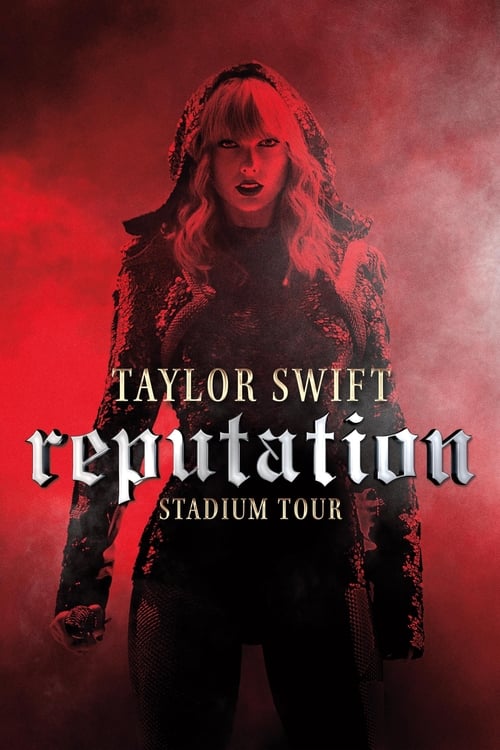
Taylor Swift: Reputation Stadium Tour
An electrifying musical spectacle where defiant energy transforms into intimate vulnerability, painting a dazzling portrait of an artist reclaiming her narrative amidst a stadium of roaring thunder and pyrotechnic magic.
Taylor Swift: Reputation Stadium Tour

Taylor Swift: Reputation Stadium Tour

"And in the death of her reputation, she felt truly alive."

31 December 2018 United States of America 125 min ⭐ 8.3 (412)
Director: Paul Dugdale
Cast: Taylor Swift, Charli xcx, Camila Cabello, David Cook, Amos Heller
Music
Reclaiming the Narrative & Empowerment Public Persona vs. Private Self The Spectacle of Modern Celebrity Finding Love Amidst Chaos

Overview

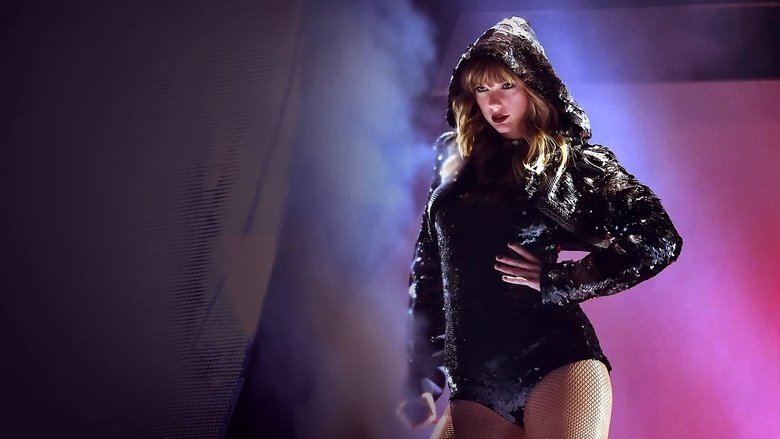
"Taylor Swift: Reputation Stadium Tour" captures the final show of the North American leg of Swift's record-breaking, first all-stadium tour. Filmed at AT&T Stadium in Arlington, Texas, the concert film presents a larger-than-life production celebrating her sixth studio album, Reputation. Directed by Paul Dugdale, the film is a high-energy spectacle featuring elaborate choreography, massive stage designs including giant inflatable snakes, pyrotechnics, and multiple costume changes.

The concert's narrative arc follows the album's journey, starting with themes of defiance, media scrutiny, and the persona forced upon her, before transitioning to a softer, more intimate exploration of finding love and genuine connection amidst the chaos. Swift performs the majority of the Reputation album, interwoven with powerful mashups and reimagined versions of her greatest hits from previous eras, including "Style," "Love Story," "You Belong With Me," and "All Too Well." Joined by supporting acts Charli XCX and Camila Cabello for a performance of "Shake It Off," the film showcases not only the grand scale of the production but also Swift's sincere and heartfelt interactions with her massive, adoring audience.
Core Meaning

The core meaning of "Taylor Swift: Reputation Stadium Tour" is the powerful act of reclaiming one's own narrative. The film documents Taylor Swift's response to a period of intense public scrutiny and vilification, transforming symbols used against her—most notably the snake—into emblems of empowerment and rebirth. The director, Paul Dugdale, captures a meticulously crafted show that is both a bombastic declaration of resilience and an intimate journey toward vulnerability. The film's message is that one can confront public perception, shed a manufactured identity, and emerge stronger and more authentic, finding genuine happiness not in public approval, but in true connections. It's a statement on the death of a manufactured "reputation" and the subsequent freedom and life found in its wake.

Thematic DNA

Reclaiming the Narrative & Empowerment 40%
Public Persona vs. Private Self 25%
The Spectacle of Modern Celebrity 20%
Finding Love Amidst Chaos 15%

Reclaiming the Narrative & Empowerment

This is the central theme of the film. Following a public feud where she was labeled a 'snake,' Swift defiantly embraces the serpent imagery. The entire concert, from the opening montage of negative press clippings to the giant inflatable snakes on stage, is an act of turning a symbol of scorn into one of strength and control. Her speeches to the audience and the thematic progression of the songs from anger to joy illustrate her journey of taking charge of her own story and empowering herself and her fans.

Public Persona vs. Private Self

The concert film explores the dichotomy between the hardened, vengeful public persona presented in the album's first half and the vulnerable, loving private self revealed in the second. Songs like "I Did Something Bad" and "Look What You Made Me Do" represent the public-facing 'character,' while acoustic performances and tracks like "Delicate" and "New Year's Day" offer a glimpse into her genuine feelings and the importance of private relationships away from the spotlight.

The Spectacle of Modern Celebrity

The film puts the nature of modern fame under a microscope. The sheer scale of the production—the 110-foot tall stage, the intricate visuals, the thousands of screaming fans—highlights the larger-than-life world of a global superstar. The opening video, filled with media gossip, directly confronts the culture of celebrity scrutiny, making the entire tour a commentary on the experience of living under a constant public gaze.

Finding Love Amidst Chaos

A significant emotional arc in the film is the discovery of a stable, grounding love during a time of public turmoil. The narrative of the Reputation album, and thus the concert, moves from themes of revenge and defiance to songs about a deep and private love affair. Tracks like "King of My Heart," "Dress," and "Call It What You Want" are presented as the emotional core of the story, suggesting that this relationship was the anchor that allowed her to survive the storm.

Character Analysis

Taylor Swift

Taylor Swift

Archetype: The Transformed Hero/Anti-Hero
Key Trait: Resilience

Motivation

Her primary motivation is to reclaim her own story and artistic identity. She seeks to confront the public narrative head-on, dismantle it, and replace it with her own version of the truth, which involves both righteous anger and profound love. She is also motivated to create an unforgettable, immersive experience for the fans who stood by her.

Character Arc

Taylor Swift's on-stage persona undergoes a clear arc. She begins the show as a defiant anti-hero, cloaked in dark, aggressive imagery, fully embracing the villainous "reputation" crafted for her by the media. As the concert progresses, this hard exterior cracks. Through heartfelt speeches and a shift in the setlist towards more vulnerable love songs, she transitions. The finale sees her not as a vengeful figure, but as a person who has found peace and happiness by letting go of her public reputation, culminating in the final powerful statement: "And in the death of her reputation, she felt truly alive."

Charli XCX

Charli XCX

Archetype: The Ally
Key Trait: Energetic

Motivation

To energize the crowd and support the headline artist, contributing to a key moment of unity and celebration in the show's setlist.

Character Arc

As a supporting act and guest performer, Charli XCX's role is to amplify the show's energy and themes of female camaraderie. Her appearance during "Shake It Off" contributes to a moment of pure, collective joy that stands in contrast to the darker themes of the show's opening act.

Camila Cabello

Camila Cabello

Archetype: The Ally
Key Trait: Supportive

Motivation

To warm up the audience and join Taylor for a celebratory performance that reinforces themes of friendship and resilience against criticism.

Character Arc

Similar to Charli XCX, Camila Cabello serves as a supportive force. Her participation in "Shake It Off" transforms the song into a powerful anthem of solidarity. It visually represents women in the music industry supporting each other, directly countering the media narratives that often pit them against one another.

Symbols & Motifs

The Snake (Ouroboros)

Meaning:

The snake is the film's dominant symbol. Initially used against Swift as an insult, she reclaims it to symbolize transformation, rebirth, and the shedding of an old skin (or reputation). It also represents the danger and perceived villainy attributed to her, which she embraces with a theatrical, self-aware wink. The use of the Ouroboros (a snake eating its own tail) in promotional materials specifically symbolizes cycles, regeneration, and immortality.

Context:

Snake imagery is omnipresent throughout the film. It appears on microphone stands, costumes, and screen visuals. Giant, skeletal snakes rise on stage during "Look What You Made Me Do," and she travels from one B-stage to another on a snake-skeleton-themed transport.

Newspaper Print / Gothic Font

Meaning:

The use of newspaper print and Old English/gothic font in the visuals symbolizes the public headlines and media narratives that defined her public image. It represents the way her story was written by others, often in a sensationalized and dramatic fashion. By using this aesthetic, she co-opts the medium that was used to critique her.

Context:

This font and imagery are used in the opening video montage, on screen visuals, and on tour merchandise. Confetti in the shape of newspaper clippings is blasted into the audience. The final on-screen message, "And in the death of her reputation, she felt truly alive," is displayed in this font.

The Tilted Stage

Meaning:

The tilted, seemingly unstable main stage symbolizes the precariousness and imbalance of her life during the period of public backlash. Lyrically referenced in "Look What You Made Me Do" ("I don't like your tilted stage"), it's a direct nod to the public drama and her feeling that the playing field was unfairly slanted against her.

Context:

The main stage itself is a massive, angular structure that appears to be off-kilter. This is a deliberate production design choice that visually reinforces the themes of chaos and instability before she finds her footing in the latter half of the show.

Memorable Quotes

A couple of years ago, someone called me a 'snake' on social media, and it caught on. And then a lot of people were calling me a lot of things on social media. And I went through some really low times for a while because of it. I went through some times when I didn't know if I was gonna get to do this anymore.

— Taylor Swift

Context:

Spoken to the stadium audience in a quiet, intimate moment before performing a song on one of the B-stages. This speech serves as a turning point in the show, transitioning from the aggressive, defiant opening to a more reflective and personal tone.

Meaning:

This quote is the emotional centerpiece of the film's narrative. It directly addresses the real-world events that inspired the Reputation era, providing context for the snake symbolism. It's a moment of raw vulnerability that explains the 'why' behind the entire spectacle, connecting her personal struggle to the themes of the show and forging a deeper bond with her audience.

And in the death of her reputation, she felt truly alive.

— Narrator/On-screen text

Context:

This phrase appears in Old English font on the giant screens as the final visual of the concert, after the last song has ended and Swift has left the stage.

Meaning:

This is the film's thesis statement. It perfectly encapsulates the core message that letting go of the public's perception and a carefully constructed image led to personal freedom and authentic happiness. It's the final, powerful punctuation mark on her journey of transformation.

1, 2, 3... let's go bitch!

— The Audience

Context:

Shouted by the entire stadium crowd during a pause in the first verse of the song "Delicate." Swift acknowledges it with a smile and a count on her fingers, making it a collaborative moment between artist and audience.

Meaning:

While not a quote from Swift herself, this fan-chanted line became an iconic and integral part of the show. It demonstrates the deep, interactive relationship between Swift and her fans. The chant, which originated online and was adopted by the entire stadium audience, symbolizes a shared, defiant joy and an in-joke that cements the feeling of community within the fanbase.

Philosophical Questions

Can an identity forged in the public eye ever be truly authentic?

The film grapples with the concept of a 'reputation' as an identity created by others. Swift's journey is about destroying this external construct and presenting what she claims is her true self. This raises the question of whether authenticity is possible for someone whose life is a public performance. Is the 'new Taylor' truly more real, or is she another, more carefully curated version designed to be perceived as authentic? The film invites the audience to consider the lines between persona, personality, and performance in the age of social media.

What is the relationship between art, artist, and audience in shaping a narrative?

The film is a powerful example of an artist using their platform to directly engage with and alter their public narrative. However, it also highlights the audience's role. The fan chant during "Delicate" and the communal energy of the stadium show that the narrative is co-created. The film explores whether an artist's story is solely their own to tell, or if it becomes a shared text, interpreted, and even altered by the very fans who consume it. The tour's success demonstrates that when the artist's and audience's desired narratives align, the cultural impact is immense.

Alternative Interpretations

While the dominant reading of the film is a story of authentic self-reclamation, an alternative interpretation views it as an even more sophisticated performance of identity. This perspective suggests that the 'vulnerable Taylor' revealed in the second half of the show is not necessarily the 'real' Taylor, but rather another masterfully constructed persona. According to this view, Swift is not simply shedding a reputation but demonstrating her ultimate control over it by being able to perform both the villain and the redeemed hero with equal conviction. The entire show can be seen as a meta-commentary on the nature of celebrity itself—that authenticity is just another role to be played for the audience. The transition from vengeful pop diva to girl-next-door with a piano isn't a reveal of her true self, but a showcase of her versatility as a performer, proving she can inhabit any narrative, including the one about her own supposed realness.

Cultural Impact

"Taylor Swift: Reputation Stadium Tour" arrived at a pivotal moment in pop culture, capping off one of the most discussed and transformative eras of Swift's career. The Reputation album was created in the wake of a highly public feud and a subsequent social media backlash where Swift was ubiquitously labeled a 'snake'. Instead of retreating, Swift went silent for a year before re-emerging with an album and tour that fully co-opted the serpentine imagery, turning a tool of public shaming into a symbol of personal empowerment. This act of narrative reclamation became a significant cultural talking point, praised as a masterclass in controlling one's public image in the digital age.

Critically, the film and the tour were lauded for their immense scale, theatricality, and production value, setting a new benchmark for stadium tours. Critics praised Paul Dugdale's direction for capturing not just the spectacle, but also the intimate connection Swift maintained with her audience, even in a venue holding tens of thousands. The tour shattered box office records, becoming the highest-grossing tour in U.S. history at the time, cementing Swift's status as a dominant force in live music. For audiences, the show became a communal experience of catharsis and celebration, particularly for fans who felt they had weathered the public backlash alongside her. In pop culture, the 'Reputation era' is remembered as a bold, defining chapter that showcased Swift's resilience and her ability to transmute personal adversity into a blockbuster artistic and commercial statement.

Audience Reception

Audience reception for "Taylor Swift: Reputation Stadium Tour" was overwhelmingly positive. Fans who attended the tour live and those who experienced it through the Netflix film praised it as a spectacular and emotionally resonant experience. The production value was a major point of praise, with viewers citing the massive stage, stunning visuals, choreography, and pyrotechnics as creating an unforgettable show. Many viewers felt a powerful sense of connection and community, both with Swift and with fellow fans, celebrating the communal catharsis of the show's themes. Swift's showmanship and vocal performance were consistently lauded, with many noting she sounded even better live than on the album. The emotional core of the concert—her vulnerable speeches and the narrative arc from defiance to joy—was frequently highlighted as a powerful and inspiring message of resilience. Criticism was minimal and often directed at the inherent nature of a concert film (i.e., not being the same as a live experience) or from those who were not fans of the Reputation album's musical style to begin with. Overall, the audience verdict was that the film was a perfect encapsulation of a record-breaking, career-defining tour.

Interesting Facts

  • The film was recorded during the second show at AT&T Stadium in Arlington, Texas on October 6, 2018, which was the last stop on the North American leg of the tour.
  • The Reputation Stadium Tour broke multiple records, becoming the highest-grossing US and North American tour in history at the time, grossing over $345 million from 2.88 million attendees.
  • The main stage was 110 feet tall, and the video screens were so massive that the floor of the stage was also a screen, creating an immersive visual experience.
  • To travel quickly from the main stage to the two B-stages out in the audience, Swift used a hidden transport system under the stage nicknamed the "rocket sled."
  • The tour's production was a massive undertaking, with the stage's decking alone being equivalent to that of ten arena tours.
  • A special meet-and-greet area was set up backstage called "The Rep Room," where Swift would meet fans handpicked from the audience after the show.
  • The film features a pre-recorded cameo from comedian Tiffany Haddish during "Look What You Made Me Do," reciting the line, "I'm sorry, the old Taylor can't come to the phone right now."
  • The tour was Swift's first all-stadium tour, a significant step up in scale from her previous arena tours.

Easter Eggs

During the mashup of "Bad Blood" and "Should've Said No," Swift plays a guitar from her early country days.

This is a deliberate nod to her past. By blending a song from her pop-focused 1989 album with one of her earliest country hits from her 2006 debut album, she connects the 'new Taylor' with the 'old Taylor.' It signifies that while she has evolved, she hasn't erased her history, and the themes of betrayal in her music have been a long-standing part of her songwriting.

The main stage is shaped like an 'X'.

The X-shaped stage is a visual reference to the lyrics in the song "Getaway Car," where she sings, "X marks the spot where we fell apart." This detail in the production design ties the physical space of the performance directly into the lyrical narrative of the album.

In the opening video montage, the word "Reputation" is formed from various media headlines and clips about her.

This is a literal and figurative representation of the album's core theme. It shows how her "reputation" was constructed by outside forces and the media. The film then spends the next two hours deconstructing and reclaiming that very word on her own terms.

⚠️ Spoiler Analysis

Click to reveal detailed analysis with spoilers

Frequently Asked Questions

Explore More About This Movie

Dive deeper into specific aspects of the movie with our detailed analysis pages

Comments (0)

Leave a comment

No comments yet. Be the first to share your thoughts!