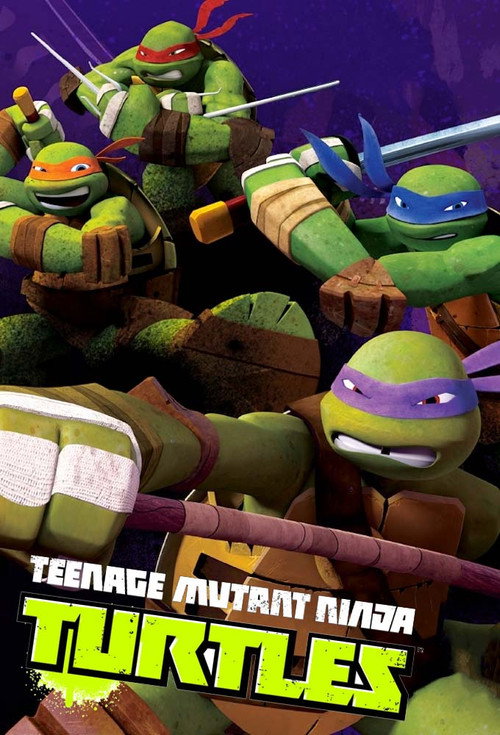
Season 1. The brothers leave the lair for the first time and immediately collide with the Kraang, who are abducting April O'Neil and her father Kirby — establishing that the aliens have a specific, unexplained interest in the O'Neil bloodline. The season builds the Foot Clan threat and, crucially, reveals the Splinter–Shredder backstory: Hamato Yoshi and Oroku Saki were rivals, and Shredder's adopted daughter Karai is in fact Yoshi's biological daughter, Miwa. That single fact poisons every subsequent alliance in the series.
Season 2. The betrayal payload detonates. Shredder allies with the Kraang — helping them take New York in exchange for finding Karai and destroying the Turtles — and Kraang Subprime, the Kraang's master spy, is revealed to have been posing all along as Irma, April's best friend. The lair is discovered and the invasion begins: Splinter is defeated by Shredder, Leonardo is badly wounded by the Foot, and the population of New York is mutated into human-Kraang hybrids. The heroes lose, unambiguously, and flee the city.
Season 3. Exile at the O'Neil farmhouse forces the family to rebuild around a broken Leonardo. Karai's attempt to act on the truth about her parentage ends catastrophically for her. The season closes with the two-part 'Annihilation: Earth!', in which the Kraang and the Triceratons turn Earth into a battlefield, producing the series' most astonishing image — Splinter and Shredder fighting side by side — before ending on the cliffhanger of the planet's destruction.
Season 4. With Earth gone, the Turtles are thrown into deep space, eventually reversing the catastrophe and returning home to a restored world and an unresolved feud. The season's final two episodes deliver the series' true climax: in 'Requiem', Shredder kills Splinter — a death the show never undoes — and in 'Owari' ('end'), with Karai incapacitated, the Turtles, April and Casey infiltrate Super Shredder's lair and finish Oroku Saki once and for all. The hidden meaning of the whole arc becomes clear here: the war was always between two fathers, and the children only inherit peace once both are gone.
Season 5 ('Tales of the Teenage Mutant Ninja Turtles'). With the central conflict closed, the twenty-episode final season becomes an anthology of legends, alternate timelines and multiversal excursions, including the crossover 'Wanted: Bebop and Rocksteady', in which the 1987 Shredder and Krang recruit the 2012 Bebop and Rocksteady and the 1987 Raphael protests that they cannot be killed because 'this is a KIDS' show'. That joke is the series' own self-assessment: it spent five years proving that a kids' show could, in fact, let things end. The series concluded on November 12, 2017.
What only lands in retrospect: the pilot's 'first time outside' framing is the beginning of a five-season argument about whether the Turtles can survive adulthood; Irma's presence in season one is a trap laid a year in advance; and Michelangelo's refusal to stop joking, which reads as comic relief early on, is revealed by the end to be the deliberate work of keeping a grieving family alive.