Skip to content
Teenage Mutant Ninja Turtles
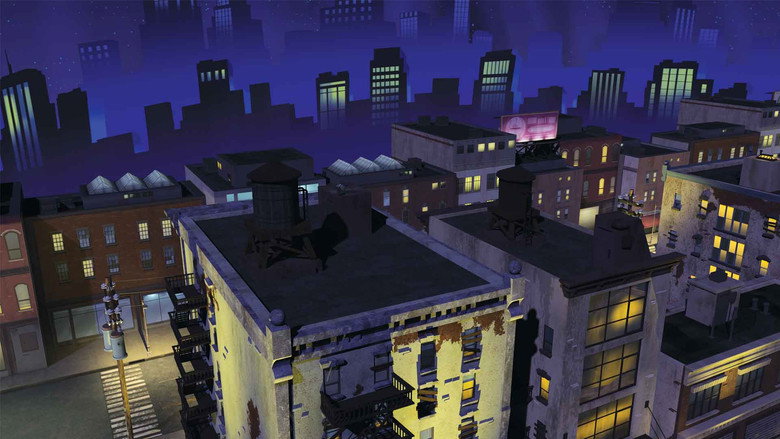
Neon-lit sewers and rooftop moonlight: four brothers in shells grow from goofy rookies into warriors, where every laugh hides a heartbeat and every victory costs something.
Teenage Mutant Ninja Turtles

Teenage Mutant Ninja Turtles

28 September 2012 — 12 November 2017 United States of America 5 season 124 episode Ended 8.3 (803)

Cast: Rob Paulsen, Sean Astin, Greg Cipes, Mae Whitman, Kelly Hu

Animation Sci-Fi & Fantasy Action & Adventure Comedy Kids Brotherhood and found family Growing up and the cost of responsibility Identity, mutation and monstrousness Revenge versus honour Loyalty, betrayal and the pull of clan

Overview

Developed by Ciro Nieli, Joshua Sternin and Jennifer Ventimilia for Nickelodeon and based on the characters created by Kevin Eastman and Peter Laird, this CGI-animated incarnation of Teenage Mutant Ninja Turtles ran from September 28, 2012 to November 12, 2017 across five seasons and 124 episodes. It begins at the most human possible starting point: four mutant teenagers step out of their lair for the very first time, blunder straight into a plot by the alien Kraang who are abducting April O'Neil and her father Kirby, and discover that the surface world is far bigger and far more dangerous than their sensei ever let on.

From that first night, the series widens in deliberate, season-by-season steps. Season one is a street-level story of a new team learning to be a team while the Foot Clan and the Kraang close in. Season two escalates into open war, culminating in a full alien invasion of New York in which Shredder allies with the Kraang, the lair is exposed, Splinter is defeated and the city's people are mutated into Kraang hybrids. Season three sends the brothers into exile and then into a three-way conflict between Earth, the Kraang and the Triceratons that forces the unthinkable — Splinter and Shredder fighting side by side. Season four carries the Turtles into deep space and back for the final reckoning with Oroku Saki, and the fifth and final season, retitled Tales of the Teenage Mutant Ninja Turtles, becomes a looser twenty-episode anthology of legends, futures and multiversal detours, including a celebrated crossover with the 1987 cartoon Turtles.

Underneath the mutagen and the pizza jokes, the show is a story about a family that keeps having to redefine itself. Leonardo has to earn the leadership he was handed, Raphael has to learn that anger is not the same as strength, Donatello learns that intelligence cannot solve grief, Michelangelo learns that being the heart of a group is a job, and April and Casey learn what it costs to love people who can never walk in daylight. It is broad, funny, merchandise-friendly children's television that nevertheless keeps raising the stakes until the losses are permanent.
Core Meaning

The series argues that family is a choice you keep making, especially after it breaks. Everything in the show's structure supports that thesis: it opens with four brothers who have never been allowed outside and ends, five seasons later, with a team that has lost its father, lost its city, and briefly lost its whole planet — and is still standing because the four of them kept choosing each other.

Its second argument is about growing up as a series of irreversible doors. Most children's action cartoons reset; this one refuses to. Mutations stick, alliances curdle, the Earth is actually destroyed, and Splinter's death is permanent. By letting consequences accumulate, the creators told their young audience something unusually honest: you do not get to be a kid forever, competence is earned through failure, and the reward for growing up is not safety but responsibility.

Finally, it is a story about being a monster in the eyes of the world and choosing to protect it anyway. The Turtles save a city that would scream if it saw them. The show's answer to that loneliness is not acceptance from the world but the found family that already loves them — and, in April, Casey and eventually Karai, proof that the circle can widen.

Thematic DNA

Brotherhood and found family 30%
Growing up and the cost of responsibility 22%
Identity, mutation and monstrousness 18%
Revenge versus honour 17%
Loyalty, betrayal and the pull of clan 13%

Brotherhood and found family

The engine of every season. Season one tests whether four very different teenagers can form a unit at all; season two fractures them under the pressure of real war and a lair that is no longer safe; season three exiles them to a farmhouse where, stripped of the city, they are forced to be nothing but a family nursing a wounded brother. Seasons four and five widen the circle — April, Casey, Karai, even reformed enemies — and then test it with the permanent loss of Splinter, the father whose absence forces the brothers to become each other's home.

Growing up and the cost of responsibility

The show is explicitly about teenage mutants. Leonardo's arc is the clearest expression: a boy playing at being a leader because he watched a samurai show, who is physically broken in the season two invasion and has to rebuild himself into someone who can actually carry the burden. Raphael's temper, Donatello's overconfidence in technology and Michelangelo's refusal to take anything seriously are all framed as adolescent defences that the escalating war gradually strips away. By the later seasons the jokes are still there, but the people telling them have been through a planetary extinction event.

Identity, mutation and monstrousness

Mutagen is the show's central metaphor and it cuts both ways: it made the heroes, and it is also the thing that turns ordinary New Yorkers into victims. The Turtles can never pass as human, and the series keeps holding up mirrors — Karai, Splinter, Bebop and Rocksteady, the Kraang-mutated citizens of the invasion — to ask whether a monstrous body implies a monstrous self. Over five seasons the answer shifts from fear of exposure toward something closer to self-acceptance, with the Turtles defending a world that would never welcome them.

Revenge versus honour

The Splinter–Shredder feud is the show's tragic spine, and it is deliberately structured as two fathers who cannot let go. Shredder's vendetta consumes his clan, his adopted daughter Karai, and eventually his own humanity as he becomes Super Shredder. Splinter's more disciplined vengeance still costs him dearly. The lesson is delivered structurally rather than in dialogue: the characters who chase revenge are hollowed out, while the ones who choose duty survive — and the third-season alliance of Splinter and Shredder against the Triceratons proves that even mortal enemies can briefly choose something larger than their grudge.

Loyalty, betrayal and the pull of clan

Nearly every major turn hinges on someone's allegiance: Karai torn between the man who raised her and the father she never knew, Kraang Subprime living for seasons inside April's life disguised as her best friend Irma, Shredder's alliance of convenience with the Kraang, and the recurring question of what the Foot Clan owes a leader who has stopped serving anything but himself. The series treats loyalty as something that must be earned continually rather than inherited, and its most emotional beats are conversions — enemies who come over, and friends who are revealed never to have been friends at all.

Character Analysis

Raphael

Sean Astin

Archetype: Hot-headed antihero / the challenger Key Trait: Fury that turns out to be love with nowhere to put itself

Motivation

Initially proving he is the strongest and being taken seriously; this curdles into a need to keep everyone he loves from being hurt again, which is what ultimately makes him reliable rather than reckless.

Character Arc

Begins as the brother most likely to solve a problem with his fists and most likely to resent Leonardo's authority — season one is largely a running argument about who should be leading. The war years force a slow re-evaluation: when Leonardo is gravely wounded in the Kraang invasion and the family flees the city, Raphael is the one who has to hold the group together, and he discovers that rage is a poor substitute for responsibility. By the later seasons he is the team's blunt conscience, fiercely protective rather than merely furious, and his loyalty to his brothers is the trait the show returns to in its darkest hours.

Donatello

Rob Paulsen

Archetype: The inventor / reluctant rationalist Key Trait: Brilliance shadowed by self-doubt

Motivation

Understanding and controlling a world that mutated him without asking; later, protecting his family with knowledge and accepting the things knowledge cannot repair.

Character Arc

Starts as the gadget-maker whose confidence lives entirely in his technology and whose social life is one long unrequited crush on April O'Neil. Across the seasons the show systematically tests the limits of cleverness: retro-mutagen does not fix everything, his machines fail at the worst moments, and no invention can undo the losses of the fourth season. What grows in their place is emotional maturity — he stops treating April as a problem to be solved and becomes a genuine friend, and his intellect becomes a tool the team trusts rather than a way of being the smartest person in the sewer.

All 5 characters and cast

Symbols & Motifs

Mutagen (the glowing green ooze)

Meaning:

Transformation without consent. Mutagen is change itself — it is what gave the Turtles their lives and their exile in the same instant, and what the Kraang intend to use to remake an entire planet. It symbolises the adolescent terror of a body that becomes something you did not ask for.

Context:

Present from the origin story onward, it escalates from a plot device (mutant-of-the-week canisters in season one) to an instrument of genocide in the season two invasion, when the population of New York is mutated into Kraang hybrids. Retro-mutagen — the cure — becomes the moral counterweight: the Turtles spend seasons trying to undo what made them.

The sewer lair versus the rooftops

Meaning:

The two halves of adolescence: the home you are hidden in and the world you are not allowed to enter. Descending is safety and childhood; climbing is risk, agency and adulthood.

Context:

The pilot is literally about leaving the lair for the first time. The lair's violation during the Kraang invasion is the series' true loss-of-innocence moment, and the farmhouse exile that follows in season three works precisely because it is neither sewer nor skyline — a limbo where the family has to rebuild before it can climb again.

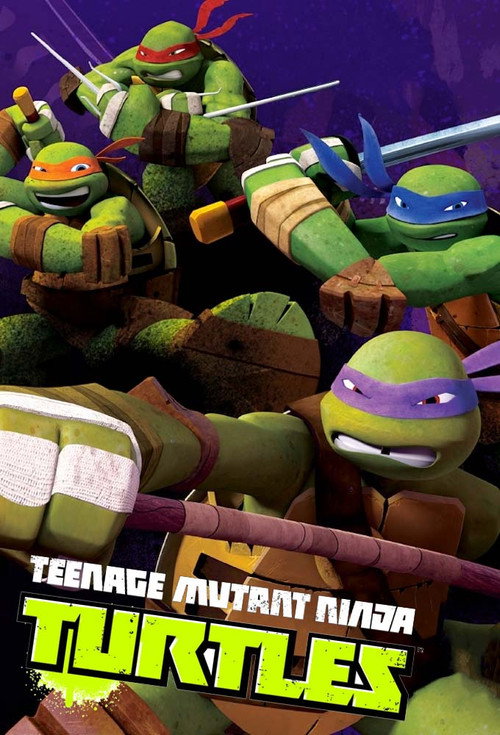
Masks and coloured bandanas

Meaning:

Individuality inside a collective. Four identical bodies, four colours: the bandana is the show's shorthand for the self that persists inside the team, and also for concealment — the ninja's face is never the face the world sees.

Context:

A merchandising necessity turned into a storytelling grammar: the colour coding lets the animation stage group fights readably, while the Foot Clan's faceless uniformity and Shredder's total enclosure in metal present the sinister opposite — a clan where no one is allowed to be anyone.

Shredder's armour and the Super Shredder form

Meaning:

Revenge as self-mutilation. Oroku Saki's blades are worn on the outside; by the time he mutates into Super Shredder in the fourth season, the man has been entirely consumed by the weapon he made of himself.

Context:

The armour grows more baroque and less human across the series, tracking his moral decay. The season four climax, in which the Turtles infiltrate Super Shredder's lair to finish Oroku Saki, makes the visual metaphor literal: there is no longer a person left inside to reason with.

Pizza

Meaning:

The stubborn survival of ordinary joy. Pizza is the one thing the Turtles share with the surface world — a small, cheap, communal pleasure that says they are teenagers before they are weapons.

Context:

Used constantly as comic punctuation, but weaponised emotionally in the darker arcs: a shared slice after a catastrophe is the show's standard signal that the family is still intact. Michelangelo's culinary experiments turn it into a running character note.

The word 'Owari'

Meaning:

Japanese for end — the series' acknowledgement that some stories genuinely finish. It marks the moment the show stops deferring consequences.

Context:

Used as the title of the fourth-season finale, in which the Turtles move against Oroku Saki once and for all in the wake of their father's death. Placing that word on an episode of a children's cartoon is the clearest statement of the show's willingness to let things be permanent.

Memorable Quotes

Booyakasha!
— Michelangelo

Context

Michelangelo's catchphrase throughout all five seasons, typically yelled as he leaps into a fight. It became the incarnation's most quoted line and its clearest bit of branding.

Meaning

The series' signature battle cry and its thesis in one nonsense word: these are teenagers first and ninjas second. Where other incarnations shout something triumphant, Mikey shouts something silly, and the show never apologises for it.

Cowabunga!
— Michelangelo

Context

Used sparingly across the run alongside 'Booyakasha', usually at moments of pure surf-culture exuberance; the interplay between the two catchphrases is one of the ways the series negotiates between nostalgia and reinvention.

Meaning

A deliberate nod to the franchise's own history — the 1980s catchphrase resurfacing in a 2012 show, signalling that this version knows exactly which shoulders it stands on.

All 3 quotes

Episode Highlights

Rise of the Turtles

S1E1

The premiere sends the brothers out of their lair for the first time on their fifteenth mutation day, and they walk straight into the Kraang abducting April O'Neil and her father Kirby. It establishes the entire five-season engine in twenty minutes: an untested team, a leader nobody voted for, an alien conspiracy, and the human family that will bind the Turtles to the surface.

Significance:

Everything the series later deconstructs — Leonardo's claim to leadership, Raphael's resentment, April's role as rescue-target — is set up here so it can be dismantled over five years.

The Invasion

S2E26

The second-season finale is the show's point of no return. Shredder's alliance with the Kraang pays off, Kraang Subprime — who has spent the season living as April's best friend Irma — leads the enemy to the lair, Splinter is defeated by Shredder, Leonardo is gravely wounded by the Foot, and the population of New York is mutated into human-Kraang hybrids.

Significance:

The moment the series stopped resetting. The heroes lose outright: the home is gone, the city is lost and the leader is broken, which reframes everything that follows as recovery rather than adventure.

Annihilation: Earth!

S3E26

The two-part third-season finale catches Earth between the Kraang and the Triceratons and forces the most extraordinary alliance in the show's history — Splinter and Shredder fighting on the same side. It ends on a cliffhanger of planetary scale.

Significance:

By actually destroying the Earth, the series bought itself the freedom to relocate to deep space for the fourth season and proved it would follow its escalation to the logical conclusion instead of pulling back.

Requiem

S4E25

The penultimate fourth-season episode delivers the loss the show had been circling since the pilot: the death of Splinter at the hands of Shredder, a death the series refuses to undo.

Significance:

Master Splinter's permanent death is the boldest decision in the run. It removes the family's centre of gravity and forces the four brothers to become the adults of their own story for the remaining episodes.

Owari

S4E26

With their father dead and Karai incapacitated, the Turtles, April and Casey infiltrate Super Shredder's new lair to end Oroku Saki once and for all, whatever it costs. The title is Japanese for 'end'.

Significance:

The true narrative finale of the main storyline — it closes the Splinter–Shredder feud that had driven four seasons, leaving the anthology-style fifth season free to explore legends, futures and alternate worlds.

Wanted: Bebop and Rocksteady

S5E18

The celebrated multiversal crossover in which the 1987 Shredder and Krang recruit the 2012 Bebop and Rocksteady, deciding they are considerably more effective than their own bumbling counterparts. It is packed with self-aware humour, including the 1987 Raphael protesting that he cannot be killed because 'this is a KIDS' show'.

Significance:

A love letter to thirty years of the franchise and one of the highest-rated episodes of the run (8.2 on IMDb), it crystallised the fifth season's role as a victory lap that plays with TMNT's own history rather than continuing its war.

Philosophical Questions

Is family something you are born into or something you build?

The series answers structurally rather than rhetorically. The brothers share no biological kinship with Splinter; Karai is bound by blood to one father and by upbringing to another, and her arc turns on choosing which claim is real. April and Casey are outsiders who become family by repeated choice. When Splinter dies, the show's thesis is put to its hardest test: the family survives because it was never dependent on him existing — only on the four of them continuing to choose each other.

Does a monstrous body make a monstrous person?

Mutagen makes heroes and villains indiscriminately, and the show keeps pairing them: the Turtles against Bebop and Rocksteady, Splinter against Shredder, and an entire city of citizens mutated into Kraang hybrids who are victims rather than enemies. The series consistently locates monstrousness in choices, not chemistry — Oroku Saki is at his most monstrous while still human, and most terrifying once his mutation has finally caught up with what he already was.

When does justice become revenge?

Splinter and Shredder pursue the same feud with different vocabularies, and the show refuses to let either off easily. The extraordinary moment in 'Annihilation: Earth!' where the two fight side by side against the Triceratons demonstrates that the grudge was always a choice; the fact that they return to it afterwards shows how expensive that choice is. By 'Owari', with Splinter dead, the Turtles have to decide whether to finish the vendetta or something larger than it.

What do you owe a world that would reject you on sight?

The Turtles protect a city that has never seen them and would not welcome them. The invasion arc pushes this to its limit: they save the very people who would flee from them, and their reward is exile to a farmhouse. The show's answer is that duty is not contingent on gratitude — but it also grants them April and Casey, so the argument is never purely ascetic.

Can you grow up without losing what made you worth saving?

Each brother's arc trades something away: Raphael his simple anger, Donatello his faith in cleverness, Leonardo his boyish idea of leadership. Michelangelo is the control case — the one who insists on staying funny — and the series treats his stubborn joy not as immaturity but as the thing that keeps the others human through a planetary catastrophe and the death of their father.

Alternative Interpretations

Where does the series actually end? The most common debate is whether the real finale is 'Owari' — the fourth-season conclusion whose title literally means 'end', in which the Turtles close the Shredder story after Splinter's death — or the twenty episodes of 'Tales of the Teenage Mutant Ninja Turtles' that follow. One reading treats season five as an epilogue: the war is over, so the show becomes a campfire circle of legends, futures and alternate worlds. The less generous reading, common in fan retrospectives, treats it as a coda tacked onto a story that had already finished, which is why 'Owari' is so often called 'sort of the show finale'.

Full ending explanation

Cultural Impact

Arriving in 2012, the series was Nickelodeon's flagship relaunch of the property after acquiring it, and it landed at a moment when American action animation was being reshaped by serialised, emotionally continuous storytelling. Its answer was to take a franchise best known for pizza jokes and give it a genuine five-season arc with permanent consequences — a full alien invasion, a destroyed Earth, a dead father figure — while never abandoning the slapstick that sells toys. It was also the first TMNT television series rendered in CGI, and its stylised, cel-shaded-looking approach to 3D became a reference point for how to translate comic-book linework into computer animation.

Critically and among fans it has aged upward. Retrospectives such as CBR's have argued it is 'better than you remember' and 'a high mark for the series that respected its comic book source material', and it is routinely bracketed with the 2003 series as one of the two strongest modern TMNT adaptations. Commentators single out its willingness to treat a young audience with respect — combining frequent humour and clear moral lessons with 'truly compelling moments' — and its Foot Clan storyline is frequently described as the best-executed version of that feud in any incarnation.

Its legacy is also visible in what came after. The show's commitment to distinct, exaggerated personalities for each brother and to a deliberately teenaged voice paved the way for the stylistic risk-taking of 'Rise of the Teenage Mutant Ninja Turtles' and the 2023 film 'Mutant Mayhem'. Retrospectives such as CBR's 'TMNT: 16 Reasons The 2012 Series Ruled' argue it is the template future reboots should study. Showrunner Ciro Nieli has said publicly that he believes the series will return someday — a sentiment that persists precisely because the fanbase has never really let it go.

Audience Reception

Seasons one and two established the show's reputation quickly. Audiences responded to the sharply differentiated personalities, the comedy-forward tone and the CGI look, and the second season's escalation into the full Kraang invasion — with the lair exposed, Splinter defeated, Leonardo wounded and New Yorkers mutated — is widely cited as the moment fans realised the series would take real risks. The Foot Clan storyline in particular is frequently described in fan retrospectives as 'top tier'.

Season three, with the farmhouse exile, the Triceraton war and the planet-destroying cliffhanger of 'Annihilation: Earth!', is generally regarded as the series' peak, and the brief Splinter-and-Shredder team-up became one of its most discussed sequences. Season four split opinion: the deep-space material was praised for ambition but criticised for drifting from the street-level identity that made the show distinctive, while its closing pair — 'Requiem' and 'Owari' — drew some of the strongest emotional reactions of the entire run, and Splinter's permanent death remains the show's most debated decision.

The fifth season, 'Tales of the Teenage Mutant Ninja Turtles', is the most contested. Its anthology structure was welcomed by viewers who wanted variety and dismissed by those who felt the story had effectively ended with 'Owari'. The clear consensus high point is the 1987 crossover 'Wanted: Bebop and Rocksteady', which holds an 8.2 rating on IMDb and is routinely named among the best episodes of the series.

The recurring criticism across the run is filler: a substantial number of viewers feel the 26-episode seasons padded their serialised arcs with disposable mutant-of-the-week instalments. The verdict has nonetheless improved over time. Retrospectives describe it as an underrated gem that respected its source material and treated children as capable of handling loss, and it now sits alongside the 2003 series in most rankings of the best TMNT adaptations — a show whose ambitions occasionally exceeded its format, but whose best hours are among the franchise's finest.

Interesting Facts

  • The series was developed for Nickelodeon by Ciro Nieli, Joshua Sternin and Jennifer Ventimilia, based on the characters created by Kevin Eastman and Peter Laird, and ran from September 28, 2012 to November 12, 2017.
  • It totals 124 episodes across five seasons: 26 episodes each for seasons one through four, and 20 for the final season.
  • The fifth season was retitled 'Tales of the Teenage Mutant Ninja Turtles' and ran from March 19 to November 12, 2017, shifting toward a looser anthology format.
  • Season four had an unusually long broadcast window, stretching from October 25, 2015 all the way to February 26, 2017.
  • Showrunner Ciro Nieli came to the project from a strong action-animation background, having previously worked on 'Super Robot Monkey Team Hyperforce Go!', 'Teen Titans', 'Transformers Animated' and 'The Avengers: Earth's Mightiest Heroes'.
  • Nieli later compiled 'The Art of Teenage Mutant Ninja Turtles', a behind-the-scenes book of design work and sketches covering his eight years on the show.
  • In a Den of Geek interview, Nieli expressed his belief that the series 'will come back someday'.
  • The show was animated in CGI rather than traditional 2D, a first for a Teenage Mutant Ninja Turtles television series.
  • Veteran voice actor Rob Paulsen, who voices Donatello here, had previously voiced Raphael in the original 1987 cartoon — a rare case of an actor returning to the franchise in a different Turtle role.
  • The series killed Master Splinter permanently and destroyed the planet Earth outright, two decisions almost unheard of in a merchandising-driven children's action cartoon.

Easter Eggs

The 1987 cartoon crossover in the fifth season's 'Wanted: Bebop and Rocksteady'

The 1987 Shredder and Krang cross over to hire the 2012 versions of Bebop and Rocksteady, explicitly because their own henchmen are hopeless. It is a direct, affectionate acknowledgement of the incarnation that made the Turtles a household name.

1987 Raphael's line, 'You can't kill us! This is a KIDS' show!!'

A deliberate fourth-wall break contrasting the consequence-free tone of the 1987 series with the 2012 show's willingness to kill characters — a joke that only works if you know both shows.

Rob Paulsen crossing Turtles

Paulsen voiced Raphael in the 1987 cartoon and Donatello here. His presence is itself a generational easter egg, and it becomes doubly pointed in the crossover episodes where the two eras share a screen.

Kraang Subprime hiding in plain sight as April's best friend Irma

Irma was a beloved human supporting character in the 1987 cartoon. Recasting that familiar name as the Kraang's master spy is a long-game trap aimed squarely at viewers who thought they knew who was safe.

The Japanese title 'Owari' for the fourth-season finale

'Owari' means 'end' — a bilingual wink that tells attentive viewers, before a single scene plays, that this episode is meant as the conclusion of the show's central story.

Frequently Asked Questions

Explore More About This Movie

Dive deeper into specific aspects of the movie with our detailed analysis pages

Comments (0)

Leave a comment

No comments yet. Be the first to share your thoughts!

Similar Movies