Skip to content
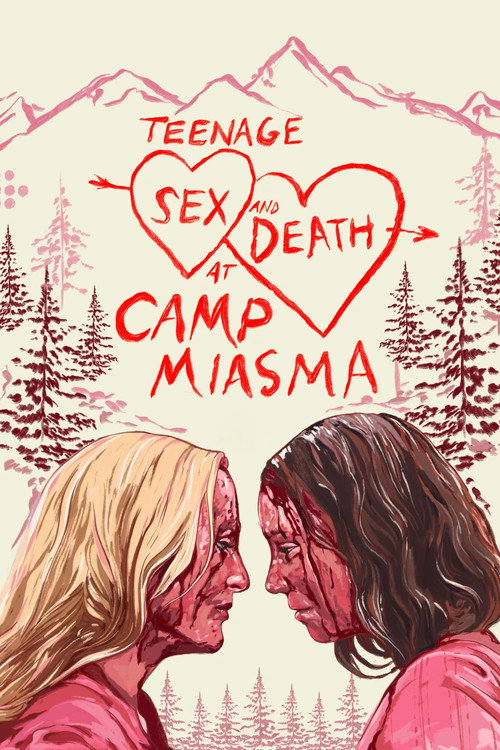
Teenage Sex and Death at Camp Miasma
A blood-soaked, sapphic slasher reverie where an abandoned summer camp becomes a haunted film set, and desire stalks its lovers like a masked killer through the pines.
Teenage Sex and Death at Camp Miasma

Teenage Sex and Death at Camp Miasma

"Blood. Lust."

06 August 2026 United Kingdom 112 min 6.4 (209)

Director: Jane Schoenbrun

Cast: Hannah Einbinder, Gillian Anderson, Amanda Fix, Arthur Conti, Eva Victor

Comedy Romance Horror Sex and cinema Gender identity and transition Queer desire and repression Legacy, fandom and the franchise machine Faded stardom
Budget: $8,000,000
Box Office: $8,525,000

Overview

Kris (Hannah Einbinder) is a young queer filmmaker who has been honored at Sundance. She is hired to reboot Camp Miasma, a moldering slasher franchise. Before she starts, she goes looking for Billy (Gillian Anderson), the actress who played the original final girl. Billy now lives as an eccentric recluse at the abandoned camp where the old movies were shot.

What begins as a casting trip slowly turns into a courtship. From there it becomes something the film deliberately never spells out. Schoenbrun sets clips from the fictional 1980s-style original, including a decapitated punk whose head exhales pot smoke, against the charged, uneasy relationship between the two women.

The film is a metatextual horror-comedy-romance. It looks at slasher tropes, the "final girl," gender identity and repression, and how the movies we watch can shape who we become.

Core Meaning

Critics note that despite its title, the film is less about sex and death than about sex and cinema. It is interested in how both have an uncanny power to get inside us and change us for good. Schoenbrun blurs the line between lived experience and the media we consume. The slasher genre, with its punishment of desire and its surviving "final girl," becomes a way to talk about gender, queerness and repression.

Reviewers have also called it a movie about getting out of your head and into your body. One reading focuses on learning to enjoy sex after transition, after years of trying to have good sex in the wrong body. The blood-soaked, euphoric ending treats the genre's violence as release and liberation rather than punishment.

Thematic DNA

Sex and cinema 25%
Gender identity and transition 25%
Queer desire and repression 20%
Legacy, fandom and the franchise machine 15%
Faded stardom 15%

Sex and cinema

Kris's reboot project and her growing fixation on Billy tie desire to moviemaking. Films are shown as able to penetrate and transform the people who watch them and the people who make them.

Gender identity and transition

Schoenbrun uses the final girl trope to explore gender and embodiment. Critics point to a thread about finding sexual pleasure after transition.

Queer desire and repression

The courtship between Kris and Billy is a sapphic, erotic relationship. It pushes against the repression built into slasher conventions, where desire usually gets people killed.

Legacy, fandom and the franchise machine

The job of rebooting an old franchise raises questions about what we inherit from beloved but troubled media. This includes the transphobic baggage Kris and Billy talk about.

Faded stardom

Billy is written as a modern Norma Desmond, a recluse whose life still revolves around her one moment of acclaim.

Character Analysis

Kris

Hannah Einbinder

Archetype: Seeker / reluctant hero Key Trait: Obsessive, self-aware creativity

Motivation

To make the new Camp Miasma and cast the original final girl, which slowly becomes a personal fixation.

Character Arc

She starts as a rising, Sundance-honored queer director hired to reboot the franchise. Her professional pursuit of Billy turns into a courtship, and she ends up embracing her own body and desire.

Billy

Gillian Anderson

Archetype: Faded star / mentor-seductress Key Trait: Eccentric, gloriously unhinged magnetism

Motivation

Holding on to the one moment of acclaim that defines her life, and finding a kindred spirit.

Character Arc

A reclusive former final girl living in the past at the abandoned camp. She guides Kris toward transformation, and in the end they share in a bloody, liberating climax.

Symbols & Motifs

The abandoned Camp Miasma

Meaning:

A haunted past and the place where fiction and reality meet. The film set has become a real home.

Context:

Billy lives at the deserted camp where the original films were shot, and Kris's search leads her there.

The final girl

Meaning:

Survival, gender and identity. The trope is taken apart and rewritten in queer terms.

Context:

Billy's role in the original film shapes both her identity and Kris's obsession with her.

Blood

Meaning:

Violence reclaimed as release, pleasure and freedom instead of punishment.

Context:

In the ending, Kris and Billy are soaked in blood and completely at ease as they buy stoner snacks.

The hungry killer

Meaning:

A desire that never goes away and keeps coming back.

Context:

"He's still hungry" is later echoed by Kris: "He'll be back soon to feed again."

Memorable Quotes

You're almost there now. You're almost dead.
— Billy

Context

Billy says it to Kris as their relationship intensifies.

Meaning

This line joins death and transformation. In the film's logic, "dying" means letting go of an old self.

He's still hungry.
— Billy

Context

The line comes back later when Kris says, "Can you feel it? He'll be back soon to feed again."

Meaning

It suggests the killer, and the desire he stands for, can never be satisfied.

All 5 quotes

Philosophical Questions

Can the media we consume shape who we become?

Billy is defined by a single film role. Kris's identity is bound up with the genre she grew up on. The film blurs lived experience and cinema.

What does it mean to inhabit your body fully?

The move from head to body, and the euphoric ending, frame pleasure and embodiment as a kind of liberation.

Can problematic art be reclaimed?

The conversations about the franchise's transphobic baggage, including the Mickey Mouse exchange, ask whether beloved but flawed media can be reworked.

How It Ends

Alternative Interpretations

Trans embodiment reading: The film is a story about learning to live in your body, and about the pleasure that becomes possible after transition.

Full ending explanation

Cultural Impact

This is Jane Schoenbrun's third feature, after We're All Going to the World's Fair and I Saw the TV Glow. It continues the director's trans-coded horror genre mashups and was the first to premiere at Cannes (Un Certain Regard) rather than Sundance.

Critics read it as a metatextual ode to slashers and an education in slasher movies, gender and queerness. Variety called it a "delicious slasher homage," and The Playlist called it a "refined sapphic ode." Other outlets were colder: Salon said it "withers in metaphor hell." The film adds to a wider trend of queer and trans filmmakers reclaiming horror conventions.

Audience Reception

Reception has been mixed to positive. Praise goes to Gillian Anderson's gloriously unhinged performance, and the San Francisco Chronicle called Hannah Einbinder \"the real surprise.\" Critics also credited the film's clever slasher homage and its erotic, self-aware tone. The Hollywood Reporter described it as strange and frustrating but ultimately fulfilling.

Criticism centers on imbalance. Some found it an uneven horror-romance that leaves viewers unsatisfied, and Salon argued it gets lost in its own metaphors. Overall, it is a divisive but distinctive entry from Schoenbrun.

Interesting Facts

  • The film premiered in the Un Certain Regard section at the Cannes Film Festival.
  • Jane Schoenbrun's two previous features, We're All Going to the World's Fair (2021) and I Saw the TV Glow (2024), both premiered at Sundance.
  • Hannah Einbinder, who plays Kris, is the Emmy Award-winning star of HBO's Hacks.
  • Gillian Anderson's Billy was written as a modern Norma Desmond, the faded star of Sunset Boulevard.
  • The film includes footage from a fictional original Camp Miasma slasher movie.
  • Variety announced the project, with Einbinder and Anderson attached, in 2025.

Easter Eggs

Billy as Norma Desmond

This is a nod to Sunset Boulevard: a reclusive star frozen in her past glory, visited by an ambitious outsider from the film industry.

Kris is a Sundance-honored queer filmmaker

This mirrors Schoenbrun's own path, since both of the director's earlier films premiered at Sundance.

Camp slasher setting

An homage to classic summer-camp slashers and the final-girl tradition.

Frequently Asked Questions

Explore More About This Movie

Dive deeper into specific aspects of the movie with our detailed analysis pages

Comments (0)

Leave a comment

No comments yet. Be the first to share your thoughts!

Similar Movies