Skip to content
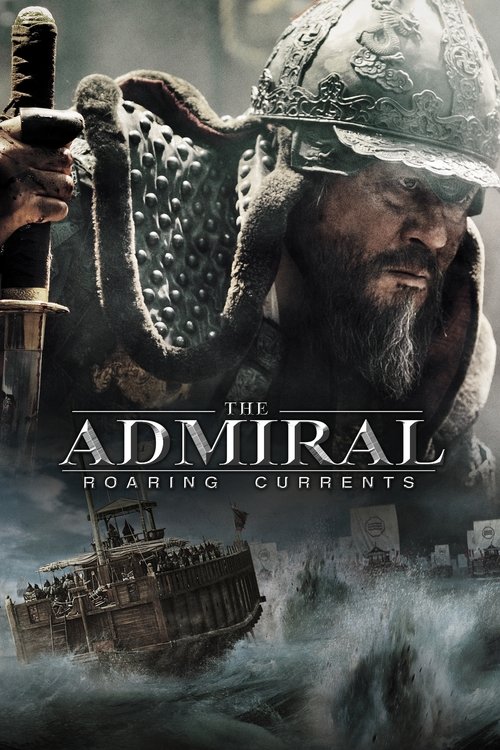
The Admiral: Roaring Currents
An austere, tension-drenched historical war epic steeped in desolation and defiance, where the solitary will of one broken commander becomes a solitary wooden bulwark holding back a raging tidal wave of destruction.
The Admiral: Roaring Currents

명량

"12 ships against a fleet of 330."

30 July 2014 South Korea 126 min 7.0 (337)

Director: Kim Han-min

Cast: Choi Min-sik, Ryu Seung-ryong, Cho Jin-woong, Jin Goo, Lee Jung-hyun

Drama War History Action Transmuting Fear into Courage Solitude, Duty, and Unrequited Loyalty The Power of the Common People (Mincho) Mastery of Nature vs. Imperial Hubris
Budget: $9,500,000
Box Office: $138,342,258

The Admiral: Roaring Currents — Ending Explained

⚠️ Spoiler Analysis

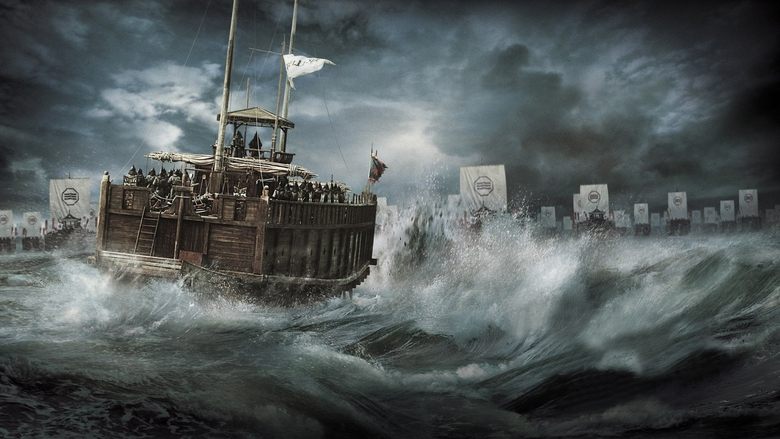
Admiral Yi positions his single flagship alone in the narrow strait of Myeongnyang, deliberately forcing his eleven reluctant captains to watch him engage the entire Japanese vanguard by himself. His Panokseon leverages higher deck elevation and broadside cannon barrages (Cheonja and Jija Chongtong) to smash through early waves.

When Kurushima dispatches a vessel packed with black powder to incinerate Yi's flagship, the captured scout Im Jun-young sacrifices himself from aboard the suicide ship. Jun-young's mute wife, watching from the cliffs, signals the fleet with her red skirt, alerting Yi in time to blow up the powder ship with cannons before contact.

As the tidal current abruptly reverses, creating a catastrophic whirlpool, Japanese ships lose steerage and crash into one another. Yi's flagship is trapped in the vortex until civilian fishermen use rope lines from small skiffs to physically pull the flagship free. Kurushima boards Yi's ship in desperation but is decapitated, his head hoisted to break Japanese morale. The remaining Joseon ships join the line, routing the surviving enemy fleet. The film concludes with Yi gazing into the sea, acutely conscious that future generations will likely forget the agony paid to secure their peace.

Alternative Interpretations

Deified National Patriotism vs. Humanized Trauma: While many viewers read the movie as an unyielding patriotic anthem celebrating Korean military heritage, critical analyses highlight the subversive portrayal of Korean royalty: the film depicts King Seonjo and court bureaucrats as petty, paranoid oppressors who tortured their greatest protector.

The Ending’s Civilian Rowing Scene: The rescue of the flagship by civilian fishing boats can be interpreted literally as tactical salvation, or allegorically as the Korean public rescuing the nation whenever its state institutions fail.

The Ambiguity of Victory: The final frame does not present a triumphalist military celebration; instead, it leaves Yi brooding over the endless cycle of sacrifice and the unrecorded suffering of ordinary conscripts.

Explore More About This Movie

Dive deeper into specific aspects of the movie with our detailed analysis pages

Similar Movies