Skip to content
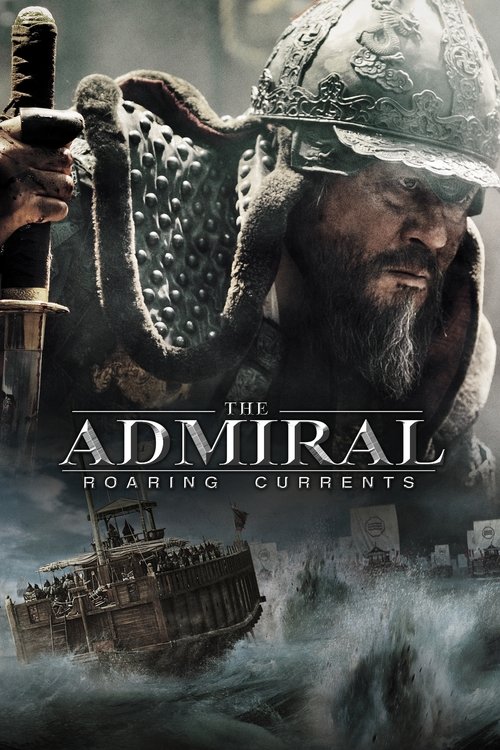
The Admiral: Roaring Currents
An austere, tension-drenched historical war epic steeped in desolation and defiance, where the solitary will of one broken commander becomes a solitary wooden bulwark holding back a raging tidal wave of destruction.
The Admiral: Roaring Currents

The Admiral: Roaring Currents

명량

"12 ships against a fleet of 330."

30 July 2014 South Korea 126 min 7.0 (337)

Director: Kim Han-min

Cast: Choi Min-sik, Ryu Seung-ryong, Cho Jin-woong, Jin Goo, Lee Jung-hyun

Drama War History Action Transmuting Fear into Courage Solitude, Duty, and Unrequited Loyalty The Power of the Common People (Mincho) Mastery of Nature vs. Imperial Hubris
Budget: $9,500,000
Box Office: $138,342,258

Overview

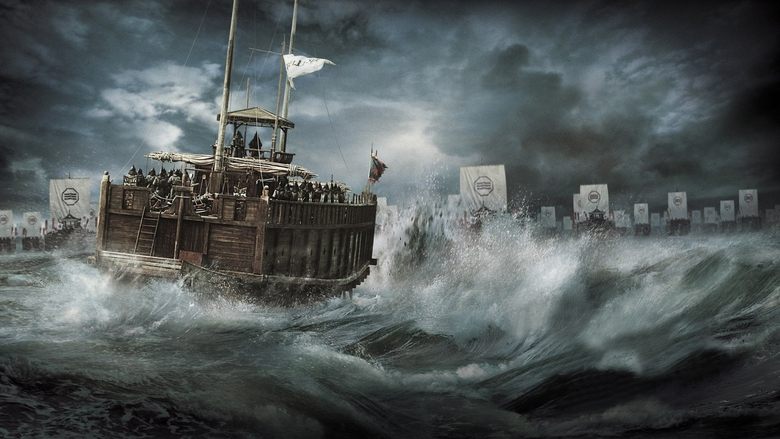
Set in 1597 during the devastating second wave of the Imjin War (the Jeongyu War), The Admiral: Roaring Currents chronicles one of the most asymmetric naval engagements in military history: the Battle of Myeongnyang. Following royal intrigue, false treason accusations, and brutal torture, Joseon Admiral Yi Sun-sin is stripped of rank, only to be reinstated after his disastrous successor loses virtually the entire royal fleet at the Battle of Chilcheollyang. Left with just twelve battle-ready Panokseon warships and a demoralized, terrified band of soldiers, Admiral Yi faces an encroaching vanguard of over 300 Japanese warships seeking to clear a maritime corridor to Hanyang (Seoul).

The first half of the film methodically builds immense psychological dread. King Seonjo orders the navy disbanded to merge with ground forces, fellow officers beg to retreat, saboteurs burn the prototype Geobukseon (Turtle Ship), and panic sweeps through the ranks. Opposing them is a fractured Japanese high command driven by rivalry between Admiral Wakisaka Yasuharu, General Todo Takatora, and the merciless pirate-commander Kurushima Michifusa, who seeks personal vengeance against Yi.

The latter half erupts into a continuous, 61-minute naval engagement inside the treacherous Myeongnyang Strait (known as the "Roaring Currents"). Admiral Yi uses geography, extreme tidal whirlpools, and sheer psychological leadership to mount an impossible stand against crushing odds.
Core Meaning

Director Kim Han-min structured the film around a foundational question: How does a leader transform paralyzing despair into miraculous resolve when all external hope is extinguished?

The core message is that true leadership is defined not by flawless invulnerability, but by moral fortitude, self-sacrifice, and the psychological alchemy of converting terror into collective courage. Kim portrays Yi Sun-sin not as an unfeeling myth, but as an ailing, tormented man whose solitary devotion to the common people (mincho) transcends political betrayal by the very court he serves.

Thematic DNA

Transmuting Fear into Courage 35%
Solitude, Duty, and Unrequited Loyalty 25%
The Power of the Common People (Mincho) 20%
Mastery of Nature vs. Imperial Hubris 20%

Transmuting Fear into Courage

The film frames fear as a contagious, paralyzing pathogen that infects both sides. Yi recognizes that retreat means annihilation; the only path forward is to push straight into mortality so deeply that fear flips into focused defiance.

Solitude, Duty, and Unrequited Loyalty

Yi is completely isolated—abandoned by the monarch who tortured him, doubted by his subordinates, and haunted by visions of fallen soldiers. His loyalty (Chung) is directed not toward the cowardly King Seonjo, but toward the land and its people.

The Power of the Common People (Mincho)

While generals and kings squabble, it is everyday Joseon subjects—scouts, oarsmen, grieving widows, and monks—whose collective labor and sacrifice turn the tide of battle.

Mastery of Nature vs. Imperial Hubris

The Japanese commanders treat the sea as a mere transit corridor for conquest, relying purely on overwhelming numbers and aggressive close-quarters boarding tactics. In contrast, Yi listens to the waters, studying tidal currents and geographic bottlenecks to let nature dismantle the enemy.

Character Analysis

Admiral Yi Sun-sin

Choi Min-sik

Archetype: Tragic / Reluctant Hero Key Trait: Immovable resolve veiled over profound physical and emotional anguish.

Motivation

Protect the Joseon land and its common people despite royal betrayal, turning collective fear into victory.

Character Arc

Reinstated in disgrace, he absorbs the dread of his country and stands alone at the head of the fleet to ignite his men's courage.

Kurushima Michifusa

Ryu Seung-ryong

Archetype: Merciless Nemesis Key Trait: Ruthless brutality, psychological terror tactics, and aggressive arrogance.

Motivation

Execute personal revenge against Yi Sun-sin and establish ruthless dominance for the Japanese invasion force.

Character Arc

Recruited for his pirate expertise; seeks personal vengeance against Yi for his brother's death and relentless naval dominance.

All 5 characters and cast

Symbols & Motifs

The Roaring Strait / Whirlpool (울돌목 - Uldolmok)

Meaning:

A natural vortex that functions as a physical manifestation of chaos, fate, and imminent death.

Context:

Navigating its violent shift represents surrendering to mortality to find salvation during the climactic naval clash.

The Burning Military Camp and Turtle Ship

Meaning:

Symbolizes the severance of retreat—a literal and spiritual burning of bridges leaving no choice but victory or death.

Context:

Occurs when the last Turtle Ship is sabotaged and Yi orders the entire encampment burned down.

The White Robe and Armor

Meaning:

Highlights the agonizing weight of duty carried by an aging, ailing body.

Context:

Worn by Admiral Yi, emphasizing his physical frailty beneath heavy commander armor.

The Red Skirt (Jeong's Signal)

Meaning:

Symbolizes the silenced voices of ordinary Koreans desperately protecting their defenders.

Context:

Lady Jeong, unable to speak, waves a red skirt from the cliffs to alert the fleet of an approaching explosive fire-raft.

Taro (Taro's Gourd/Melon)

Meaning:

Represents the enduring cycle of agrarian life and the humble peace preserved through immense bloodshed.

Context:

At the film’s conclusion, a young boy hands Admiral Yi a melon.

Memorable Quotes

필사즉생 필생즉사 (必死則生 必生則死)
— Admiral Yi Sun-sin

Context

Yi's legendary rallying address to his terrified captains and soldiers on the eve of the battle.

Meaning

Crystallizes the film's philosophical core: "Those who seek death shall live; those who seek life shall die."

신에게는 아직 열두 척의 배가 남아있사옵니다.
— Admiral Yi Sun-sin

Context

Written in Yi's memorial to King Seonjo, rejecting the royal command to abandon naval resistance and merge with ground forces.

Meaning

Affirms his uncompromising stand at sea: "Your humble subject still has twelve ships remaining."

All 4 quotes

Philosophical Questions

Does true loyalty require devotion to the sovereign or to the people?

The film explores Chung (loyalty), demonstrating that Yi’s ultimate duty was to the innocent populace rather than an insecure, treacherous royal monarch.

Can fear be harnessed rather than conquered?

Rather than treating fear as a flaw to be eliminated, the film examines fear as explosive emotional kinetic energy that can be inverted into survival instinct.

What is the moral cost of historical greatness?

Yi achieves immortality in history books, but at the cost of physical ruin, chronic trauma, and burying hundreds of his own loyal countrymen.

Alternative Interpretations

Deified National Patriotism vs. Humanized Trauma: While many viewers read the movie as an unyielding patriotic anthem celebrating Korean military heritage, critical analyses highlight the subversive portrayal of Korean royalty: the film depicts King Seonjo and court bureaucrats as petty, paranoid oppressors who tortured their greatest protector.

Full ending explanation

Cultural Impact

Released in July 2014, the film resonated profoundly with the South Korean public in the immediate aftermath of the Sewol Ferry disaster (April 2014). Amid widespread public grief and national soul-searching over leadership failures and institutional neglect, Admiral Yi’s portrayal as an incorruptible, sacrificial protector who refused to abandon his post tapped deeply into the national zeitgeist.

The film triggered the "Yi Sun-sin Syndrome" across South Korea, driving surges in book sales of the Nanjung Ilgi, historical tourism to coastal battle sites, and establishing a new high watermark for domestic historical blockbusters (sageuk).

Audience Reception

Critical Praise: Critics and general audiences universally lauded Choi Min-sik’s commanding, deeply grounded performance, along with the visceral sound editing, authentic ship maneuvers, and relentless pacing of the 61-minute naval clash.

Criticism: Western and some domestic critics pointed out that the first hour dragged under heavy exposition, Japanese antagonists bordered on stylized Kabuki caricature, and several Korean actors delivered unnatural Japanese dialogue pronunciation.

Box Office Reception: The film became the #1 most-watched and highest-grossing film in South Korean cinematic history.

Interesting Facts

  • The film shattered all South Korean box office records, drawing 10 million admissions in just 12 days and finishing with over 17.6 million tickets sold and $138.3M+ gross—surpassing Avatar to become the most-watched and highest-grossing film in South Korean cinematic history.
  • Production built multiple life-sized, fully seaworthy Panokseon and Japanese Atakebune vessels mounted on customized gimbal systems over both open water in Gwangyang Bay and massive indoor water tanks.
  • Choi Min-sik conducted extensive archival research using the Nanjung Ilgi (Admiral Yi's War Diary) and reportedly suffered physical exhaustion and neck injuries due to the authentic, heavy Joseon armor worn during prolonged battle filming.
  • Director Kim Han-min devoted nearly half of the film’s 128-minute runtime (61 continuous minutes) to the Battle of Myeongnyang, combining practical pyrotechnics with groundbreaking Korean VFX.
  • The film served as the first entry in Kim Han-min's dedicated Yi Sun-sin naval battle trilogy, followed by Hansan: Rising Dragon (2022) and Noryang: Deadly Sea (2023).

Easter Eggs

Park Bo-gum's Breakthrough Supporting Role

A young Park Bo-gum appears as Bae Su-bong, the son of a fallen soldier who joins the oarsmen and hands Yi the melon in the closing scene.

Ryohei Otani as Junsa

Japanese actor Ryohei Otani plays Junsa, a real historical Japanese defector who recognized Yi's moral superiority and provided critical reconnaissance to Joseon forces.

No Min-woo as Haru

Pop star and actor No Min-woo plays Kurushima’s silent, lethal masked sniper Haru, visually referencing theatrical Noh/Kabuki conventions.

Director Kim Han-min's Regional Roots

Director Kim Han-min was born in Suncheon, South Jeolla Province—the very coastal region where Yi maintained headquarters—and spent his childhood exploring local naval relics that inspired the trilogy.

Frequently Asked Questions

Explore More About This Movie

Dive deeper into specific aspects of the movie with our detailed analysis pages

Comments (0)

Leave a comment

No comments yet. Be the first to share your thoughts!

Similar Movies