Skip to content
The Beast
A chilly, genre-bending sci-fi melodrama steeped in melancholic dread, where human vulnerability drowns across fractured centuries like a fragile porcelain doll submerged in stagnant black tar.
The Beast

The Beast

La Bête

"You remember, don't you? That we have already met?"

07 February 2024 France 146 min 6.3 (272)

Director: Bertrand Bonello

Cast: Léa Seydoux, George MacKay, Guslagie Malanda, Dasha Nekrasova, Martin Scali

Drama Romance Science Fiction The Paralyzing Fear of Vulnerability and Love Technological Alienation and the Algorithmic Future Male Resentment, Entitlement, and Modern Alienation Cyclical History and Doomed Determinism Emotional Sterilisation vs. Meaningful Pain
Budget: $7,500,000
Box Office: $760,979

Overview

Set across three interconnected eras—Belle Époque Paris in 1910, sun-bleached Los Angeles in 2014, and a sterile, pacified Paris in 2044—The Beast (La Bête) follows Gabrielle (Léa Seydoux), a woman perpetually stalked by an unshakable premonition that an imminent catastrophe will annihilate her life. In each incarnation, she repeatedly encounters Louis Lewanski (George MacKay), a man bound to her across time whose presence awakens both acute longing and deep psychological alarm.

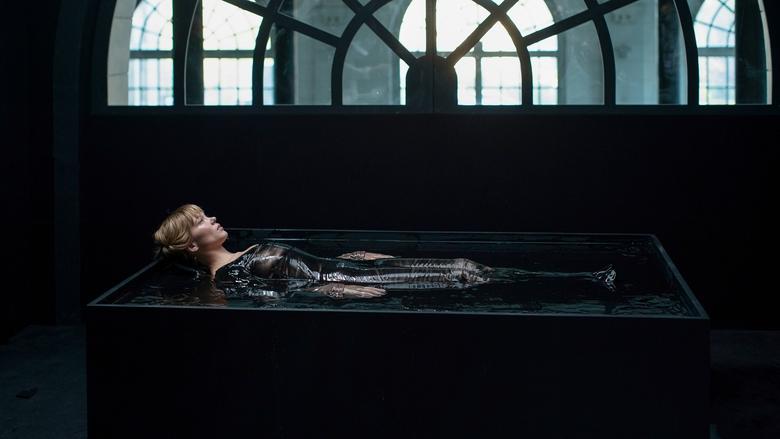
In the dystopian world of 2044, artificial intelligence has seized control of global infrastructure, eliminating social unrest and driving human unemployment to 67%. Because human emotions and passions are viewed by the governing algorithm as defective liabilities that compromise efficiency and rational judgment, citizens are urged to undergo a DNA "purification" process. To qualify for meaningful employment, Gabrielle steps into a sensory-cleansing submersion tank designed to eradicate trauma and emotional baggage lingering from her past lives.

As Gabrielle immerses herself in the neural memories of her former selves, the narrative oscillates between her 1910 romance with Louis as an aristocratic concert pianist on the eve of the historic Great Flood of Paris, and her 2014 experience as an aspiring model and actress housesitting in the Hollywood Hills. In every epoch, the two circle one another in differing registers of desire, suspense, and social alienation, steadily steering toward a convergence where the true identity of the looming "beast" is laid bare.

Core Meaning

Bertrand Bonello utilizes a loose, speculative adaptation of Henry James’s 1903 novella The Beast in the Jungle to interrogate how human beings construct emotional, technological, and ideological barriers to protect themselves from suffering. The core thesis is that the terror of intimacy—the fear of opening oneself to vulnerability, rejection, or heartbreak—is itself the true catastrophe that ruins human existence.

Bonello critiques a contemporary world drifting toward emotional sterilisation. In seeking total safety, predictability, and friction-free social lives through automation and algorithms, society willingly surrenders the painful yet sublime essence of what it means to be alive. The titular "beast" is not an external apocalypse, but the tragedy of living a life rendered hollow by self-preservation.

Thematic DNA

The Paralyzing Fear of Vulnerability and Love 30%
Technological Alienation and the Algorithmic Future 25%
Male Resentment, Entitlement, and Modern Alienation 20%
Cyclical History and Doomed Determinism 15%
Emotional Sterilisation vs. Meaningful Pain 10%

The Paralyzing Fear of Vulnerability and Love

In each timeline, Gabrielle's instinctive impulse to protect her inner sanctum prevents her from surrendering fully to passion. The narrative demonstrates that anticipating disaster becomes a self-fulfilling prophecy: avoiding emotional risk out of dread results in missing the only connections that could give life purpose.

Technological Alienation and the Algorithmic Future

The 2044 timeline presents an extreme logical conclusion to contemporary screen culture: human labor is rendered obsolete, physical encounters are replaced by disembodied communications, and human emotions are treated as genetic glitches to be purged. Technology is depicted not as an engine of liberation, but as a system of pacification and isolation.

Male Resentment, Entitlement, and Modern Alienation

In the 2014 segment, Bonello transforms the courtly romantic Louis into a self-loathing, misogynistic incel. This shift exposes how male loneliness and social detachment curdle into violent entitlement when human connection is filtered through digital illusions, pornography, and narcissistic grievance.

Cyclical History and Doomed Determinism

The recurring archetypes and encounters across 1910, 2014, and 2044 demonstrate how societal structures evolve while primal human neuroses stay constant. Cataclysms—whether natural disasters (the 1910 flood, the 2014 earthquake) or political shifts—mirror internal emotional fractures that echo across generations.

Emotional Sterilisation vs. Meaningful Pain

Through the purification process, the film argues that suffering, anxiety, and grief are inextricably tied to empathy, artistic creation, and love. Eliminating distress creates an eerie, doll-like equilibrium that drains humanity of its soul.

Character Analysis

Gabrielle Monnier

Léa Seydoux

Archetype: The Tragic Protagonist / The Seeker Key Trait: Heightened emotional sensitivity and an unshakable sense of foreboding

Motivation

To find safety from her paralyzing dread without surrendering her ability to feel deeply.

Character Arc

Across 1910, 2014, and 2044, Gabrielle struggles against a suffocating dread of catastrophe. In 1910, she is a refined artist restrained by societal convention; in 2014, an anxious, aspiring performer trapped in alienation; in 2044, a despondent citizen seeking release through DNA purification. Her journey culminates in the agonizing realization that purging her past cost her the very capacity for love she sought to protect.

Louis Lewanski

George MacKay

Archetype: The Shape-Shifting Catalyst / The Anima Mirror Key Trait: Obsession—shifting from romantic persistence to destructive grievance, then to chilling affective apathy

Motivation

In early lives, to break down Gabrielle’s defenses; in 2014, to punish women for his perceived romantic exclusion; in 2044, to assimilate into AI-driven stability.

Character Arc

In 1910, Louis is a polite, patient gentleman devoted to courting Gabrielle; in 2014, he curdles into an aggrieved, predatory incel stalking her in the Hollywood Hills; in 2044, he is a fully cleansed, serene corporate drone completely stripped of romantic warmth.

All 4 characters and cast

Symbols & Motifs

Celluloid Dolls and Mannequins

Meaning:

Symbolizes the horror of a hollow human shell devoid of emotional depth.

Context:

In 1910, Gabrielle's husband owns a doll factory manufacturing early celluloid figures. The inanimate, vacant faces recur in 2044 with robotic companions and Gabrielle’s own blank expressions.

The Black Purification Goo

Meaning:

Acts as an underworld river of Lethe, symbolizing the technological erasure of identity, memory, and affective baggage in the name of corporate utility.

Context:

Found in the sensory tanks in 2044 where citizens undergo the DNA purification process.

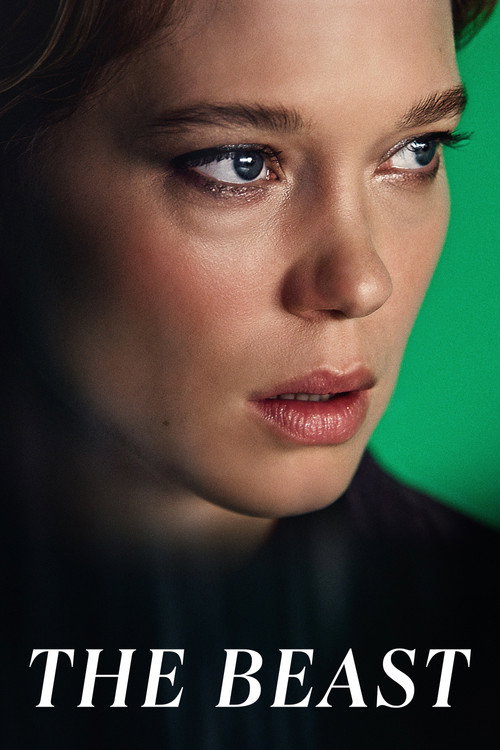
The Green Screen Void

Meaning:

Symbolizes the manufactured nature of modern identity, the unmoored terror of virtuality, and the cinematic apparatus itself.

Context:

Frames the opening scene where Gabrielle stands against a chroma key backdrop, carrying only a prop knife while guided by an off-camera director.

The Intrusive Pigeon

Meaning:

Acts as an omen of chaotic intrusion, representing nature and subconscious foreboding piercing the fragile domestic shields constructed by human inhabitants.

Context:

A bird that repeatedly penetrates Gabrielle’s domestic spaces across multiple timelines.

Floods and Earthquakes

Meaning:

Serve as physical manifestations of repressed psychological upheavals, showing how internal emotional turmoil manifests in environmental ruptures.

Context:

Appears as the 1910 Paris deluge and the 2014 Los Angeles tremors.

Memorable Quotes

J'ai peur. Je ne sais pas de quoi, mais j'ai peur... comme si quelque chose d'affreux allait arriver.
— Gabrielle (1910)

Context

Gabrielle’s salon confession to Louis regarding her constant, nameless sense of impending doom.

Meaning

Translates the core thesis of Henry James’s novella into French, establishing the thematic foundation that haunts her across all three incarnations.

If you cannot feel pain, you cannot feel love.
— Gabrielle (2044)

Context

Spoken as she weighs the consequences of submitting her mind and body to the DNA cleansing tank.

Meaning

Directly names the trade-off of the film’s dystopian premise: total comfort at the price of spiritual numbness.

All 4 quotes

Philosophical Questions

Is Suffering Inseparable from Love?

The film posits that true affective connection cannot exist without vulnerability to immense pain; eliminating the capacity to suffer destroys the ability to love.

Does Optimizing for Comfort Destroy Humanity?

When human society eliminates all risk, friction, and irrationality, it yields an antiseptic, doll-like world devoid of artistic and spiritual vitality.

Are We Ruined More by External Catastrophe or Internal Fear?

In line with Henry James, the film asks whether external disasters are merely the stage upon which our own self-imposed passivity destroys our lives.

Alternative Interpretations

1. The Literal Reincarnation Reading: Gabrielle and Louis are two karmically linked souls destined to play out an eternal cycle of unconsummated desire, structural barrier, and disaster. Every era introduces a new societal impediment: strict class decorum in 1910, internet-bred psychopathy in 2014, and algorithmic repression in 2044.

Full ending explanation

Cultural Impact

Conceived in the aftermath of COVID lockdowns and released amidst mainstream panic over generative artificial intelligence, algorithmic automation, and the epidemic of modern loneliness, The Beast acts as a mirror to modern anxieties. By integrating incel subculture and techno-dystopian control into a period melodrama, Bonello comments directly on how alienation manifests across different sociopolitical systems.

Audience Reception

The film premiered in Official Competition at the 80th Venice International Film Festival in September 2023, followed by a theatrical run in 2024. On Rotten Tomatoes, the film maintains an 86% approval rating (average score 7.6/10). On Metacritic, it holds a weighted score of 80/100, indicating "generally favorable reviews". On France’s AlloCiné, it holds a critical score of 3.7/5.

Audiences and critics praised several elements:

  • Léa Seydoux’s Lead Performance: Universally lauded for shifting effortlessly across three distinct emotional eras while maintaining psychological continuity.
  • Genre Hybridity: Admiration for Bonello’s daring shift between period costume drama, tense Hollywood home-invasion thriller, and sterile post-human dystopia.
  • Cinematography & Atmosphere: Josée Deshaies’ nuanced visual texture across eras and the unnerving, patient sound design.

Criticisms focused on pacing and length, with many feeling the 145-minute runtime sagged in the middle stretches, and the 2014 slasher pivot, where critics argued modeling Louis directly on mass shooter Elliot Rodger jarred against the romantic universality of the other timelines. Overall, it was regarded as a cerebral, visually intoxicating, and challenging auteur piece that rewards patient viewers comfortable with unresolved questions and Lynchian ambiguity.

Interesting Facts

  • The role was originally written for Gaspard Ulliel, who previously starred in Bonello’s Saint Laurent (2014) and voiced a character in Coma (2022). Ulliel died in a skiing accident in January 2022 shortly before filming, leading Bonello to recast British actor George MacKay, who learned to deliver his dialogue in French.
  • The film carries a heartfelt dedication to Ulliel in the credits.
  • Production of The Beast was delayed by the COVID-19 pandemic. During the hiatus, Bonello wrote and directed the hybrid film Coma (2022), dealing with similar themes of lockdown, isolation, and virtual simulation.
  • For the 2014 timeline, Bonello did not invent Louis's monologues; he lifted them verbatim from YouTube recordings and manifesto writings left behind by real-life mass murderer Elliot Rodger.
  • While the 1910 and 2044 sequences were staged in Paris, the 2014 American segment was shot over a couple of nights in Los Angeles with a skeleton crew and without municipal filming permits.
  • Defying industry tradition, the film does not run standard crawling end credits in theaters; it displays a singular QR code on screen that audience members can scan to read cast and crew listings online.
  • The film's moody electronic and orchestral score was composed collaboratively by Bertrand Bonello and his daughter, Anna Bonello.

Easter Eggs

Henry James’s The Beast in the Jungle

The direct source material is reflected in character names, philosophical debates, and the recurring concept of a life wasted in anticipation of catastrophe.

David Lynch’s Mulholland Drive (2001)

The 2014 segment features surreal, vacant Los Angeles streets, deep nighttime driving shots through the Hollywood Hills, and an audition dynamic deliberately modeled on Lynchian psychological horror.

Fred Walton’s When a Stranger Calls (1979)

The home-invasion dread in the modern Beverly Hills home borrows structural suspense and pacing directly from Walton’s slasher classic, which Bonello cited as a major influence.

Harmony Korine’s Trash Humpers (2009)

Video excerpts from Korine’s lo-fi cult horror film appear on screens in the 2014 sequence, underlining cultural rot and decaying urban landscapes.

Bertrand Bonello Cameo (Director’s Voice)

In the prologue, the disembodied director’s voice giving instructions to Léa Seydoux across the green screen is Bonello himself.

Xavier Dolan Vocal Cameo

Renowned Canadian auteur Xavier Dolan makes a brief, uncredited vocal cameo within the 2044 soundscape.

Frequently Asked Questions

Explore More About This Movie

Dive deeper into specific aspects of the movie with our detailed analysis pages

Comments (0)

Leave a comment

No comments yet. Be the first to share your thoughts!

Similar Movies