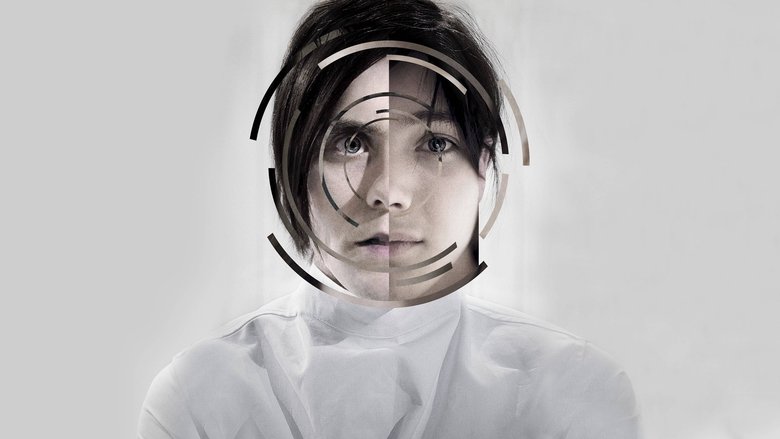
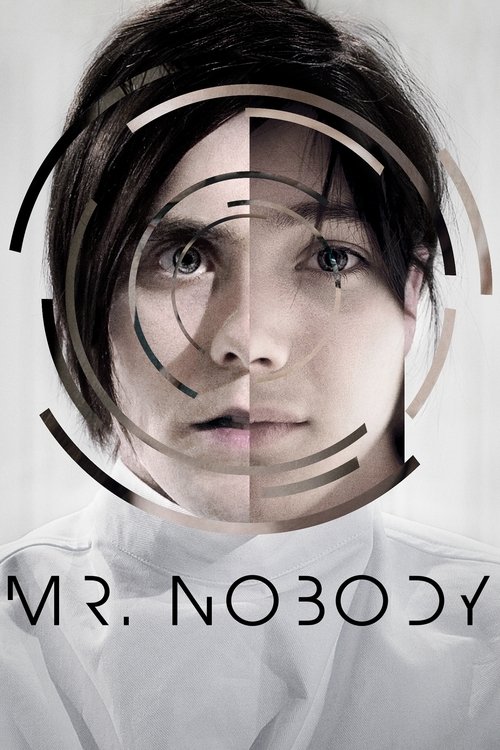
Mr. Nobody
"Nothing is real, everything is possible."
Overview
Set in the year 2092, humanity has achieved quasi-immortality through advanced cell regeneration. The world's attention is fixed on 118-year-old Nemo Nobody, the last mortal man on Earth, as he approaches his final days. Nemo claims to have no memory of his past, yet under the guidance of a psychiatrist and the probing questions of a curious journalist, he begins to recount the divergent stories of his life.
The narrative centers on a pivotal childhood moment at a train station where a nine-year-old Nemo must choose between staying with his father or leaving with his mother. This single decision fractals into a multitude of alternate realities, exploring his relationships with three distinct women—Anna, Elise, and Jean—and the wildly different social and emotional trajectories each path creates. As the timelines overlap and contradict, the film questions the nature of time, memory, and the validity of the choices we make.
Core Meaning
The core message of Mr. Nobody is that there are no wrong choices. Director Jaco Van Dormael suggests that every potential path we take, regardless of its outcome or the suffering it may entail, possesses its own intrinsic value and meaning. The film posits that life is not about finding the 'perfect' path, but about the experience of being alive itself. As the elderly Nemo states: "Every path is the right path. Everything could have been anything else and it would have just as much meaning."
Thematic DNA
The Burden of Choice
The film examines the paralysis that comes with having 'infinite possibilities.' Nemo's ability to see the future outcomes of his decisions makes choosing impossible, leading to the concept of Zugzwang—a chess term where the only viable move is not to move at all. This is revealed through his hesitation at the train station and his various adult lives where he often lets chance or others dictate his path.
Chaos Theory and the Butterfly Effect
The plot frequently illustrates how seemingly insignificant events—a boiling egg, a leaf blowing in the wind, or a broken shoelace—can cause catastrophic shifts in the timeline. It highlights the interconnectedness of all things and the fragility of human planning in the face of random universal forces.
Love and Fate
Nemo's lives are defined by three women who represent different emotional archetypes: Anna (true passion), Elise (melancholy and sacrifice), and Jean (indifference and luxury). The film explores whether love is a matter of destiny or a result of circumstantial timing.
Time and Entropy
Using scientific concepts like the Big Crunch and the 'arrow of time,' the film explores the inevitability of decay (entropy) and the human desire to reverse or stop time. The non-linear structure reflects Nemo's unique perception of time as a non-spatial dimension.
Character Analysis
Nemo Nobody
Jared Leto
Motivation
To find the 'right' life and reunite with his true love, Anna, while avoiding the pain of loss and regret.
Character Arc
As an old man, Nemo moves from confusion to a state of peace as he realizes his 'unlived' lives are just as real as his 'lived' ones. As a child, he transitions from the paralysis of choice to the realization that he can forge a third path.
Anna
Diane Kruger
Motivation
To find Nemo again after being separated by parental divorce and the cruelty of circumstance.
Character Arc
Throughout various timelines, Anna remains the anchor of Nemo's heart, often appearing as a lost memory or a missed opportunity until the final cosmic reset allows them to reunite.
Elise
Sarah Polley
Motivation
To find an escape from her internal suffering and the ghosts of her past.
Character Arc
In the path where Nemo chooses her, she suffers from severe clinical depression and remains trapped in the memory of a past love, eventually leaving Nemo or dying.
Jean
Linh-Dan Pham
Motivation
To be loved and noticed by a husband who is physically present but emotionally absent.
Character Arc
Representing a life chosen by chance (a coin toss), Jean lives in luxury but is never truly loved by Nemo, leading to a hollow, distant marriage.
Symbols & Motifs
Color Palettes (Red, Blue, Yellow)
Each of Nemo's three main life paths is coded with a specific primary color to represent its emotional core: Red for Anna (passion and love), Blue for Elise (depression and sadness), and Yellow for Jean (wealth, apathy, and external success).
Used consistently in set design, costumes, and lighting. For example, Nemo's house with Elise is painted blue, while his life of luxury with Jean is bathed in golden yellow tones.
Water
Symbolizes the fluidity of time and Nemo's inability to 'swim' (make a choice). His fear of water and his repeated near-drowning experiences represent his struggle to navigate the currents of fate.
Nemo admits to Anna he cannot swim; in another life, he drowns in a car submerged in a lake; in the future, he is shown in a bathtub before being shot.
The Falling Leaf
Represents determinism and the butterfly effect. It is a symbol of how small, external forces beyond our control dictate the most significant moments of our lives.
A leaf falling is shown to be the reason Nemo's parents met in the first place, and later, a leaf blowing in the wind connects Nemo back to Anna as adults.
The Train Station (Chance Harbor)
A metaphorical crossroad representing the moment of bifurcation where one's life splits into infinite possibilities.
The site of the primary choice at age nine where Nemo must choose between his mother and father.
Memorable Quotes
As long as you don't choose, everything remains possible.
— Nemo (Age 9)
Context:
Nemo contemplates his parents' divorce and the weight of having to choose between them.
Meaning:
The central thesis of the film regarding the paralysis of potential. Once a choice is made, other possibilities are 'killed'.
In chess, it's called Zugzwang... when the only viable move is not to move at all.
— Old Nemo
Context:
Old Nemo explains his life philosophy to the confused journalist in 2092.
Meaning:
Explains why Nemo 'failed' to make a choice—by doing nothing, he preserves all potential futures.
Every path is the right path. Everything could have been anything else and it would have just as much meaning.
— Nemo (Age 118)
Context:
His final realization before the Big Crunch begins.
Meaning:
The ultimate resolution of the film's philosophical conflict: a rejection of regret.
Philosophical Questions
Is a life lived in the mind any less real than a life lived in reality?
The film suggests that the emotional weight of Nemo's imagined lives is so profound that they are indistinguishable from reality, challenging our definition of existence.
Does knowing the future negate free will?
Nemo knows the outcomes but still struggles to act. The film explores whether 'predestination' is a trap or if we can choose to transcend it by doing the 'irrational'.
Alternative Interpretations
There are three primary ways audiences interpret the film's ending:
- The Child's Imagination: The entire film takes place in the split second at the train station where a 9-year-old Nemo imagines every possible future to decide which parent to follow. In this view, none of the adult lives 'happened'.
- The Quantum Reality: All lives happened simultaneously in a multiverse. The 118-year-old Nemo is the version who gained the awareness to see all other versions, and the 'Big Crunch' represents the universe resetting to allow a new path.
- The 'Nobody' Path: The old man represents the timeline where Nemo chose neither parent and ran away into the woods, leading to a life of anonymity where he truly became 'Mr. Nobody'.
Cultural Impact
Mr. Nobody has left a profound mark on the sci-fi genre as a pioneer of 'multiverse' storytelling before it became a mainstream trend. While it initially struggled at the box office, it gained a massive following through streaming and home media, often compared to films like Eternal Sunshine of the Spotless Mind and Cloud Atlas. It is frequently cited in discussions about determinism and quantum physics (specifically the Many-Worlds Interpretation) in cinema. Its impact is visible in later complex narratives like Everything Everywhere All at Once, which shares its exploration of 'what if' scenarios and the ultimate beauty of the mundane path.
Audience Reception
Audience reception is highly polarized. Critics praised the film for its technical ambition, visual beauty, and Jared Leto's performance, while some criticized it for being 'pretentious' and overly convoluted. Audiences, however, have largely embraced it as a life-changing philosophical work. Common points of praise include the stunning cinematography and the emotional impact of the Anna storyline, while detractors often find the non-linear editing and scientific monologues to be distracting or cold.
Interesting Facts
- With a budget of 33 million euros, it was the most expensive Belgian film ever made at the time of its release.
- Jared Leto spent over six hours in the makeup chair daily to be transformed into the 118-year-old version of Nemo.
- The film's director, Jaco Van Dormael, spent seven years writing the complex, non-linear screenplay.
- The character 'Nemo' is Latin for 'Nobody', making his name 'Nobody Nobody'.
- The soundtrack was composed by the director's brother, Pierre Van Dormael, who passed away from cancer shortly before the film's release.
- The film was a massive commercial failure upon its initial release but has since become a significant cult classic.
Easter Eggs
Nemo's Name and The Odyssey
The name Nemo is a direct reference to Homer's Odyssey, where Odysseus uses the name 'Outis' (Nobody) to trick the Cyclops. It highlights Nemo's status as a blank slate or a universal avatar.
The 'Mr. Sandman' Motif
The song Mr. Sandman is played in four different versions throughout the film. It references the theme of dreams and the desire for a perfect life/partner ('Bring me a dream').
Cameo by Jaco Van Dormael
The director has a small cameo as the Brazilian man who gets killed due to a 'butterfly effect' involving a boiling egg in another part of the world.
⚠️ Spoiler Analysis
Click to reveal detailed analysis with spoilers
Frequently Asked Questions
Explore More About This Movie
Dive deeper into specific aspects of the movie with our detailed analysis pages
Comments (0)
No comments yet. Be the first to share your thoughts!