Skip to content
The Beauty Inside
A tender fantasy romance where love must recognize a lover who wakes up as a stranger each morning, like a face drawn on water and read by touch.
The Beauty Inside

The Beauty Inside

뷰티 인사이드

"Love has many faces."

20 August 2015 South Korea 127 min 7.6 (294)

Director: Baek Jong-yeol

Cast: Han Hyo-joo, Kim Dae-myung, Do Ji-han, Bae Sung-woo, Park Shin-hye

Fantasy Romance Inner versus outer beauty Identity and selfhood The burden of unconditional love Fear of intimacy and self-protection Prejudice and diversity
Box Office: $14,301,869

Overview

The Beauty Inside (2015) is a South Korean romantic fantasy. It is the feature debut of director Baik (Baek Jong-yeol), who had worked in commercials. It is based on the 2012 American "social film" of the same name, which was conceived by Intel and Toshiba. On his eighteenth birthday, Woo-jin wakes up in a body that isn't his own. From then on his appearance changes every day. He may be a man or a woman, old or young, Korean or foreign.

Woo-jin builds a life around this condition. He works as a furniture designer and keeps his contact with the world limited. Then he meets Yi-soo, a woman he is drawn to, and has to decide whether to risk intimacy with someone who has never seen the same face twice.

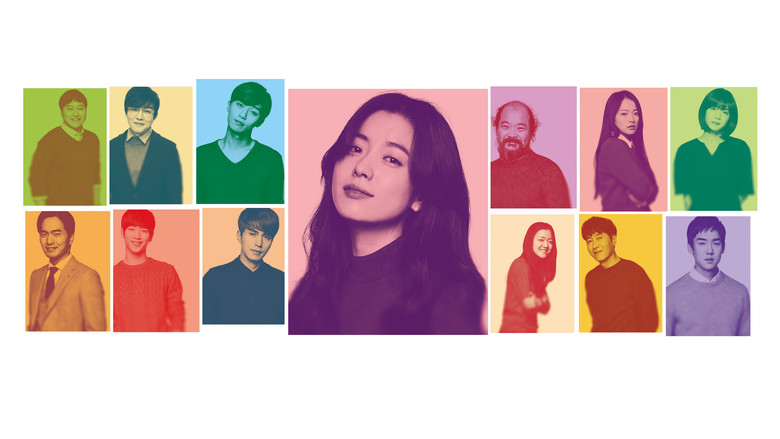
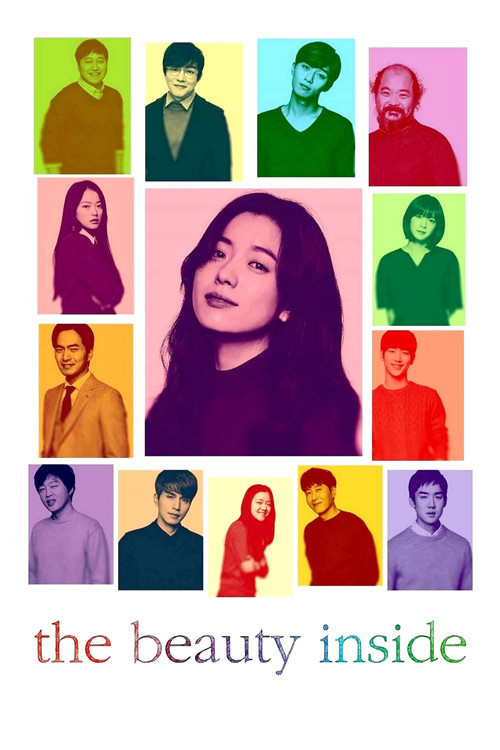
The film treats a high-concept premise as a question about love. Woo-jin is played by many different actors, and the cast includes Kim Dae-myung, Do Ji-han, Bae Seong-woo and Park Shin-hye. Han Hyo-joo plays Yi-soo, the one constant in the film.


Core Meaning

The film argues that love attaches to a person's essence, not their appearance. Yi-soo is asked to love someone whose face keeps changing. The film suggests that this is a heightened version of what every long-term partner does as bodies age and moods shift.

It also refuses to make this easy. Reviewers noted that the film's emotional core is Yi-soo's side of the story, and that loving "the inside" is a daily effort that strains her mental health. The film presents love as a repeated decision, not a magical certainty.

Thematic DNA

Inner versus outer beauty 30%
Identity and selfhood 25%
The burden of unconditional love 25%
Fear of intimacy and self-protection 12%
Prejudice and diversity 8%

Inner versus outer beauty

Woo-jin appears in countless bodies, so Yi-soo has to recognize him by his manner and voice. The title states the idea directly.

Identity and selfhood

Woo-jin has no stable face, and the film asks what remains of a self when the body is not constant. His hidden life as a designer and his reliance on his mother show how he anchors himself.

The burden of unconditional love

Yi-soo carries the emotional cost of loving him. Her stress builds to a breaking point, and she is shown talking to a therapist. The film does not pretend that love alone resolves this.

Fear of intimacy and self-protection

Woo-jin ends the relationship partly to spare Yi-soo, and his condition gives him a reason to hide from the world. Both of them have to decide whether to risk being known.

Prejudice and diversity

Woo-jin lives in bodies of different genders, ages and nationalities. One critic noted that this premise raises questions about gender, race and ageism, though the film treats them lightly.

Character Analysis

Woo-jin

Kim Dae-myung, Do Ji-han, Bae Seong-woo, Park Shin-hye and many others

Archetype: Wounded romantic hero Key Trait: Gentle, guarded creativity

Motivation

To be known and loved without having to hide.

Character Arc

He starts as an isolated man who hides his condition. He is drawn out by love, withdraws again out of fear, and in the end has to trust that he can be loved as he is.

Yi-soo

Han Hyo-joo

Archetype: Devoted lover and emotional anchor Key Trait: Patience and emotional honesty

Motivation

To love Woo-jin truly while protecting her own wellbeing.

Character Arc

She moves from falling in love to the exhaustion of loving someone whose face is never the same. She seeks help and has to decide what she is able to give.

All 3 characters and cast

Symbols & Motifs

Chairs and furniture

Meaning:

Essence persisting beneath changing forms.

Context:

Woo-jin is a furniture designer. A viewer review quotes a line about the 'chairness of a chair': we recognize a chair in any form because we know its essence. This parallels how Yi-soo recognizes Woo-jin.

The changing face and body

Meaning:

The impermanence of appearance and the way it tests love.

Context:

Every morning Woo-jin wakes in a different body. The film uses a different actor for each version of him.

Holding hands

Meaning:

Recognition through touch rather than sight.

Context:

In a therapy scene Yi-soo says she tells herself that the man holding her hand is the one she loves, even when a stranger's face is smiling at her.

Sleep and waking

Meaning:

Sleep is the point where identity resets, and it is the source of Woo-jin's anxiety.

Context:

On their first dates Woo-jin tries to stay awake as long as he can because his body will change after he sleeps.

Memorable Quotes

Yesterday my hand was bigger than my face, today my hand is smaller than my face.
— Woo-jin

Context

He describes adjusting to a new body. The line is quoted in English subtitles in a review; I did not find the original Korean.

Meaning

It shows how disorienting his condition is.

We recognize a chair no matter what form it takes because we know the essence of a chair.
— Film's chair monologue

Context

A review quotes the line. The speaker is not named in the sources, and the original Korean was not found.

Meaning

A Platonic metaphor for recognizing a person beyond their appearance.

All 3 quotes

Philosophical Questions

What do we love when we love a person?

The film separates face, voice and body from the person, and asks whether love can survive that separation.

Is personal identity tied to the body?

Woo-jin stays himself in every body, yet others treat him as a stranger each day.

Is unconditional love a duty or a choice?

Yi-soo's therapy scene shows that loving unconditionally can cost the lover her own stability.

How It Ends

Alternative Interpretations

The shifting faces can be read as a metaphor for any long relationship, in which a partner changes with age, illness and mood. A second reading is a metaphor for mental illness or disability, where the loved one 'isn't themselves' on some days. A third reading, raised by critics, is a feminist one: the story is as much about Yi-soo's emotional labor as about Woo-jin's condition. Others note that the premise is safely treated, and that the film avoids exploring gender fluidity or race in depth.

Full ending explanation

Cultural Impact

The film belongs to a wave of Korean high-concept romances. It adapts a branded American web project into a feature, and it was later chosen for an American remake. The SCMP critic argued that, in a country where cosmetic surgery is common, the story would have hit harder if the female lead's face had been the one that changed. IMDb lists a Metascore of 48, which reflects mixed critical opinion.

Audience Reception

Audiences praised Han Hyo-joo's performance and the charm of the cast of many Woo-jins. IMDb users rated it 7.3/10 and called it a sweet romance with an odd premise. MyDramaList reviewers also rated it highly. The main criticisms were that the premise doesn't hold up under scrutiny and that the script favours melodrama over deeper questions. The SCMP review called it frustratingly safe, though occasionally touching. The overall verdict is that it is a charming, imperfect romance.

Interesting Facts

  • It is the feature film debut of director Baik (Baek Jong-yeol), who previously directed commercials.
  • The film is based on the 2012 American 'social film' The Beauty Inside, which was conceived by Intel and Toshiba and directed by Drake Doremus.
  • Woo-jin is played by a different actor in almost every scene, which led to many big-name cameos.
  • It was released in South Korea on August 20, 2015, ran 126 minutes and grossed about US$14.3 million.
  • In January 2017 it was announced that Fox 2000 had acquired rights to an American remake of the 2015 film, with Emilia Clarke set as the female lead.

Frequently Asked Questions

Explore More About This Movie

Dive deeper into specific aspects of the movie with our detailed analysis pages

Comments (0)

Leave a comment

No comments yet. Be the first to share your thoughts!

Similar Movies