Skip to content
Beauty and the Beast
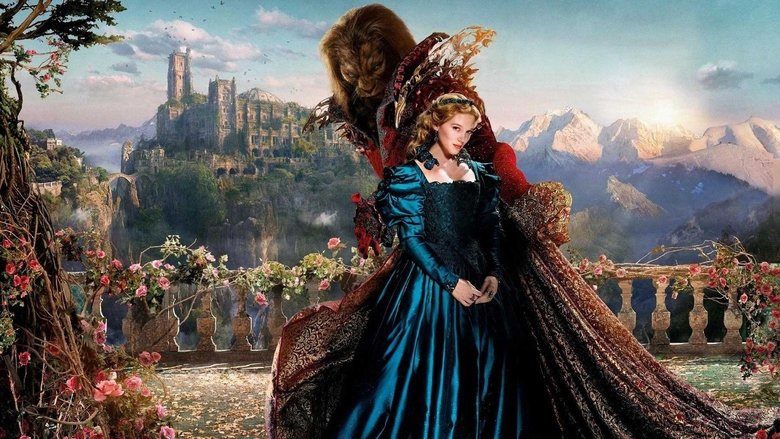
A sumptuous, Gothic dark romantic fable drenched in melancholy and longing, unfolding like an overgrown tapestry of gilded roses, ancient stone titans, and untamed woodland sorcery.
Beauty and the Beast

Beauty and the Beast

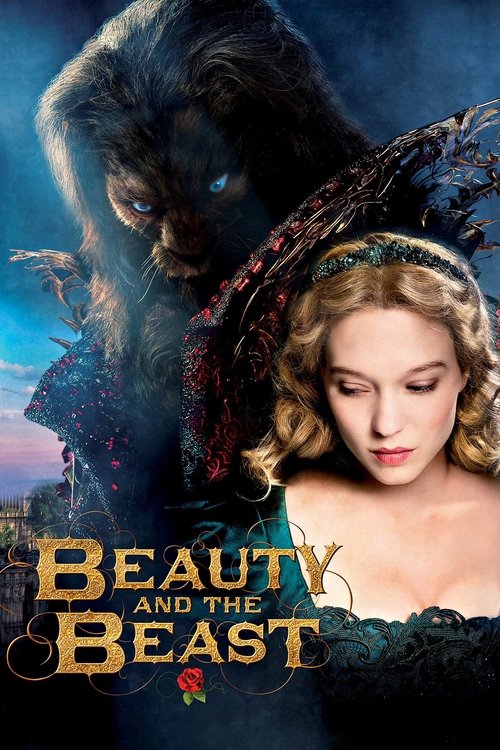
La Belle et la Bête

"The legend is reborn..."

12 February 2014 France 112 min 6.3 (2,228)

Director: Christophe Gans

Cast: Vincent Cassel, Léa Seydoux, André Dussollier, Eduardo Noriega, Myriam Charleins

Fantasy Romance Nature, Sanctity, and Human Hubris Sacrificial Love vs. Selfish Desire Illusion, Beauty, and Moral Essence Greed, Debt, and Materialism Memory, Guilt, and Redemption
Budget: $33,000,000
Box Office: $47,430,624

Overview

Set in France in 1810, the story begins with a wealthy merchant who faces sudden financial ruin when his cargo ships are lost at sea. Forced into countryside exile with his three sons and three daughters, only his youngest child, Belle, finds genuine peace in their modest pastoral existence. Hope flares when news arrives that one of the lost ships has made port, but the voyage to reclaim his assets ends in bitter disappointment, as the cargo is confiscated to pay outstanding debts.

Stranded in a snowstorm on his journey home through an uncharted forest, the merchant stumbles into an ancient, magical estate overgrown with lush foliage. There, he finds warm food, priceless gifts for his family, and shelter. However, as he departs, he plucks a single blooming red rose for Belle, awakening the castle's monstrous lord—a regal, feline-like Beast who sentences the merchant to death for trespassing and theft unless a life is surrendered in exchange.

Overcome with guilt and determined to protect her father, Belle rides to the enchanted castle to face death in his stead. Instead of being slain, she is granted free run of the estate, bounded only by the requirement to join the Beast for dinner every evening. As nocturnal dream visions begin to reveal the tragic origins of the creature's curse, Belle must navigate the Beast's simmering ferocity and discover the sorrowful secret binding his crumbling kingdom.
Core Meaning

Director Christophe Gans envisioned La Belle et la Bête not as a musical fairy tale, but as an ecological and mythic fable rooted in Gabrielle-Suzanne Barbot de Villeneuve's 1740 literary source. The core meaning revolves around humankind's fraught relationship with the natural world, the perils of greed and masculine hubris, and the transformative power of empathy. Gans explores how true nobility is not derived from wealth, lineage, or conquest, but from humility, sacrifice, and the capacity to recognize oneself in the 'other'.

Thematic DNA

Nature, Sanctity, and Human Hubris 30%
Sacrificial Love vs. Selfish Desire 25%
Illusion, Beauty, and Moral Essence 20%
Greed, Debt, and Materialism 15%
Memory, Guilt, and Redemption 10%

Nature, Sanctity, and Human Hubris

Transgression against the natural order triggers the central curse. The Prince's arrogance leads him to hunt the sacred Golden Doe—a manifestation of a forest nymph and daughter of the Forest God—demonstrating that violating nature invites destruction.

Sacrificial Love vs. Selfish Desire

The plot moves forward through voluntary sacrifices: Belle surrendering her freedom to save her father, and later risking her life to restore the Beast's humanity. This contrasts sharply with Perducas and the Prince’s historic greed.

Illusion, Beauty, and Moral Essence

Challenging superficial glamour, the film highlights how the Prince's handsome exterior concealed a predatory heart, while the Beast's terrifying appearance hides profound remorse and capacity for grace.

Greed, Debt, and Materialism

Materialistic obsessions drive human ruin—from the merchant’s debts to Perducas’s raid on the Beast’s domain for treasure. Gans juxtaposes the emptiness of stolen riches against the enduring peace of modest rural labor.

Memory, Guilt, and Redemption

The curse is an enduring prison of guilt. Redemption is achieved only when the Beast lets go of possessiveness and Belle unearths the past through dreams, healing the wound with genuine forgiveness.

Character Analysis

Belle

Léa Seydoux

Archetype: Heroine / Seeker Key Trait: Unflinching courage and empathy.

Motivation

To protect her family and redeem the soul trapped in the Beast.

Character Arc

Evolves from an obedient, self-sacrificing daughter to an assertive woman who uncovers hidden truths and chooses love on her own terms.

The Beast / The Prince

Vincent Cassel

Archetype: Tragic Anti-Hero / Byronic Figure Key Trait: Fierce pride masking profound remorse.

Motivation

To break his eternal curse and atone for the death of his beloved nymph.

Character Arc

Evolves from a reckless, arrogant monarch to an agonizingly lonely monster, ultimately achieving redemption through humility.

All 5 characters and cast

Symbols & Motifs

The Red Rose

Meaning:

Symbolizes innocence, pure love, and fatal temptation.

Context:

Grown over the grave of the slain Golden Doe, picking a rose represents taking a life, which sparks the Beast's fury.

The Golden Doe (La Biche d'Or)

Meaning:

Represents the untamed spirit and sacred perfection of nature.

Context:

Slaying her symbolizes mankind's desecration of the natural world for sport and ego.

The Dream Pool / Water Mirror

Meaning:

Symbolizes memory, subconscious connection, and truth.

Context:

Belle gazes into water to travel back in time, discovering the Prince's buried past.

The Stone Giants (Titans)

Meaning:

Symbolizes the petrified weight of past sins and nature’s wrath against intruders.

Context:

The Prince's cursed hunting companions turned to stone who awaken to defend the estate against invaders.

The Gilded Mirror / Magic Mirror

Meaning:

Symbolizes spiritual perception.

Context:

Acts as a conduit showing distant loved ones and exposing inner intentions.

The Tadés (Cursed Beagle Sprites)

Meaning:

Symbolizes lingering innocence within the cursed household.

Context:

The Prince’s hunting dogs transformed into large-eyed creatures that act as Belle's companions and guardians.

Memorable Quotes

Une vie pour une rose.
— The Beast

Context

Spoken when the Beast corners the terrified Merchant after he cuts a blossom from the garden.

Meaning

Sets the high-stakes moral bargain of the narrative and underscores the heavy price of taking what belongs to nature.

Vous avez jusqu'au septième coup de dix-neuf heures pour me rejoindre.
— The Beast

Context

The Beast establishing his nightly dining decree with Belle.

Meaning

Emphasizes the ritualized structure of their relationship, bridging civility and entrapment.

All 5 quotes

Philosophical Questions

Does human civilization inherently corrupt the sacredness of the natural world?

Explored through the Prince's need to conquer the forest and kill the Golden Doe despite already having everything.

Can genuine love exist without sacrifice?

Explored through Belle's repeated willingness to offer her life to shield her family and save the Beast.

Is outward monstrosity a truer reflection of past guilt than physical beauty?

Addressed through the Prince's beastly form, which makes his hidden moral deformity visible until he repents.

Alternative Interpretations

The film can be analyzed through several distinct lenses:

Full ending explanation

Cultural Impact

Released in France in February 2014, the film arrived during a resurgence of big-budget European fantasy adaptations aiming to compete with Hollywood tentpoles. The film proved to be a box office hit in Europe and Asia, particularly in France, Italy, and Japan, grossing over $47 million worldwide.

Audience Reception

The film received positive recognition for its exceptional production design, practical set construction, evocative lighting, Pierre-Yves Gayraud’s breathtaking wardrobe, and Pierre Adenot’s orchestral score, as well as its faithfulness to the darker mythological roots of the Villeneuve source.

However, points of criticism centered on an over-reliance on CGI for background creatures and giant battle sequences in the climax, a rapid romantic transition between Belle and the Beast in the second half, and the comic-relief CGI dog-creatures (Tadés) which some critics felt clashed with the dark tone. Overall, it was regarded as a visually arresting, dark European fairy tale prioritizing painterly grandeur over conventional romantic comedy.

Interesting Facts

  • Principal photography took place primarily at Studio Babelsberg in Potsdam, Germany, utilizing massive soundstages to build ornate physical sets combined with blue-screen environments.
  • Vincent Cassel wore a specialized motion-capture rig and tracking suit with facial capture markers, allowing the digital feline Beast head and fur simulation to match his exact expressions and body language.
  • Costume designer Pierre-Yves Gayraud designed lavish, massive gowns for Léa Seydoux (including the emerald gown, deep red velvet ballgown, and sapphire dress) that were so heavy and expansive that they dictated how Seydoux walked and moved on set.
  • Production designer Thierry Flamand won the César Award for Best Production Design at the 40th César Awards in 2015 for his work creating the decaying Gothic palace.
  • With a production budget of approximately €35 million, it stood as one of the most expensive French-led co-productions released in 2014.
  • Director Christophe Gans was originally slated by Pathé to direct a major remake of Notre-Dame de Paris (The Hunchback of Notre Dame), but he shifted the project to Beauty and the Beast, viewing it as a kindred myth of transformative romance.

Easter Eggs

Homage to Hayao Miyazaki (Princess Mononoke)

Gans openly credited Hayao Miyazaki's Princess Mononoke as a primary narrative and aesthetic influence, particularly the Golden Doe representing forest divinity, the towering Forest God, and the clash between human avarice and ancient spirits.

Nod to Jean Cocteau (1946)

While striving for an original visual language, the layout of the dining table, the grand fireplace, and the tragic isolation of the Beast pay deliberate homage to Jean Cocteau's 1946 masterpiece.

Villeneuve Literary Origin

Unlike Disney's version, Gans incorporates original details from Madame de Villeneuve's 1740 novel: six siblings (three brothers and three sisters), the specific ruin of merchant shipping, and dream visions as narrative exposition.

Mythological Titans

The giant stone guardians that awaken in the third act were designed to evoke Greek Titans and Scandinavian mythological jotuns.

Frequently Asked Questions

Explore More About This Movie

Dive deeper into specific aspects of the movie with our detailed analysis pages

Comments (0)

Leave a comment

No comments yet. Be the first to share your thoughts!

Similar Movies