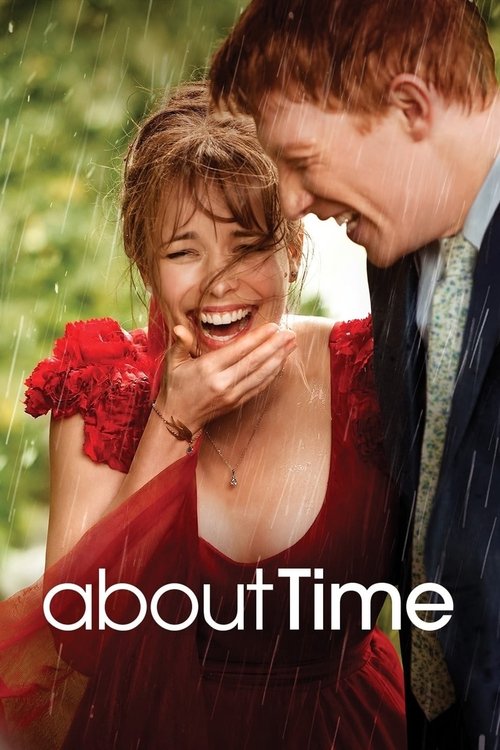
About Time
"What if every moment in life came with a second chance?"
Overview
On his 21st birthday, Tim Lake is told an incredible family secret by his father: the men in their family have the ability to travel in time. Tim can't change history, but he can change what happens and has happened in his own life. He decides to make his world a better place... by getting a girlfriend. Sadly, that turns out not to be as easy as he thinks.
Moving from the Cornwall coast to London to train as a lawyer, Tim finally meets the beautiful but insecure Mary. They fall in love, then an unfortunate time-travel incident means he's never met her at all. So they meet for the first time again - and again - but finally, after a lot of cunning time-traveling, he wins her heart.
Tim then uses his power to create the perfect romantic proposal, to save his wedding from the worst best-man speeches, to save his best friend from professional disaster and to get his pregnant wife to the hospital in time for the birth of their daughter, despite a nasty traffic jam. But as his unusual life progresses, Tim finds out that his unique gift can't save him from the sorrows and ups and downs that affect all families, everywhere. There are great limits to what time travel can achieve, and it can be dangerous too.

Core Meaning
The central message of "About Time" is the profound importance of appreciating the beauty and joy in the ordinary moments of everyday life. Initially, the protagonist, Tim, uses his ability to time travel to correct mistakes and perfect his life, particularly his romantic endeavors. However, he gradually learns from his father and his own experiences that true happiness doesn't come from manipulating the past, but from fully immersing oneself in the present.
The film posits that the real gift isn't the ability to relive time, but to live each day with the awareness and appreciation as if one were living it for the second time. Ultimately, director Richard Curtis delivers an "anti-time travel movie," using the fantastical element to underscore a deeply humanistic theme: the most extraordinary life is the one we are already living, if we only take the time to notice.
Thematic DNA
Appreciation of the Ordinary
The film champions the idea that happiness is found not in grand, perfect moments, but in the small, everyday details of life. Tim's father teaches him to relive each day twice, once with all its tensions and worries, and the second time to notice the sweetness of the world. This practice eventually leads Tim to abandon time travel altogether, choosing instead to live each day as if he has already come back to it, fully relishing its simple joys.
The Love of Family
While the film begins as a romantic comedy, it evolves into a heartfelt story about familial love, particularly the bond between a father and son. The relationship between Tim and his father is the emotional core of the movie, with some of the most poignant scenes revolving around their shared moments and Tim's eventual need to let go. The film explores the love between siblings and the support of a loving family unit in navigating life's challenges.
The Imperfections of Life and Love
"About Time" suggests that life, and love, are inherently imperfect, and that's what makes them beautiful. Tim initially uses his powers to erase awkwardness and create flawless romantic encounters, but he learns that some of the most meaningful moments are unplanned and imperfect. The film ultimately embraces the messy, unpredictable nature of life and relationships.
The Passage of Time and Mortality
The fantasy element of time travel is used to explore the very real and universal experience of time's passage and the inevitability of loss. Tim's father's illness and death serve as a poignant reminder that even with the ability to revisit the past, we cannot escape mortality. The film encourages cherishing the time we have with loved ones.
Character Analysis
Tim Lake
Domhnall Gleeson
Motivation
Initially, Tim's primary motivation is to find a girlfriend and experience love. This evolves into a deeper desire to create a happy life for his family and to cherish the time he has with them, especially his father.
Character Arc
Tim begins as an awkward and insecure young man who uses his newfound ability to time travel to fix his romantic blunders. As the story progresses, he matures from someone who seeks to perfect his life into someone who learns to appreciate its imperfections. He eventually transcends the need for his special ability, finding profound happiness in the ordinary moments of his life with his family.
Mary
Rachel McAdams
Motivation
Mary seeks a genuine and loving relationship. She is motivated by her love for Tim and her desire to build a family with him. She represents the beautiful, ordinary life that Tim learns to cherish.
Character Arc
Mary is presented as a charming and slightly insecure woman who becomes the object of Tim's affection. While her character arc is less pronounced than Tim's, she serves as his anchor to the present and the catalyst for his understanding of true love. Her love for Tim is genuine, independent of his time-traveling manipulations, which is a key element of their relationship.
James Lake (Dad)
Bill Nighy
Motivation
His motivation is to guide his son towards a happy and meaningful life, and to spend as much quality time with his family as possible before he dies. He imparts the wisdom that the key to happiness is not changing the past, but appreciating the present.
Character Arc
Tim's father is the wise and gentle mentor who introduces him to the family secret of time travel. He has already learned the lessons that Tim is just beginning to discover. His arc is one of quiet acceptance of his mortality, using his ability not to cheat death, but to savor the time he has left with his family. His guidance and philosophy are the emotional and thematic core of the film.
Kit Kat
Lydia Wilson
Motivation
Kit Kat is searching for love and happiness, often in impulsive and self-destructive ways. Her journey is about learning to overcome her personal struggles with the help of those who love her.
Character Arc
Kit Kat is Tim's free-spirited and somewhat troubled younger sister. Her struggles and a car accident prompt Tim to try and manipulate her past, leading to unforeseen and undesirable consequences. This experience teaches Tim a crucial lesson about the limits of his power. Kit Kat's arc is about finding stability and happiness with the support of her family, rather than through supernatural intervention.
Symbols & Motifs
The Cornwall Beach
The beach in Cornwall symbolizes family, home, and the constants in Tim's life. It is a place of cherished memories and significant life events, representing a sanctuary of happiness and connection.
The film frequently returns to the picturesque Cornish coast where Tim's family home is located. It is the backdrop for family gatherings, poignant conversations between Tim and his father, and his wedding reception. It represents the idyllic and enduring nature of his family's love.
The Dark Wardrobe
The dark, enclosed space of the wardrobe (or any dark room) acts as a simple, low-fi 'time machine'. It symbolizes the internal and personal nature of Tim's gift, emphasizing that the power to change his life comes from within himself, rather than from external technology.
To travel in time, Tim must go into a dark space, clench his fists, and think of the memory he wants to return to. This ritual is consistently performed in wardrobes or other dark rooms throughout the film, grounding the fantastical element in a mundane, everyday setting.
Tea
The recurring act of making and sharing tea symbolizes comfort, family connection, and the simple, grounding rituals of everyday life that the film celebrates. It's a small act of love and normalcy amidst the extraordinary circumstances of time travel.
Throughout the film, characters are often seen making or drinking tea, especially during moments of emotional significance or quiet contemplation. Tim's father, in particular, is frequently associated with a cup of tea, reinforcing his warm, comforting presence.
Memorable Quotes
We're all traveling through time together, every day of our lives. All we can do is do our best to relish this remarkable ride.
— Tim Lake
Context:
This is part of Tim's final voiceover narration at the end of the film, where he reflects on the lessons he has learned about life and happiness.
Meaning:
This quote encapsulates the film's central philosophy. It suggests that everyone is a time traveler in a sense, and the most important thing is to be present and enjoy the journey of life.
I just try to live every day as if I've deliberately come back to this one day, to enjoy it, as if it was the full final day of my extraordinary, ordinary life.
— Tim Lake
Context:
This is from Tim's concluding monologue, explaining why he has stopped time traveling and how he has found a more profound way to live happily.
Meaning:
This line reveals Tim's ultimate realization: he no longer needs to physically travel back in time because he has adopted a mindset of cherishing each day as if it were a deliberate choice to experience its beauty.
All the time travel in the world can't make someone love you.
— Tim Lake
Context:
Tim comes to this realization after unsuccessfully trying to win over his first crush, Charlotte, despite multiple attempts using time travel.
Meaning:
A crucial lesson Tim learns early on is that his powers have limits, especially when it comes to the feelings of others. Love must be genuine and cannot be manufactured, no matter how perfectly a moment is engineered.
Philosophical Questions
If you had the ability to change your past, should you?
The film explores this question through Tim's journey. Initially, he enthusiastically alters his past to his benefit, but he soon learns that changing events can have unforeseen and sometimes negative consequences, such as erasing his own child from existence. The film ultimately suggests that while the temptation to correct our mistakes is strong, it is perhaps wiser and more fulfilling to accept our lives as they unfold, imperfections and all.
What is the true nature of happiness?
"About Time" posits that happiness is not the result of a perfectly curated life free of mistakes and pain. Instead, it is found in the conscious appreciation of the small, fleeting moments of everyday existence. Tim's father's advice to live each day twice, and Tim's eventual realization that he only needs to live it once with full awareness, underscores the film's central argument that happiness is a matter of perspective and presence.
Alternative Interpretations
While the film is largely straightforward in its message, some alternative interpretations can be considered. One perspective is to view the time travel ability not as a literal, physical power, but as a metaphor for memory and reflection. In this reading, Tim's 'travels' to the past represent the human tendency to dwell on past mistakes and a desire to have done things differently. His eventual decision to stop 'traveling' signifies a mature acceptance of the past and a commitment to living in the present.
Another interpretation focuses on the potentially manipulative and ethically questionable aspects of Tim's actions. While the film portrays his use of time travel to win Mary's affection as romantic, it could also be seen as a form of coercion, as he is essentially engineering a relationship based on his ability to perfect every interaction. This reading offers a darker take on the protagonist's journey and raises questions about consent and free will within the film's narrative.
Cultural Impact
"About Time" was met with mixed to positive reviews upon its release, with many critics praising its heart, humor, and the performances of the cast, particularly Bill Nighy. While some critics pointed out the film's sentimentality and the logical inconsistencies in its portrayal of time travel, audiences have generally responded very positively, with the film gaining a reputation as a beloved 'feel-good' movie.
The film is often cited as a standout in the romantic comedy-drama genre for its emotional depth and its focus on family relationships, which sets it apart from more conventional romance narratives. It has contributed to the ongoing popularity of films that blend romance with a light science fiction or fantasy premise. The movie's central message about appreciating the ordinary has resonated deeply with many viewers, making it a film that is frequently recommended for its uplifting and life-affirming themes. Richard Curtis's distinct directorial and writing style, characterized by witty dialogue, charmingly awkward protagonists, and a heartfelt emotional core, is on full display in "About Time", solidifying his reputation as a master of the modern romantic comedy.
Audience Reception
Audiences have generally embraced "About Time" with great affection, often praising its warmth, humor, and emotional depth. Many viewers connect strongly with the film's life-affirming message and find the father-son relationship particularly moving. The performances of Domhnall Gleeson, Rachel McAdams, and especially Bill Nighy are frequently highlighted as strengths.
The main points of criticism from audiences, which often align with those of professional critics, revolve around the film's loose and inconsistent time travel rules. Some viewers find the plot holes distracting, while others are willing to overlook them in favor of the film's emotional impact. A minority of viewers have also expressed discomfort with the potentially manipulative aspect of Tim's use of his powers to pursue Mary. Despite these critiques, the overall verdict from audiences is overwhelmingly positive, with the film often described as a heartwarming and poignant story about love, life, and family.
Interesting Facts
- This was the third film in which Rachel McAdams stars that involves time travel, the others being 'The Time Traveler's Wife' and 'Midnight in Paris'. In none of these films does her character time travel.
- Director Richard Curtis has stated that 'About Time' would likely be his last film as a director.
- Zooey Deschanel was originally in talks for the role of Mary, which ultimately went to Rachel McAdams.
- The film is dedicated to the actor Richard Griffiths, who had a role in the film and passed away a few months before its release.
- The genesis for the film came from a conversation Richard Curtis had with a friend about happiness, which led him to want to make a film about finding joy in ordinary life. The time travel element was added to what he felt was an otherwise too 'simple' concept.
- Actress Lydia Wilson, who plays Kit Kat, had to learn to drive in just two days for the scene where she crashes her car.
Easter Eggs
A character in the film is seen reading the book 'Trash' by Andy Mulligan.
This is a nod to director Richard Curtis's next project at the time. He wrote the screenplay for the film adaptation of 'Trash'.
⚠️ Spoiler Analysis
Click to reveal detailed analysis with spoilers
Frequently Asked Questions
Explore More About This Movie
Dive deeper into specific aspects of the movie with our detailed analysis pages
Comments (0)
No comments yet. Be the first to share your thoughts!