Skip to content
The Childe
A razor-sharp neo-noir thriller pulsating with relentless dread and macabre humor, where a desperate quarry sprints through blood-soaked asphalt while a smiling dandy in a tailored suit orchestrates chaos like an inescapable shadow.
The Childe

The Childe

귀공자

"The chase is on."

21 June 2023 South Korea 118 min 7.2 (200)

Director: Park Hoon-jung

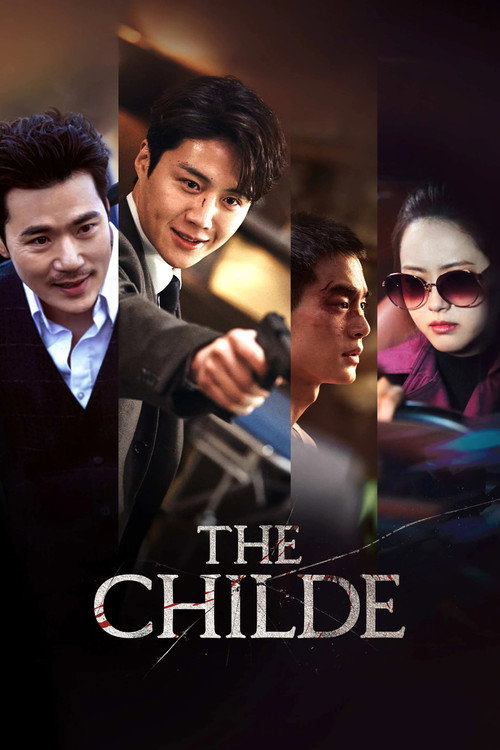
Cast: Kim Seon-ho, Kang Tae-ju, Kim Kang-woo, Go Ara, Jung Lael

Drama Action Thriller Exploitation and Commodification of Marginalized Lives Survival and the Instinct to Endure Familial Betrayal and False Kinship Professionalism vs. Morality in Noir Spaces

Overview

The Childe follows Marco Han, a young half-Korean, half-Filipino ("Kopino") boxer struggling to survive in the underground rings of the Philippines. Marco urgently needs money to pay for a life-saving surgery for his terminally ill mother. In his desperation, he attempts to locate his estranged, wealthy Korean father, whom he has never met. When a team of corporate Korean attorneys suddenly approaches Marco claiming that his dying father wishes to reunite with him and fund his mother’s treatment, Marco is swiftly boarded onto a first-class flight to South Korea.

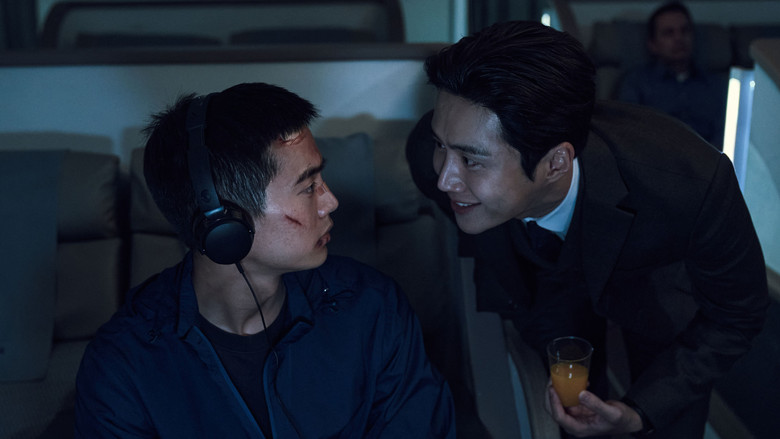
However, the journey quickly unravels into a relentless nightmare. Aboard the plane, an enigmatic, impeccably dressed assassin known only as "The Nobleman" approaches Marco with mocking familiarity. Upon landing in Korea, Marco finds himself hunted from multiple sides: Director Han, the sociopathic heir to a massive conglomerate; Yoon-ju, a mysterious woman playing conflicting angles; and the unhinged, seemingly omnipresent Nobleman. Marco is thrust into a high-stakes game of survival across urban and rural Korean landscapes without understanding why he has suddenly become the most valuable target in the country.

Core Meaning

Director and screenwriter Park Hoon-jung crafts The Childe as a scathing, kinetic critique of systemic exploitation, corporate greed, and the disposable nature of marginalized lives. By centering the narrative on the societal issue of Kopino children, the film exposes how elite chaebol power structures view vulnerable human beings merely as biological commodities to be discarded. Beneath its stylish gunplay and black comedy, the film delivers a message about agency, retribution, and solidarity among outcasts navigating a merciless, predatory world.

Thematic DNA

Exploitation and Commodification of Marginalized Lives 35%
Survival and the Instinct to Endure 25%
Familial Betrayal and False Kinship 20%
Professionalism vs. Morality in Noir Spaces 20%

Exploitation and Commodification of Marginalized Lives

The plot revolves around how South Korean corporate wealth treats mixed-race Kopino youth as disposable resources rather than kin.

Survival and the Instinct to Endure

Marco’s desperate pursuit to save his mother mirrors his fight for bodily autonomy against relentless predators.

Familial Betrayal and False Kinship

The illusion of paternal love and long-lost family is weaponized by the wealthy elite for selfish gain.

Professionalism vs. Morality in Noir Spaces

Explored through the Nobleman’s contradictory nature—balancing ruthless contract execution with bizarre personal ethics and camaraderie.

Character Analysis

The Nobleman / The Childe

Kim Seon-ho

Archetype: Antihero / Chaotic Trickster Hitman Key Trait: Suave demeanor masking lethal firearm proficiency and dark comedic eccentricity.

Motivation

Secure a massive financial payday to fund his own medical treatment while exacting vengeance on corrupt elites.

Character Arc

Evolves from a chilling, mocking pursuer into a cunning, protective guardian with a hidden agenda.

Marco Han

Kang Tae-ju

Archetype: The Innocent Prey / Reluctant Survivor Key Trait: Tenacious physical endurance and filial devotion.

Motivation

Secure funds to pay for his mother’s vital medical operation.

Character Arc

Moves from an exploited boxer and defenseless target into an active survivor who confronts the harsh reality of his lineage.

All 4 characters and cast

Symbols & Motifs

The Tailored Suit and Pristine Shoes

Meaning:

Symbolizes the Nobleman’s narcissistic vanity and detached professionalism.

Context:

He constantly frets over blood splatters or scuffs on his designer attire during brutal firefights.

The Whistle

Meaning:

Acts as a terrifying psychological auditory cue announcing inevitable danger.

Context:

Used by the Nobleman to signal his sudden, inescapable presence to his quarry.

The Boxing Ring and Broken Knuckles

Meaning:

Represents a physical metaphor for someone forced to fight through pain just to stay alive.

Context:

Depicts Marco’s working-class struggle in the underground fight scene of Manila.

The Scalpel and Operating Table

Meaning:

Embodies the sterile, calculated horror of corporate cannibalism and the literal extraction of life.

Context:

Featured in the secluded medical mansion where Chairman Han's illicit organ extraction is prepared.

Cigarettes and Carbonated Drinks

Meaning:

Contrasts calm domestic quirks with intense hyper-violence.

Context:

Used throughout as the Nobleman’s frequent personal indulgences amidst chaotic confrontations.

Memorable Quotes

난 프로야, 친구.
— The Nobleman

Context

Spoken by the Nobleman to Marco aboard the plane to South Korea.

Meaning

Establishes his mocking yet deadly identity and cold professional stance.

오랜만이야, 친구.
— The Nobleman

Context

Used repeatedly by the Nobleman every time he catches up to Marco.

Meaning

Serves as an ironic, unnerving greeting that reinforces his inescapable pursuit.

All 3 quotes

Philosophical Questions

Can humanity be retained inside purely transactional professions?

The film examines this through the Nobleman's lethal hitman execution paired alongside his underlying, quirky sense of justice and protective actions toward Marco.

What defines true kinship—blood lineage or mutual protection?

Highlighted by the sharp contrast between Marco's murderous biological Korean family who view him as biological spare parts and the violent bond formed with the Nobleman.

Alternative Interpretations

The film can be viewed under multiple analytical perspectives:

Full ending explanation

Cultural Impact

The Childe directly engages with the socio-economic reality of Kopino children (children of Korean fathers and Filipino mothers) who frequently face parental abandonment and legal disenfranchisement. The film brings this issue into mainstream genre cinema, framing systemic exploitation through a stylish action lens.

Audience Reception

Audiences and critics praised Kim Seon-ho’s dynamic shift from charming television lead to an eccentric, lethal noir antihero, alongside the visceral, fast-paced action choreography and third-act mansion shootout. Minor criticisms noted the pacing shifts between the slower, exposition-heavy first act in Manila and the high-octane chase in South Korea, as well as familiar chaebol narrative tropes. Overall, it was received as a stylish, entertaining neo-noir thriller that revitalized director Park Hoon-jung's trademark action style.

Interesting Facts

  • Kang Tae-ju was selected for the role of Marco after beating out 1,980 hopefuls in a competitive audition process held by director Park Hoon-jung.
  • The film was originally conceived and announced under the working title Sad Tropics (슬픈 열대, Seulpeun Yeoldae) before being retitled to The Childe (귀공자).
  • The film marks popular television actor Kim Seon-ho's big-screen debut; director Park Hoon-jung notably held onto Kim for the lead role throughout casting adjustments.
  • Production took place across South Korea and locations in Thailand/the Philippines to capture the authentic contrast between Manila's urban fringe and South Korea's secluded estates.
  • The energetic, pulse-pounding score was composed by Mowg, a frequent collaborator on acclaimed Korean thrillers (such as I Saw the Devil).

Easter Eggs

Stylistic Ties to The Witch Universe

The heightened, superhuman combat fluidity and dark comedic banter closely reflect director Park Hoon-jung’s signature style seen in The Witch: Part 1. The Subversion and Part 2. The Other One.

Neo-Noir Hitman Tropes

The contrast of a dapper, well-groomed hitman in a tailored suit performing messy violence evokes classic French crime cinema (such as Jean-Pierre Melville’s Le Samouraï) and modern South Korean dandy assassin tropes.

Mid/Post-Credits Linguistic Twist

The Nobleman unexpectedly speaking fluent Tagalog during the epilogue provides a humorous and thematic callback to the film's cross-cultural premise.

Frequently Asked Questions

Explore More About This Movie

Dive deeper into specific aspects of the movie with our detailed analysis pages

Comments (0)

Leave a comment

No comments yet. Be the first to share your thoughts!

Similar Movies