Skip to content
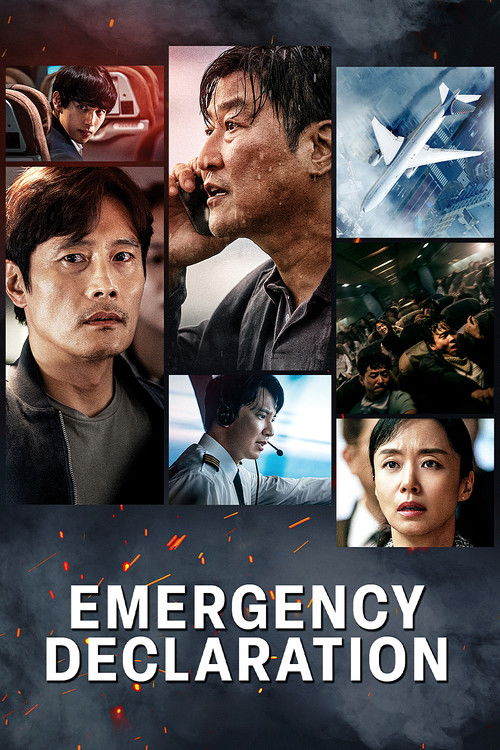
Emergency Declaration
A claustrophobic disaster thriller steeped in sheer existential dread, where a metal cabin suspended in boundless skies transforms into a crucible of human panic, profound sacrifice, and fragile redemption.
Emergency Declaration

Emergency Declaration

비상선언

"Take your seat."

03 August 2022 South Korea 140 min 7.4 (443)

Director: Han Jae-rim

Cast: Song Kang-ho, Lee Byung-hun, Jeon Do-yeon, Kim Nam-gil, Yim Si-wan

Drama Action Thriller Self-Sacrifice vs. Self-Preservation Institutional Paralysis & Geopolitical Alienation Overcoming Trauma & Guilt Nihilism vs. Human Dignity
Budget: $18,052,672
Box Office: $19,200,000

Overview

Emergency Declaration (비상선언), directed by Han Jae-rim, is a high-concept aviation disaster thriller that explores human nature under acute collective peril. The story begins at Incheon International Airport when Ryu Jin-seok, a sociopathic microbiologist, boards Flight KI501 destined for Honolulu carrying an aerosolized bio-weapon, alongside Park Jae-hyuk, a former commercial pilot struggling with severe flight phobia who is traveling with his young daughter.

Shortly into the flight, a passenger dies under agonizing circumstances, unleashing catastrophic panic as the airborne pathogen rapidly spreads through the cabin ventilation system. On the ground, veteran police detective Gu In-ho uncovers the plot and realizes his own wife is aboard, while Minister Kim Sook-hee forms a crisis response team to manage the unprecedented geopolitical and public health nightmare.

As the flight crew succumbs to the virus and foreign authorities refuse landing permissions, the aircraft is trapped in international airspace. The narrative shifts dynamically between the suffocating fuselage thousands of feet in the air and the frantic, politically charged emergency response headquarters on the ground.


Core Meaning

Director Han Jae-rim uses a commercial airliner as a microcosm of human society trapped in an unforeseen crisis, examining how civilization responds to collective existential dread—whether fear degrades society into tribalism and self-preservation, or elevates it through empathy, shared civic responsibility, and voluntary self-sacrifice.

The film serves as an allegory for societal trauma, institutional dysfunction, and public panic during modern epidemics and disasters. Han posits that while institutions and state machines often falter under bureaucratic self-preservation, the innate dignity of ordinary citizens who are willing to sacrifice for the greater good remains the ultimate bedrock of humanity.

Thematic DNA

Self-Sacrifice vs. Self-Preservation 35%
Institutional Paralysis & Geopolitical Alienation 25%
Overcoming Trauma & Guilt 20%
Nihilism vs. Human Dignity 20%

Self-Sacrifice vs. Self-Preservation

Explored through the passengers' agonized decision to reject landing to protect their families, and Detective In-ho's life-threatening choice to inject himself with the virus to prove the antiviral cure.

Institutional Paralysis & Geopolitical Alienation

Demonstrated when international partners, including the United States and Japan, as well as domestic protestors turn away the infected plane, exposing the fragility of global solidarity and government protocol under acute risk.

Overcoming Trauma & Guilt

Revealed through Jae-hyuk's internal struggle: crippled by past guilt and panic attacks from a fatal cockpit incident, he must reclaim control of the aircraft when all pilots are incapacitated.

Nihilism vs. Human Dignity

Contrasted through Ryu Jin-seok's motiveless cruelty of killing solely to witness chaos against the passengers and crew who organize care, maintain order, and choose love over terror.

Character Analysis

Gu In-ho

Song Kang-ho

Archetype: Everyman Hero / Protective Father-Figure Key Trait: Unyielding tenacity and emotional empathy

Motivation

Saving his wife and upholding his duty as a protector.

Character Arc

Starts as a weary, instinct-driven detective handling a minor threat complaint, but escalates into a sacrificial figure who risks his own life to secure an antidote for his infected wife and the passengers.

Park Jae-hyuk

Lee Byung-hun

Archetype: Reluctant Hero / Wounded Healer Key Trait: Latent professional mastery burdened by severe PTSD

Motivation

Protecting his daughter Soo-min and redeeming his past failure.

Character Arc

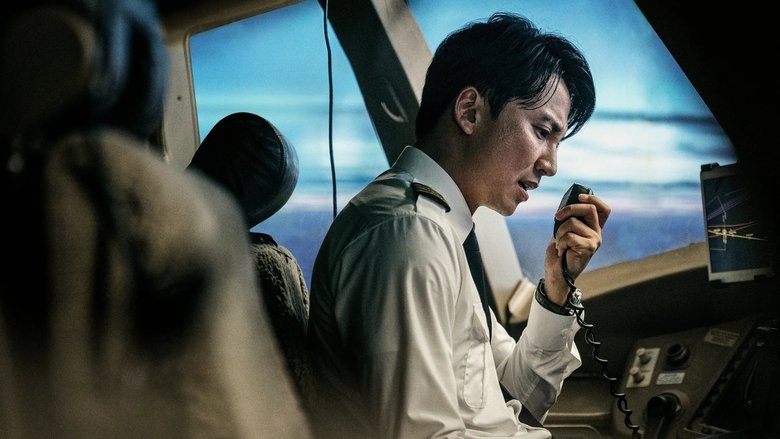
Paralyzed by aviation trauma after a past flight incident, he initially focuses solely on shielding his daughter; he ultimately overcomes panic to step into the cockpit and manually land the aircraft.

All 5 characters and cast

Symbols & Motifs

The Sealed Airplane Cabin (KI501)

Meaning:

Symbolizes the isolation of a vulnerable community in a crisis—a modern ark cut off from the rest of the world where social status dissolves.

Context:

Used as the primary setting of containment where airborne viral transmission occurs and societal stratification collapses under shared mortality.

The 360-Degree Free Fall

Meaning:

Serves as a visual motif for societal vertigo, loss of institutional control, and the descent into complete chaos.

Context:

Occurs when the aircraft plunges into an uncontrolled spiral after the pilot collapses from the viral infection.

Video Calls and Smartphone Screens

Meaning:

Symbolizes technological intimacy juxtaposed against physical helplessness.

Context:

Bridges the physical gulf between the condemned passengers in the cabin and their families watching helplessly on the ground.

The Syringe / Antiviral Vial

Meaning:

Represents both human hubris in the form of bio-weaponry and the redemption of science and love.

Context:

Culminates in Detective In-ho's high-stakes self-inoculation on the ground to clinically validate the experimental treatment.

The Eczema / Skin Rash

Meaning:

The visual manifestation of biological vulnerability and physical mortality.

Context:

Appears on the skin of infected victims, signaling the onset of disease and confronting passengers with their immediate danger.

Memorable Quotes

비상선언이란, 항공기가 더 이상 정상적인 비행이 불가능하여 무조건적인 착륙을 선언하는 것입니다.
— Opening Title Text / Narration

Context

Presented as opening text defining an Emergency Declaration as an unconditional landing command when normal flight is impossible.

Meaning

Defines the aviation law doctrine that forms the premise of the movie, setting up the central conflict when international airports violate this standard.

난 여기 있는 사람들이 다 죽었으면 좋겠어요.
— Ryu Jin-seok

Context

Spoken coldly to Jae-hyuk's young daughter while in the airport terminal before boarding.

Meaning

Encapsulates Jin-seok's complete absence of conventional motive and raw, indiscriminate nihilism.

All 4 quotes

Philosophical Questions

The Trolley Problem on an International Scale

The film questions whether it is ethically justifiable to condemn a contained group of innocent individuals in mid-air to guarantee the absolute safety of millions on the ground.

The Source of Human Evil

Explores whether society can ever prepare for or rationalize purely motiveless malice, as embodied by Ryu Jin-seok's desire for indiscriminate suffering without demands or ideology.

The Limits of the Social Contract

Examines whether moral authority reverts entirely to the collective consensus of ordinary citizens when state institutions fail or prioritize political fallout over the preservation of human life.

Alternative Interpretations

The film supports multiple layered readings:

Full ending explanation

Cultural Impact

The film carries cultural weight across several dimensions:

  • The Shadow of the Sewol Ferry Disaster (2014): Channels South Korea's collective societal grief by highlighting government hesitation, the sacrifice of civilians, and the moral duty of authority figures to prioritize human lives.
  • COVID-19 Parallels: Written prior to the pandemic and filmed during 2020, it captured real-time global anxieties regarding vaccine testing speed, international border closures, viral airborne transmission, and societal polarization over quarantine measures.
  • Box Office & Critical Impact: Released domestically in August 2022, crossing 2 million admissions in South Korea and generating critical debate over its technical execution versus third-act emotional intensity.

Audience Reception

Audience and critical reception highlighted several key areas:

  • Strengths & Praise: Celebrated for technical filmmaking masterclass—especially the 360-degree rotating gimbal sequence and cockpit sound design—alongside Yim Si-wan's chilling performance, the gravitas of Song Kang-ho and Lee Byung-hun, and relentless pacing throughout the first two acts.
  • Criticisms & Controversies: Some critics found the third act overburdened with heightened melodrama (shinpa) and rapid plot escalations such as antiviral self-testing, aerial dogfights, and international landing refusals.
  • Overall Consensus: A gripping disaster blockbuster executed with top-tier production values that blends technical craftsmanship with poignant emotional weight.

Interesting Facts

  • The production team purchased an authentic retired Boeing 777 airframe from the United States, dismantled it, shipped it to South Korea, and rebuilt it inside the soundstage to achieve practical realism.
  • A massive, custom-engineered gimbal was constructed that could rotate the entire fuselage 360 degrees, allowing actors and stunt performers to rotate over 100 times to simulate zero-gravity dive sequences without primary reliance on CGI.
  • Director Han Jae-rim and cinematographers Lee Mo-gae and Park Jong-chul shot the airplane interiors using handheld camera rigs, maneuvering through tight aisles to replicate visceral, documentary-like panic.
  • Emergency Declaration had its world premiere out of competition at the 74th Cannes Film Festival in July 2021, receiving a standing ovation.
  • Filming began in May 2020 and was suspended due to COVID-19 pandemic outbreaks in South Korea before wrapping in late 2020, eerily mirroring the film's viral pandemic plotline.

Easter Eggs

Reunion of Legendary Lead Actors

Marks a high-profile reunion between Song Kang-ho and Lee Byung-hun (who previously starred in Park Chan-wook's Joint Security Area and Kim Jee-woon's The Good, the Bad, the Weird), as well as Song Kang-ho and Jeon Do-yeon (who led Lee Chang-dong's Secret Sunshine).

Aviation Disaster Thriller Homages

The cockpit tension and ethical dilemmas pay tribute to disaster classics such as Airport 1975, Outbreak (1995), and Flight (2012), while subverting Western action tropes into communal melodrama.

Prominent Character Actor Supporting Cast

Features notable actors such as Park Hae-joon (as Crisis Management chief Park Tae-su) and Seol In-ah (as a flight attendant), providing deep characterization to minor roles.

Frequently Asked Questions

Explore More About This Movie

Dive deeper into specific aspects of the movie with our detailed analysis pages

Comments (0)

Leave a comment

No comments yet. Be the first to share your thoughts!

Similar Movies