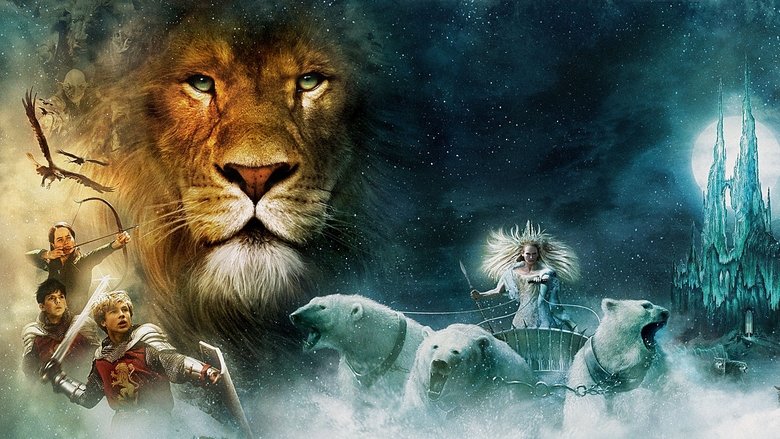
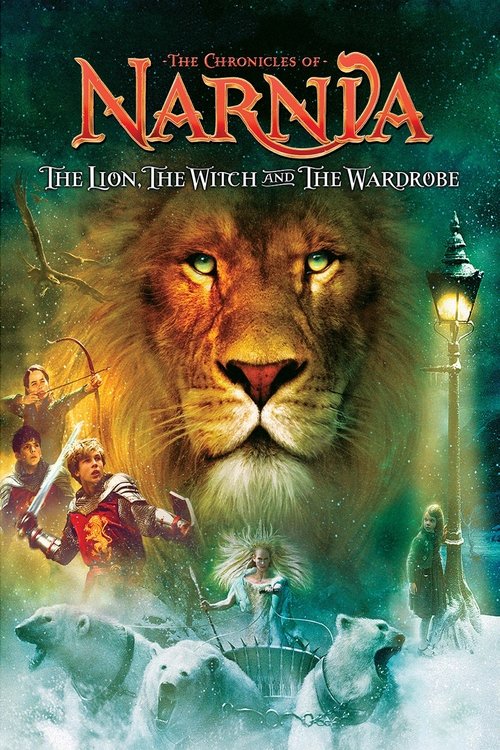
The film opens with the Luftwaffe bombing London during the Blitz; the Pevensie siblings are evacuated to the countryside estate of Professor Kirke. Lucy discovers Narnia and meets Mr. Tumnus, who confesses he intended to kidnap her for the White Witch under penalty of treason, but repents and helps her return home. When Edmund follows Lucy into the wardrobe later, he encounters Jadis, who plies him with enchanted Turkish Delight and promises to make him King if he delivers his brother and sisters to her palace.
When all four children enter Narnia together, they find Tumnus's home ransacked; he has been arrested by the secret police led by the wolf Maugrim. Guided by Mr. and Mrs. Beaver, the children learn of the ancient prophecy and Aslan's return. Edmund sneaks away to the Witch's palace to claim his reward, only to be chained, starved, and forced to witness Jadis turning a fox and loyal forest creatures into stone statues.
As the remaining three journey to Aslan's camp at the Stone Table, Father Christmas visits them, giving Peter a sword and shield, Susan an ivory horn and bow, and Lucy a dagger and a bottle of healing cordial. The snow begins to melt as Aslan arrives. Peter kills Maugrim in defense of his sisters and is knighted "Sir Peter Wolfsbane." Aslan's rescue party frees Edmund from the Witch's clutches.
The White Witch arrives at the camp, invoking the "Deep Magic from the Dawn of Time," which grants her the right to execute Edmund as a traitor. In a private parley, Aslan strikes a secret bargain to surrender his own life in Edmund's stead. That night, witnessed in secret by Susan and Lucy, Aslan walks to the Stone Table where he is bound, shaved, mocked, and killed with a stone knife by Jadis.
At dawn, as the sisters weep over Aslan's body, the Stone Table cracks in two and Aslan is resurrected. He explains the "Deeper Magic from Before the Dawn of Time": when a willing, innocent victim is slain in a traitor's place, the Table shatters and Death itself is reversed. Aslan rushes with Susan and Lucy to the Witch's castle, breathing life into all the petrified warriors.
Meanwhile, Peter and Edmund lead Aslan's army in the climactic Battle of Beruna against Jadis's demonic army. Edmund bravely shatters Jadis's petrifying wand, saving Peter, but is grievously wounded in the process. Aslan arrives with the reanimated reinforcements and leaps upon the Witch, killing her. Lucy heals Edmund with her magic cordial, and the siblings are crowned at Cair Paravel as King Peter the Magnificent, Queen Susan the Gentle, King Edmund the Just, and Queen Lucy the Valiant.
Decades later, as fully grown adult monarchs hunting the mystical White Stag through the Lantern Waste, they stumble across the forgotten lamppost. Pushing through the thick branches, they tumble out of the wardrobe back into England as children, where not a single second has passed since they left. Professor Kirke enters the room, smiling knowingly as he retrieves the dropped cricket ball.