Skip to content
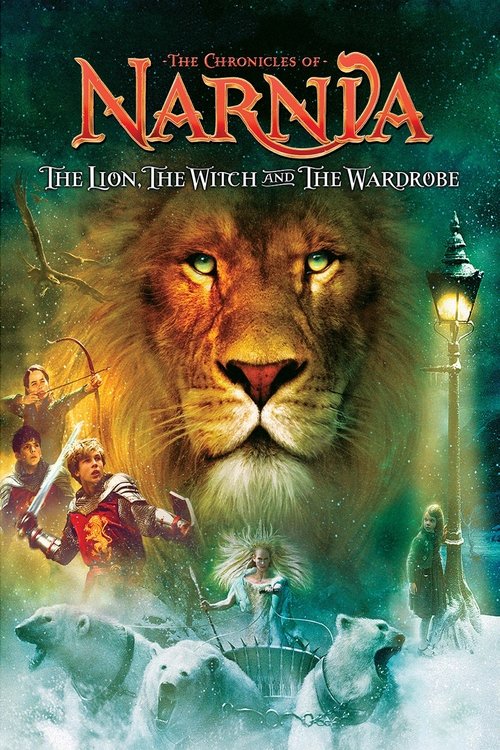
The Chronicles of Narnia: The Lion, the Witch and the Wardrobe
Enveloped in a frostbitten high-fantasy wonder, a dormant spark of innocence dares to melt an age of tyranny. The film is a golden beam of sun piercing through an eternal blizzard, igniting the quiet courage hidden in children's hearts.
The Chronicles of Narnia: The Lion, the Witch and the Wardrobe

The Chronicles of Narnia: The Lion, the Witch and the Wardrobe

"The beloved masterpiece comes to life."

07 December 2005 United Kingdom 143 min 7.1 (11,724)

Director: Andrew Adamson

Cast: William Moseley, Anna Popplewell, Skandar Keynes, Georgie Henley, Liam Neeson

Family Fantasy Adventure Grace, Redemption, and Substitutionary Sacrifice Innocence, Faith, and Childlike Wonder vs. Cynicism Family Unity, Sibling Conflict, and Coming of Age Courage, Moral Duty, and Standing Against Tyranny
Budget: $180,000,000
Box Office: $745,013,115

Overview

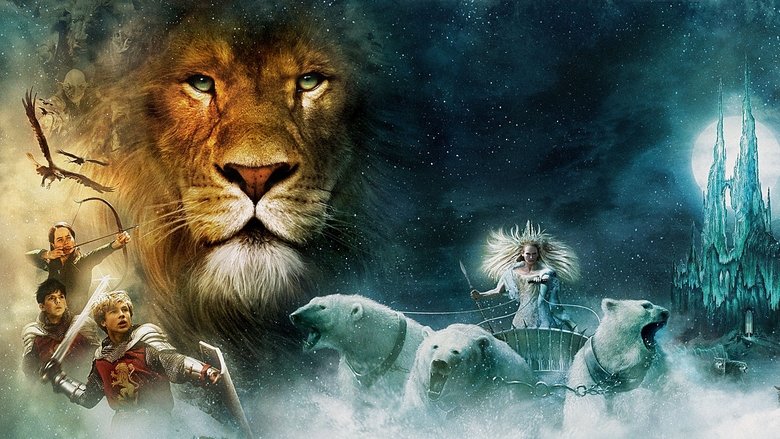
Set against the harrowing backdrop of World War II, the story follows four British siblings—Peter, Susan, Edmund, and Lucy Pevensie—who are evacuated from war-torn London to the cavernous country manor of the eccentric Professor Digory Kirke. While playing hide-and-seek to escape the gloom of their displacement, the youngest, Lucy, stumbles upon an unassuming wooden wardrobe tucked away in a spare room. Stepping past the rows of fur coats, she discovers a portal into Narnia, a mystical world of talking beasts and mythological creatures.

However, Narnia is trapped under a tyrannical 100-year winter where it is "always winter and never Christmas," enforced by the ruthless Jadis, the White Witch. Lucy quickly befriends Mr. Tumnus, a warm-hearted faun, but her siblings initially dismiss her magical tales as pure imagination. When Edmund unwittingly follows her into the wardrobe, he crosses paths with the White Witch, whose deceptive flattery and magical Turkish Delight manipulate his resentment toward his siblings, setting off a dangerous chain of events.

Soon, all four Pevensie children find themselves inside the enchanted realm. They learn of an ancient prophecy declaring that two Sons of Adam and two Daughters of Eve will take their seats at the royal castle of Cair Paravel, overthrow the Witch, and restore peace alongside the legendary lion, Aslan, the true sovereign ruler of Narnia. As winter begins to thaw, the siblings must unite, face perilous trials, and step into roles far greater than ordinary schoolchildren.
Core Meaning

Director Andrew Adamson crafted the film not merely as an escapist fantasy spectacle, but as a tender, profound meditation on sibling reconciliation, the burden of leadership, and the redemptive power of sacrificial love.

The core message posits that no individual is beyond redemption; moral failing can be washed away through grace and selfless sacrifice. Furthermore, Adamson emphasizes that growing up is not about shedding wonder or innocence, but about learning to shoulder moral responsibility, exercise courage in the face of fear, and preserve one's moral compass when confronting tyranny.

Thematic DNA

Grace, Redemption, and Substitutionary Sacrifice 35%
Innocence, Faith, and Childlike Wonder vs. Cynicism 25%
Family Unity, Sibling Conflict, and Coming of Age 20%
Courage, Moral Duty, and Standing Against Tyranny 20%

Grace, Redemption, and Substitutionary Sacrifice

The pivotal narrative axis revolves around Edmund's moral betrayal and Aslan's willingness to surrender his own life to satisfy the Deep Magic. Grace is not earned through merit; it is freely given through costly sacrifice, which dismantles the cold, transactional cruelty of the Witch's legalism.

Innocence, Faith, and Childlike Wonder vs. Cynicism

Lucy's pure, unwavering faith opens the door to Narnia. While the older children—dominated by wartime cynicism, fear, and rationalism—demand empirical proof, Narnia rewards open-hearted belief and genuine trust.

Family Unity, Sibling Conflict, and Coming of Age

Displaced from their father and mother during the Blitz, the Pevensie children are fragmented. The journey through Narnia forces Peter to embrace true protective stewardship rather than domineering authority, and Edmund to recognize that his spite harms the ones who love him.

Courage, Moral Duty, and Standing Against Tyranny

The children do not seek power; they are called to assume moral responsibility against Jadis's oppressive regime. Courage is presented not as fearlessness, but as taking a stand for justice even when trembling.

Character Analysis

Lucy Pevensie

Georgie Henley

Archetype: The Innocent / The Seeker of Truth Key Trait: Pure empathy and childlike trust

Motivation

To protect her friends, speak truth, and bring warmth and peace to Narnia.

Character Arc

Evolves from a tearful, overlooked youngest child into Queen Lucy the Valiant, a compassionate healer and steadfast beacon of unshakeable faith.

Edmund Pevensie

Skandar Keynes

Archetype: The Traitor Redeemed / The Fallen Hero Key Trait: Prone to moral weakness, yet capable of fierce repentance and keen judicial insight

Motivation

Desires respect, agency, and sweet comfort away from Peter's scrutiny, later shifting to saving his family and defeating the Witch.

Character Arc

Begins as a spiteful, insecure middle child who betrays his siblings for power and sweets; transformed through captivity, forgiveness, and battlefield valor into King Edmund the Just.

All 5 characters and cast

Symbols & Motifs

The Wardrobe & Fur Coats

Meaning:

Represents the threshold between the mundane, war-scarred world and the transcendent realm. The soft fur coats evoke warmth, protection, and the physical passage into a dimension where spiritual realities manifest.

Context:

Located in a spare room of Professor Kirke's estate, serving as the physical passageway through which the children enter Narnia.

The Lamppost

Meaning:

Represents enduring hope, memory, and divine light that neither cold nor time can extinguish.

Context:

Stands as an eternal beacon of light situated in the Lantern Waste at the boundary between worlds.

Turkish Delight

Meaning:

The intoxicating sweetness of temptation. It serves as a motif for shallow indulgence, selfishness, and deceitful allure that ultimately breeds entrapment and sickness.

Context:

Offered by the White Witch to Edmund to exploit his resentment and manipulate him into betraying his siblings.

The Stone Table

Meaning:

A monument to cosmic law and archaic justice ("Deep Magic"). Its shattering upon Aslan's resurrection symbolizes the defeat of retributive death by higher, ancient grace ("Deeper Magic").

Context:

The sacred site where Aslan is bound, humiliated, and sacrificed by Jadis, later cracking in two when Aslan rises from the dead.

Father Christmas and the Gifts

Meaning:

The harbinger of the melting winter. His arrival signals the Witch's waning authority, and his practical gifts symbolize spiritual armaments, vocation, and purpose.

Context:

Appears as the snow thaws to present Peter with a sword and shield, Susan with a bow and horn, and Lucy with a healing cordial and dagger.

The Stone Statues

Meaning:

Symbolizes spiritual stagnation, terror, and the silencing of life. Restoring them to flesh reflects physical and spiritual resurrection.

Context:

Fills the courtyard of the Witch's castle until Aslan breathes upon them, restoring them back to life.

Memorable Quotes

He's not a tame lion. But he is good.
— Mr. Beaver (voiced by Ray Winstone)

Context

Spoken while explaining Aslan's nature to the frightened children.

Meaning

Encapsulates the theological paradox of divine majesty—dangerous and untamable, yet loving and benevolent.

Do not cite the Deep Magic to me, Witch! I was there when it was written.
— Aslan

Context

Spoken when confronting Jadis as she demands Edmund's blood according to the ancient laws of Narnia.

Meaning

Asserts Aslan's eternal existence predating created law and supreme authority over cosmic justice.

All 5 quotes

Philosophical Questions

What is the nature of Justice versus Mercy?

The White Witch operates on strict, unforgiving retributive justice: the traitor's blood belongs to her by law. Aslan shows that true justice is satisfied not by vengeance, but by voluntary, self-sacrificing love that absorbs the penalty.

Can rational skepticism blind us to deeper realities?

Susan represents empiricism and scientific doubt, often dismissing wondrous truths because they defy conventional rules. The narrative questions whether an over-reliance on logic restricts one's capacity for wonder and truth.

What constitutes genuine leadership and nobility?

The Pevensies do not rule through divine right or tyrannical force, but through service, sacrifice, and protecting the vulnerable, defining sovereignty as a heavy moral stewardship rather than an entitlement to power.

Alternative Interpretations

The narrative invites multiple interpretive approaches:

Full ending explanation

Cultural Impact

Released in December 2005 on the heels of Peter Jackson's The Lord of the Rings trilogy and the Harry Potter boom, The Lion, the Witch and the Wardrobe established that high fantasy could tackle profound spiritual themes while remaining accessible to families.

C.S. Lewis and J.R.R. Tolkien were close friends and members of the Oxford literary group "The Inklings". The cinematic adaptations of both authors' masterworks in the early 2000s cemented Oxford high-fantasy as a foundational pillar of modern cinema.

The film grossed over $745 million worldwide, making it the third-highest-grossing film of 2005. Furthermore, Walden Media and Disney forged a unique marketing partnership that simultaneously engaged mainstream filmgoers and faith-based audiences, setting an industry precedent for family-friendly fantasy epics.

Audience Reception

Critics praised the film (Rotten Tomatoes ~76%, Metacritic 75/100) for being a visually magnificent, emotionally grounded, and faithful adaptation of Lewis's classic. Tilda Swinton's performance was widely lauded as chilling and charismatic, and the child actors received acclaim for their genuine, unforced chemistry.

Audiences embraced the warm, nostalgic, and epic atmosphere, particularly Harry Gregson-Williams's evocative orchestral score and the seamless blend of CGI and practical prosthetics. While some secular critics felt the Christian allegorical parallels were overly overt, and a minority of literary purists noted that expanding the final battle diverged slightly from Lewis's brief climax, it is celebrated as a landmark fantasy film of the 2000s that successfully combined intimate family drama with grand mythic spectacle.

Interesting Facts

  • Georgie Henley's wide-eyed wonder upon entering the snowy Narnia forest was completely authentic; director Andrew Adamson kept her blindfolded until cameras were rolling so her first reaction to the set was captured on film.
  • Henley had never seen James McAvoy in his full prosthetics and goat-ears makeup prior to filming their initial meeting at the lamppost.
  • Howard Berger and Tilda Swinton's prosthetic design team won the Oscar for Best Makeup at the 78th Academy Awards for their ground-breaking practical work across dozens of creature species.
  • Richard Taylor's Weta Workshop created hundreds of suits of armor, shields, and practical weapons, while visual effects studio Rhythm & Hues developed photorealistic CGI fur for Aslan and tens of thousands of digital combatants for the climactic battle.
  • After health regulations prevented live reindeer from being imported into New Zealand for the shoot, Mark Rappaport Creature Effects engineered fully animatronic reindeer to pull the Witch's sleigh.
  • In the opening Blitz sequence, when glass shatters near the boys, real sugar glass was used; William Moseley famously convinced young Skandar Keynes to taste and eat pieces of it between takes.
  • The movie was filmed extensively in New Zealand (including Flock Hill for the climactic battle), the Czech Republic (Adršpach-Teplice Rocks for winter landscapes), Slovenia, and Poland.
  • To make the children's emotional bonds and maturing look natural, Adamson filmed the Pevensie siblings' scenes largely in chronological order.

Easter Eggs

Douglas Gresham's Cameo

C.S. Lewis's stepson and co-producer makes a brief voice cameo as the radio announcer during the air-raid shelter scene in London.

Director Andrew Adamson's Cameo

The director appears briefly as a train conductor at the Finchley train station during the children's evacuation.

Professor Kirke's Wardrobe Carvings

The wooden wardrobe was carved with scenes depicting events from The Magician's Nephew, including the Creation of Narnia, the Apple of Life, and the Rings, hinting at prequel lore.

Professor Kirke's Identity

Professor Digory Kirke is the young boy Digory from The Magician's Nephew, explaining why he instantly believes Lucy's story instead of dismissing her as mad.

Witch's Melting Crown

As winter begins to thaw due to Aslan's return, Jadis's icy crown physically melts and shrinks, visually mirroring her diminishing dominion.

Frequently Asked Questions

Explore More About This Movie

Dive deeper into specific aspects of the movie with our detailed analysis pages

Comments (0)

Leave a comment

No comments yet. Be the first to share your thoughts!

Similar Movies