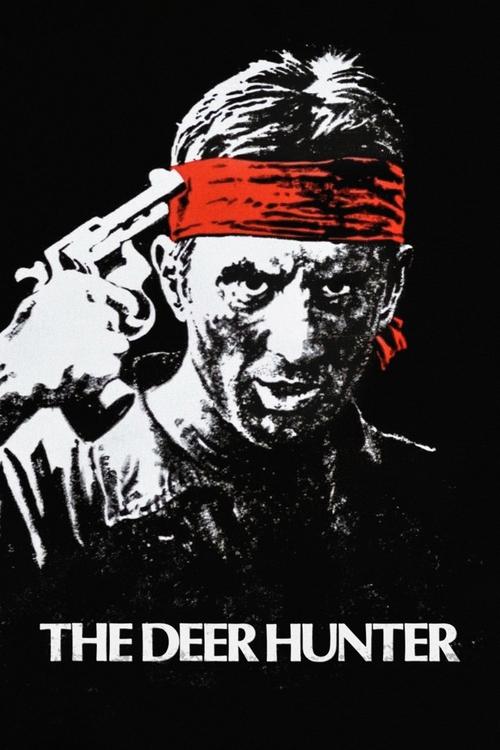
The Deer Hunter
An epic war drama's haunting elegy for innocence, painting the devastating transformation of friendship and self against the brutal canvas of the Vietnam War.
The Deer Hunter

The Deer Hunter

"God bless America."

08 December 1978 United Kingdom 183 min ⭐ 8.0 (4,034)
Director: Michael Cimino
Cast: Robert De Niro, Christopher Walken, John Cazale, John Savage, Meryl Streep
Drama War
The Devastation of War Fragility of Male Friendship The American Dream and Disillusionment Ritual and Randomness
Budget: $15,000,000
Box Office: $49,000,000

Overview

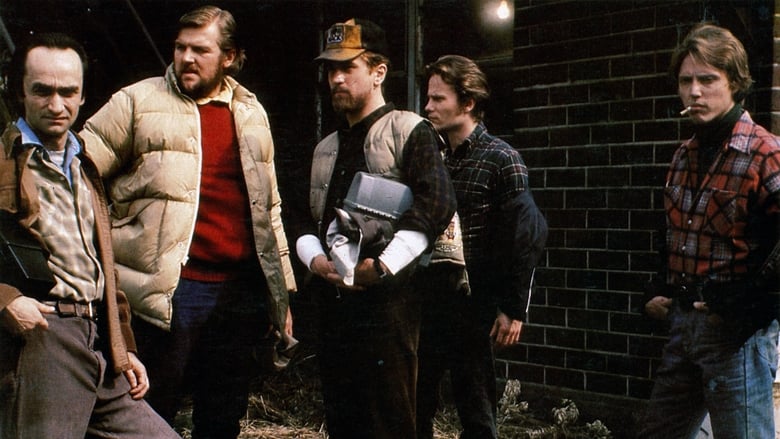
"The Deer Hunter" chronicles the lives of a trio of close-knit Slavic-American steelworkers from a small industrial town in Pennsylvania. The film is divided into three acts. The first act immerses the audience in the community's daily life, culminating in the wedding of one of the friends, Steven, and a final deer hunting trip before he, Michael, and Nick depart for military service in Vietnam. This section establishes their powerful bonds and the rituals that define their existence.

The second act abruptly transports them to the brutal reality of the Vietnam War. Captured by the Viet Cong, they are forced to participate in harrowing games of Russian roulette, an experience that shatters them mentally and physically. Their subsequent escape is chaotic and traumatic, leaving Steven severely injured and Nick psychologically lost.

The final act follows their return home. Michael, though inwardly scarred, struggles to reintegrate into a society that doesn't understand his experience. He discovers Steven in a veterans' hospital, crippled and withdrawn, and learns that Nick has gone AWOL in Saigon, consumed by the deadly game of Russian roulette. The film builds to a devastating climax as Michael returns to Vietnam to fulfill a promise and bring his friend home.
Core Meaning

The core meaning of "The Deer Hunter" is a profound exploration of the devastating and irreversible impact of war on the human psyche, friendship, and community. Director Michael Cimino sought to convey how the trauma of Vietnam shattered the lives and innocence of a generation of young American men. The film is not a political statement for or against the war itself, but rather a deeply personal and emotional examination of its consequences. It contrasts the warmth and rituals of a close-knit community with the random, dehumanizing violence of combat, suggesting that once innocence is lost and the soul is damaged, there is no true way to go home again. The final, somber singing of "God Bless America" encapsulates this complex message: a fragile, pained attempt to find meaning and community in the wreckage of patriotism and personal loss.

Thematic DNA

The Devastation of War 35%
Fragility of Male Friendship 30%
The American Dream and Disillusionment 20%
Ritual and Randomness 15%

The Devastation of War

This is the central theme, illustrating how war corrupts, traumatizes, and ultimately destroys individuals. The film starkly contrasts the vibrant community life in Clairton with the hellish, chaotic violence in Vietnam. The psychological disintegration of Nick, the physical crippling of Steven, and the emotional isolation of Michael all serve as testaments to the deep, lasting wounds of combat that persist long after the fighting stops. The narrative focuses less on the politics of the war and more on its human cost.

Fragility of Male Friendship

The film opens by meticulously building the powerful, almost sacred bond between Michael, Nick, and Steven. Their camaraderie, rooted in shared work, rituals, and community, seems unbreakable. War tests and ultimately shatters this bond. Michael's promise to not leave Nick behind becomes the driving force of the third act, a desperate attempt to salvage a friendship destroyed by trauma. The film shows that even the strongest friendships are vulnerable to the dehumanizing forces of war.

The American Dream and Disillusionment

The steel town of Clairton, with its church weddings, local bars, and hunting trips, represents a specific vision of the American working-class dream. The men go to war, perhaps with patriotic ideals, only to return to a world they no longer fit into. Their homecoming is not triumphant but fraught with alienation and pain. The dream is broken, and the film questions the very foundations of the patriotism that sent them to war, culminating in the ambiguous final scene where the survivors sing "God Bless America" in a state of mourning.

Ritual and Randomness

The film is structured around rituals: a wedding, a deer hunt, a funeral. These events provide order, meaning, and community. Michael's hunting philosophy of "one shot" is a personal ritual of control and honor. This order is violently contrasted with the absolute, senseless randomness of the war, symbolized by the game of Russian roulette, where life and death are decided by a single, arbitrary click of a hammer. War replaces meaningful ritual with a horrifying game of chance.

Character Analysis

Michael "Mike" Vronsky

Robert De Niro

Archetype: The Stoic Hero
Key Trait: Resilient

Motivation

His primary motivation becomes fulfilling the promise he made to Nick: to not leave him in Vietnam. This is driven by a profound sense of loyalty, love, and guilt over what happened to his friends. He is driven to restore some semblance of the community and order that the war destroyed.

Character Arc

Michael begins as a quiet but intense leader among his friends, a man who lives by a strict personal code, exemplified by his "one shot" hunting philosophy. Initially emotionally reserved and seemingly tough, the war forces him into a role of a protector. Upon returning home, he is deeply alienated and emotionally scarred, unable to resume his old life. His arc is about grappling with this trauma, shedding his hardened masculinity to become more vulnerable and compassionate, and ultimately trying to take responsibility for his friends by bringing Steven and Nick home.

Nikanor "Nick" Chevotarevich

Christopher Walken

Archetype: The Innocent Victim
Key Trait: Sensitive

Motivation

Before the war, his motivation is love for Linda and his friends. After his trauma, he loses all connection to his past. His later motivation becomes a self-destructive need to feel alive through the thrill of Russian roulette, the very thing that broke him. He becomes trapped in a cycle of reliving his trauma.

Character Arc

Nick starts as a gentle, sensitive, and well-liked man who is engaged to Linda. He is more introspective than his friends. The war completely shatters his psyche. The trauma of Russian roulette severs his connection to his past life, leaving him in a state of amnesia and addiction in Saigon. His arc is a tragic downward spiral from a hopeful young man into a hollowed-out ghost, psychologically destroyed by the war to the point that he cannot be saved.

Steven Pushkov

John Savage

Archetype: The Broken Survivor
Key Trait: Vulnerable

Motivation

Initially, his motivations are for his new wife and the life they will build. After the war, his motivation is to hide from his past and the shame of his injuries. He wants to disappear rather than be a burden or face the pity of his community.

Character Arc

Steven is introduced on his wedding day, full of joy and on the cusp of a new life. The war breaks him both physically and mentally. He survives, but loses both of his legs and the will to return to his life and wife. He sequesters himself in a VA hospital, overwhelmed by shame and trauma. Michael's intervention forces him to begin the painful process of reintegration. His arc is about being pulled from the depths of despair and having to face a life that has been irrevocably altered.

Linda

Meryl Streep

Archetype: The Waiting Woman
Key Trait: Patient

Motivation

Her motivation is rooted in love and the desire for connection and stability. Initially this is directed at Nick, but as the story progresses, she seeks comfort and understanding from Michael, the only person who can comprehend the loss she feels.

Character Arc

Linda begins as Nick's gentle girlfriend, a quiet figure within the boisterous group of men. She represents the normalcy and love that the men are leaving behind. While they are at war, she waits, becoming a symbol of the home they long for. After Nick's disappearance and Michael's return, she forms a complex, tentative bond with Michael, both of them drawn together by their shared loss and trauma. Her arc reflects the struggle of those left on the home front to cope with the war's devastating ripple effects.

Symbols & Motifs

Russian Roulette

Meaning:

The game of Russian roulette is the film's most powerful and controversial symbol. It represents the senseless, random violence and psychological horror of the Vietnam War. It serves as a metaphor for the way war forces soldiers into situations where survival is a matter of pure, arbitrary chance, stripping away their humanity and sanity.

Context:

The main characters are first forced to play the game by their Viet Cong captors in a harrowing prisoner-of-war sequence. The trauma of this event follows them, with Nick becoming a professional player in a Saigon gambling den, unable to escape the cycle of chance and death. Michael must enter the game one last time in a desperate attempt to save him.

The Deer / Deer Hunting

Meaning:

Deer hunting symbolizes a code of honor, control, and a sacred connection to nature before the war. Michael's philosophy of killing a deer with "one shot" represents precision, respect, and a clear, moral way of life. After returning from Vietnam, Michael's inability to shoot a deer signifies his loss of innocence and his changed perspective on life and killing. The act no longer holds the same meaning after he has witnessed the horrors of war.

Context:

The film features two major hunting scenes. In the first, before Vietnam, Michael successfully kills a deer with a single shot. In the second, after he returns, he has a perfect shot lined up but chooses to fire into the air, letting the deer go. This marks a pivotal moment in his character's transformation.

The Mountains

Meaning:

The mountains of Pennsylvania represent a place of freedom, purity, and spiritual solace, a stark contrast to both the grimy industrial town and the hellish jungles of Vietnam. They are a place where the friends connect with nature and their own moral codes. Nick specifically mentions his love for the trees on the mountains as a symbol of the home and the peace he fears losing.

Context:

The mountains are the setting for the friends' hunting trips. Before leaving for Vietnam, Nick and Michael have a conversation overlooking the landscape, where Nick makes Michael promise not to leave him behind. This setting imbues their promise with a sense of sacredness and natural order that is later violated by the war.

Memorable Quotes

One shot.

— Michael Vronsky

Context:

Michael first explains this philosophy to Nick during their final hunting trip before deploying to Vietnam. It is later repeated by both Michael and Nick in the final, fatal Russian roulette game in Saigon, connecting their lost past with their horrific present.

Meaning:

This is Michael's personal philosophy and code of honor. It refers to his belief that a deer must be killed with a single, clean shot out of respect for the animal. It symbolizes a desire for control, certainty, and a moral code in a chaotic world. The phrase becomes a tragic echo in the final confrontation with Nick, who repeats it with a faint smile before killing himself, twisting its original meaning into an embrace of a final, fatal act.

This is this. This ain't something else. This is this.

— Michael Vronsky

Context:

Michael says this to Stan during the first deer hunt, after taking a pistol away from him that he was handling carelessly. He is frustrated with Stan's immaturity and lack of respect for the power of the weapon.

Meaning:

This seemingly simple line reveals Michael's pragmatic, no-nonsense worldview. He is trying to convey to Stan that actions have real, direct consequences. A gun is a gun; reality is what it is, and it must be confronted directly and without illusion. It underscores his role as the group's grounded, if intense, center.

You gotta promise not to leave me over there... Don't leave me.

— Nick Chevotarevich

Context:

Nick says this to Michael on the night of Steven's wedding, after they have gone up to the mountains. It's a moment of quiet introspection and foreshadowing before they are sent to Vietnam.

Meaning:

This quote is a desperate plea that establishes the central promise of the film. It's a moment of vulnerability that reveals Nick's deep-seated fear of being lost and abandoned in the chaos of war. Michael's agreement to this promise becomes his driving motivation in the film's final act, lending a tragic weight to his quest to find Nick in Saigon.

Philosophical Questions

How does extreme trauma redefine a person's identity and their capacity for 'going home'?

The film explores this question through its three central characters. Michael returns physically whole but emotionally alienated, unable to connect with his old life. Steven is physically broken and so ashamed he refuses to go home. Nick is psychologically erased, his identity completely consumed by his trauma to the point where 'home' becomes a meaningless concept. The film suggests that after experiencing the dehumanizing chaos of war, the original self is destroyed, and returning to a former life is impossible because the person who lived that life no longer exists.

What is the nature of luck, and how does it relate to morality and survival in a chaotic world?

"The Deer Hunter" posits a world where morality and skill (represented by Michael's 'one shot' code) are pitted against pure, random chance. The Russian roulette scenes are the ultimate expression of this conflict. Survival becomes a matter of luck, not virtue or strength. This randomness mirrors the soldiers' experience of war, where death can come arbitrarily. The film questions whether any moral framework can hold up in a world governed by such brutal chaos, suggesting that survival is often a matter of enduring the unendurable through sheer, terrifying luck.

Can community and ritual provide meaning in the face of senseless violence?

The film heavily contrasts the ordered, meaningful rituals of the community in Clairton—the wedding, the hunt, the funeral—with the meaningless violence of Vietnam. The first act is a deep immersion into these communal bonds. The war shatters them. The final scene, where the survivors gather and sing, is a desperate attempt to reconstruct a communal ritual to process their grief. The film leaves it open whether this final ritual is a sign of resilient hope or a tragic acknowledgment that the old meanings can never truly be restored.

Alternative Interpretations

The film's meaning, particularly its ending, is subject to multiple interpretations. One of the most debated aspects is the final scene where the surviving characters gather after Nick's funeral and spontaneously sing "God Bless America."

  • A Critique of Patriotism: Some viewers interpret the scene as deeply ironic. The characters sing the anthem in a broken, somber tone, not out of celebration but out of mourning. In this view, the song is a hollow echo of the patriotic ideals that led them to war, highlighting their profound disillusionment and the emptiness of the patriotic cause that destroyed their lives. It's seen as a lament for a lost and broken America.
  • A Search for Healing and Unity: An alternative interpretation sees the act as a genuine, albeit pained, attempt at healing and reaffirming community. In the face of immense loss and trauma, the song is the only thing they have left to cling to. It's a fragile gesture of solidarity, a way to find solace and shared identity after everything has been taken from them. It's not a celebration of the state, but of the bonds between the people who have survived.
  • An Ambiguous Statement: Many critics and viewers believe director Michael Cimino intended the ending to be ambiguous, reflecting America's own confused and divided feelings about the war. The scene doesn't offer a clear pro- or anti-war message but instead presents a complex tableau of pain, loss, and the struggle to find meaning. It forces the audience to confront their own feelings about the war's legacy without providing an easy answer.

Cultural Impact

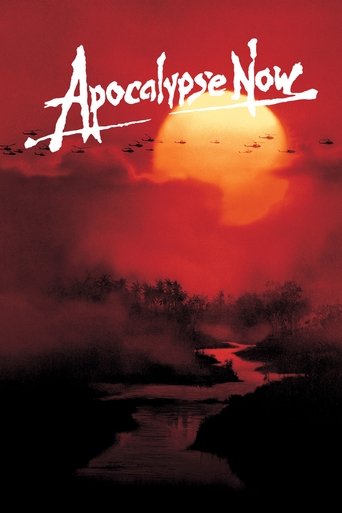
Released just three years after the fall of Saigon, "The Deer Hunter" was one of the first major, epic films to confront the trauma of the Vietnam War, a subject previously considered taboo by Hollywood studios. It won five Academy Awards, including Best Picture and Best Director, cementing its place in cinematic history and paving the way for other Vietnam films like "Apocalypse Now" and "Platoon".

The film was, and remains, highly controversial. Its reception created a serious public debate about the war's legacy. Critics condemned its historical inaccuracies, most notably the use of Russian roulette, for which there are no documented cases of the Viet Cong using it against American POWs. Many also criticized the film for its racist and one-dimensional portrayal of the Vietnamese as sadistic barbarians, which some felt justified American intervention. Protests by Vietnam veterans and activists occurred at the 1979 Academy Awards ceremony.

Despite the controversy, many praised the film's powerful performances, emotional depth, and harrowing depiction of post-traumatic stress disorder (PTSD). Roger Ebert defended the Russian roulette scenes not as literal truth, but as a brilliant artistic metaphor for the random, insane violence of the war as a whole. The film's ambiguous ending, with the characters singing a somber "God Bless America," left audiences to grapple with complex feelings about patriotism, sacrifice, and disillusionment, reflecting a nation deeply divided and struggling to heal.

Audience Reception

Audience reception for "The Deer Hunter" has been deeply polarized since its release. The film was a box office success and is praised by many as a cinematic masterpiece. Viewers frequently laud the powerful, tour-de-force performances, especially from Robert De Niro, Christopher Walken (who won an Oscar), and Meryl Streep. The film is also commended for its emotional weight, realistic tone, and Vilmos Zsigmond's stunning cinematography, which beautifully captures both the grit of industrial Pennsylvania and the brutal landscapes of the war. Many consider it one of the most emotionally shattering films ever made.

However, the film drew significant criticism and outrage. The main points of contention were its historical inaccuracies, particularly the fictionalized Russian roulette sequences, and its perceived racist depiction of the Vietnamese people as uniformly sadistic and inhuman. This led to protests and accusations that the film was dishonest and morally irresponsible. Some critics and audience members also found the film's pacing, especially the lengthy first act, to be slow and self-indulgent, and its political stance to be ambiguous or even jingoistic.

Interesting Facts

  • John Cazale, who played Stan, was dying of bone cancer during filming. All of his scenes were filmed first. Robert De Niro personally paid for his insurance bond when the studio wanted to remove him from the picture. Cazale passed away shortly after completing his scenes and never saw the finished film.
  • The famous Russian roulette scenes were intensely realistic. According to director Michael Cimino, a live cartridge was put in the gun for the scene where Michael forces Stan to play, to heighten the actors' tension (though it was never in the firing chamber).
  • Robert De Niro and John Savage performed their own stunts during the 30-foot fall from a helicopter into a river, doing the drop 15 times over two days. During one take, the helicopter's skids snagged on the rope bridge, genuinely endangering the actors, and this footage was included in the final cut.
  • To achieve a gaunt, traumatized look for the post-war scenes, Christopher Walken consumed a diet consisting only of water, bananas, and rice.
  • Director Michael Cimino claimed to have been a Green Beret medic in Vietnam, but this was later revealed to be a lie. He had served in the Army reserves for six months in 1962.
  • The extensive and chaotic wedding scene was filmed over five days. To achieve authenticity, Cimino took the cast to a real Russian Orthodox wedding and used actual drunk Russian immigrants as guests.
  • The film was one of the first major Hollywood pictures to depict the Vietnam War and was shot on location in Thailand.
  • The emotional final confrontation between Michael and Nick in the Saigon gambling den was improvised by Robert De Niro and Christopher Walken in a single take.

⚠️ Spoiler Analysis

Click to reveal detailed analysis with spoilers

Frequently Asked Questions

Explore More About This Movie

Dive deeper into specific aspects of the movie with our detailed analysis pages

Comments (0)

Leave a comment

No comments yet. Be the first to share your thoughts!