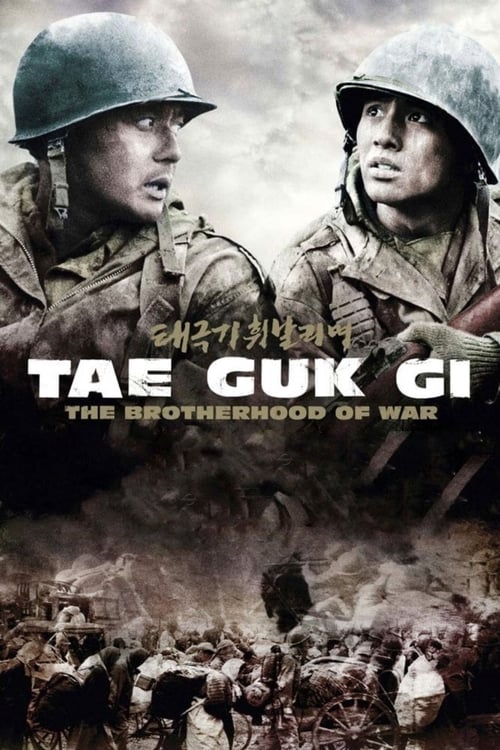
Tae Guk Gi: The Brotherhood of War
A visceral war epic where the fierce love between two brothers is tragically consumed and redefined by the devastating crucible of the Korean War.
Tae Guk Gi: The Brotherhood of War

Tae Guk Gi: The Brotherhood of War

태극기 휘날리며

"One country, one family… divided by war."

05 February 2004 South Korea 148 min ⭐ 8.0 (732)
Director: Kang Je-kyu
Cast: Jang Dong-gun, Won Bin, Lee Eun-ju, Gong Hyung-jin, Lee Young-ran
Drama War History Action Adventure
The Dehumanizing Nature of War Brotherhood and Familial Sacrifice The Tragedy of a Divided Nation The Loss of Innocence
Budget: $1,500,000

Overview

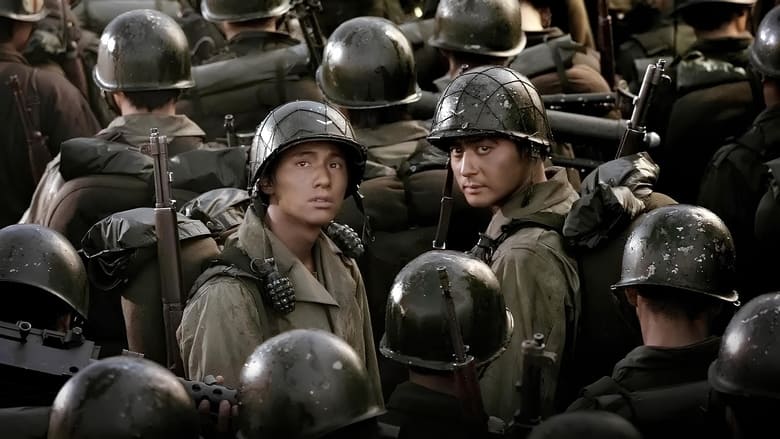
Set against the backdrop of the Korean War, "Tae Guk Gi: The Brotherhood of War" tells the poignant story of two brothers, Jin-tae and Jin-seok. Living a simple but happy life in Seoul, their world is shattered when the war breaks out in 1950, and both are forcibly conscripted into the South Korean army. The older brother, Jin-tae, a humble shoe-shiner, makes a deal with his commander: if he can earn the prestigious Medal of Honor, his younger, university-bound brother, Jin-seok, will be sent home safely.

Driven by this singular goal, Jin-tae volunteers for the most dangerous missions, transforming himself from a gentle caretaker into a ferocious and ruthless war hero. However, his transformation horrifies Jin-seok, who begins to question his brother's motives, believing he has become addicted to the glory and violence of war. This growing rift between the brothers becomes a psychological battlefield, mirroring the brutal external conflict that is tearing their nation apart. The film explores the profound impact of war on individuals, family, and the very concept of humanity.
Core Meaning

The core meaning of "Tae Guk Gi: The Brotherhood of War" is a profound anti-war statement that explores how conflict dehumanizes individuals and destroys the most fundamental human bonds. Director Kang Je-kyu's primary message is not about the politics or ideologies of the Korean War, but about its devastating human cost. The film uses the central relationship between two brothers as a microcosm for the tragic division of the Korean peninsula itself—a nation of brothers turned against each other. The director's intent was to move beyond a simple narrative of good versus evil and show the atrocities and suffering inflicted by both sides, questioning the very definition of 'enemy' in a civil war. Ultimately, the film suggests that in the face of such brutality, the only allegiance that truly matters is the one to family, and it mourns the loss of a generation whose dreams were obliterated by a conflict they did not choose.

Thematic DNA

The Dehumanizing Nature of War 35%
Brotherhood and Familial Sacrifice 30%
The Tragedy of a Divided Nation 25%
The Loss of Innocence 10%

The Dehumanizing Nature of War

The film relentlessly portrays war as a force that strips away humanity. Jin-tae's transformation is the central example; he begins as a loving, self-sacrificing brother and becomes a cold-blooded, almost monstrous killer, numbed to the violence he perpetrates. This theme is reinforced by the graphic and realistic battle scenes, which emphasize the chaos, brutality, and indiscriminate slaughter. The movie shows that both North and South Korean forces are capable of committing horrific acts, such as massacring civilians and executing prisoners, thereby blurring the lines between 'good' and 'evil' and suggesting that the true enemy is the war itself.

Brotherhood and Familial Sacrifice

The bond between Jin-tae and Jin-seok is the emotional core of the film. Jin-tae's initial motivation for his heroic, albeit reckless, actions is the profound love he has for his younger brother and his desire to protect him. This theme explores the lengths one will go to for family. However, the war twists this very motivation; the sacrifices Jin-tae makes to save his brother are what ultimately drive them apart, creating a deep and tragic irony. The film's title itself, "The Brotherhood of War," highlights how this fraternal bond is both the central pillar of the story and the primary casualty of the conflict.

The Tragedy of a Divided Nation

The brothers' personal conflict serves as a powerful metaphor for the Korean War as a civil war. Just as Jin-tae and Jin-seok are turned against each other by misunderstanding and trauma, Korea itself was a single nation torn in two by ideology and external forces. The film deliberately focuses on the Korean perspective, minimizing the role of international forces to emphasize the internal, fratricidal nature of the conflict. The title, "Tae Guk Gi," refers to the South Korean flag, symbolizing a national identity that is being fought over and ultimately shattered by the war.

The Loss of Innocence

The film begins by establishing the idyllic, peaceful life of the two brothers and their family in pre-war Seoul. This initial innocence is brutally shattered by their forced conscription. Jin-seok, the studious and more sensitive brother, acts as the audience's viewpoint for this loss. He watches in horror as the world he knew, and the brother he idolized, are consumed by the war's savagery. This theme extends to other characters as well, like Jin-tae's fiancée Young-shin, whose life is tragically cut short by the brutal paranoia that accompanies the conflict.

Character Analysis

Lee Jin-tae

Jang Dong-gun

Archetype: The Tragic Hero
Key Trait: Fiercely Protective

Motivation

Initially, his motivation is purely to earn a Medal of Honor to secure his brother's discharge from the army. This later becomes corrupted by the trauma of war and a thirst for glory, before shifting to pure vengeance, and finally returning to selfless love for his brother.

Character Arc

Jin-tae begins as a selfless, protective older brother who works as a shoeshiner to support his family. His sole motivation for fighting is to get his younger brother discharged. This noble intention, however, leads him down a dark path. He becomes an incredibly effective but brutal soldier, and the line between protecting his brother and seeking glory blurs. After believing Jin-seok is dead and witnessing the execution of his fiancée, he is consumed by rage and defects to the North Korean army, becoming a commander for them. In the end, he rediscovers his love for his brother and sacrifices himself to save Jin-seok's life, completing his tragic arc.

Lee Jin-seok

Won Bin

Archetype: The Observer/The Conscience
Key Trait: Idealistic

Motivation

His primary motivation is to survive the war and maintain his sense of morality. He wants to save his brother not from the enemy, but from the monster he has become. He is driven by a desire to understand what happened and to restore their broken bond.

Character Arc

Jin-seok starts as a bright, somewhat frail, and idealistic student. Forced into the war, he is initially protected by his older brother. His arc is one of disillusionment and horror as he witnesses Jin-tae's brutal transformation. He grows to resent and fear his brother, believing he has lost his humanity. After being separated and learning of Jin-tae's defection, Jin-seok chooses to rejoin the army to find and confront his brother. He ultimately understands the true depth of his brother's sacrifice. The film is framed through his perspective, opening and closing with him as an old man finally discovering his brother's remains.

Young-shin

Lee Eun-ju

Archetype: The Innocent Victim
Key Trait: Caring

Motivation

Her motivation is simply to survive and care for her family during the war. Her actions are born of desperation, not political conviction.

Character Arc

Young-shin is Jin-tae's fiancée and a kind figure who helps the Lee family. She represents the home, peace, and normalcy that the brothers are fighting to return to. Her arc is short and tragic. During the shifting occupations of Seoul, she is forced to associate with communists to feed her family. When the South Koreans retake the city, she is accused of being a collaborator and is publicly executed by an anti-communist militia, despite the brothers' desperate attempts to save her.

Symbols & Motifs

The Taegukgi (South Korean Flag)

Meaning:

The flag represents the nation and the ideals for which the soldiers are supposedly fighting. However, as the film progresses, the flag becomes an ironic symbol. The war fought under it tears the nation and the film's central brotherhood apart. The title itself poses the question of what it truly means to fight for one's country when doing so destroys the very fabric of that society: its families.

Context:

The flag is a constant visual motif throughout the film, seen on uniforms and in military encampments. Jin-tae's quest for the Medal of Honor, which features the Taeguk symbol, is central to the plot, linking the national symbol directly to his tragic transformation.

Jin-seok's Fountain Pen

Meaning:

The silver fountain pen symbolizes the brothers' bond, Jin-tae's hopes for his brother's future, and the life of education and peace that the war destroyed. It represents the promise of a better life that Jin-tae works tirelessly to provide for Jin-seok.

Context:

In the beginning, Jin-tae gives the pen to Jin-seok as a gift. The pen is lost during the war. At the very end of the film, the elderly Jin-seok is given the excavated belongings of his brother, and among them is the pen, bringing the story full circle and triggering his final, emotional breakdown.

The Unfinished Shoes

Meaning:

The pair of shoes that Jin-tae was crafting for Jin-seok before the war represents his deferred dreams and his dedication to his family. They are a tangible reminder of his role as a provider and protector, and the simple, peaceful life he wished to return to. They symbolize his promise to his brother, a promise that the war prevented him from fulfilling in person.

Context:

The shoes are shown in the beginning as Jin-tae carefully works on them. At the end of the film's main narrative (in the 1950s), the surviving Jin-seok returns home and finds the completed shoes, a heartbreaking testament to his brother's enduring love and sacrifice.

Memorable Quotes

돌아와서 구두 완성한다고 했잖아요. 이러고 있으면 어떡해요. 내가 얼마나 기다렸는데... 돌아온다고 약속했잖아요. 왜 이러고 있어요. 뭐 말 좀 해요.

— Lee Jin-seok (as an old man)

Context:

This is the final scene of the film. The elderly Jin-seok has been brought to the excavation site where his brother's remains were found. He breaks down, speaking to the skeleton as if his brother were alive, finally releasing fifty years of grief.

Meaning:

"You promised you'd come back to finish the shoes. What are you doing lying here like this? I've waited so long... You promised you'd come back. Why are you like this? Say something to me." This quote, delivered at the site of his brother's excavated remains, encapsulates the entire film's emotional weight: a lifetime of waiting, the broken promises caused by war, and the enduring power of brotherly love.

우리 다시 만날 때 그때... 저... 꼭... 꼭 돌아와야 돼.

— Lee Jin-tae

Context:

During their final encounter on the battlefield, after Jin-tae has recognized Jin-seok, the North Korean forces are advancing. Jin-tae pushes his wounded brother to flee to safety while he stays behind to hold them off, promising they will meet again but knowing it's a lie.

Meaning:

"When we meet again... you have to... you have to come back." In this moment, Jin-tae's original motivation resurfaces. He is no longer a crazed soldier but an older brother making a final, desperate plea to ensure his younger brother's survival, accepting his own fate.

Philosophical Questions

Can familial love survive the absolute corruption of war?

The film places the powerful bond between two brothers at the center of the most brutal and dehumanizing environment imaginable. It constantly tests their relationship, pushing it to the breaking point through violence, misunderstanding, and trauma. Jin-tae's love for his brother is the catalyst for his descent into violence, creating a paradox where the act of protecting his family is what ultimately poisons their bond. The film's tragic conclusion suggests that while this love can be rediscovered, it cannot escape the devastating and permanent scars of war.

What defines an 'enemy' in a civil war?

"Tae Guk Gi" deliberately blurs the moral lines between North and South. It shows atrocities committed by both sides, from the execution of suspected communist sympathizers by South Korean militias to the brutality of North Korean soldiers. When Jin-tae, a South Korean war hero, defects and becomes a ruthless North Korean commander, the film forces the audience to question the very concept of an enemy. It suggests that in a civil war, the 'enemy' is not a foreign other, but a reflection of oneself—a 'brother'—and that the true enemy is the ideology that forces them to fight.

Do noble ends justify monstrous means?

Jin-tae embarks on his journey with a noble goal: to save his brother. To achieve this, he volunteers for suicide missions and becomes a merciless killer. The film asks whether his laudable goal justifies the monstrous person he becomes. Jin-seok's horrified reactions serve as the moral compass, suggesting that the means have corrupted the ends entirely. He no longer sees a hero saving him, but a monster he doesn't recognize, implying that losing one's humanity is too high a price to pay for any goal, no matter how noble.

Alternative Interpretations

While the primary interpretation of "Tae Guk Gi" is as a powerful anti-war statement focused on brotherhood, there are more nuanced readings. One interpretation focuses on the film as a critique of nationalism and ideology. Jin-tae's quest for the Taeguk Cordon (the medal of honor) can be seen as a pursuit of a nationalistic symbol that ultimately brings him nothing but suffering and causes him to lose his humanity. His eventual defection to the North Korean army, born of personal betrayal rather than political conviction, highlights the arbitrary and destructive nature of the ideological lines drawn during the war. The film suggests that for the ordinary soldier, the grand narratives of nationhood and political systems collapse into the singular, primal need to protect one's family.

Another interpretation views Jin-tae's transformation not just as dehumanization, but as a depiction of Post-Traumatic Stress Disorder (PTSD). His increasing aggression, emotional numbness, and eventual violent rage can be read as the psychological unraveling of a man subjected to unbearable trauma. From this perspective, his actions are less a descent into evil and more a tragic manifestation of a mind shattered by the horrors he has witnessed and perpetrated. His brief moment of clarity and recognition of Jin-seok at the end is then a fleeting return of his true self before his inevitable death.

Cultural Impact

"Tae Guk Gi" had a monumental cultural impact in South Korea. It was a landmark production that shattered box office records, demonstrating that Korean-made films could achieve blockbuster success on a massive scale. Its release prompted a national conversation about the Korean War, an event often referred to as the "Forgotten War". The film presented the conflict from a deeply personal and Korean perspective, focusing on the lived experience of ordinary people rather than ideological clashes, which resonated strongly with a domestic audience that had personal or familial connections to the war's trauma.

Internationally, the film raised the profile of South Korean cinema. Along with other contemporary films, it was part of the "Korean Wave" (Hallyu) that brought global attention to the country's film industry. While its graphic violence and melodrama received mixed reviews from some Western critics, many praised its technical achievements, emotional power, and its unflinching portrayal of the brutalities committed by both sides of the conflict. It is often cited alongside "Saving Private Ryan" as one of the most realistic and powerful war films ever made, solidifying director Kang Je-kyu's reputation as "Asia's Steven Spielberg".

Audience Reception

Audience reception for "Tae Guk Gi" was overwhelmingly positive, particularly in its native South Korea, where it became a cultural phenomenon and one of the highest-grossing films of all time. Viewers were deeply moved by the emotional story of the two brothers and praised the film's powerful depiction of the Korean War from a personal, Korean perspective. Many viewers found the film to be a heart-wrenching and tear-inducing experience.

Internationally, audiences often compared it favorably to Hollywood war epics like "Saving Private Ryan" for its realistic and visceral battle sequences. However, a common point of criticism, especially from Western viewers, was its perceived melodrama and overt sentimentality, with some finding the emotional scenes to be overly contrived or manipulative. Despite this, the film is widely regarded by many film enthusiasts as one of the greatest war films ever made, praised for its unflinching look at the horrors of war and its powerful, character-driven story.

Interesting Facts

  • The film was the most expensive in South Korean history at the time of its release, with a budget of approximately $12.8 million USD.
  • It became one of the biggest box office successes in South Korean film history, attracting over 11.74 million viewers, which was about a quarter of the country's population at the time.
  • The director, Kang Je-kyu, was inspired to make the film after the massive success of his previous spy thriller, "Shiri".
  • The film's realistic and brutal battle sequences are often compared to those in Steven Spielberg's "Saving Private Ryan".
  • Kim Jae-joong, who would later become a famous K-pop singer with the group TVXQ, worked as an uncredited extra in the film, playing a corpse and a Chinese soldier.
  • The film won Best Film and Best Director at the 50th Asia Pacific Film Festival.
  • Despite its success and being South Korea's submission, the film was not nominated for Best International Feature Film at the 77th Academy Awards.

⚠️ Spoiler Analysis

Click to reveal detailed analysis with spoilers

Frequently Asked Questions

Explore More About This Movie

Dive deeper into specific aspects of the movie with our detailed analysis pages

Comments (0)

Leave a comment

No comments yet. Be the first to share your thoughts!