
Skip to content
The East Palace
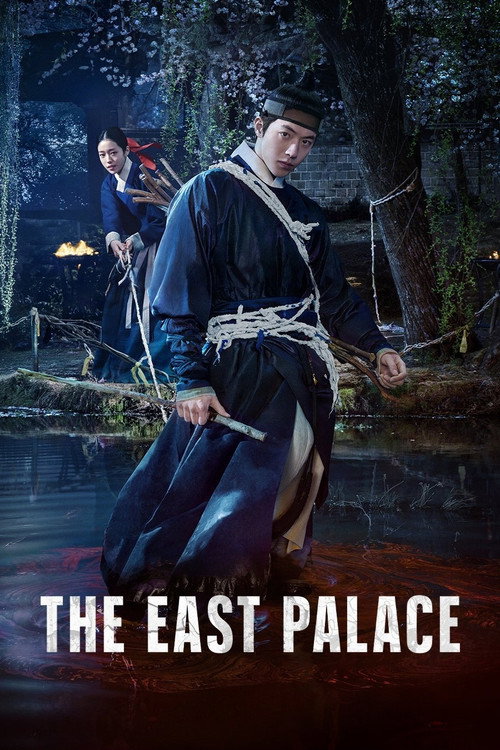
In an abyss of blood-stained court intrigue and haunting mist, a ghost-hunter and an empathic maid unravel ancestral grief where the royal palace mirrors a suffocating underworld.
The East Palace
The East Palace

동궁

"Beyond boundaries, they unearth the truth."

17 July 2026 — 17 July 2026 South Korea 1 season 8 episode Ended 8.1 (100)

Cast: Nam Joo-hyuk, Roh Yoon-seo, Cho Seung-woo, Jang Young-nam, Hong Seo-jun

Drama Sci-Fi & Fantasy Action & Adventure Mystery The Monstrosity of Human Ambition vs. Supernatural Terror Grief, Unheard Voices, and Shamanic Atonement The Cost of Concealment and Corrupted Heritage The Isolation of Walking Between Dimensions

The East Palace — Ending Explained

⚠️ Spoiler Analysis

The defining twist of The East Palace reveals that the catastrophic supernatural curse plaguing the dynasty was never initiated by a random mythical demon, but was entirely orchestrated by human ruthlessness. Thirty years prior, the current King's biological mother, Royal Concubine Suk-bin Choi, systematically poisoned the legitimate sons of the late King to pave the way for her low-born son, Ju Sang, to seize the crown. To disguise her cold-blooded assassinations as a curse, she drowned witnesses and burned alive suspicious court ladies in the East Palace compound, creating the massive cluster of resentful spirits (wongwi) that formed the Pond Demon.

Furthermore, Saeng-gang's investigation reveals that her own mother, a former palace lady who possessed secret records of the poisonings, was slaughtered by the same matriarchal cabal, making Saeng-gang both the King's illegitimate half-sister and the daughter of his mother's victim. In the explosive finale, the king is forced to witness the terrifying reality that his entire reign is an illegitimate sham born of his mother's atrocities. Gu-cheon and Saeng-gang successfully neutralize the supreme spirit not by brute force alone, but by bringing the King to confess his dynasty's sins, allowing the silenced victims of the East Palace to finally pass peacefully from the mortal coil.

Alternative Interpretations

While presented on the surface as an occult fantasy about slaying malevolent specters, many critics interpreted The East Palace as an allegory for historical revisionism and state violence. In this reading, the Realm of Gwi represents the suppressed collective consciousness of state victims whose erased murders destabilize succeeding generations until acknowledged. Alternatively, the King's ambiguous moral positioning led some viewers to interpret the entire curse as an internal psychological collapse born of the King's subconscious guilt over ascending a throne built on fratricide.

Explore More About This Movie

Dive deeper into specific aspects of the movie with our detailed analysis pages

Similar Movies