Skip to content
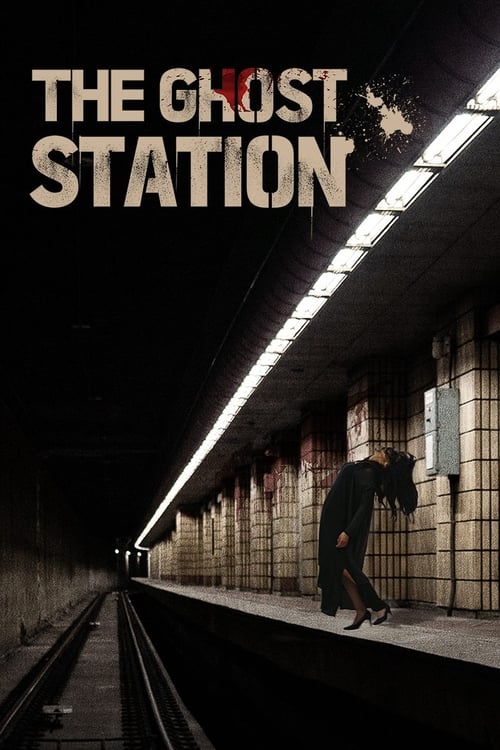
The Ghost Station
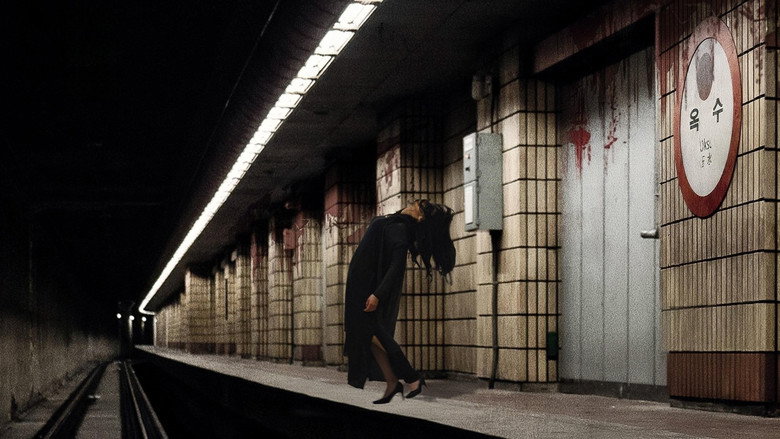
A damp, fluorescent-lit J-horror homage in which a city's busiest veins hide a buried grievance. Dread creeps up through numbers, scratches and small wet footsteps, and guilt runs below the platform like groundwater.
The Ghost Station

The Ghost Station

옥수역귀신

"Dead on arrival."

19 April 2023 South Korea 80 min 6.6 (101)

Director: Jeong Yong-ki

Cast: Kim Bo-ra, Kim Jae-hyun, Shin So-yul, Oh Jin-seok, Kim Kang-il

Mystery Horror Buried truth and institutional cover-up Unavenged victims and the grudge Media ethics and clickbait journalism Friendship and self-preservation Modernity haunted by the past
Box Office: $2,305,305

Overview

The Ghost Station (original title 옥수역귀신) is a South Korean horror-mystery directed by Jeong Yong-ki. It is based on the 2011 Oksu Station Ghost webtoon by Horang, a short story that circulated online as an urban legend. Na-young (Kim Bo-ra) is a junior online reporter in trouble at work and desperate for a scoop that will save her job. Her friend Woo-won (Kim Jae-hyun) works at Oksu Station, and he tells her about a fatal accident he witnessed there. He also saw a ghostly child afterward, and the station mortician saw the child too.

Na-young starts investigating with Woo-won. A string of deaths among station workers and visitors is tied to strange details, including unknown numbers the victims repeat and odd markings on their bodies. A relative of one of the dead adds a clue: a hidden well near the abandoned station building, and the history of an orphanage that once stood on the site.

The film runs a little over 80 minutes. It works as a procedural, with a reporter and a friend collecting testimony, and as a haunted-place chiller in the manner of early-2000s Japanese horror. The question of what happened here, and who made sure nobody found out, drives the story more than the question of who dies next.
Core Meaning

The film is built on the formula of Korean ghost stories, which Jeong Yong-ki describes in interviews: the dead are victims of an old wrong, and their resentment builds when nobody acknowledges what they suffered. The way out is to find the cause and release the grudge. It is not to defeat or avoid the ghost. Here the wrong is the death of orphaned children, a crime buried beneath a modern piece of infrastructure.

This yields a message about covering up atrocity for the sake of progress. A station was built where an orphanage had stood, and the powerful preferred silence to delay. The curse therefore spreads to anyone who walks over the buried truth. The ending adds a bleaker coda. The film suggests that people will always push the curse onto someone else instead of atoning, which means the grudge cannot end.

Thematic DNA

Buried truth and institutional cover-up 30%
Unavenged victims and the grudge 25%
Media ethics and clickbait journalism 20%
Friendship and self-preservation 15%
Modernity haunted by the past 10%

Buried truth and institutional cover-up

The station stands on top of an orphanage and a hidden well. Reviewers read a cover-up involving powerful people who wanted construction to proceed, and a newspaper that may have been complicit. The reporter's work turns into an excavation.

Unavenged victims and the grudge

The child ghosts are identified by numbers rather than names, and their resentment turns into killings. Jeong describes this as the standard Korean pattern, where fear is resolved by understanding and releasing the grudge.

Media ethics and clickbait journalism

Na-young starts the film in trouble for a careless report and chases a story for viewership. An opening sequence has a man filming a stranger for online mockery, and the curse punishes him. Both strands point at voyeuristic digital culture.

Friendship and self-preservation

When a way to break the curse appears, the characters' loyalty is tested. Audience reviews single out one character's choice to save himself at his friend's expense as the film's most disturbing moment.

Modernity haunted by the past

A commuter station is a place of routine, and the ghosts move uncannily through it. The well suggests contaminated water feeding the society above, a classic J-horror image of the past seeping into the present.

Character Analysis

Na-young

Kim Bo-ra

Archetype: Reluctant hero / ambitious rookie Key Trait: Driven and persistent

Motivation

Saving her job at first, then surviving the curse and exposing the truth.

Character Arc

She begins as a careless online reporter who needs a story to keep her job. The investigation pulls her into real danger and into the truth about the cover-up. Reviewers describe her ending as one in which she is betrayed and then accepts passing the curse onto someone else.

Choi Woo-won

Kim Jae-hyun

Archetype: Conflicted ally Key Trait: Cautious and self-protective

Motivation

To understand the haunting and, ultimately, to stay alive.

Character Arc

A station worker studying for the civil service exam, he is shaken by the accident he witnessed and brings Na-young in. Audience reviews say his decision at the end is the film's most controversial act, since he saves himself by transferring the curse to his friend.

All 4 characters and cast

Symbols & Motifs

The buried well

Meaning:

Suppressed history, and the contaminated source beneath modern life.

Context:

The investigation ends at an abandoned, buried well near the old station house. It is where the children's ghosts dwell, and the film echoes Ring in using it.

Numbers (such as "1211")

Meaning:

The dehumanization of the orphans, who were identified by numbers instead of names.

Context:

The ghost child gives the mortician the number 1211 as its name. The afflicted workers repeat unknown numbers before they die.

Scratch marks on the victims

Meaning:

The mark of the curse and a countdown to death. They also suggest the children's desperate clawing in the well.

Context:

Strange markings appear on victims shortly before their deaths, and they serve as the investigation's first clues.

The abandoned platform and station house

Meaning:

A repressed layer of the city, a place nobody looks at that nonetheless sits inside a working station.

Context:

A man on the tracks of the abandoned station is the first apparition Woo-won sees, just before an accident.

The orphanage

Meaning:

Society's neglected children, whose suffering was erased by development.

Context:

The orphanage that once stood at the site is the origin of the grudge, and a witness's relatives were connected to it.

The smartphone video and CCTV

Meaning:

Technology that records but does not see the truth.

Context:

Footage shows ghostly details in the opening, and CCTV shows Na-young alone when she believed she had interviewed someone.

Philosophical Questions

Can a wrong be undone if it is only hidden and not atoned for?

The orphans' deaths were buried under a station, yet the grudge persists. The film argues that covering up a crime does not erase it, and that the guilt leaks out until it is acknowledged.

Is it justified to save yourself by passing suffering to someone else?

The curse can be transferred, and the characters use that. The film puts friendship, desperation and the choice of a "deserving" victim under pressure, without giving a comfortable answer.

What responsibility do the media have for what they expose and conceal?

Na-young begins as a careless reporter and finds that her employer may have been part of a cover-up. The film sets sensational clickbait against the slow work of uncovering truth.

How It Ends

Alternative Interpretations

The ending can be read as moral cynicism: people choose self-preservation over the truth and over each other, so the curse circulates forever. It can also be read as a flaw in the writing, as several reviewers felt, because the betrayal is not given any emotional fallout.

Full ending explanation

Cultural Impact

The film belongs to a wave of Korean horror adaptations of internet urban legends, drawing on Horang's webtoon, which was one of the early online "jump-scare" phenomena. Its cultural position is mainly as a deliberate cross-border homage: a Korean director, a Japanese co-writer, and a plot that blends the Korean idea of han-like resentment with J-horror imagery.

Critical reception was modest. Rotten Tomatoes lists a few reviews, including a 3/5 for decent entertainment and solid cinematography, and a C+ from Crooked Marquee that cites some creepy moments but an abrupt, unsatisfying ending. Some reviewers found it derivative, and others found it affectionate. The film has not produced a notable pop-culture legacy that the research could confirm.

Audience Reception

Praised: the gradually unraveling mystery in the first half, the creepy ghost-child imagery, the short runtime and some solid performances and cinematography. One reviewer called it possibly the most enjoyable Korean horror film of its year, and another saw it as a loving tribute to J-horror.

Criticized: its familiar tropes and low scare factor, a feel closer to a lower-budget 2005 J-horror than polished Korean horror, a messy ending with logic holes, and one character's betrayal that overshadows everything. MyDramaList users score it around 6.7 out of 10, and the Rotten Tomatoes audience score is based on very few reviews.

Verdict: an entertaining but derivative horror best suited to fans of Asian ghost stories.

Interesting Facts

  • The film is adapted from Horang's short webtoon Oksu Station Ghost, published in 2011 on Naver.
  • The webtoon was notable for presenting a moving flash-style animation, a format famed for its sudden jump scares.
  • Hiroshi Takahashi, the screenwriter of the original Ringu, co-wrote the script with Lee So-young, and the director says the producer wanted a Japanese-horror feel.
  • Jeong Yong-ki said Takahashi's script was so Japanese that it needed adapting to suit Korean sentiment.
  • Jeong describes the film as a modern reinterpretation of the golden age of Japanese horror from the early 2000s, such as Ring and Ju-on.
  • AsianWiki states filming began on June 20, 2021.
  • The film premiered at the Bucheon International Fantastic Film Festival in 2022 and was released in South Korea on April 19, 2023, per HanCinema and other listings.
  • The film runs roughly 80 minutes, and the production companies include Joa Film and Mystery Pictures, with Smile Entertainment as distributor.
  • Release years vary between sources (2021, 2022, 2023) because of the festival premiere and the later theatrical and home release.

Easter Eggs

The film is set at the real Oksu Station in Seoul, on the Line 3 platforms, as the source webtoon was.

It keeps the urban-legend flavor of the online story, and the film draws on the real, everyday setting of a commuter station.

Co-writer Hiroshi Takahashi also wrote the original Ringu, and the film echoes it with a well, a grudge and a curse that can be passed on.

Reviewers describe it as a love letter to J-horror classics like Ring and Ju-on.

Frequently Asked Questions

Explore More About This Movie

Dive deeper into specific aspects of the movie with our detailed analysis pages

Comments (0)

Leave a comment

No comments yet. Be the first to share your thoughts!

Similar Movies